Let’s make your tank the happiest little splash in the house!
If your betta is biting their own tail, it can feel confusing and a little heartbreaking. The good news is that tail biting is often a fixable behavior once you identify what is triggering it. This guide will help you tell self-biting apart from fin rot, spot the most common causes, and calm things down so those beautiful fins can finally get a break.
What tail biting looks like
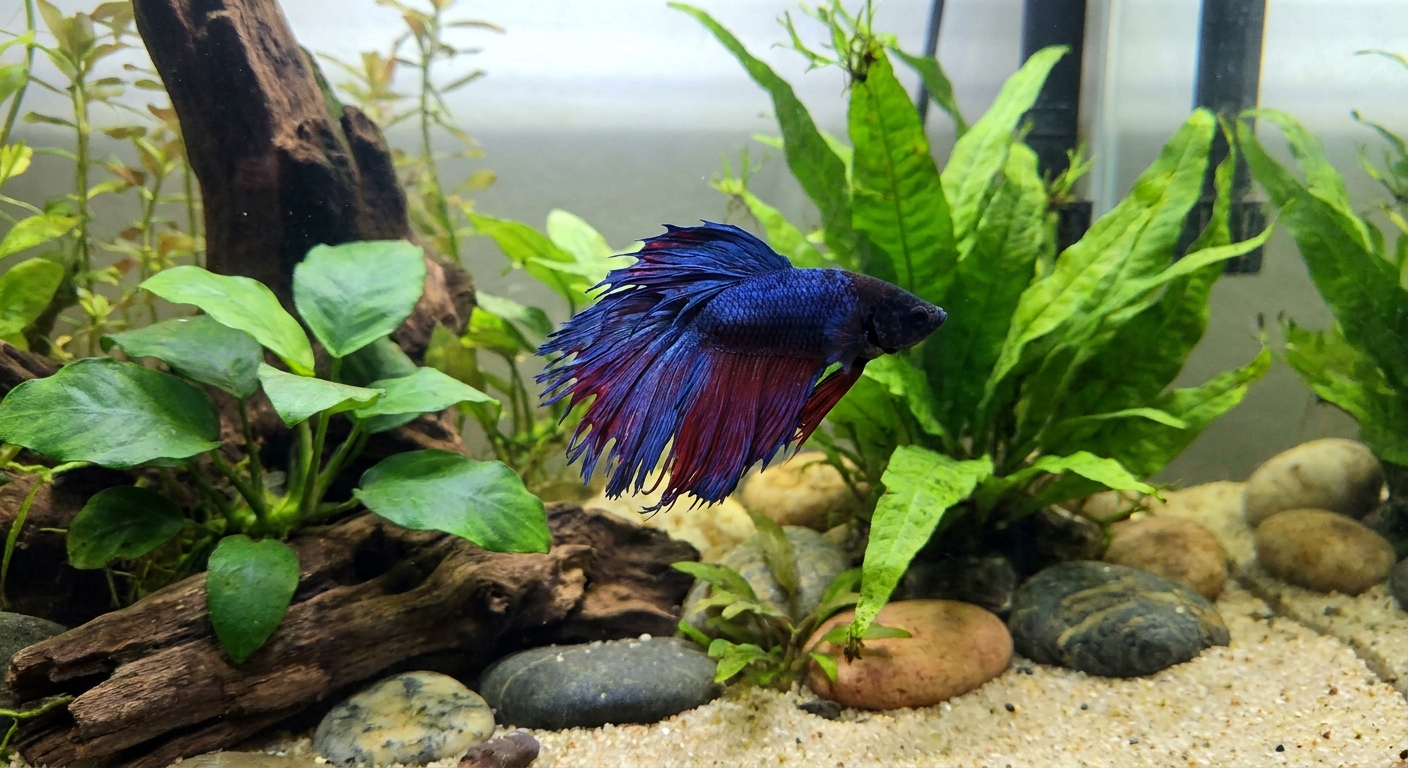
Tail biting is self-directed fin damage. A betta will suddenly twist, dart, or curl toward their tail and take quick bites. Some bettas spit the fin pieces out, and others swallow them. Either way, the result is the same: fins that look freshly torn, shortened, or uneven.
You may also see this called self-nipping or self-biting. The term fin nipping is sometimes used when tank mates are the ones doing the damage, so in this article we are talking specifically about a betta biting their own fins.
Common causes tend to fall into a few overlapping categories:
- Stress (environment, water quality, social pressure)
- Under-stimulation (a bare tank with nothing to explore)
- Physical irritation or burden (long fins, strong flow, snaggy decor)
Sometimes more than one factor is involved, and occasionally you never find one single “magic” cause. The goal is to reduce triggers and give fins the best chance to heal.
Tail biting vs fin rot
Before you focus only on behavior, make sure you are not dealing with an infection. Tail biting and fin rot can look similar at first glance, but the pattern is usually different.
Signs that point to tail biting
- Sudden changes: fins look shorter overnight, or right after you notice a twisting bite motion
- Fresh-looking tears: chunks missing, uneven edges, or “torn” sections that look newly damaged
- Uneven damage: one area is hit hard while another looks fine
- Behavior clues: quick darts, spirals, or snapping toward the tail
Signs that point to fin rot (or another fin infection)
- Gradual worsening over days to weeks
- Discolored or inflamed edges: dark, pale, red, or bloody-looking margins
- Fraying or “melting” look: the fin seems to thin and recede rather than lose clean chunks
- Other illness signs: lethargy, clamped fins, loss of appetite
If you suspect infection, pop over to Fin Rot in Betta Fish: Identify and Treat It. It is also possible for tail biting to start the damage and then fin rot to move in afterward, so keep an eye on the edges as the days go by.
Also rule out itch and irritation
Sometimes a betta bites fins because something feels “off” on their skin, not because they are bored. If you see flashing (rubbing on decor), a dusty or gold sheen, white spots, rapid breathing, or sudden clamping, check these guides:
Common triggers
1) Water quality stress
When water is irritating, bettas can get twitchy and uncomfortable. That stress can turn into fin biting, especially if the fins already feel heavy or ragged.
- Common culprits: measurable ammonia or nitrite, rising nitrate, missed water changes, overfeeding, dirty substrate
- Practical targets: aim for 0 ammonia and 0 nitrite. For nitrate, many hobbyists try to keep it low (often under about 20 to 40 ppm), especially for long-term comfort.
- What to do: test the water, improve maintenance, and avoid sudden parameter swings
A steady, gentle routine helps a ton. If you want a clean plan to follow, see Betta Tank Cleaning Routine and Water Change Schedule and How to Cycle a New Betta Fish Tank.
2) Temperature swings or running too cool
Bettas are tropical fish. When temperatures fluctuate or stay low, they can become stressed and more prone to problem behaviors and illness.
Many keepers aim for a stable tropical range, often around 78 to 80°F (about 25.5 to 26.5°C), with consistency being just as important as the exact number.
For a calm, stable setup, check Betta Tank Temperature and Heater Placement.
3) Too much light or too little cover
A bright tank with nowhere to hide can make a betta feel exposed all day. That constant “on alert” feeling can lead to tail biting.
- Provide shaded areas and leafy cover
- Limit intense lighting and long photoperiods
- Add resting spots near the surface
Lighting tips live here: Betta Fish Lighting Requirements. For cozy cover, see 7 Essential Tank Decorations for Betta Hiding Spots and Enrichment.
4) Reflections and nonstop flaring
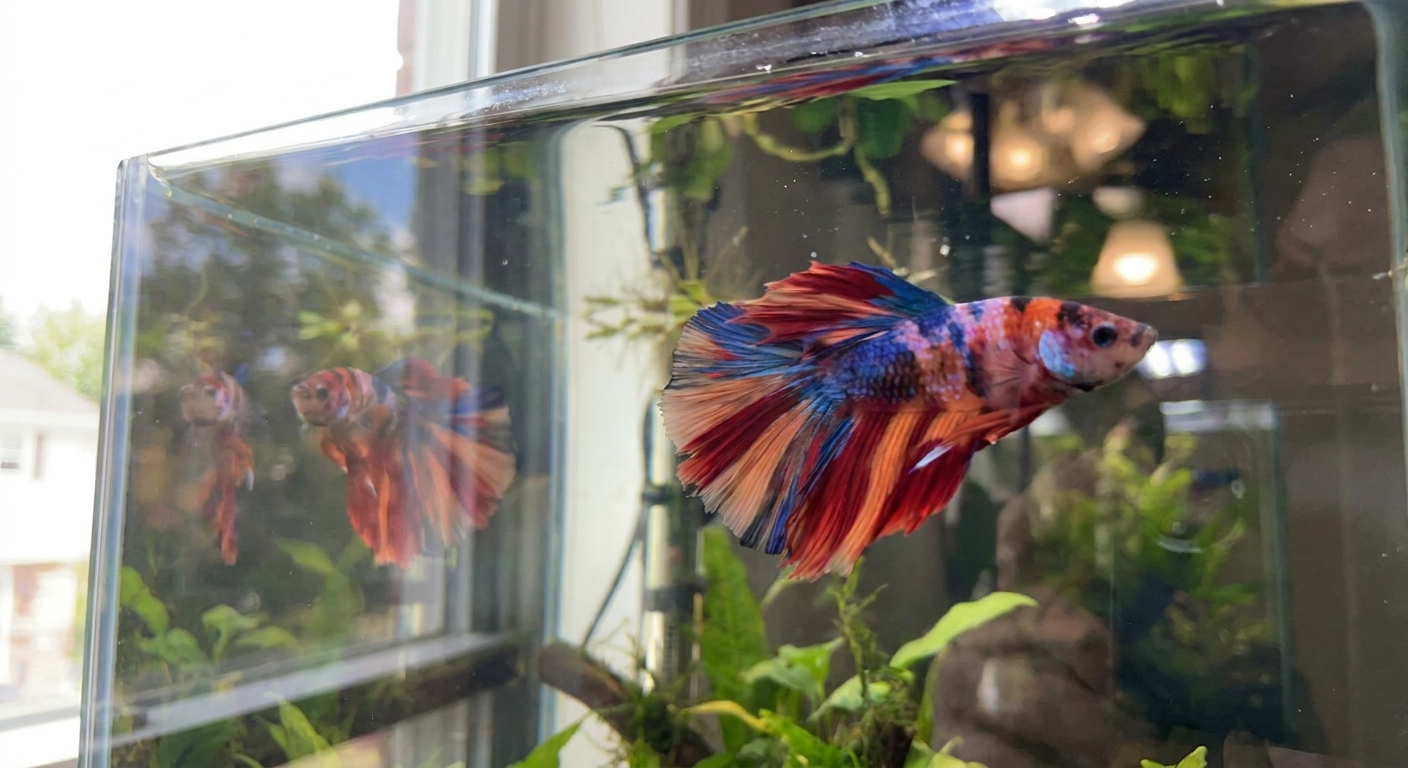
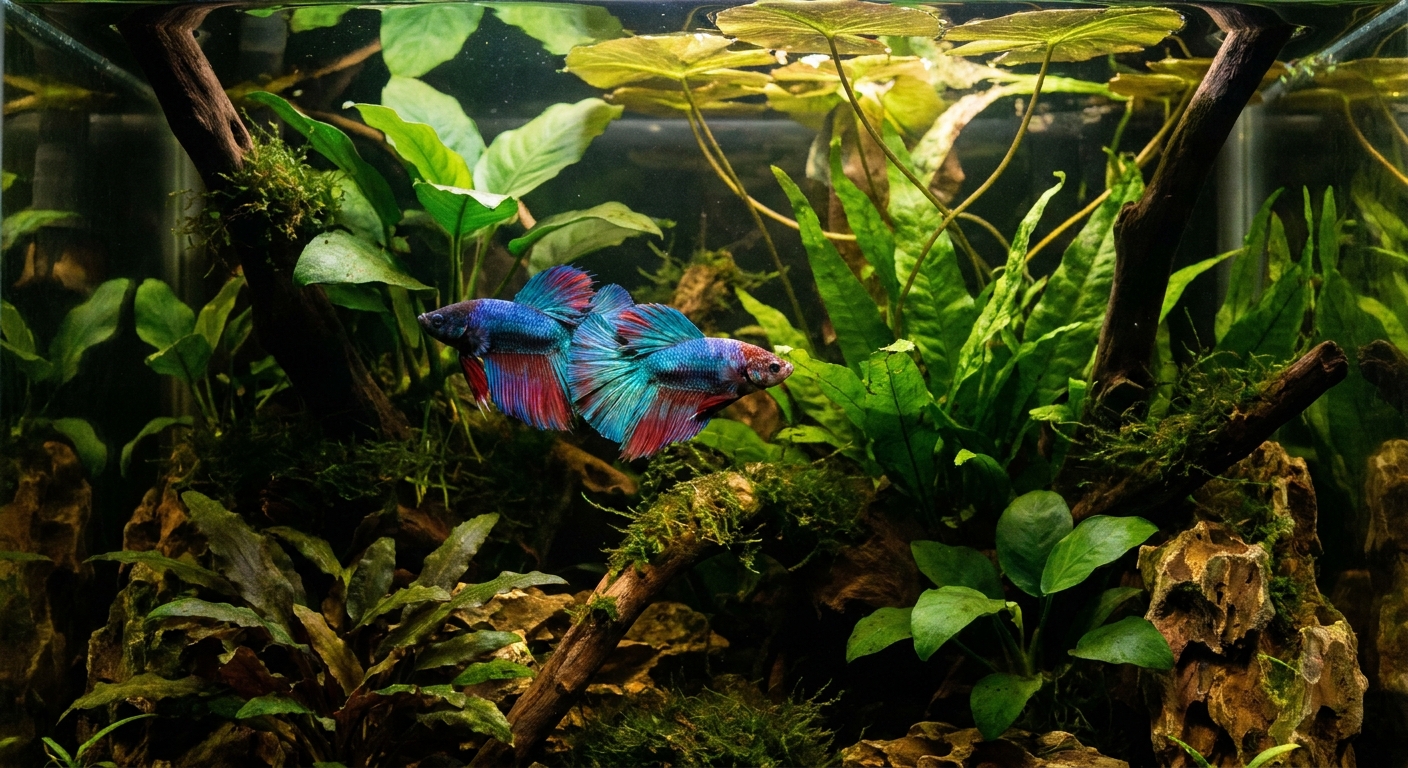
Bettas can flare at their reflection in glass, shiny decor, or bright tank walls. A little flaring is normal. Hours of flaring is a stress marathon, and some bettas redirect that energy into fin biting.
- Check for reflections when the tank light is on and the room is dark
- Add a background to the back or sides of the aquarium
- Increase plant cover to break line-of-sight
- Reduce lighting intensity or duration
5) Boredom and under-stimulation
Yes, bettas can get bored. A bare tank with the same view every day can lead to restless, repetitive behaviors, including fin biting.
Enrichment that often helps:
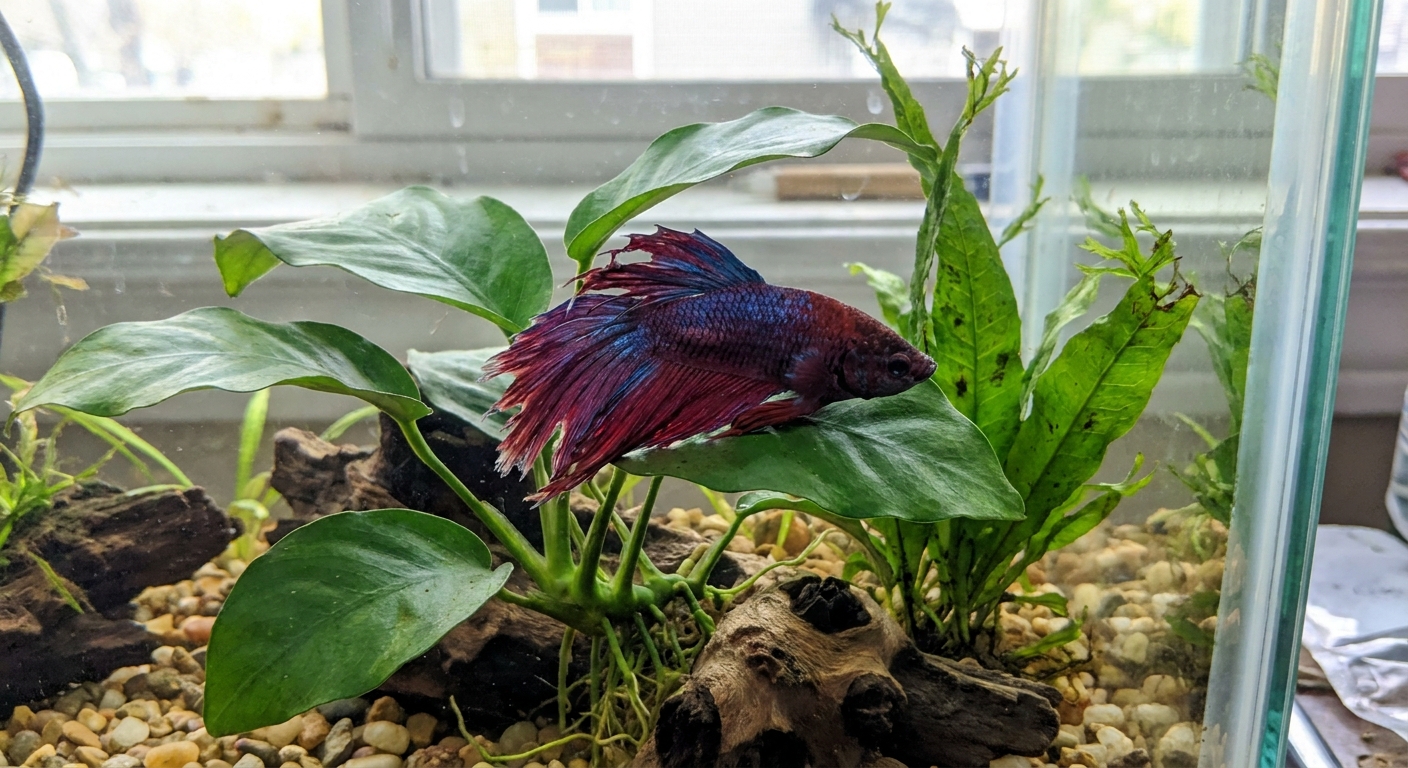
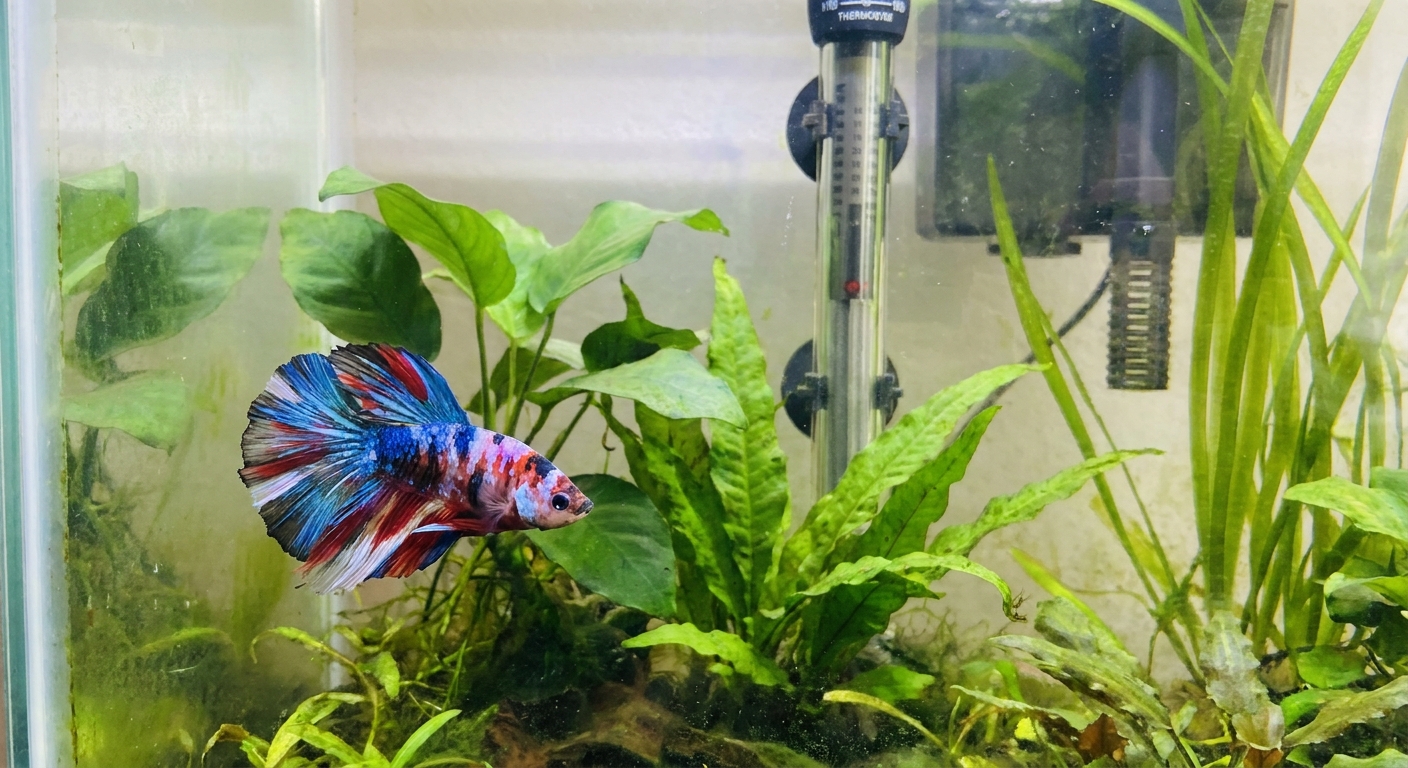
- Live or silk plants arranged to create “paths” and little caves
- Leaf hammocks or smooth resting ledges
- Gentle current and places to escape it
- Occasional safe changes, like a small decor swap during a water change
If you want more ideas, swim through the Behavior & Enrichment section.
6) Heavy fins, strong flow, or snaggy decor
Some bettas, especially long-finned varieties, can get frustrated with fins that drag, snag, or simply feel uncomfortable. If your betta is constantly catching fins on decor, struggling in strong flow, or resting a lot, they may bite to “shorten the problem.”
- Swap sharp or rough decor for smooth options
- Use silk plants instead of hard plastic
- Make sure filter flow is gentle
Plant choice matters more than people think. Here’s help: Live vs Silk Plants for Bettas and Choosing the Right Filter for a Betta Tank.
7) Tank mate stress
Even “peaceful” community fish can create constant pressure through chasing, nipping, or crowding. A betta that cannot relax may start biting their own fins.
If your betta shares a tank, reassess compatibility and space. These guides help sort it out:
8) Small or unstable setup
Chronic stress builds up faster in small, bare, or frequently changing tanks. More water volume is usually more forgiving, which means fewer sudden swings and a calmer fish.
If you are unsure whether your setup is giving your betta enough breathing room (and stable water), these are helpful starting points:
How to stop tail biting
Tail biting tends to improve fastest when you lower stress first, then add calm enrichment, then protect healing fins from infection.
Step 1: A 10-minute stress audit
- Test water for ammonia, nitrite, nitrate
- Check temperature stability (not just the current number)
- Look for reflection hotspots (especially at night)
- Scan the tank for sharp decor or snaggy plastic plants
- Observe: flaring for long stretches, glass surfing, hiding all day, frantic darting
Step 2: Make the tank feel safer
- Add more cover with plants and hiding spaces
- Dim or shorten lighting if it is intense
- Keep the environment consistent for a couple weeks
Stress signs can be subtle. If you want a checklist, visit 7 Signs of Stress in Betta Fish and How to Fix Their Environment.
Step 3: Reduce fin burden
- Ensure gentle filtration and minimal buffeting current
- Provide broad leaves and perches near the surface for resting
- Remove anything rough, poky, or abrasive
Step 4: Keep healing fins protected
When fins are freshly torn, the main goal is to prevent secondary infection.
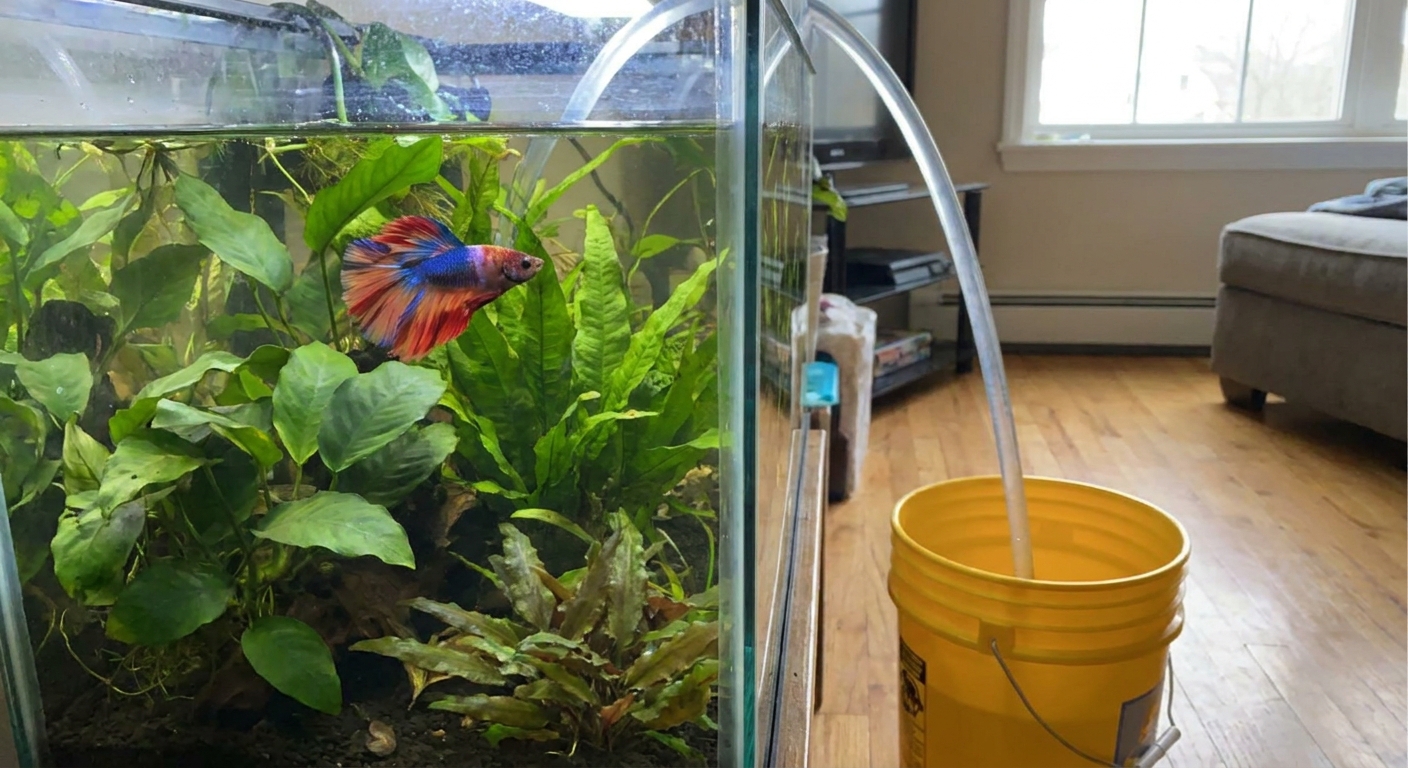
- Keep water pristine with consistent partial water changes
- Do not overfeed, and promptly remove uneaten food
- Watch the fin edges daily for redness, fuzz, darkening, or rapid “melting”
If you do see infection signs, use the fin rot guide linked earlier, and consider moving your betta to a controlled setup if needed. Here’s how: How to Set Up a Hospital Tank for a Sick Betta Fish. A hospital tank should still be warm and stable. It is not about making it sterile, it is about making it calm and easy to keep clean.
Step 5: Add gentle enrichment
Enrichment should lower stress, not create it. Think calm exploration, not constant stimulation.
- Rotate one small decor item during weekly maintenance
- Offer varied foods for interest and nutrition
- Create a “plant jungle” zone and a “resting” zone
Food variety can help bettas feel more engaged at mealtimes. If you want options: 7 Best Frozen and Live Foods for Betta Color and Vitality.
What not to do
- Do not use mirrors for long periods to “tire them out.” Short, controlled mirror time can be enrichment for some bettas, but extended flaring often raises stress and can worsen biting.
- Do not do huge emergency water changes daily unless a test shows dangerous parameters. Big swings can keep stress high.
- Do not add random medications if the damage is clearly self-biting and the water is clean. Treat the cause first, then watch for infection signs.
- Do not leave sharp plastic plants and assume it is only behavior. Physical irritation can be the trigger.
How long fins take to grow back
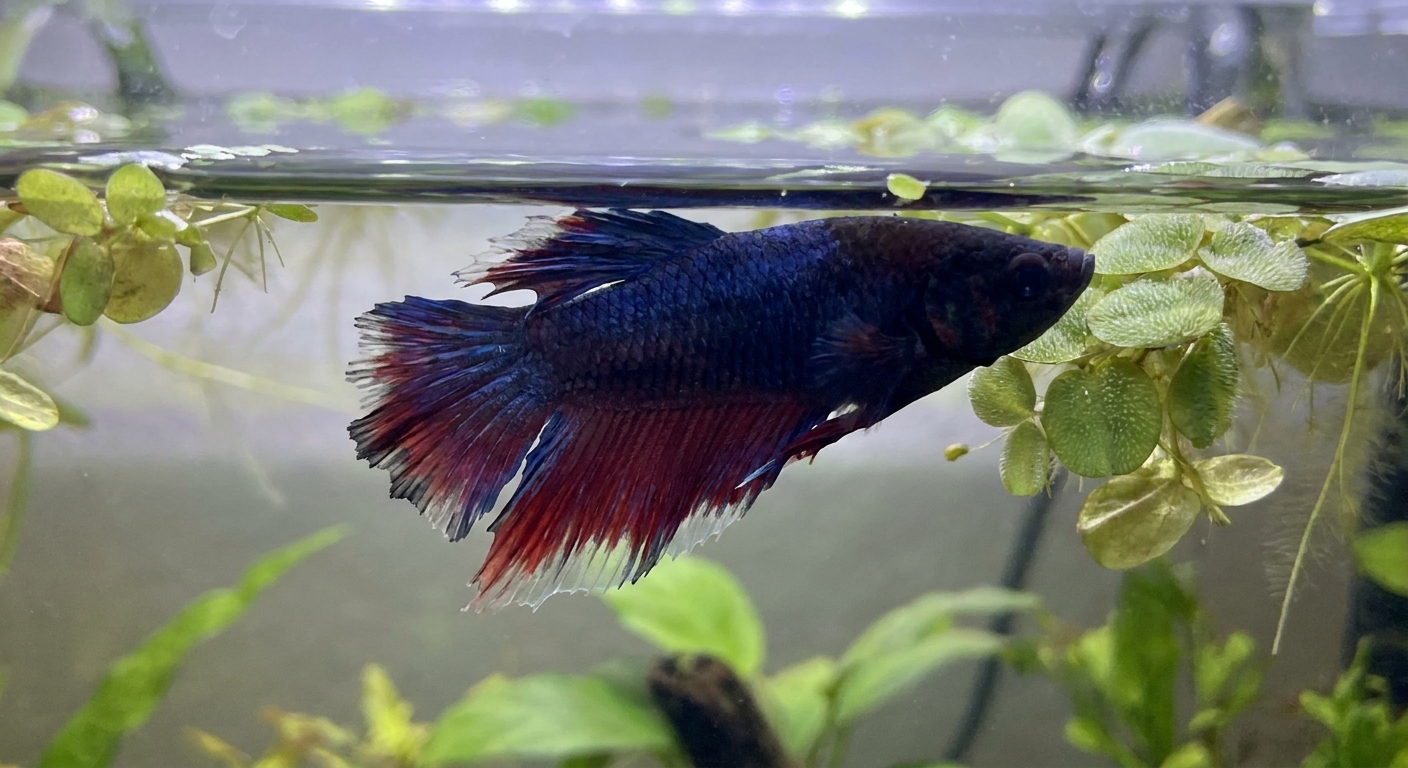
Recovery depends on how much fin was lost and how stable the environment is. Many bettas show the first signs of regrowth in about 1 to 3 weeks if conditions are good, but full regrowth can take 1 to 3 months or longer.
New fin growth often looks like a thin clear or pale edge at first, then gains color over time.
While healing:
- Keep stress low and water clean
- Track progress with a weekly photo under similar lighting
- Act quickly if edges start looking inflamed or fuzzy
When to get extra help
Consider a more hands-on approach if:
- Your betta is biting daily and losing fin rapidly
- You have corrected water quality, flow, lighting, and reflections with no improvement after a couple weeks
- The fin edges look infected or your betta is acting unwell
In those situations, a quiet hospital tank can reduce stimulation and make it easier to maintain excellent water. If you are dealing with other symptoms too, browse the Health & Wellness section for condition-specific guides.
Quick checklist
- Confirm it is self-biting, not just fin rot
- Test water, aim for 0 ammonia and 0 nitrite, keep nitrate low
- Stabilize temperature in a tropical range
- Reduce reflections and harsh lighting
- Add cover, hiding spots, and resting leaves
- Gentle filter flow, no sharp decor
- Reassess tank mates and space
- Keep water extra clean during regrowth
Your betta’s fins are not just decoration, they are part of how they move, rest, and feel safe. With a few thoughtful changes, many self-nippers settle down and start growing those fancy tails back one peaceful day at a time.