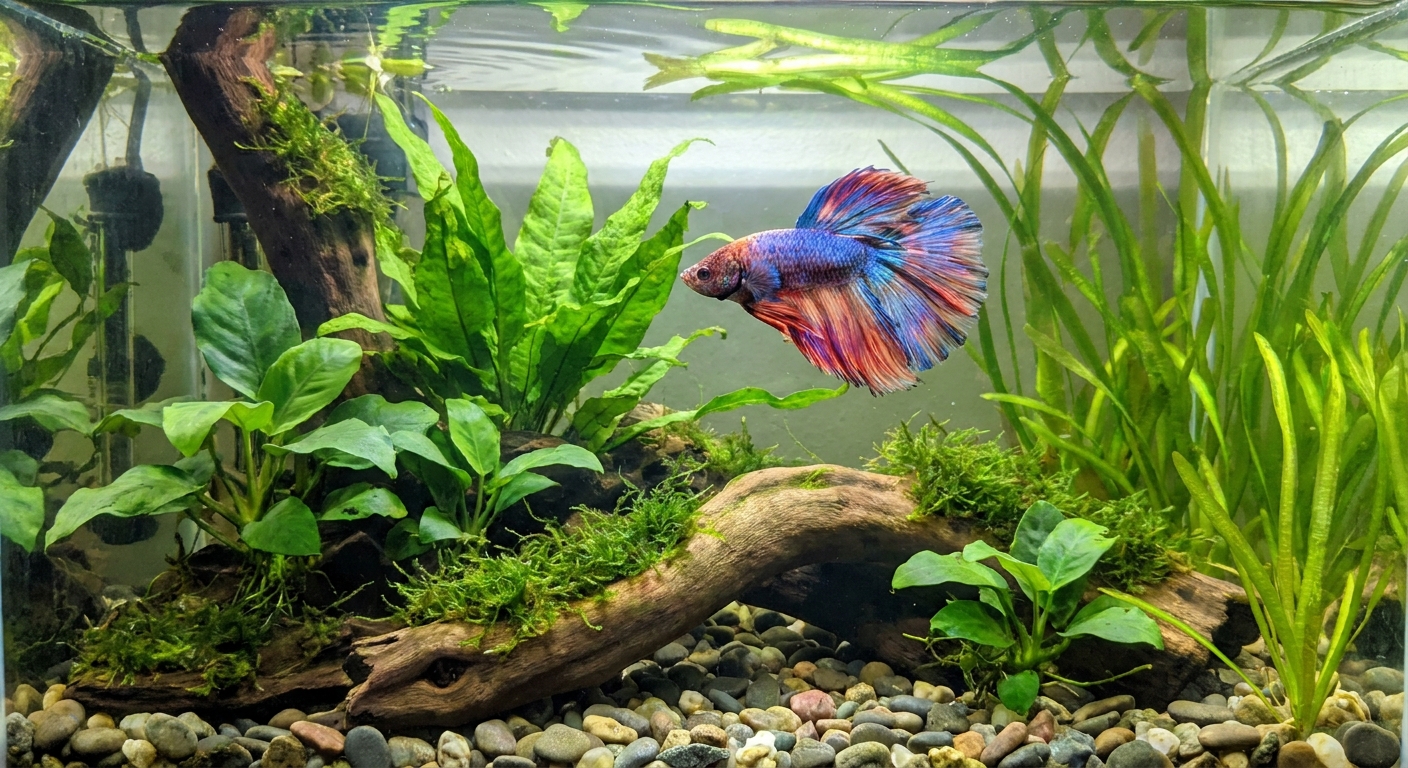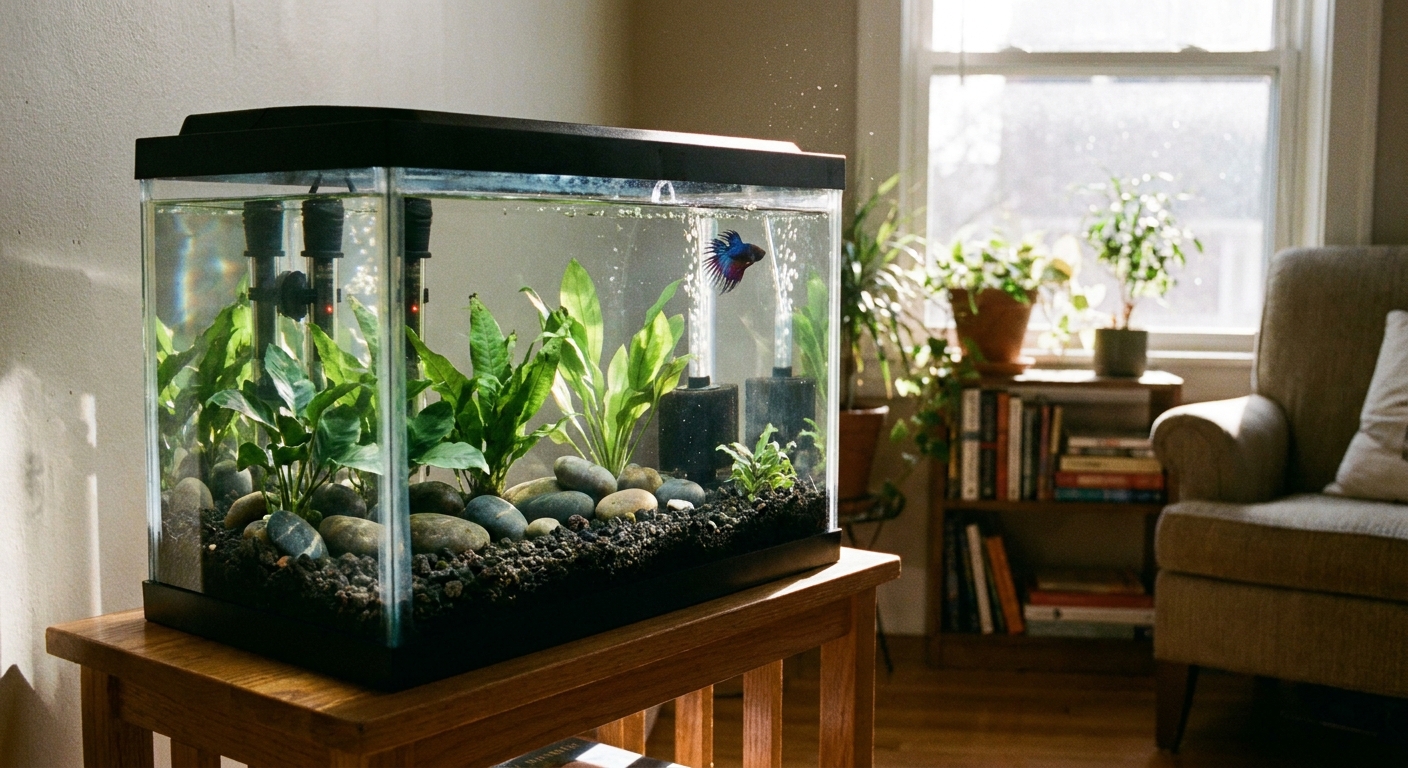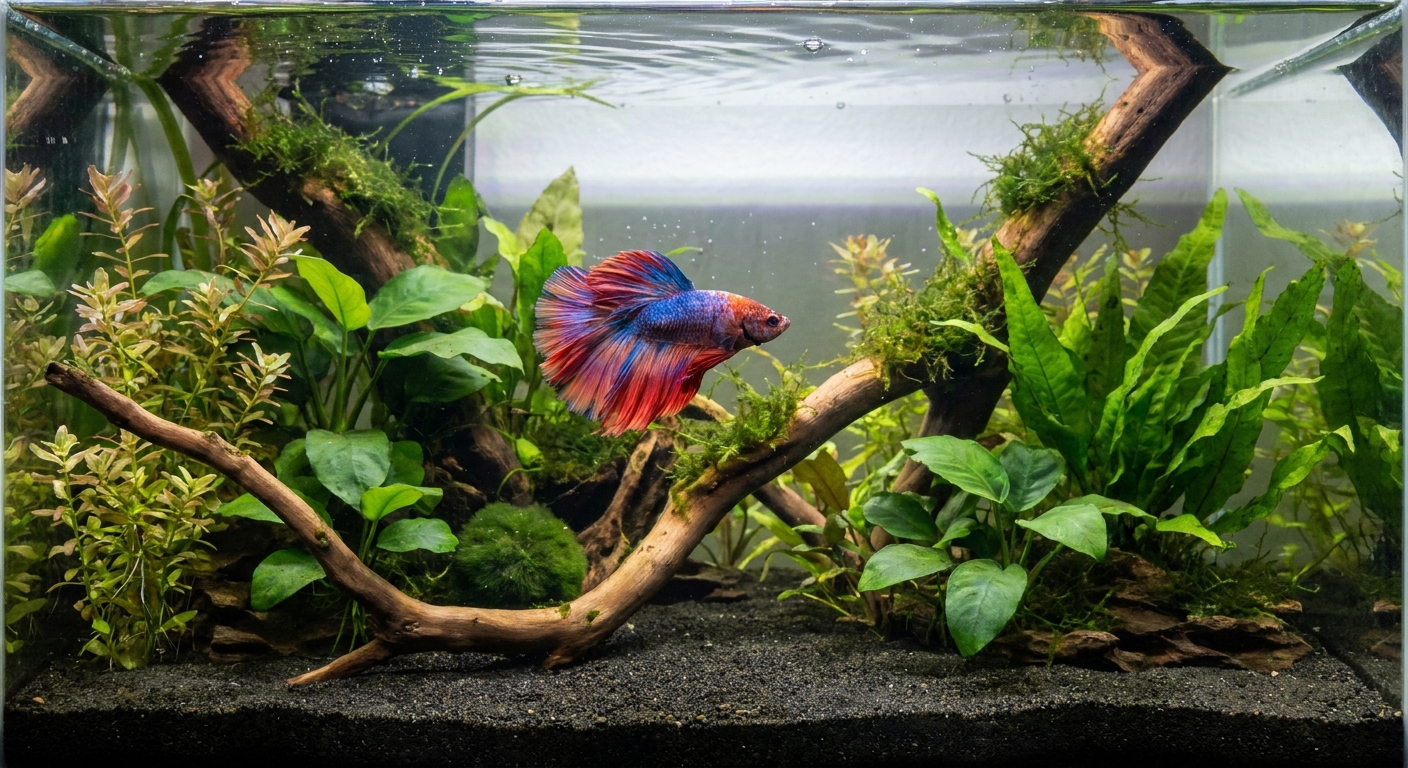

Let's make your tank the happiest little splash in the house! Lighting is one of those sneaky details that can make a betta tank feel calm and natural, or turn it into a bright, stressful stage that grows algae faster than you can say “water change.” The good news is that bettas do not need intense lighting. They need consistent lighting and a dependable day-night rhythm.
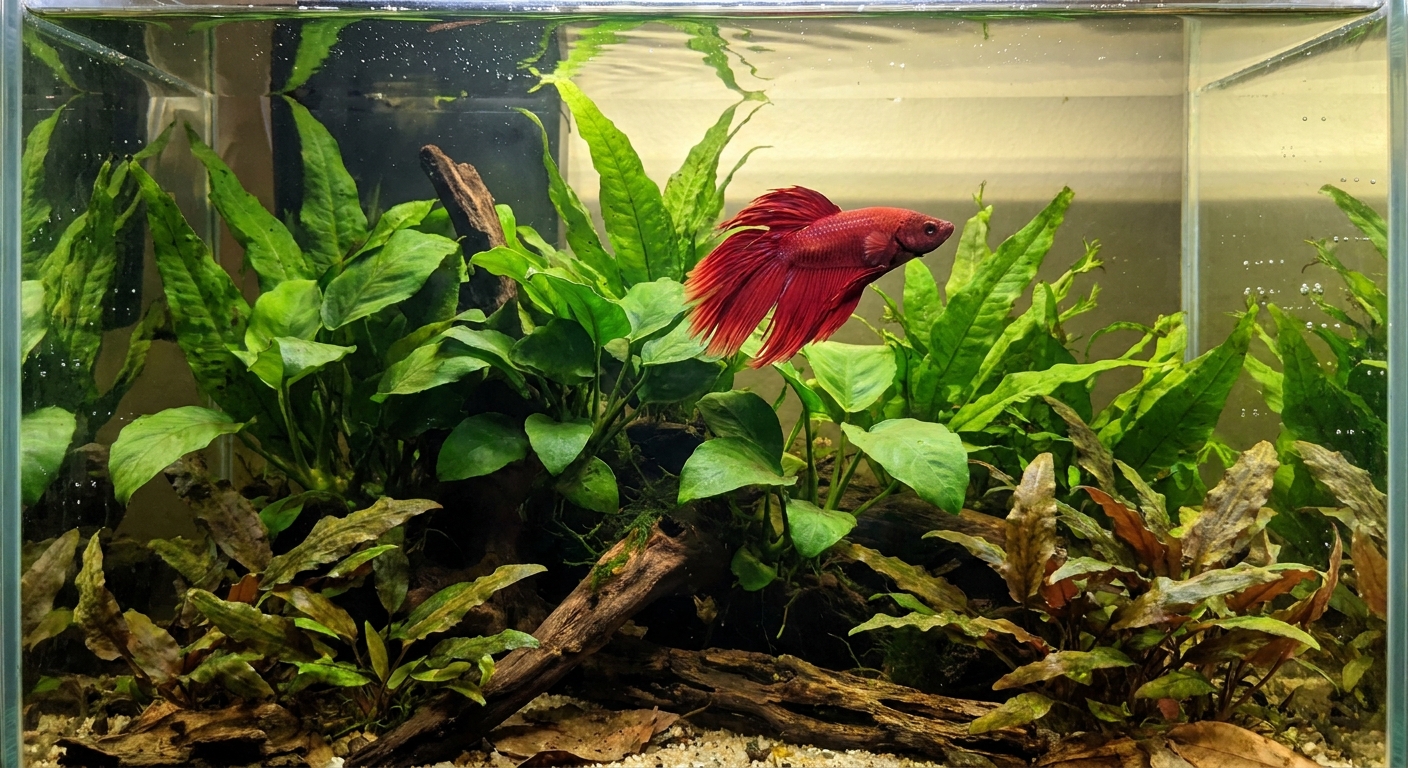
Do betta fish need a light?
Bettas do not need special high-powered lighting for their bodies the way reptiles need UVB. What they do benefit from is:
- A stable day-night cycle so their resting and activity patterns stay healthy.
- Enough visibility for you to observe them clearly and for them to find food easily.
- Appropriate plant lighting if you keep live plants, since plants have their own light needs.
Think of aquarium lighting as creating a gentle “daytime” that supports the whole little ecosystem, then a true “nighttime” where your betta can fully settle down.
How many hours of light does a betta tank need?
For most betta tanks, a solid starting target is 6 to 8 hours of light per day, especially in low-tech setups and in tanks that are algae-prone. Many tanks do beautifully with 7 hours as a sweet spot.
That said, hours and intensity work together. A dimmer light can often run longer, and a very bright light usually needs fewer hours. Some keepers run 8 to 10 hours successfully with balanced planting and gentle intensity.
The exact number depends on what else is in the tank:
- Fish-only or silk plants: 6 to 8 hours is plenty.
- Low-light live plants (anubias, java fern, cryptocoryne): often 7 to 9 hours works well if the light is not too intense.
- Brighter setups or algae-prone tanks: start at 6 hours and adjust slowly.
If you are not sure where to begin, start with 7 hours daily and watch the tank for 2 to 3 weeks before changing anything.
The healthiest day-night cycle for bettas
Bettas typically come from shallow, plant-filled waters where light shifts gradually through the day. In our tanks, the goal is not to mimic sunrise perfectly, but to keep lighting predictable.
A simple daily schedule
- Lights on: same time every day
- Lights off: same time every day
- Total light: 6 to 8 hours to start (then adjust based on plants, algae, and brightness)
- Total dark: the rest of the day, with the room dim at night
If your room is bright late into the evening, your betta may never get a true “night.” Consider turning the tank light off earlier and keeping the area calm and dim later on.
Should the light stay on at night?
Try not to. Constant light can interrupt rest and encourage algae. Bettas also appreciate dark, quiet time. If you want a little evening glow for viewing, keep it short and gentle, and then let nighttime be nighttime.
Sudden on and off can startle
Some bettas get jumpy when the light snaps on in a dark room. If your fixture has a ramp or “sunrise” setting, it can help. If it does not, simply turning on a nearby room light first often makes the switch less dramatic.
Brightness matters more than you think
When a tank seems “too bright,” the fish often tells you first through behavior. Bettas generally prefer a setup that feels sheltered and not spotlighted. If your tank light makes strong reflections in a dark room, it can also make your betta feel exposed.
Signs the light may be too strong
- Hiding constantly, especially during peak lighting hours
- Glass surfing or frantic pacing when the light turns on
- Faded coloration or looking “washed out” (can have multiple causes, but lighting stress can contribute)
- Refusing food during bright periods
These signs are not lighting-only. If they persist, also check temperature and water parameters, and make sure your betta has cover and calm flow.
To soften brightness, you can reduce intensity (if your light is dimmable), shorten the photoperiod, add more plant cover, add floating plants as a natural diffuser, or shift the light higher above the water if your fixture allows it.
Lighting and algae: how to keep the tank clear
Algae is not a sign that you are doing everything wrong. It is a sign that the tank has light + nutrients, and algae is taking advantage. Adjusting lighting is often one of the easiest levers to pull safely while you also tidy up feeding and maintenance.
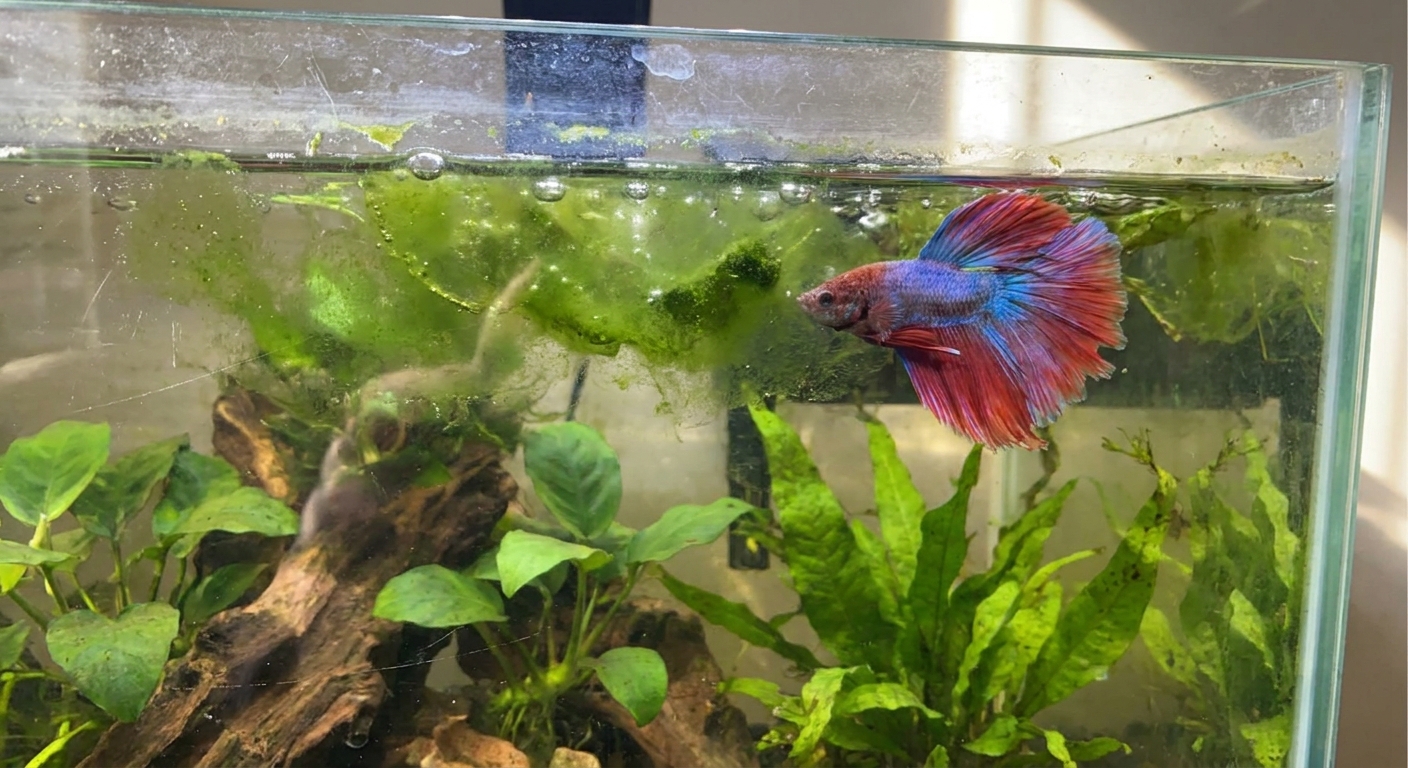
What causes algae blooms in betta tanks?
- Too many hours of light (very common)
- Light that is too intense for the plant load
- Direct sunlight hitting the tank
- Extra nutrients from overfeeding, decaying plant matter, or infrequent maintenance
Quick algae control plan (without stressing your betta)
- Set a timer and keep lighting consistent at 6 to 8 hours to start.
- Move the tank away from windows or block direct sun with a curtain.
- Feed a touch less if food regularly reaches the substrate uneaten.
- Manually remove algae during water changes so it cannot keep spreading.
- Add fast-growing plants if you want live plants, since they compete for nutrients.
Big tip from the bubble nest department: do not increase lighting “for the plants” unless you also balance nutrients and plant mass. More light without balance often means more algae.
Best types of lights for a betta tank
You do not need a fancy setup to get this right. The best aquarium light for a betta tank is usually an LED fixture that is reliable, not overly harsh, and easy to put on a timer.
What to look for
- Adjustable brightness (dimming is wonderful if your tank is bright)
- Timer or outlet timer compatibility for a stable schedule
- Even coverage across the tank, not a single intense hot spot
- A spectrum suitable for plants if you keep live plants
Blue “moonlight” settings
Blue night lights are popular, but they are not necessary for bettas and can still count as “light” to algae and to a fish that is trying to rest. If you use a moonlight mode, keep it very dim and not all night long.
Lighting for planted betta tanks
Live plants and bettas are a dreamy match. Plants create shade, reduce stress, and make the tank feel like a cozy jungle instead of an empty box. But plants also influence your lighting choice and schedule.
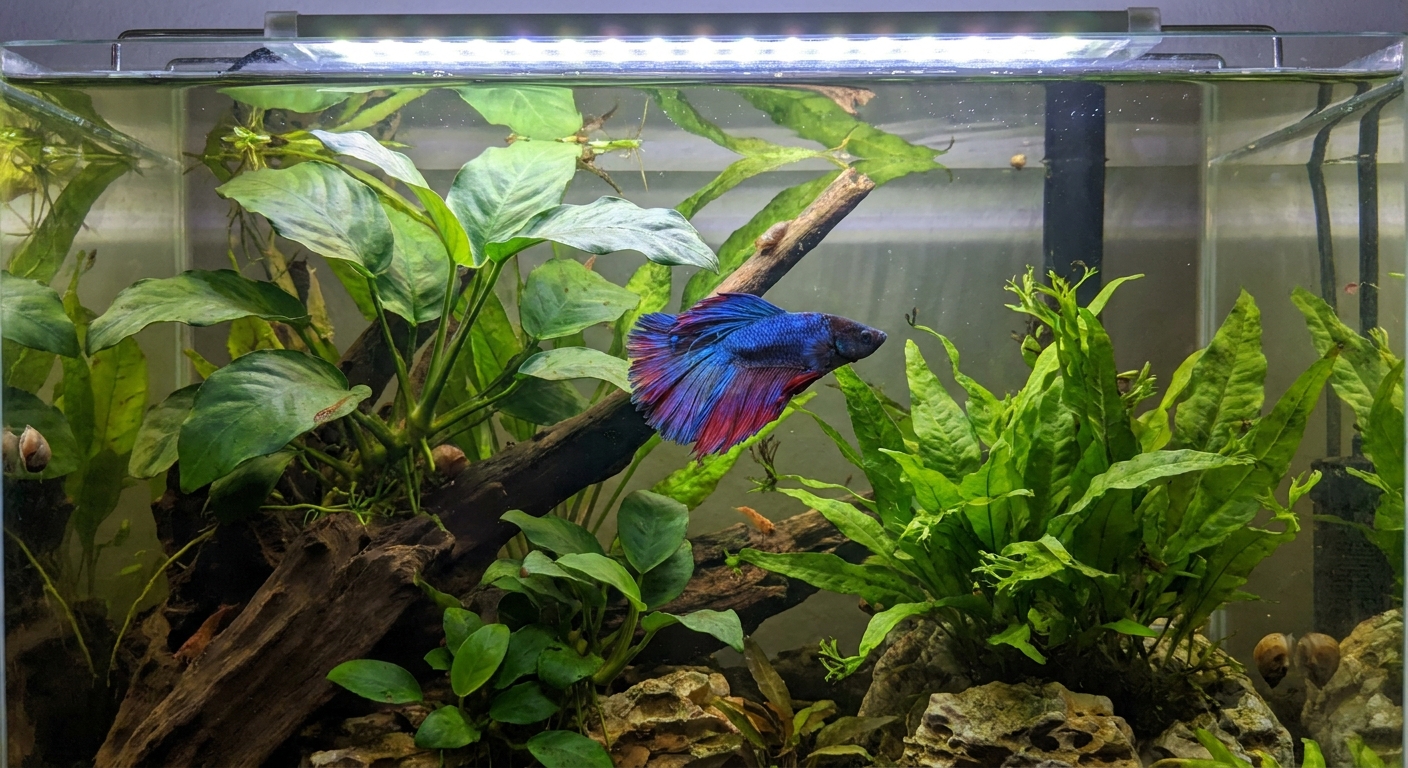
Low-light plants are betta besties
If you want an easier lighting routine with fewer algae battles, choose plants that thrive in lower light. Many betta favorites do.
A practical planted schedule
- Start at 7 hours per day.
- If plants struggle and algae is low, increase by 30 minutes and wait 2 weeks.
- If algae rises, decrease by 30 to 60 minutes and wait 2 weeks.
Small adjustments and patience beat big changes every time.
Common lighting mistakes
Mistake: Leaving the light on “just in case”
Fix: Use a timer. Consistency helps your betta relax and helps you control algae.
Mistake: Putting the tank in a sunny window
Fix: Choose a bright room but avoid direct sunbeams on the glass. Sunlight is powerful and unpredictable.
Mistake: Bright tank, no hiding places
Fix: Add broad-leaf plants, floating plants, or decor that creates shade and breaks line-of-sight. Floating plants are especially handy here because they soften light like a little leafy lampshade. For more ideas, visit Behavior & Enrichment.
Mistake: Chasing algae by buying stronger cleaners instead of adjusting light
Fix: Cut photoperiod first, then improve feeding and maintenance. Lighting control is gentle and effective.
Quick lighting checklist
- Photoperiod: start with 6 to 8 hours, then adjust based on intensity, plants, and algae
- Dark period: lights fully off at night
- Use a timer for consistency
- Avoid direct sunlight
- Provide shade and cover with plants or decor
- If algae appears, reduce hours or intensity before changing everything else
FAQ
Is it okay to keep the tank light on for 10 to 12 hours?
It can be okay for some planted tanks with balanced nutrients, gentle intensity, and lots of plant mass. For many betta tanks, especially newer or low-tech ones, it is a fast track to algae. If you are seeing algae, stress, or constant hiding, try stepping back to 6 to 8 hours and reassessing brightness.
My betta flares at the glass more when the light is on. Why?
Brighter light can increase reflections, making a betta think there is a rival nearby. Reducing brightness, adding plants to break reflections, and keeping room lighting more even can help.
Does ambient room light count?
Yes. A bright room can provide plenty of daytime cues even if the tank light is off. On the flip side, a very bright tank light in an otherwise dark room can create strong reflections and make your betta feel on display.
Do bettas need darkness to sleep?
They do best with a true rest period. Darkness and a calmer room at night support natural downtime and reduce stress.
Should I turn the light off during water changes?
You can, especially if your betta startles easily. Many fish stay calmer in dimmer conditions during maintenance.
One last cozy glow
The perfect betta lighting plan is not the brightest light on the shelf. It is the one that keeps your tank calm, your schedule consistent, and your algae under control. Start with a gentle daytime, a real nighttime, and plenty of leafy shade, then fine-tune from there.
If you are dialing in the rest of your setup too, swim over to Tank Setup & Environment for more cozy, clear-water essentials.