
Let’s make your tank the happiest little splash in the house! Bettas are curious, clever fish, and a few minutes of gentle training can turn mealtime into enrichment. The secret is simple: tiny rewards, clear cues, and stopping before your betta gets tired or frustrated.
Before you start
Training should feel like a game, not a chase. If your betta is flaring nonstop, hiding, clamping fins, breathing fast, or glass surfing, pause training and focus on comfort first. Stress can also make learning harder.
When to wait on training
- New fish still settling in: Give newly purchased or rehomed bettas time to acclimate before adding “homework.”
- Any visible illness or injury: Fin damage, bloating, lethargy, or anything that looks off is a reason to pause.
- Unstable or uncycled tank: If parameters are swinging or the tank is still cycling, focus on stability first. If you need help there, start with how to cycle a new betta fish tank.
- Train in short sessions: 2 to 5 minutes once or twice a day is plenty.
- Use tiny treats: One pellet piece, one thawed frozen bite, or a very small portion per reward.
- Keep water clean: Uneaten food can contribute to ammonia over time. If a piece sinks, remove it when you can.
- Choose a calm time: Try training before a regular meal, when your betta is interested but not frantic.
- Hands off: No tapping the glass, no chasing with tools, no scooping your betta for “practice.”
If you are seeing stress signals, this guide can help you reset the environment: 7 signs of stress in betta fish and how to fix their environment.
What you need
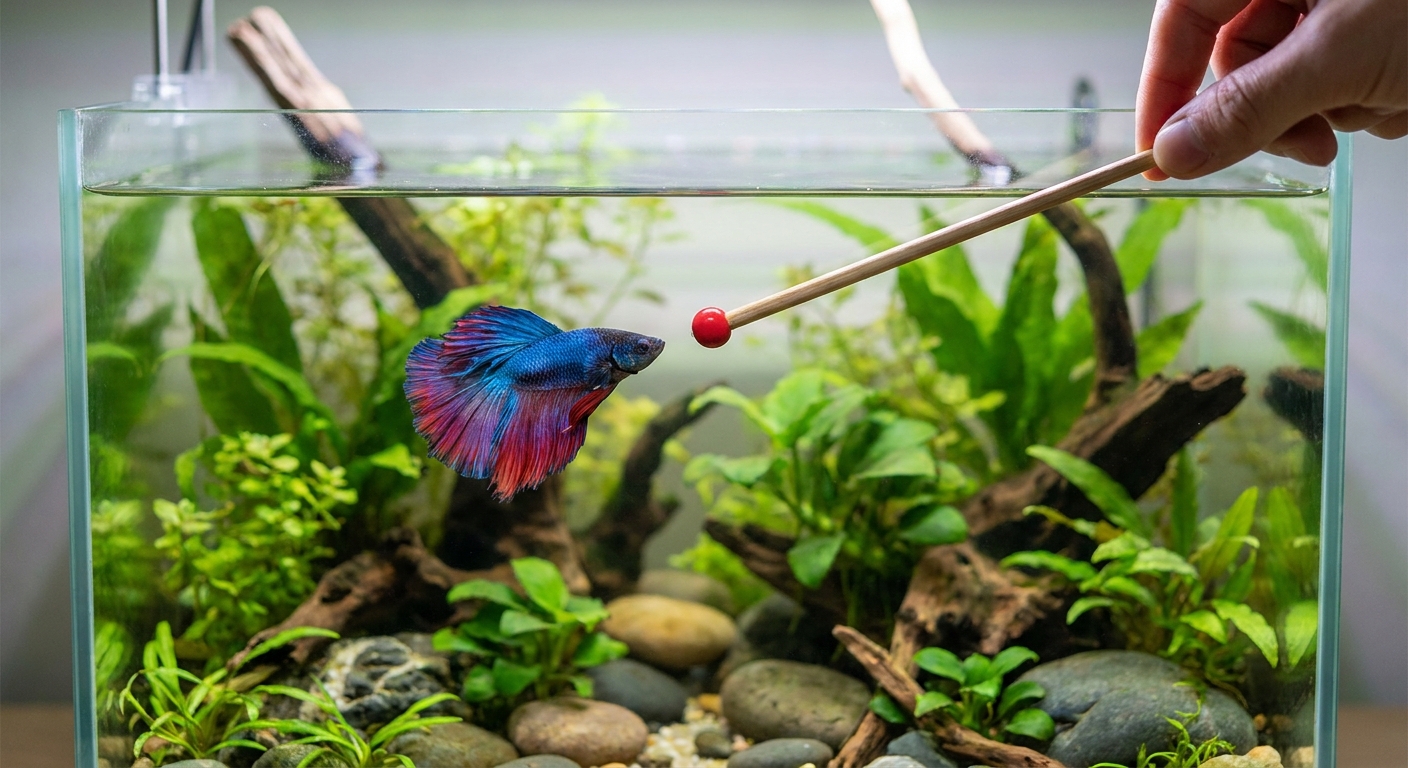
- A target: A dedicated aquarium feeding stick is ideal. A smooth plastic straw can work too. If you use a cotton swab stick, only use one that is smooth plastic and remove the cotton completely. Avoid paper, cardboard, or wooden stems that can soften or splinter.
- A hoop: A small aquarium-safe ring, a plant ring, or a DIY hoop made from airline tubing formed into a circle and secured with an aquarium-safe connector. Skip anything with metal parts.
- High-value food rewards: Bettas often work best for frozen or live treats. See options here: 7 best frozen and live foods for betta color and vitality.
- A small net or turkey baster: For quick cleanup of dropped food.
Tool hygiene
Rinse your target and hoop with warm water, dechlorinated water, or old tank water. Never use soap or household cleaners on anything that goes into the tank.
Food note: Training rewards count as part of the daily diet. If your betta earns treats during training, slightly reduce the regular meal to avoid overfeeding. For a feeding baseline, visit how much and how often to feed a betta fish.
How bettas learn
The kindest way to teach tricks is positive reinforcement. Your betta does a behavior, and immediately earns a reward. With repetition, the behavior becomes a predictable way to get the treat.
Timing matters
Deliver the food as quickly as you can after the correct behavior (ideally within a couple of seconds). The faster the reward, the easier it is for your betta to connect the action to the treat.
One cue at a time
Use the same target and the same motion every time. Consistency is the magic that makes training feel easy.
Step 1: Target training
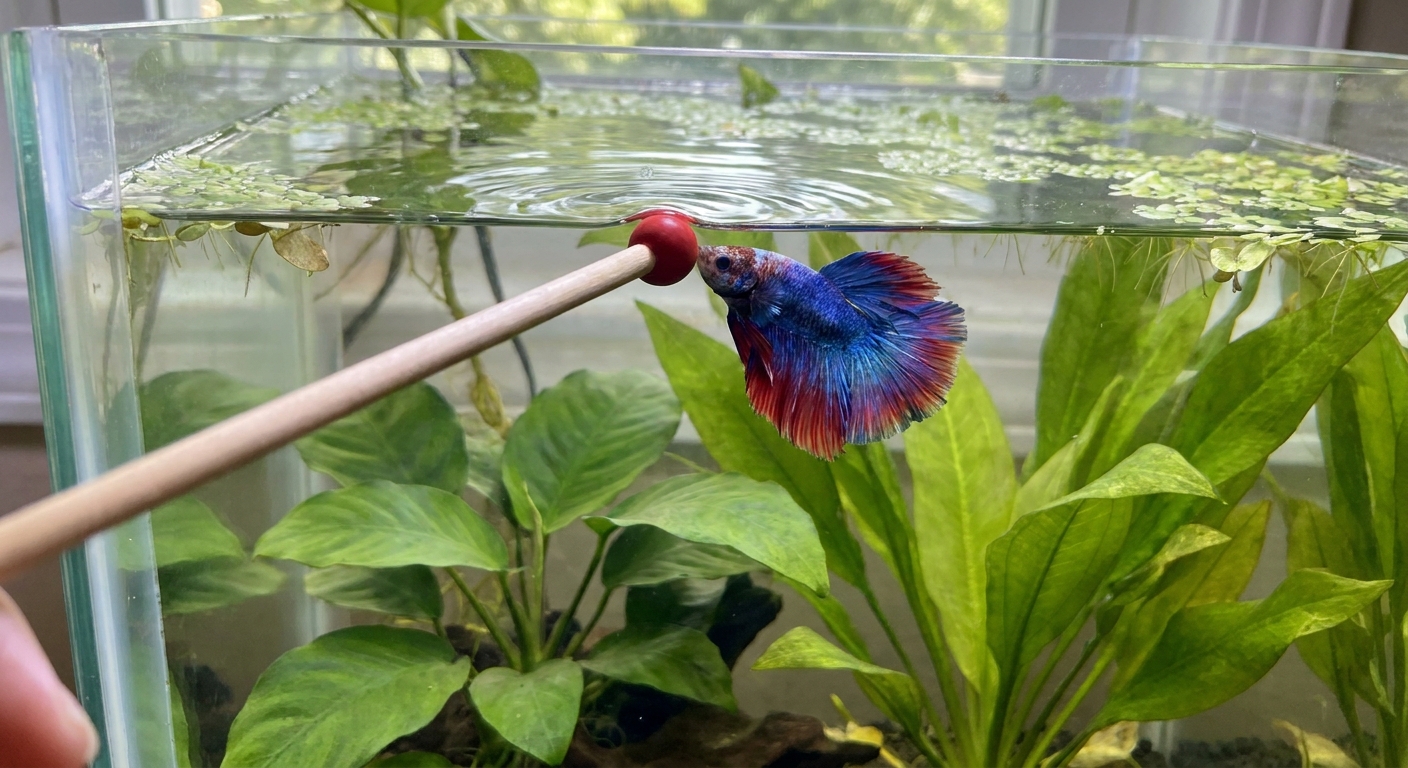
Target training teaches your betta to swim toward and gently touch a specific object. Once your betta understands the target, you can guide them through hoops, around obstacles, and into a feeding spot without stress.
How to do it
- Pick a training spot: Use the same front corner of the tank each time so your betta knows where the game happens.
- Show the target: Hold the tip 1 to 2 inches from your betta, just under the surface.
- Wait for curiosity: The first win can be as small as your betta swimming toward it or looking at it.
- Reward immediately: The moment your betta touches the target (or comes very close at first), drop a tiny treat.
- Repeat 5 to 10 times: End on a success, then stop.
Make it harder slowly
- Move the target a little farther away each time.
- Guide your betta left and right, then slightly down, then back up.
- Keep movements smooth and slow. Quick motions can trigger flaring.
If your betta bites the target
A gentle bump is fine. If they clamp down or thrash, your target may look too much like food. Switch to a different shape or color, and avoid wiggling it like prey.
Step 2: Teach a station
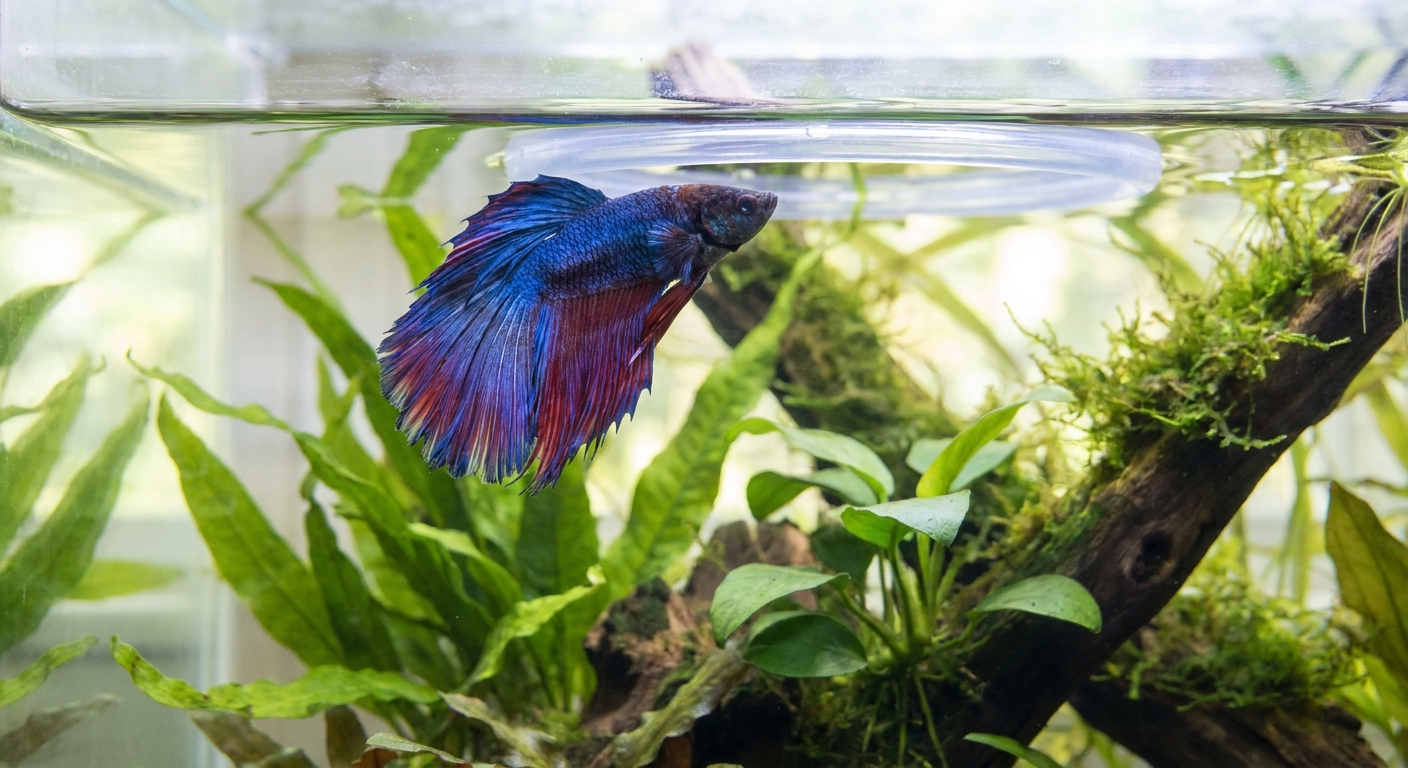
Before hoops and jumps, it helps to teach a station: a specific place where food appears. This can help reduce begging at the glass and makes training feel organized.
How to teach it
- Choose the station: A floating feeding ring or a consistent corner works well.
- Lead with the target: Guide your betta to the station.
- Reward only at the station: Food appears there and only there.
- Add a simple cue: For example, tap the target gently on the water surface near the station once, then present the target.
This station behavior is also handy if your betta ever needs careful feeding due to appetite issues. If meals are being refused, see why is my betta fish not eating?.
Step 3: Swim through a hoop
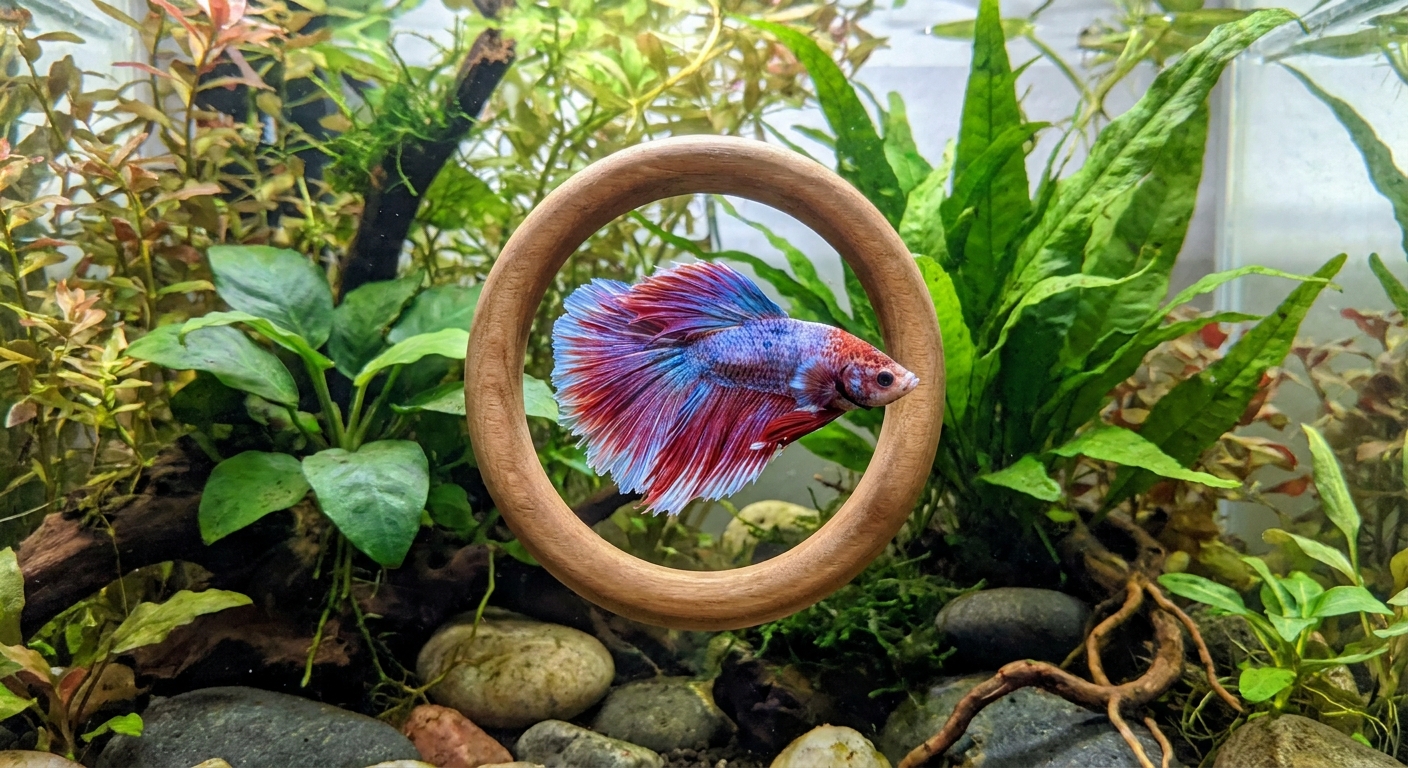
Hoop training is essentially target training with a fun obstacle. The goal is for your betta to swim through the center of a hoop calmly, not squeeze or scrape.
Hoop safety checklist
- Use a smooth hoop: No sharp edges or rough plastic that can snag fins.
- Go large first: Start with a hoop opening that looks roomy for your betta’s fins.
- Place it in open water: Avoid tight gaps near hard decor.
How to teach the hoop
- Introduce the hoop: Put it in the tank for a day so it becomes normal.
- Hold or position the hoop: Keep it steady a few inches under the surface.
- Target through the center: Put the target tip on the far side of the hoop so your betta must swim through to touch it.
- Reward the swim-through: Treat immediately when your betta passes through the hoop.
- Repeat, then fade the target: Over time, point at the hoop first, then use the target less and less.
Level up ideas
- Move the hoop slightly left or right between repetitions.
- Try two hoops spaced apart, once one hoop is easy.
- Lower the hoop a little deeper, but keep it in comfortable swimming space.
Step 4: Jump feeding (optional)
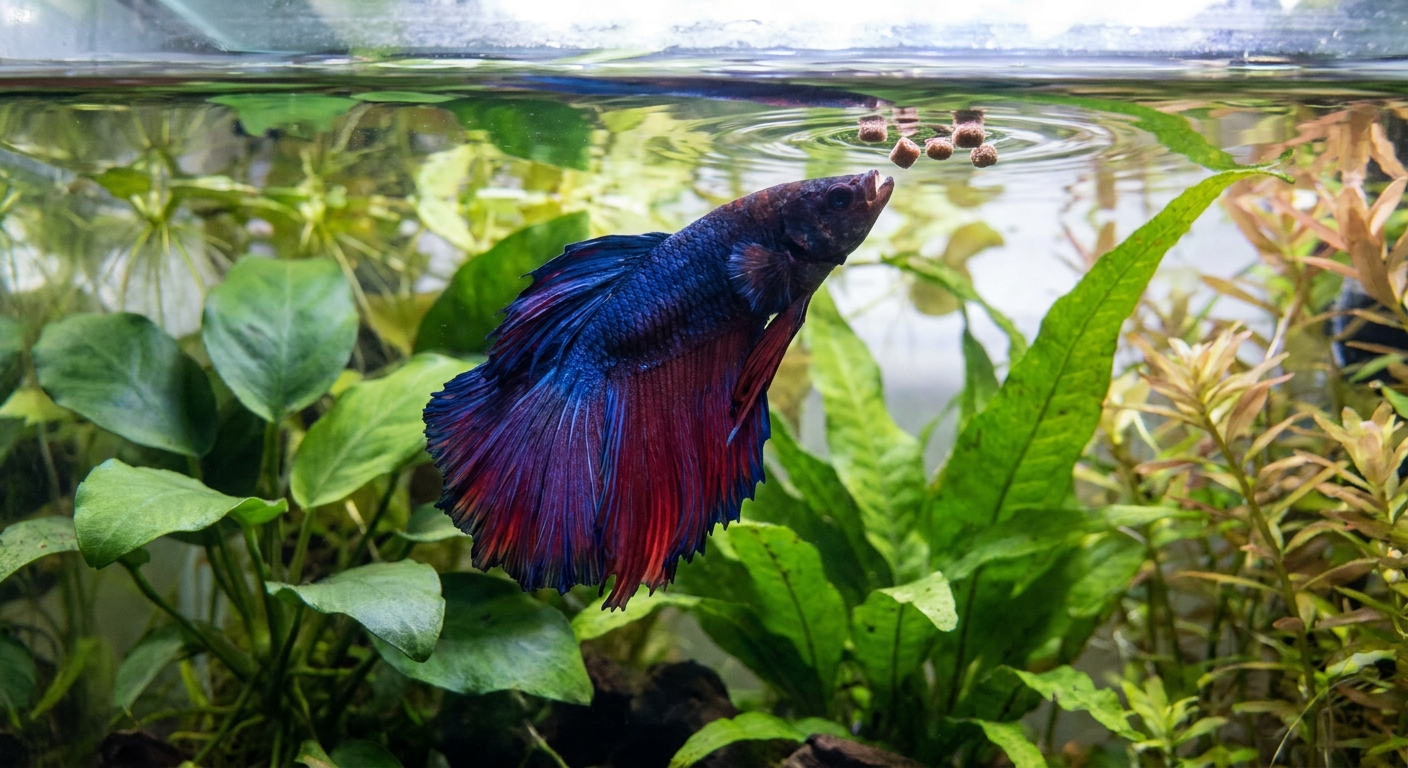
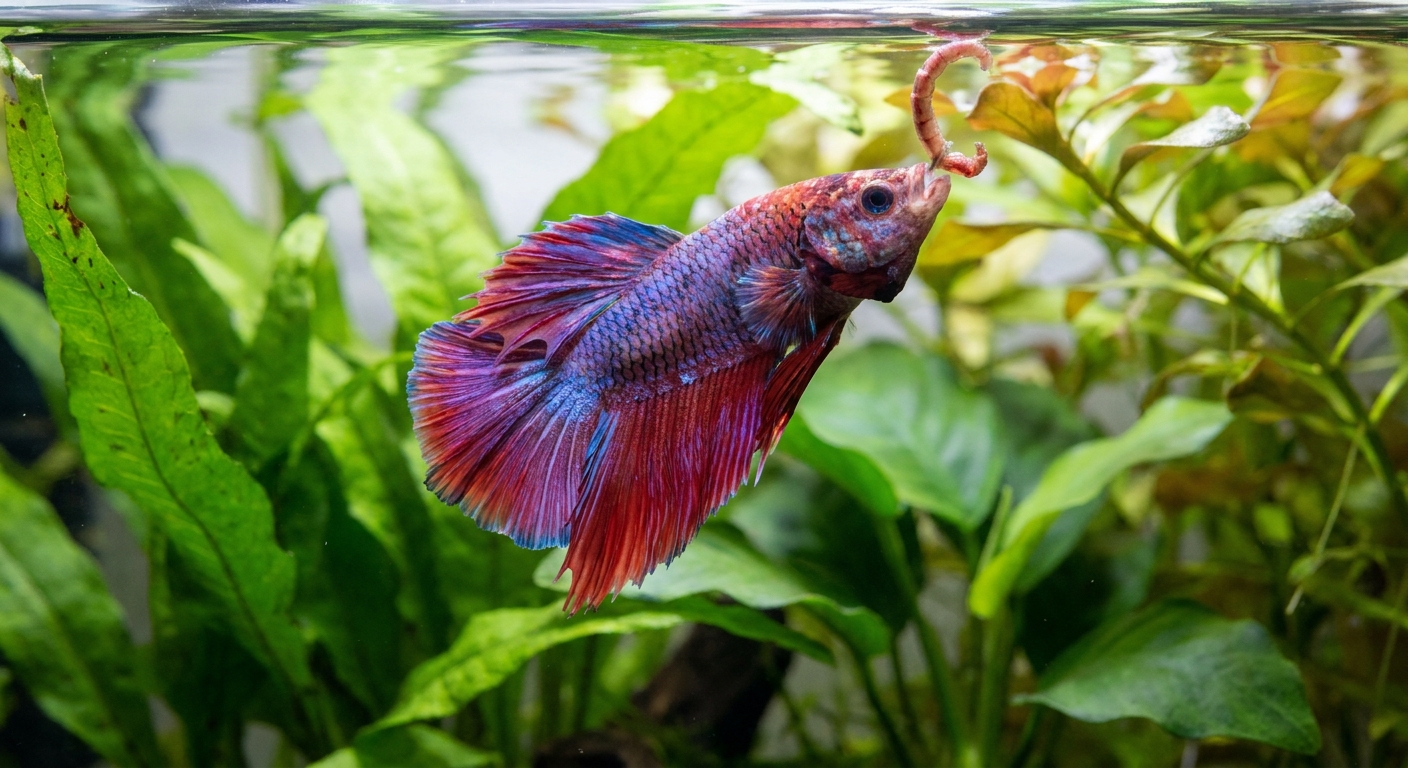
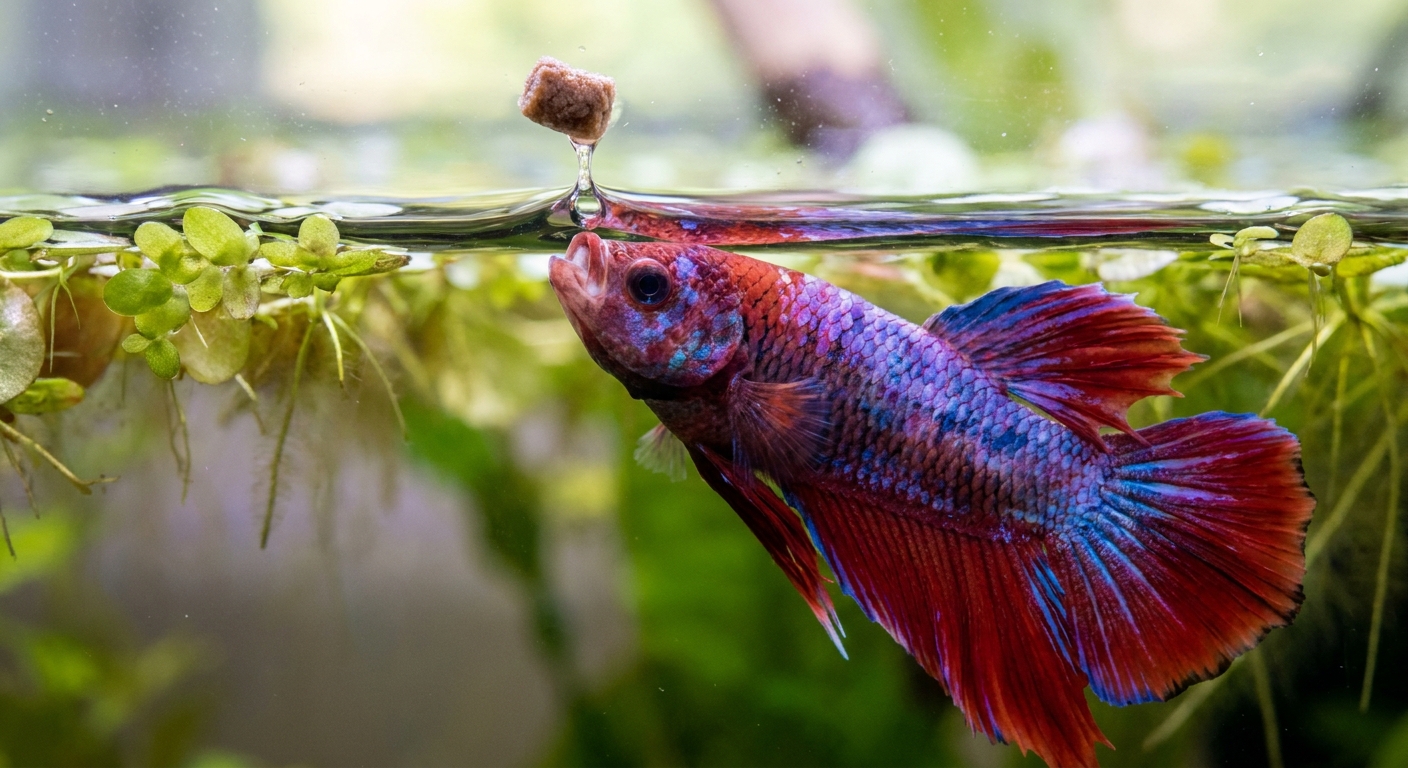
Some bettas love a tiny hop at the surface to grab food. Others find it startling. This trick should always be low height, low excitement, and fully optional.
Important: Avoid making your betta launch out of the water. Big jumps can risk injury, and repeated surface commotion can cause stress.
Lid check: Make sure your tank has a secure lid and no escape gaps before you practice any surface hop behavior.
How to teach a tiny hop
- Use the station area: Start where your betta already expects food.
- Hold food just above the surface: About a quarter inch to half inch above the waterline.
- Wait for the reach: Reward the moment your betta takes it, even if it is mostly a sip at first.
- Keep it minimal: If your betta has to leap, the treat is too high.
When to skip it
- If your betta is a clumsy striker and misses often.
- If your tank has a strong current at the surface.
- If your betta is stressed, recovering from illness, or has fin damage.
Simple tricks to try
Once your betta understands “touch the target,” you can create a whole little enrichment routine without adding stress.
Follow the finger
Use your fingertip on the outside of the tank like a target. Move slowly. Reward at the station after a short follow. Do not tap.
Figure-eight swim
Guide with the target in a sideways 8 pattern. Reward at the end of the loop.
Spin
Make a small circle with the target. Reward a partial turn at first, then a full 360-degree spin later.
Go to bed
Target your betta toward a broad leaf or cave entrance, then reward when they enter. If your betta seems unsure, keep the hide very open and inviting. For cozy options, see essential tank decorations for hiding spots and enrichment.
How often to train
Training is enrichment, but food is still food. A good rhythm for many bettas is:
- Frequency: 4 to 6 days per week
- Session length: 2 to 5 minutes
- Rewards: About 5 to 12 tiny bites total per session, which is often roughly 1 to 3 pellets worth of food in total (depending on pellet size and your betta’s normal diet)
Watch the belly. A gently rounded belly after eating is normal. A swollen, lopsided, or persistently distended belly is a sign to reduce food and pause treat-heavy training. If constipation is a concern, this can help: betta constipation: daphnia vs the pea myth.
Many keepers also use an occasional light day or fast day as part of routine feeding. If that fits your care plan, keep training gentle on that day or skip it: the betta fasting day.
Troubleshooting
My betta flares at the target
- Use a thinner, less “threatening” target (like a clear straw).
- Move slower and keep the target farther away.
- Train with the lights slightly dimmer, if your tank lighting is very bright. For lighting comfort, see betta fish lighting requirements.
My betta ignores the target
- Try training right before a meal.
- Switch to a higher-value reward (like a tiny thawed frozen bite).
- Check temperature and filtration. Low energy can mean the tank is too cool or stressful. A stable heater setup matters: betta tank temperature and heater placement.
My betta gets too excited and misses food
- Use larger, easier-to-see treats cut into small pieces, rather than dust-sized crumbs.
- Slow everything down. Reward calm approaches, not frantic darting.
- End the session early and try again later.
My betta seems stressed afterward
- Shorten sessions and reduce repetition.
- Add more resting spots near the surface like broad silk or live leaves.
- Double-check water quality and maintenance routine. A stable tank makes training much easier: betta tank cleaning routine and water change schedule.
Setup tips for training
Bettas learn best when they feel secure. A few environmental tweaks can turn training into a calm daily ritual.
- Gentle flow: Strong currents make precision tricks frustrating.
- Clear sightlines: Keep one open area for hoop work and targeting.
- Enrichment balance: Provide plants and hides so your betta can choose breaks.
If you are still building your habitat, start here: setting up a betta tank for the first time.
FAQ
Can you really train a betta fish?
Yes. Bettas can learn patterns and cues, especially when the training is consistent and reward-based. Some learn in a day or two, others need a couple of weeks. Personality matters.
Do bettas recognize their owner?
Bettas often learn to associate a specific person with food and interaction. It is best to think of it as recognition through routine, movement, and cues, rather than a human-style relationship.
Is a laser pointer safe for bettas?
It is best to skip lasers. They can encourage frantic chasing and frustration because the “prey” can never be caught, which is the opposite of calm enrichment. A physical target stick is clearer and kinder.
Will training make my betta more aggressive?
Not when it is done gently. Training usually channels energy into a predictable routine. If your betta becomes more reactive, shorten sessions and avoid exciting motions that trigger flaring.
A simple 7-day plan
If you want a tidy starting path, try this:
- Days 1 to 2: Target touch at close distance
- Days 3 to 4: Target follow to a station, then reward only at the station
- Days 5 to 6: Introduce hoop and target through it
- Day 7: Mix easy reps (target) with one new challenge (hoop position change), then finish with a guaranteed success
Keep it playful, keep it tiny, and keep it calm. Your betta is not auditioning for a talent show. They are just enjoying a little brain-boosting enrichment in a sparkling, safe home.