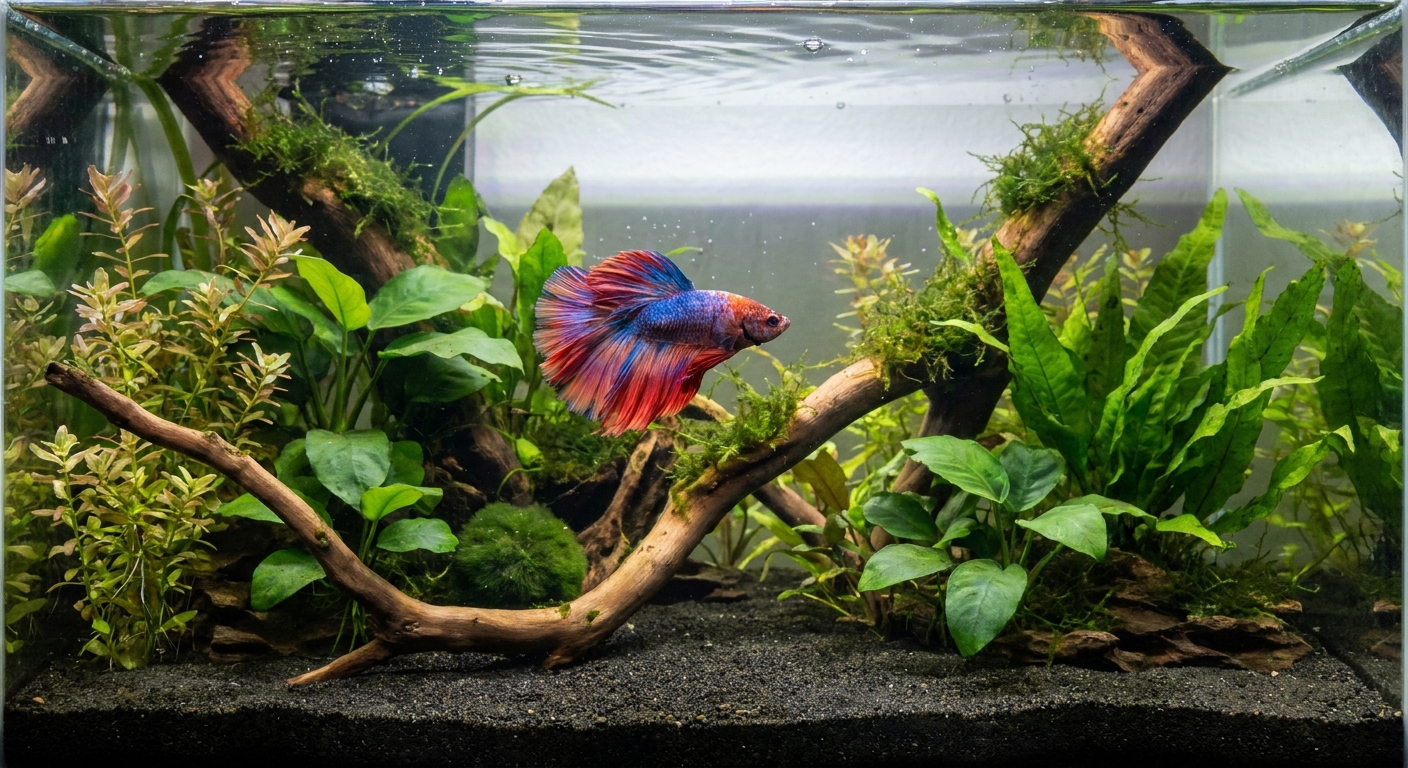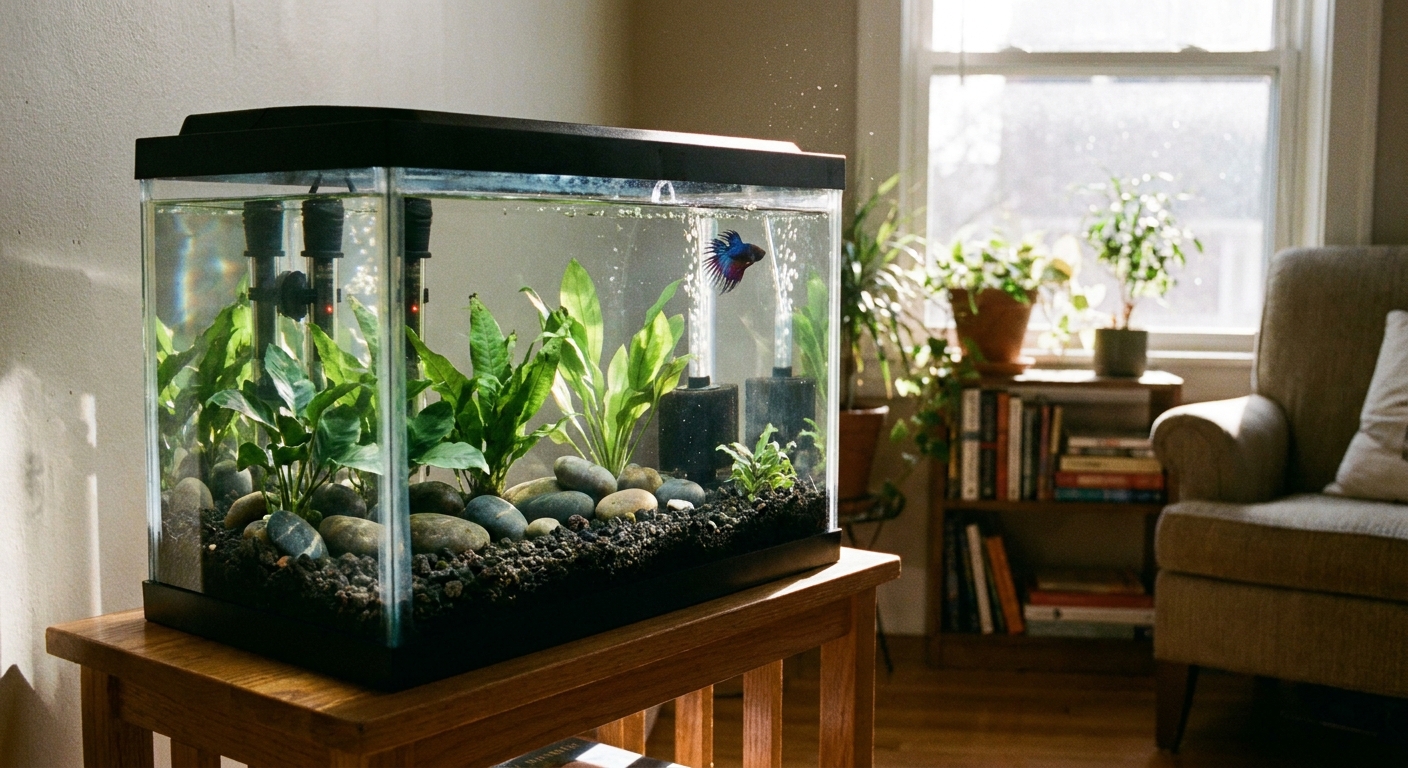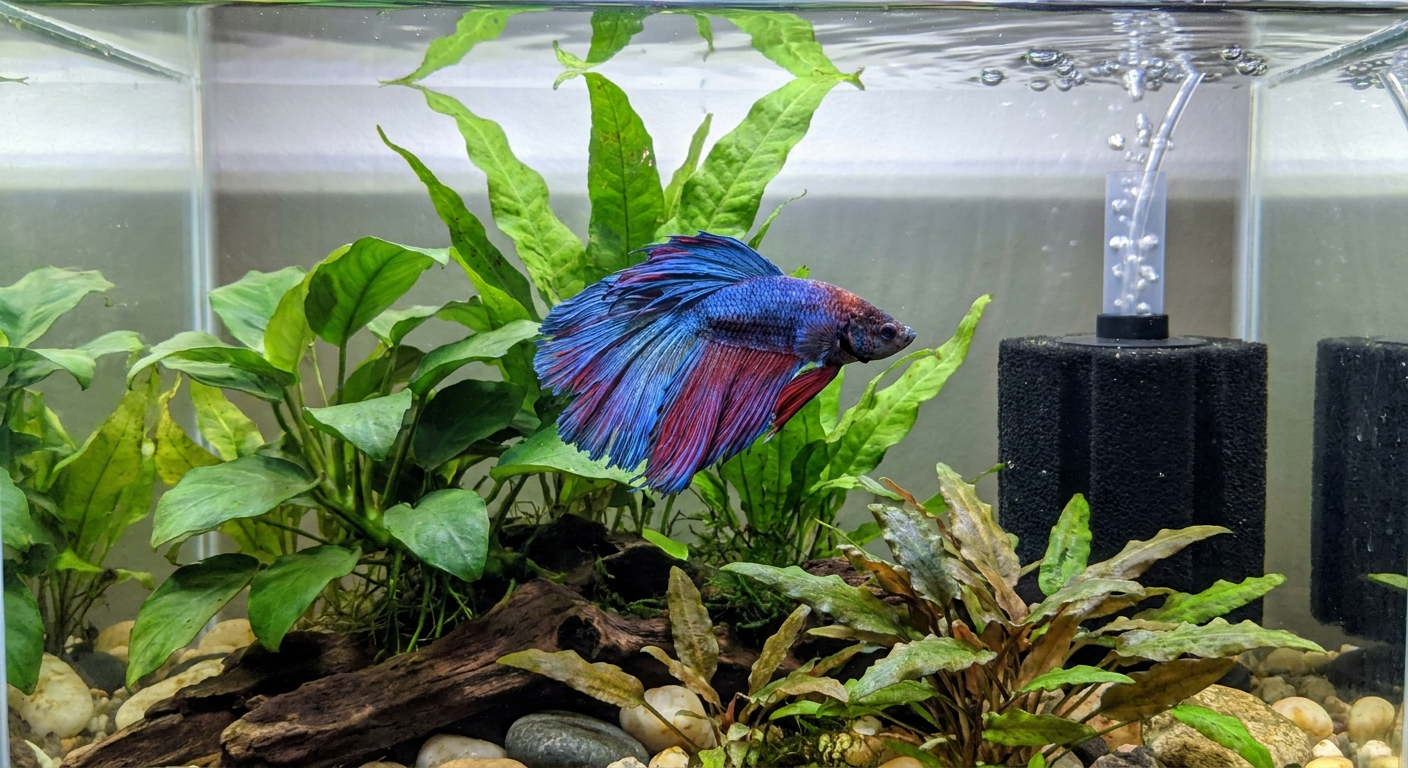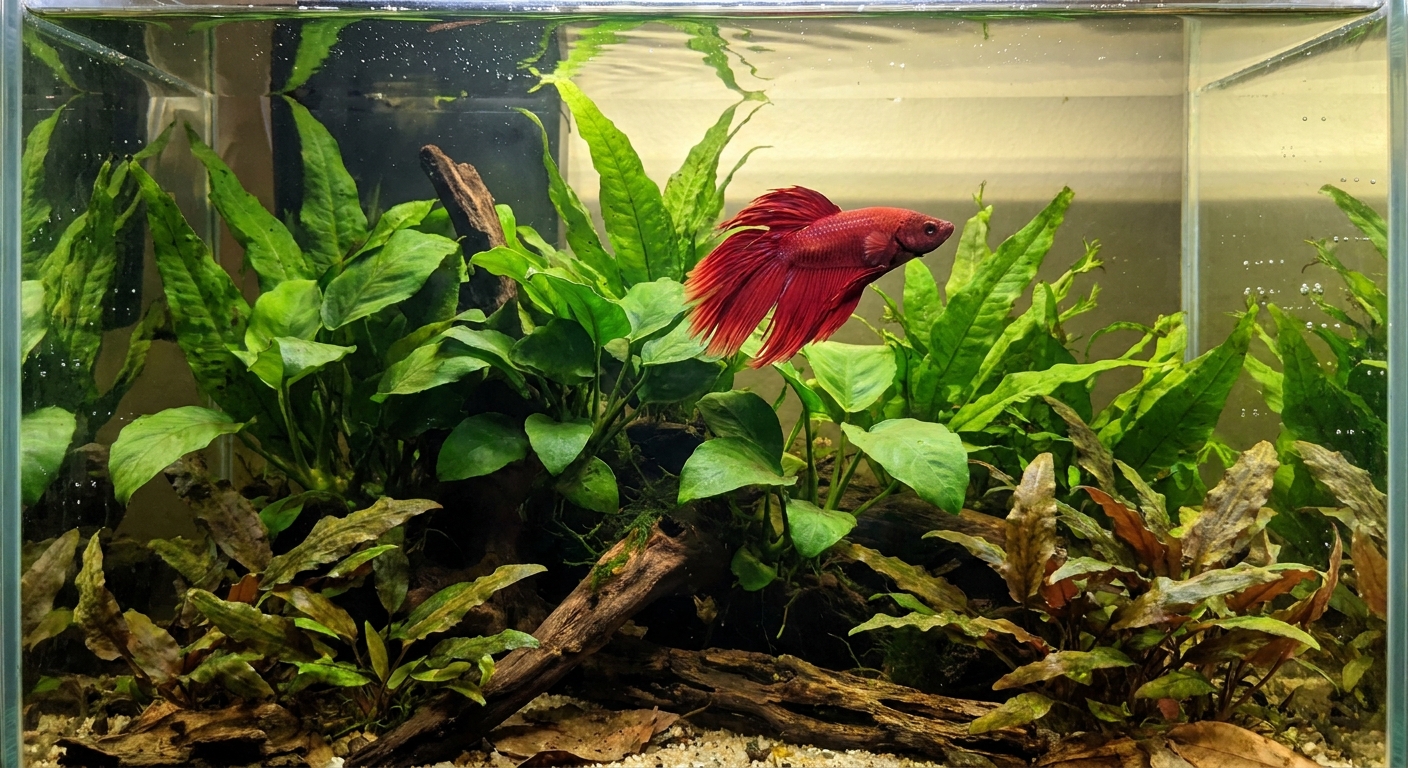
Let's make your tank the happiest little splash in the house. When it comes to betta-friendly decorating, plants are not just pretty. They are a big part of fin safety, stress levels, and even how steady your tank feels day to day. The two most betta-popular options are live aquarium plants and silk plants. Both can work beautifully, as long as you pick and place them with your betta’s delicate fins in mind.
What bettas need from plants
Bettas love to weave, perch, and rest. The safest plant setup supports those natural behaviors without snagging fins.
- Soft contact points for brushing past leaves.
- Resting spots near the surface so your betta can lounge and gulp air easily.
- Breaks in line of sight to reduce stress and pacing.
- More stable parameters with fewer “oops” spikes from missed debris or heavy feeding.
If you are still building the basics, head over to Tank Setup & Environment for more home-building notes for your finned friend.
Live plants: natural helpers
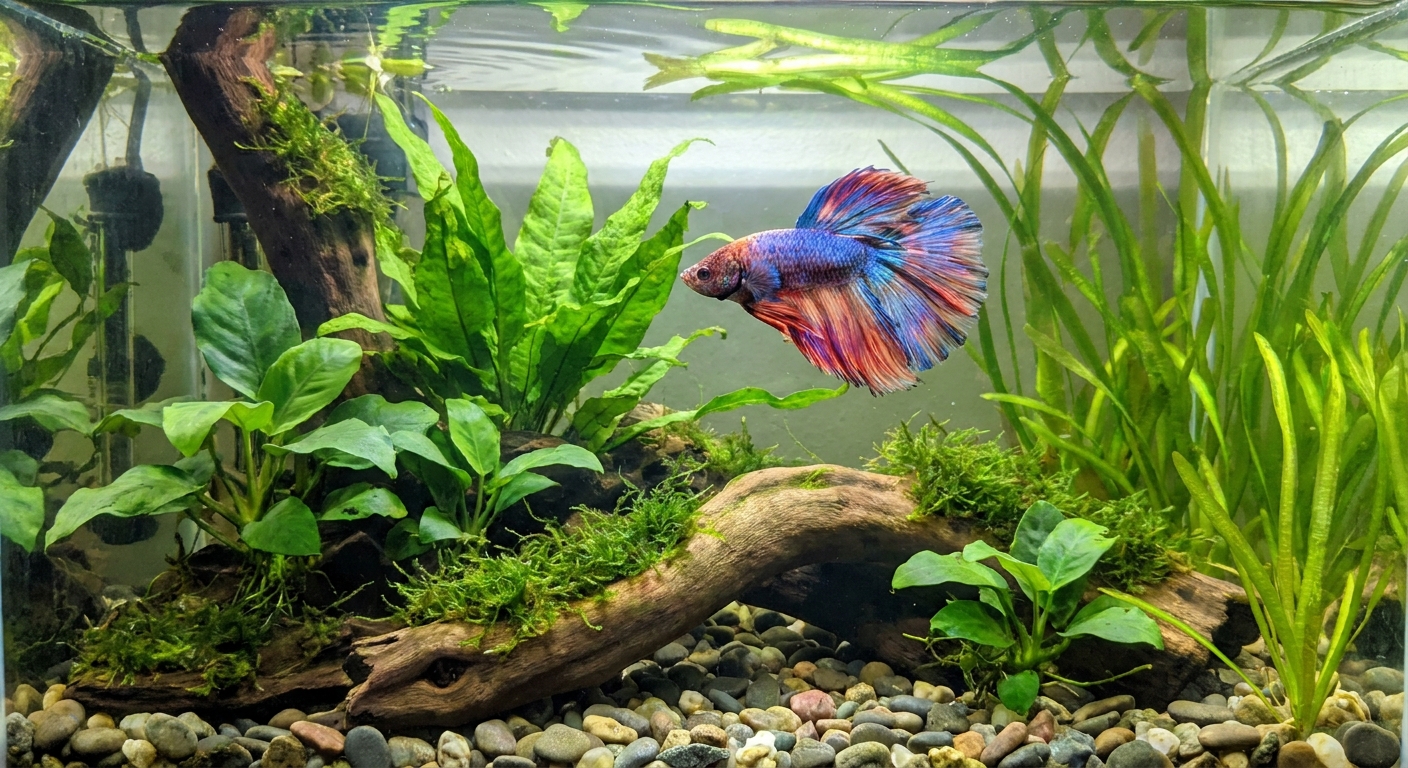
Live plants are the closest thing to a tiny underwater garden. They can be wonderfully gentle on fins and they can help support water quality, but how much they help depends on plant mass, lighting, and overall tank routine.
Why live plants are great for bettas
- Fin-friendly texture when you choose broad-leaf, flexible species.
- Water quality support because plants can uptake some nitrogen waste products. In most established tanks this is most noticeable with nitrate, and the effect varies by species, growth rate, and how heavily the tank is fed.
- Stress reduction from natural cover and shaded pockets.
- Small hiding places for curious exploration and calmer behavior.
Drawbacks to plan for
- Learning curve: light, nutrients, and plant choice matter.
- Melting and decay: some plants shed older leaves when first added, which can add gunk if not cleaned up.
- Pests: snails or hitchhikers can arrive on new plants if they are not rinsed and inspected.
- Not every “aquarium plant” is betta-soft: some are stiff or spiky.
Betta-safe live plant picks
Look for soft, bendy leaves and broad surfaces that act like little hammocks.
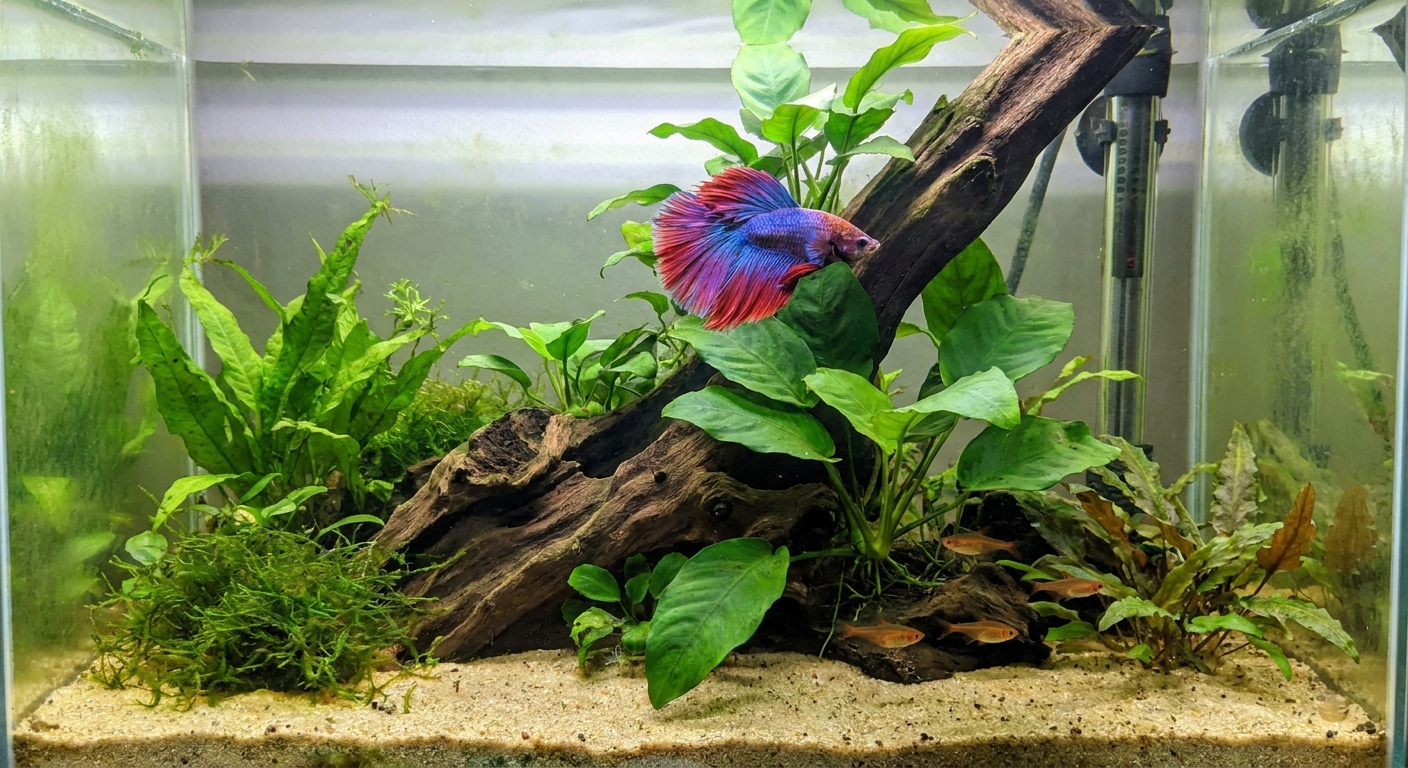
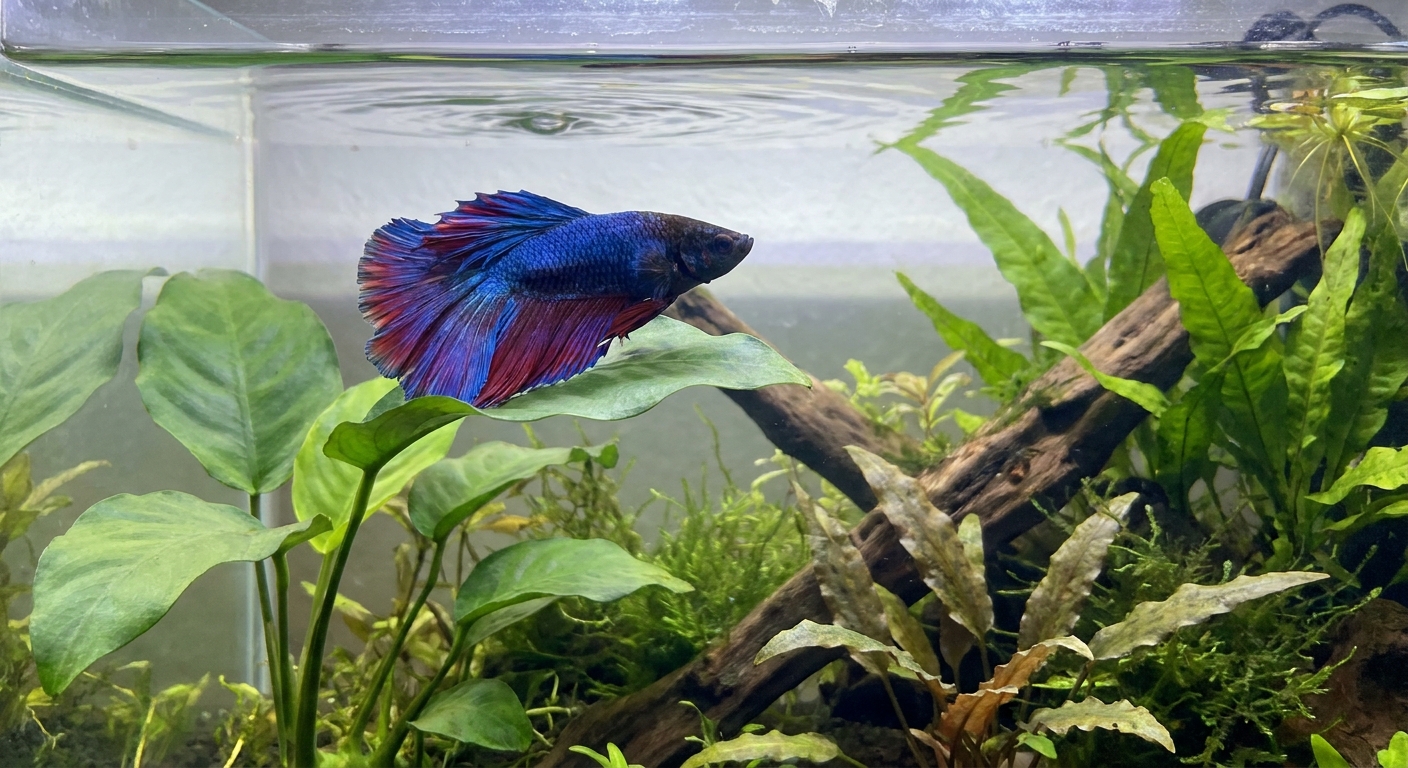
- Anubias: thick, smooth leaves that bettas often rest on. Attach to wood or rock instead of burying the rhizome.
- Java fern: hardy, low to moderate light, generally soft leaf edges. Attach to decor rather than planting the rhizome.
- Amazon sword: larger planted tanks can use these as a “leafy forest,” but they need more root nutrition and room.
- Java moss: great for cover and texture, but keep it trimmed so it does not trap debris.
- Frogbit or salvinia: floating plants give shade and dangling roots to explore. Keep the surface partially open for easy breathing.
Live plant safety checklist
- Skip plants with stiff needles, hard spikes, or sharp-edged leaves.
- Provide gentle flow so leaves move softly rather than whipping around.
- Trim damaged leaves and remove decaying bits during routine maintenance.
- Inspect plants before adding them. Rinse well and check for hitchhiking snails or egg clutches.
A common beginner pitfall
Some “plants” sold for aquariums are not meant to live fully submerged long-term. They may look fine for a while, then rot and foul the water. If a plant is labeled as a houseplant or terrarium plant, treat it as an above-water option (roots in the tank, leaves out) unless you are sure it is truly aquatic.
Silk plants: soft and simple
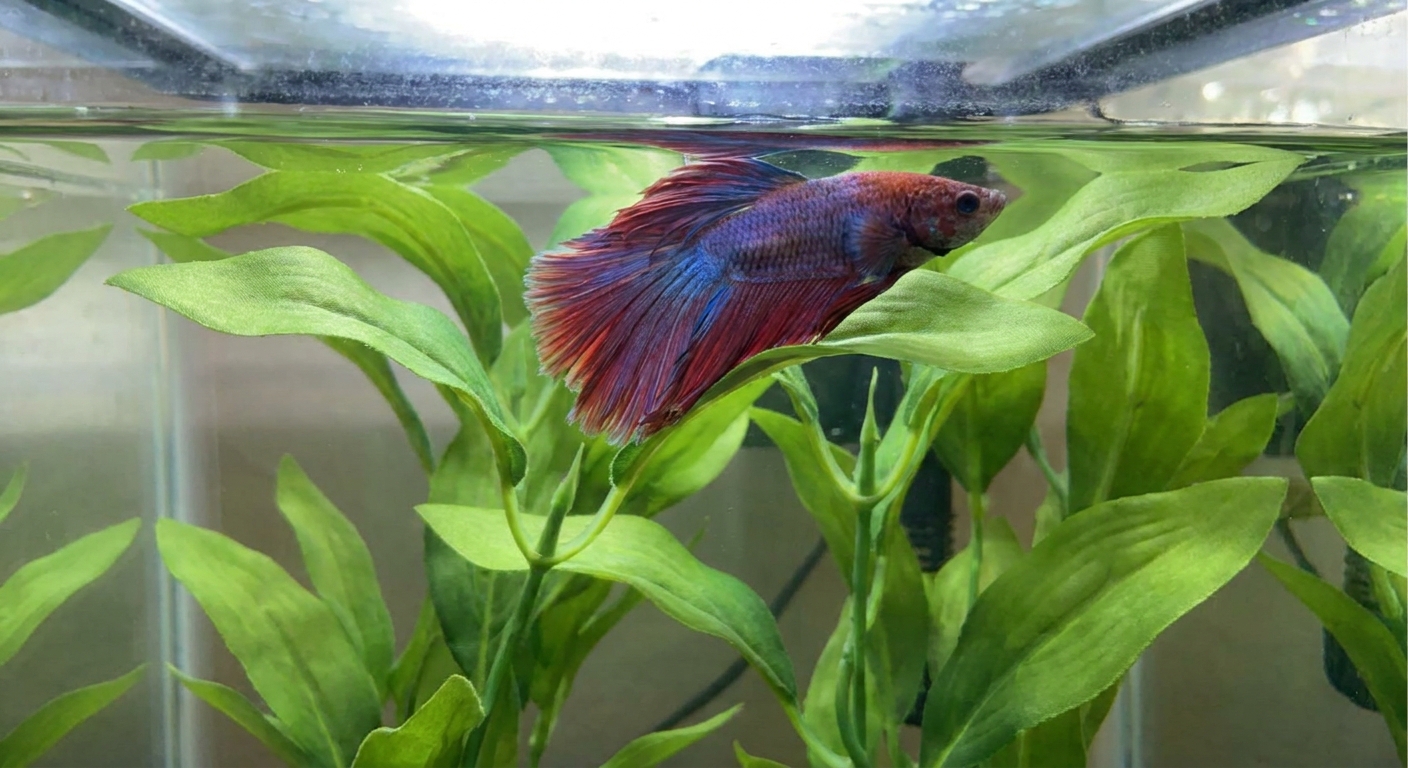
Silk plants are a popular alternative to plastic because they are usually much gentler on fins. They do not grow, and they will not “melt” the way some live plants can after shipping or a big change in water conditions. For many betta homes, silk plants are the easiest way to add safe cover fast.
Why silk plants can be a great choice
- Soft leaves that are less likely to snag or slice delicate fins.
- Low maintenance: no plant nutrients, no special trimming schedule.
- Instant cover: great for a shy betta that needs hiding spots right away.
- Flexible decorating: easy to rearrange as you learn what your betta likes.
Drawbacks to watch for
- No water-quality assistance: silk does not uptake waste the way live plants can.
- Some bases are rough: the plant itself may be soft, but the anchor can have sharp edges.
- Debris trap: uneaten food and waste can collect in dense silk “bushes” if not swished and rinsed during cleaning.
- Residue risk: choose aquarium-labeled silk plants and rinse before use to remove dust and manufacturing residue.
Silk plant fin-safety test
Before any plant goes into the tank, give it a quick gentleness check.
- Stocking test: gently rub a piece of nylon stocking over the leaves and base. If it snags, your betta’s fins can snag too.
- Base check: feel for sharp seams, rough plastic edges, or wire tips. Sand or cover rough areas, or pick a different plant.
- Rinse and soak: rinse in dechlorinated water, and consider a short soak to loosen dust or packaging residue. If the water discolors or the plant smells “chemical,” skip it.
Live vs. silk: fin safety
For fin-tear prevention, softness and smooth surfaces matter more than whether the plant is real or artificial.
- Safest overall: properly chosen live plants with broad, flexible leaves and no sharp hardware.
- Safest artificial option: silk plants that pass the stocking test, especially when paired with smooth decor.
- Riskiest option: hard plastic plants with stiff, sharp leaves or exposed wire tips.
Also remember that fin damage is not always from plants. Strong filter flow, rough caves, intake grates, or persistent glass-surfing can contribute too. If you are troubleshooting injuries, you may also like browsing Health & Wellness for care and recovery basics.
Water quality: what to expect
Live plants can use up some nitrogen waste and can compete with algae for nutrients. In a mature, well-lit tank with enough plant mass, that can support steadier water and reduce algae pressure. It is not guaranteed though, especially early on. New planted tanks can have plant melt, extra organics, and algae phases while everything settles in.
- Keep using a filter (gentle flow is betta-friendly).
- Keep up with regular water changes.
- Do not rely on plants to “fix” overfeeding or an undersized tank.
If your goal is the calmest, cleanest environment, a planted tank can be a wonderful direction. If you want very simple maintenance while you get your routine down, silk can still look lush and comforting.
Ferts and meds
If you go with live plants, you may eventually use liquid fertilizer or root tabs. When dosed according to the label and paired with regular maintenance, these are typically betta-safe. The bigger watch-out is mixing treatments and tank mates.
- If you plan to keep snails or shrimp, be cautious with copper-based medications, which can be dangerous for invertebrates.
- When in doubt, keep it simple and change water instead of stacking products.
Best of both worlds
You do not have to pick a team and stick with it forever. Many betta keepers use a mix of live and silk to balance safety, coverage, and maintenance.
- Use live anubias or java fern as your core “soft leaf” structure.
- Add silk plants for extra dense cover in corners or midground.
- Include a floating plant if your lighting allows it, while keeping some surface open.
- Leave open swimming lanes so your betta can cruise without bumping into everything.
Placement tips
- Keep rough décor away from high-traffic routes: Bettas often patrol the front glass and the surface zone.
- Create a surface lounge: tall plants or broad leaves near the top give resting spots. (A smooth betta leaf or “hammock” can help too, but plants do the job nicely.)
- Avoid tight squeeze gaps: if a betta can wedge in, fins can scrape on the way out.
- Anchor plants securely: wobbling decorations can startle a betta and encourage frantic darting.
Quick FAQ
Are plastic plants ever okay?
Sometimes, but they are a common fin-tear culprit. If you use plastic, choose very soft, flexible styles and do the stocking test on every edge and the base. When in doubt, swap to silk or live.
Do live plants make care easier?
They can make the tank feel more stable and forgiving, but they also add a plant-care routine. If you enjoy a little garden upkeep, live plants are a joy. If you want maximum simplicity, silk is a solid option.
Can live plants introduce disease?
Plants can carry hitchhikers like snails, and occasionally microorganisms or residues from store tanks. Rinsing well and inspecting closely helps. Many keepers also quarantine plants separately, especially for sensitive setups.
What is the single safest plant choice?
A broad-leaf live plant like anubias is a top fin-friendly pick when it is clean, securely attached, and paired with gentle flow.
My bottom line
Choose live plants if you want natural cover plus extra support for water quality, and you are ready for a bit of plant upkeep. Choose silk plants if you want soft, instant greenery with simple maintenance and fewer surprises. Either way, the big secret is this: smooth, soft, snag-free surfaces keep those beautiful betta fins in one piece.
For more home-building ideas, swim through Tank Setup & Environment and keep that water crystal clear, one happy droplet at a time.