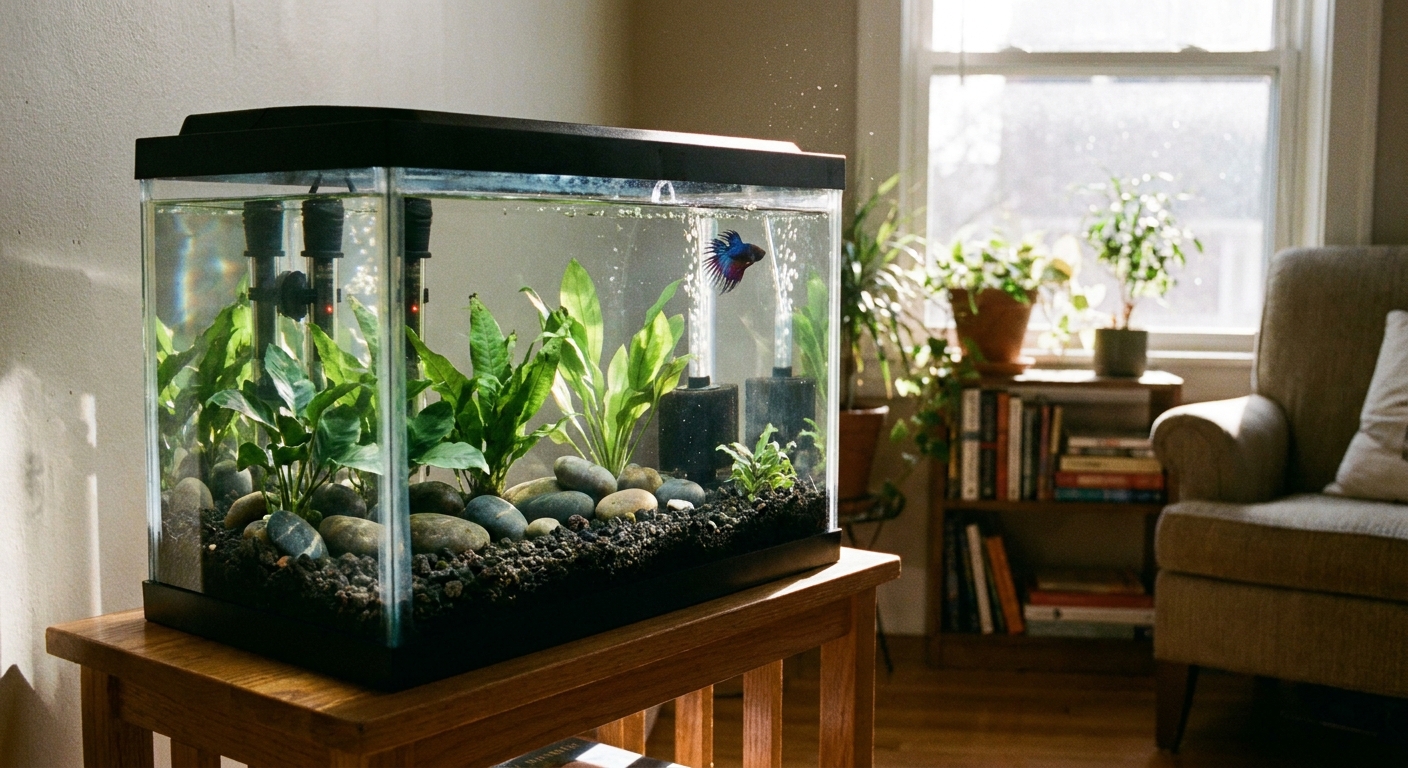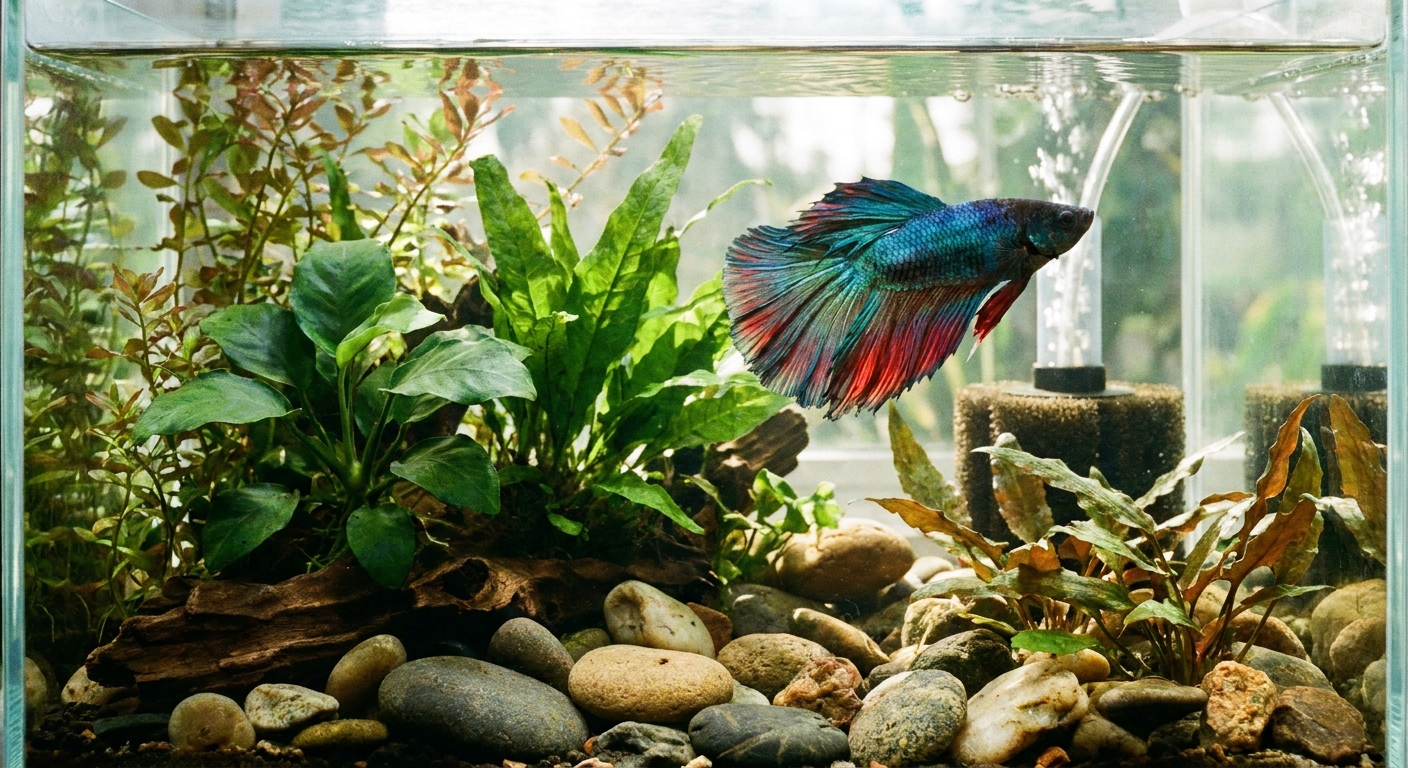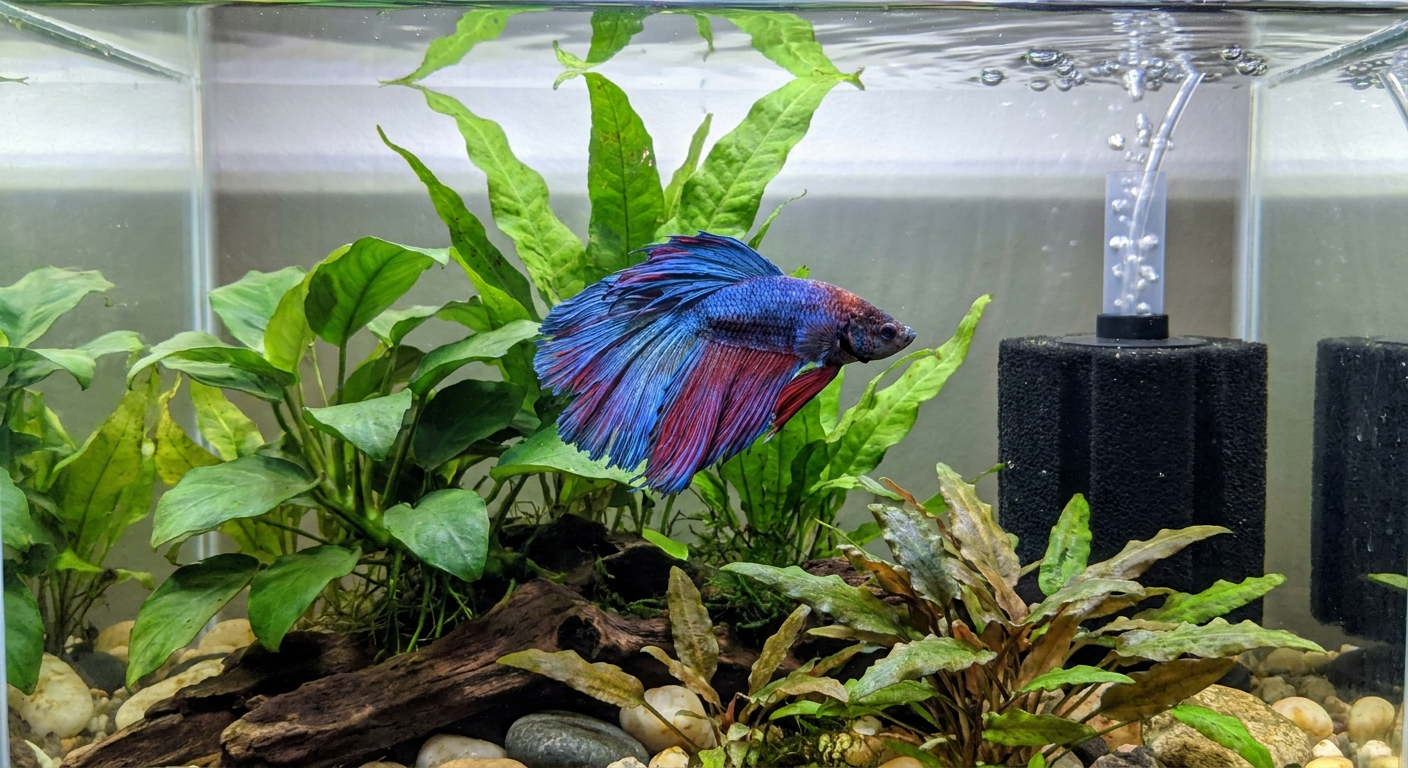

Let’s make your tank the happiest little splash in the house! For bettas, warm, steady water is not a luxury. It’s the foundation for comfortable swimming, smooth digestion, and a calm, confident flare. This guide will help you hit the ideal temperature range, choose the right heater, place it correctly, and monitor it like a pro.
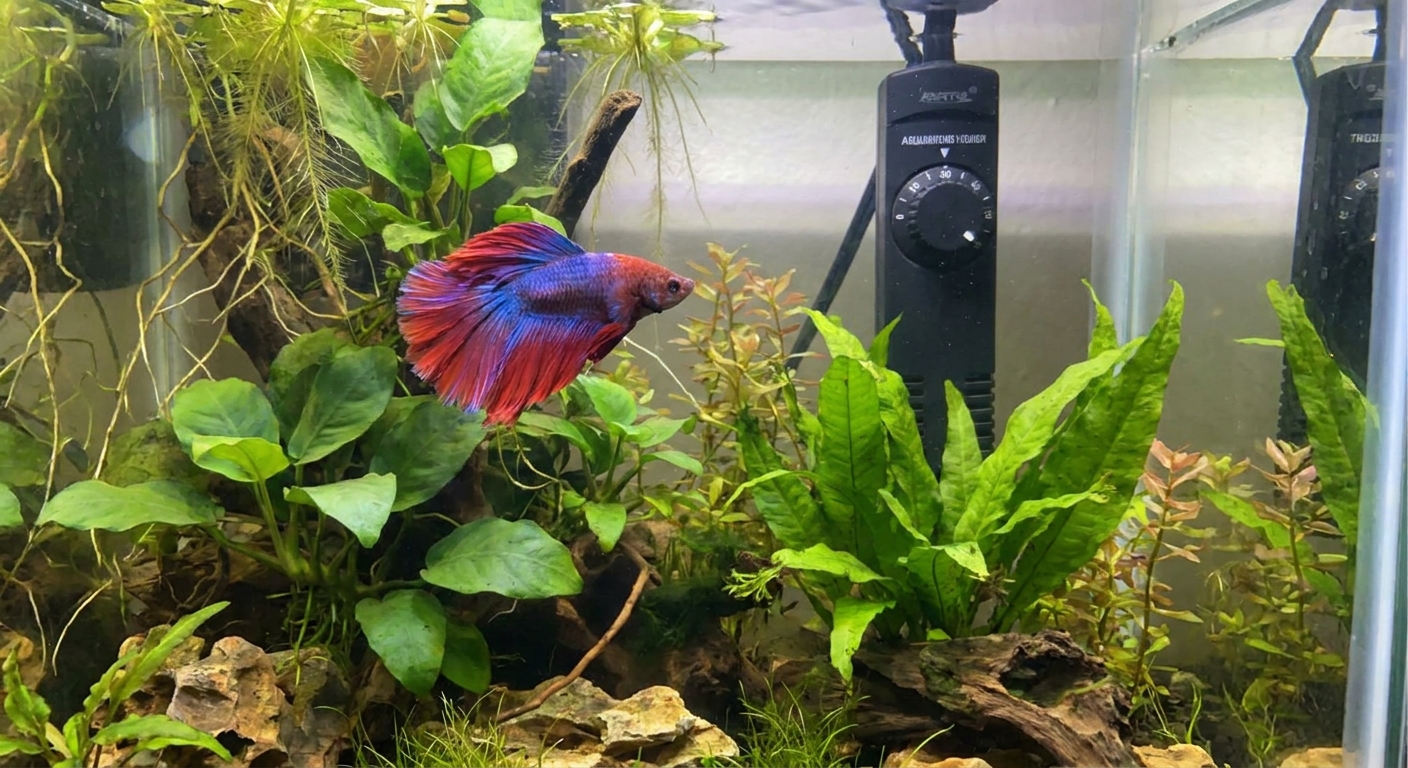
Ideal betta water temperature
Most bettas do best when their water stays consistently warm.
- Target range: 78 to 80°F (about 25.5 to 26.5°C)
- Acceptable range for many setups: 76 to 82°F (about 24.5 to 27.8°C)
- Stability goal: Avoid swings bigger than about 1 to 2°F in a day
In the wild, bettas come from warm, slow waters. In a home aquarium, fluctuations often cause more stress than being 1°F off target.
If your tank regularly sits in the mid-to-high 70s, you are in a generally comfortable zone. If it is 82°F and above for long stretches, keep a closer eye on your fish’s behavior and oxygenation.
Why steady warmth matters
Temperature affects a betta’s metabolism and immune response. When water runs too cool, a betta may seem sluggish, rest more, and eat less. Over time, chronic chill can make it easier for common illnesses to gain a foothold.
On the flip side, running too warm can speed metabolism and reduce dissolved oxygen. Warmth is good, but “hot” is not the goal.
If you want more general wellness tips for keeping stress low, swim by Health & Wellness.
Heater basics
Adjustable heaters help most
For bettas, an adjustable heater is usually easier to dial in than a preset model, especially if your room temperature changes with seasons or at night. Preset heaters can work in some homes, but they often land a bit off target and give you fewer ways to correct it.
Pick the right wattage
Heater wattage depends on tank volume and how much you need to raise the water above your room temperature. A common rule of thumb is:
- About 2.5 to 5 watts per gallon, depending on how cool your room is and how big of a temperature boost you need
As a rough guide, that range often covers a typical 5 to 10°F increase over room temperature in many homes (lids, airflow, and tank shape can change the math).
Typical starting points many betta keepers use:
- 5 gallon: 25W (or 50W if your room is quite cool)
- 10 gallon: 50W
- 20 gallon: 100W
If your home runs cool (for example, low 60s°F), sizing up is often safer than asking a tiny heater to work at its limit all day. If you size up, pair it with careful monitoring so you do not overshoot.
Safety features worth having
- Shatter-resistant housing or a protective guard (helpful around curious fish, snails, or hardscape)
- Overheating protection and, on some models, shutoff if exposed to air (features vary by model)
- Clear temperature markings and a smooth adjustment dial
One more real-world note: heater dials can be a little “off.” Trust your thermometer, then adjust the heater setting until your tank holds steady where you want it.
Heater placement
Heater placement is about one thing: even heat distribution. You want the warm water to mix through the whole tank so there are no chilly corners.
Best placement in most betta tanks
- Near water flow, so warmed water circulates (for example, near the filter outflow, but not blocking it)
- Low on the tank wall in a spot where moving water will carry heat around the aquarium
- Fully submerged if the heater is rated for submersion (check the label)
Vertical vs horizontal mounting
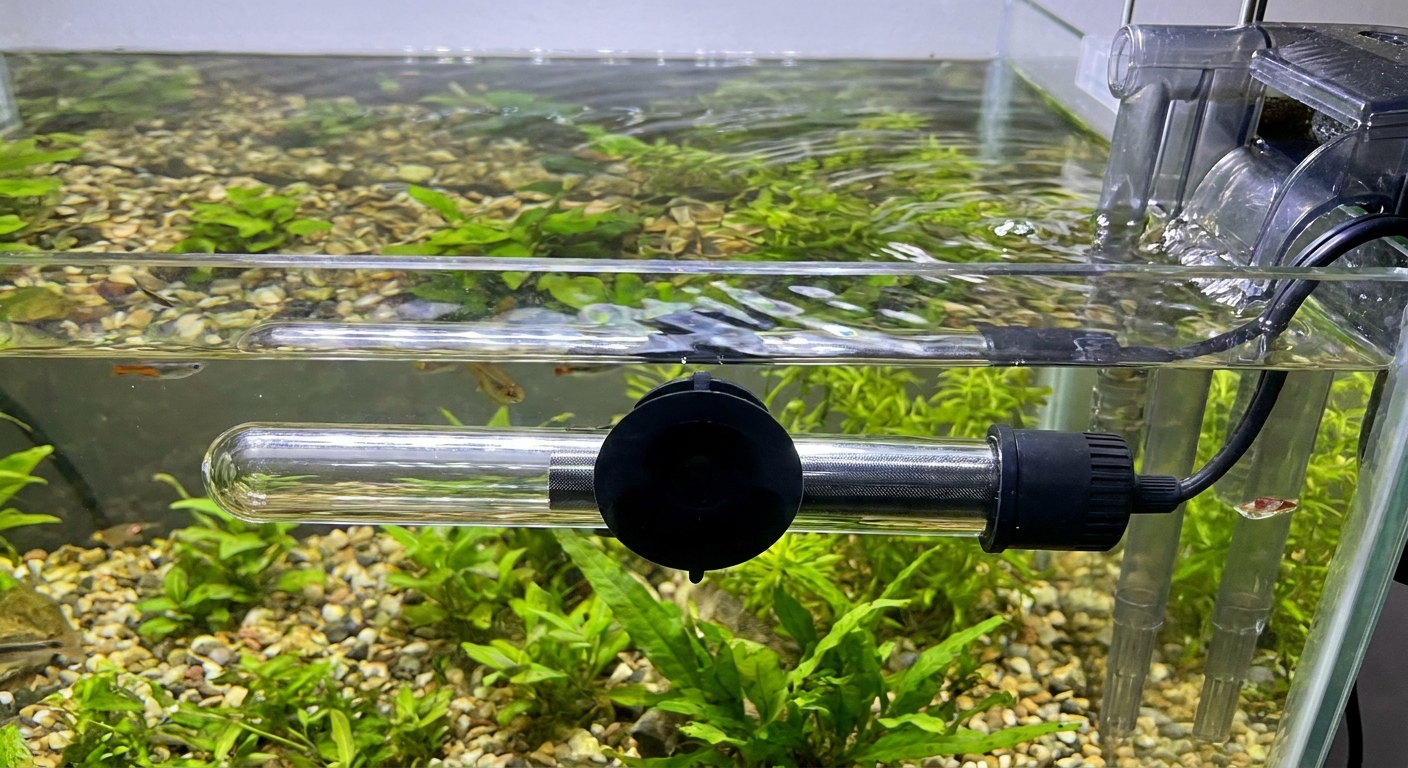
Many heaters can be mounted vertically or horizontally. If your heater allows it, a horizontal or slightly angled position lower in the tank can help distribute warmth more evenly, especially in smaller aquariums.
If your heater must be vertical, that can still work beautifully. Just place it where flow will carry heat around the tank.
Where not to place a heater
- Pressed against substrate or buried (uneven heating and damage risk)
- In a dead-flow corner where warm water gets trapped
- Right beside your thermometer (you want a reading of the overall tank, not the heater’s hot spot)
- Where your betta can get pinned between the heater and glass decor (rare, but avoid tight gaps)
Thermometer placement
A heater without a thermometer is like swimming in fog. Always verify temperature with a separate thermometer.
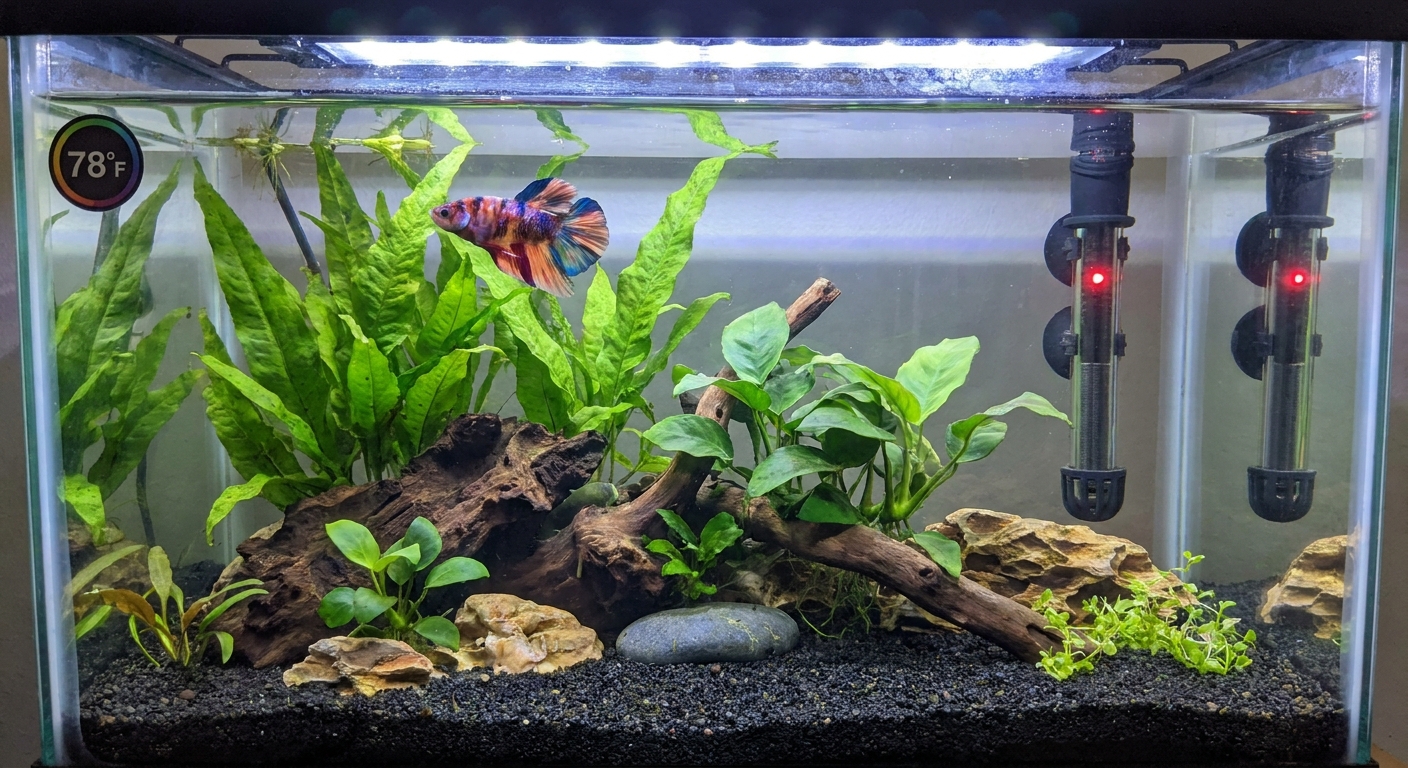
- Place the thermometer on the opposite side of the tank from the heater to check overall circulation.
- For longer tanks, consider two thermometers (one near each end) if you suspect uneven heating.
- Digital probe thermometers can be very precise, but even a simple glass thermometer is better than guessing.
Setting up a new heater
- Rinse and inspect the heater and suction cups (no soap).
- Mount it in the tank where it will be fully underwater and near gentle flow.
- Wait the manufacturer’s recommended time before plugging it in (often 15 to 30 minutes) so the heater can acclimate and reduce crack risk.
- Set the dial to your target, usually 78 to 80°F.
- Check temperature after a few hours, then again at 24 hours. Fine-tune in small steps.
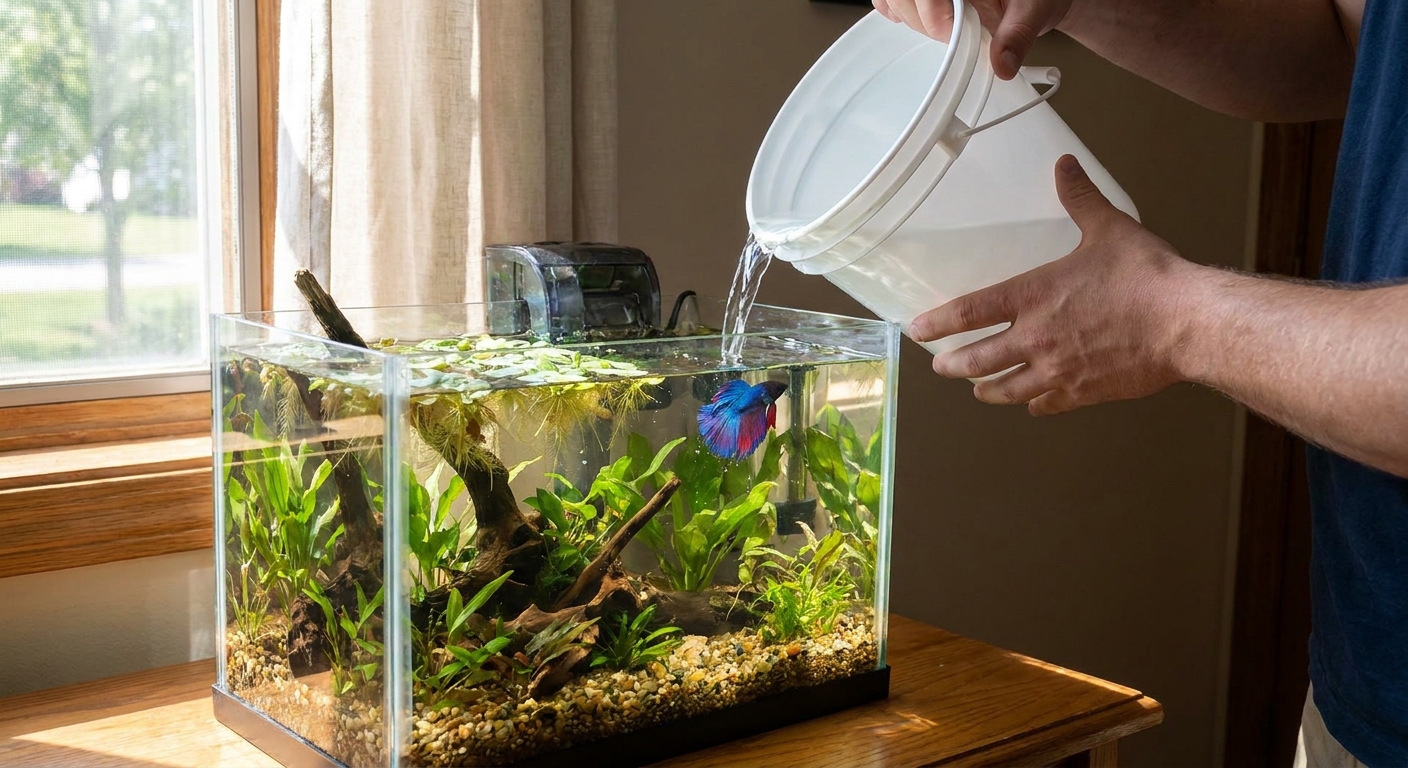
Water change reminder: If the water level might drop below the heater’s minimum line, unplug the heater during the change and let it cool for a few minutes before exposing it to air.
Electrical safety basics: Use a drip loop on all cords and keep the outlet above the cord line so water cannot run straight into the socket.
If you are building a tank from scratch, warm water is part of the bigger comfort picture. For the full habitat checklist, visit Tank Setup & Environment.
Avoiding hot and cold spots
Keep water moving, but betta-gentle
Bettas like calm water, but they still need circulation. If the tank is very still, warm water can stay trapped around the heater while other areas run cooler.
- Aim for gentle surface movement, not a strong current.
- If your filter output is too strong, baffle it with a sponge or adjust the flow if your filter has a control.
Use hardscape and plants wisely
Dense decor can block flow. Make sure there is at least one open path for water to circulate from the heater side to the rest of the tank. Lush plants are wonderful, just avoid creating a fully walled-off corner.
Common problems and fixes
The tank will not warm up enough
- Check room temperature: If the room is cold, the heater may be undersized for the temperature boost you need.
- Improve circulation: Move the heater closer to flow so heat spreads through the tank.
- Verify the thermometer: Swap in a second thermometer to confirm the reading.
- Add a lid: An aquarium lid reduces heat loss and helps stabilize temps.
The tank is overheating
- Confirm the reading with a second thermometer.
- Lower the heater setting gradually.
- Move the heater so it is not trapped in a low-flow zone.
- Consider replacing a faulty heater if it will not regulate.
Big day-night swings
- Use an adjustable heater and keep the tank away from drafty windows or vents.
- Add a lid and consider insulating the back of the tank if the room gets chilly.
- Check water level: Low water exposes more glass and can change heating behavior in small tanks.
FAQ
Do bettas need a heater in a 5 gallon tank?
Usually, yes. Smaller tanks lose heat faster, and most homes do not stay in a stable 78 to 80°F range all day and night. A properly sized heater plus a thermometer keeps your betta’s world steady.
Is 75°F too cold for a betta?
For many bettas, 75°F is cooler than ideal long-term. Some individuals handle it better than others, but aiming closer to 78 to 80°F is a safer comfort zone for most.
Is 82°F okay?
It can be, especially short-term, but it is near the warm edge of the typical range. Prioritize stability, watch behavior closely, and be mindful of oxygen levels if you run warmer.
Where should the thermometer go?
On the opposite side from the heater, about mid-water level, where it reflects the average tank temperature.
Can a heater burn a betta?
It is uncommon, but it can happen if a fish rests against a very hot heater or if a heater malfunctions. Using a reliable heater, placing it in good flow, and considering a heater guard can reduce risk.
Cozy temperature checklist
- Keep betta water 78 to 80°F when possible
- Use an adjustable heater and a separate thermometer
- Place the heater near gentle flow for even heat
- Measure temperature away from the heater
- Avoid quick swings and re-check after any equipment change
Warm water, calm flow, and steady numbers. That is the recipe for a relaxed betta with room to sparkle.