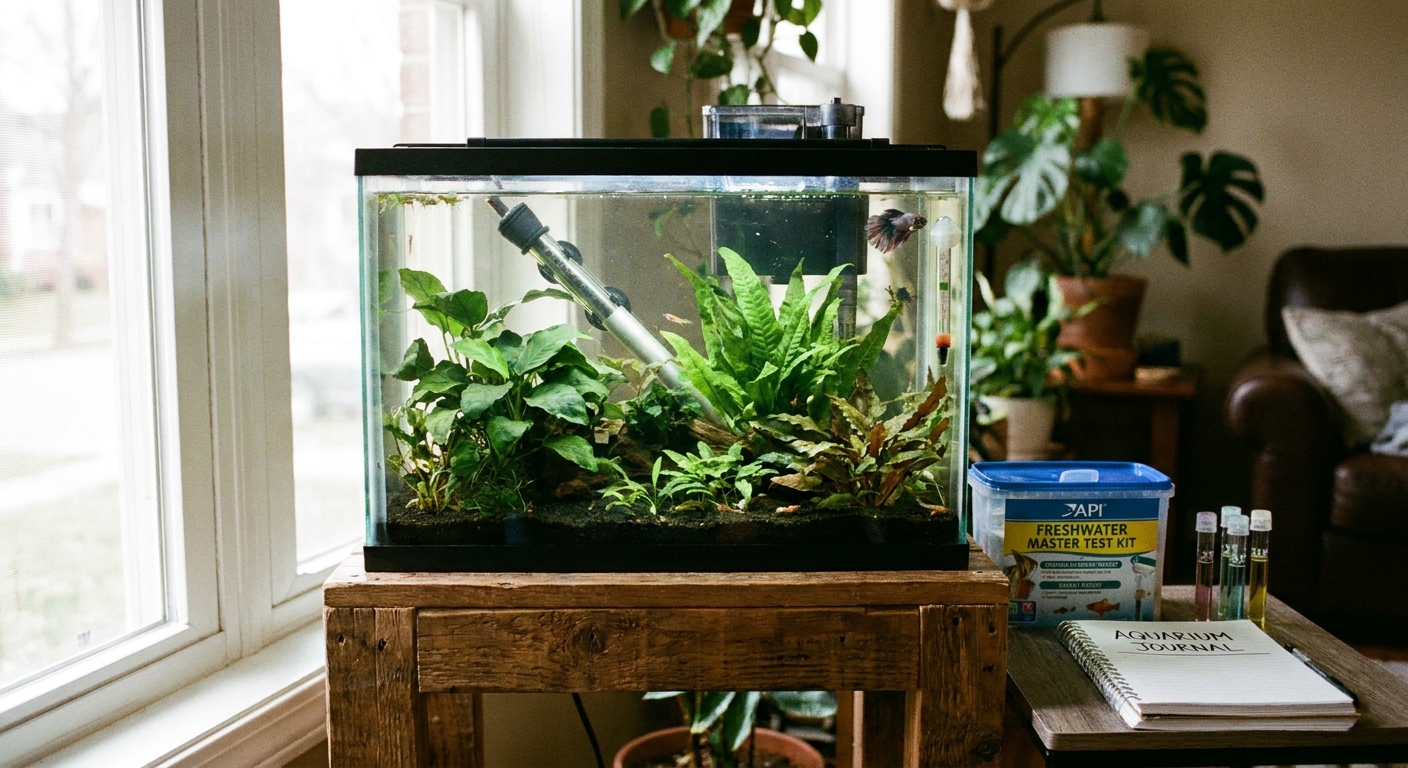

Let’s make your tank the happiest little splash in the house! A good betta filter should do two things at once: keep the water clean and keep the current calm. Long fins are beautiful, but they are not built for treadmill swimming all day.
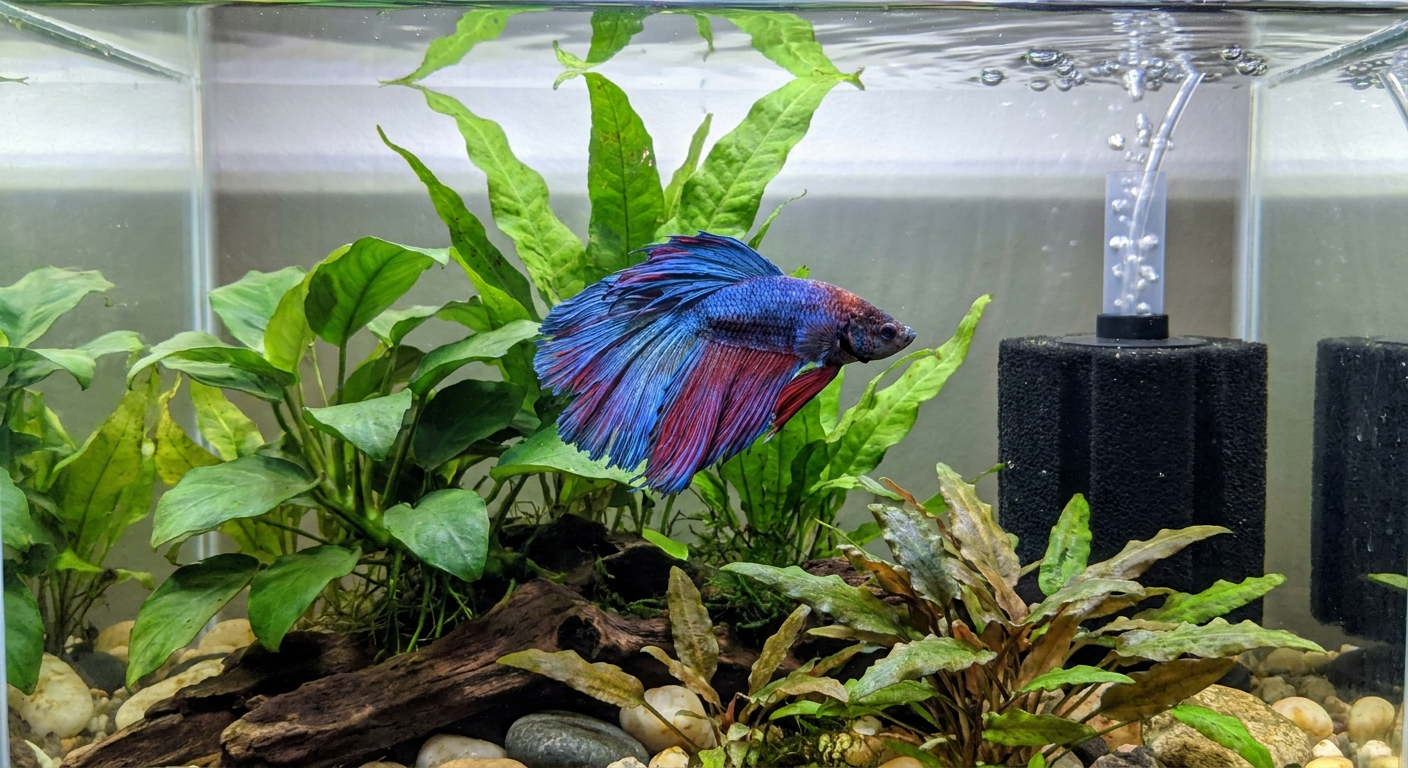
In this guide, you’ll learn how sponge filters, hang-on-back filters, and internal filters compare, what to look for when shopping, and how to set up gentle flow that won’t push your betta around.
What bettas need from a filter
Bettas often come from slow-moving or still waters, so the best filtration is usually the kind you barely notice. Here are the four things to prioritize:
- Low flow: enough movement to circulate water, not enough to pin fins or whip plants sideways.
- Biological filtration: a home for beneficial bacteria that process ammonia and nitrite.
- Mechanical filtration: trapping debris so it can be removed during maintenance.
- Safe intake: no sharp grates and no strong suction that can snag fins.
If you are still building the basics of a comfortable home, visit Tank Setup & Environment for more setup guides.
Quick comparison
| Filter type | Flow gentleness | Best for | Watch-outs |
|---|---|---|---|
| Sponge filter | Very gentle | Most betta tanks, especially long-finned bettas | Needs an air pump and airline tubing; bubbling can be loud if not tuned |
| Hang-on-back (HOB) | Varies by model | Heavier stocking, people who want easy access to media | Can create strong waterfall current; intakes can snag fins without a prefilter sponge |
| Internal filter | Varies, often moderate | Small tanks where a HOB won’t fit, rimless tanks | May take up swimming space; many have stronger directional jets |
Sponge filters
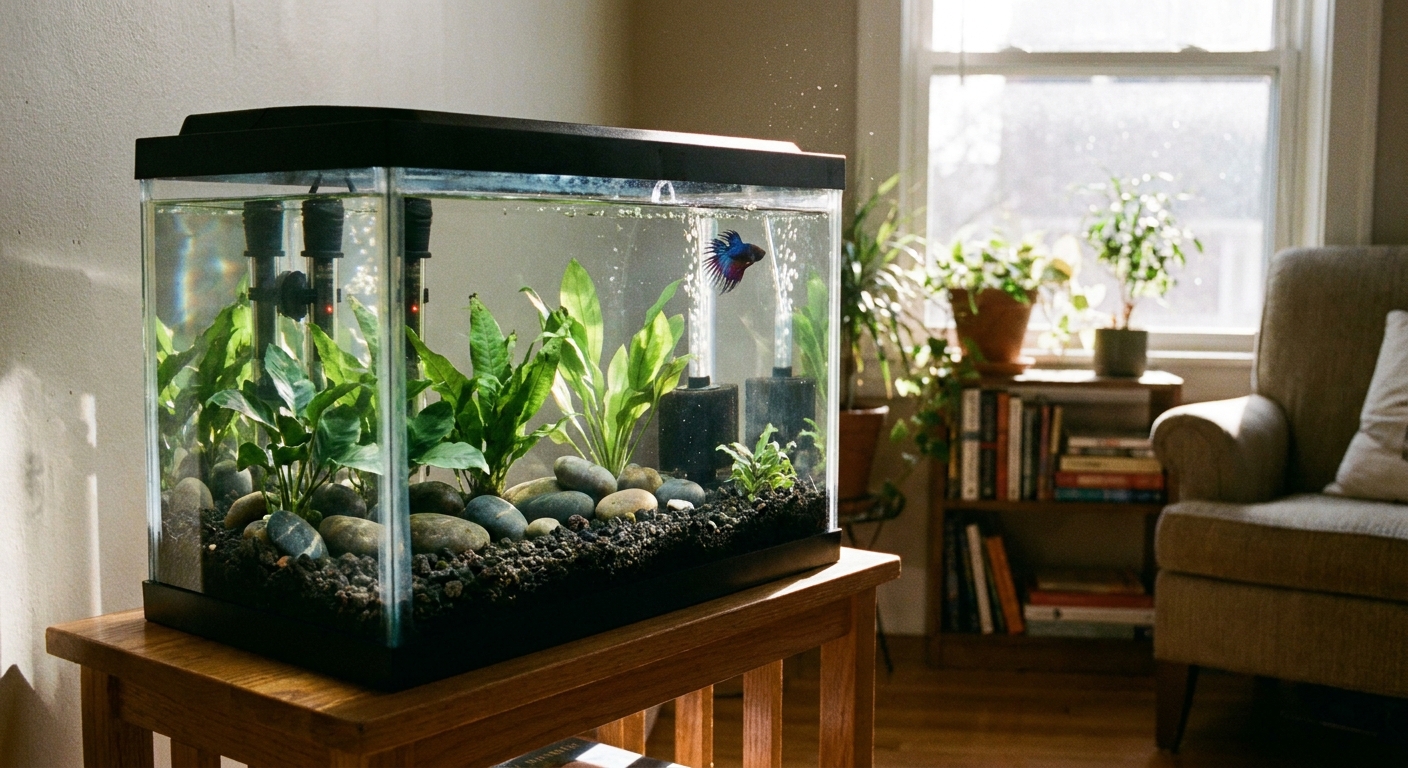
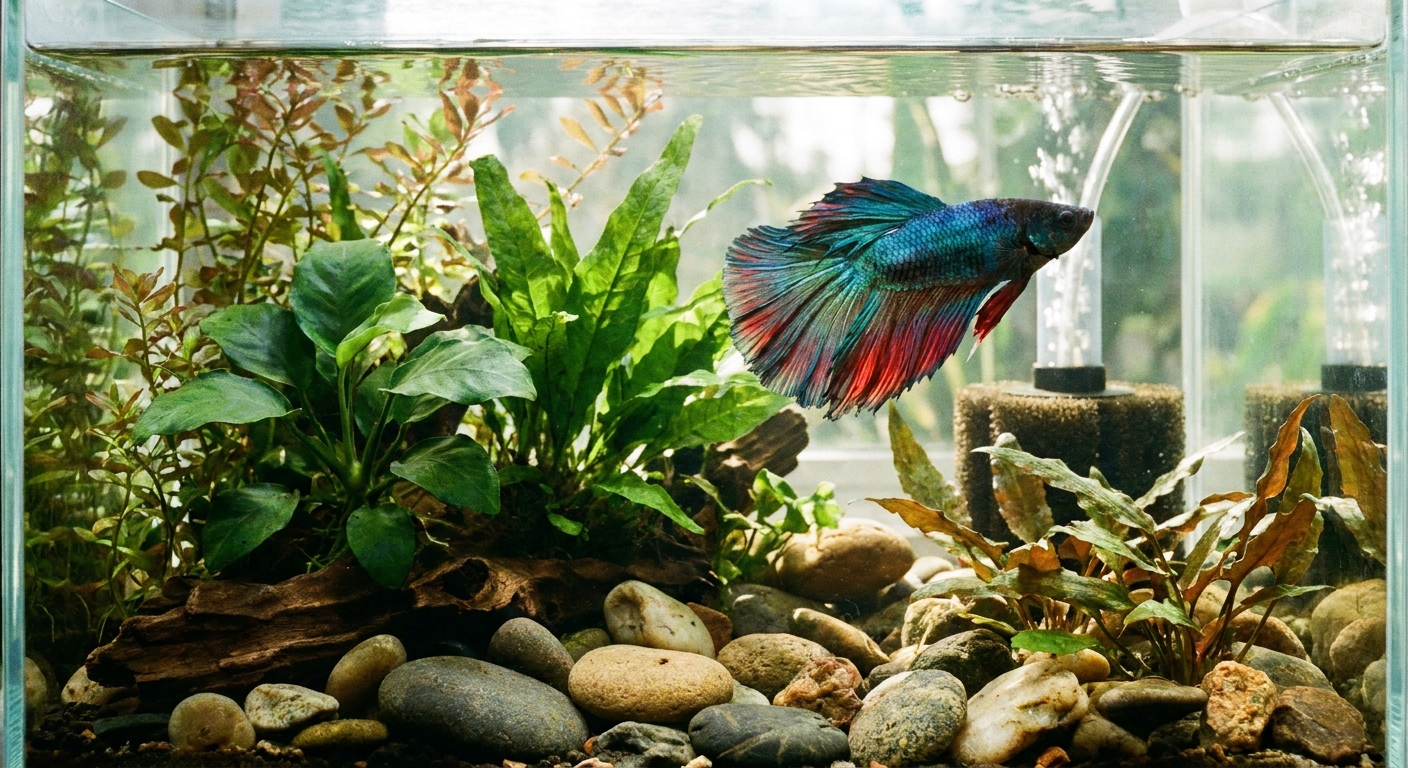
Sponge filters are a classic betta-friendly choice because they offer strong biological filtration and soft water movement. Water is pulled through a sponge, trapping debris while beneficial bacteria colonize the sponge surface. Mechanical filtration can be light to moderate depending on sponge density and airflow.
Why sponge filters work so well for bettas
- Soft suction: fins are far less likely to get pulled or torn.
- Low, even circulation: no harsh jet stream across the tank.
- Great for planted tanks: gentle movement is less likely to uproot newly planted stems.
- Simple maintenance: easy to rinse the sponge in removed tank water.
What you need to run one
- A sponge filter sized for your tank volume.
- An air pump (choose one that can be adjusted, or add a valve).
- Airline tubing and a check valve to prevent back-siphon if the power goes out.
- An air control valve to fine-tune bubbles and flow.
How to keep it calm and quiet
- Start low: set the air valve so bubbles are steady but not roaring.
- Place it wisely: tuck the sponge near a back corner so circulation gently loops around the tank.
- Use plants as flow softeners: broad-leaf plants and floating plants can calm movement even more.
- Reduce vibration: set the air pump on a soft mat or folded towel, and make sure it is not rattling against the stand or wall.
If your betta is getting pushed sideways, avoiding an area of the tank, or food is constantly swept away, reduce airflow. Calm is the goal.
If your betta is resting on the bottom or hiding constantly even after you reduce flow, also check temperature and water parameters. Those signs can be about more than current.
Hang-on-back (HOB) filters
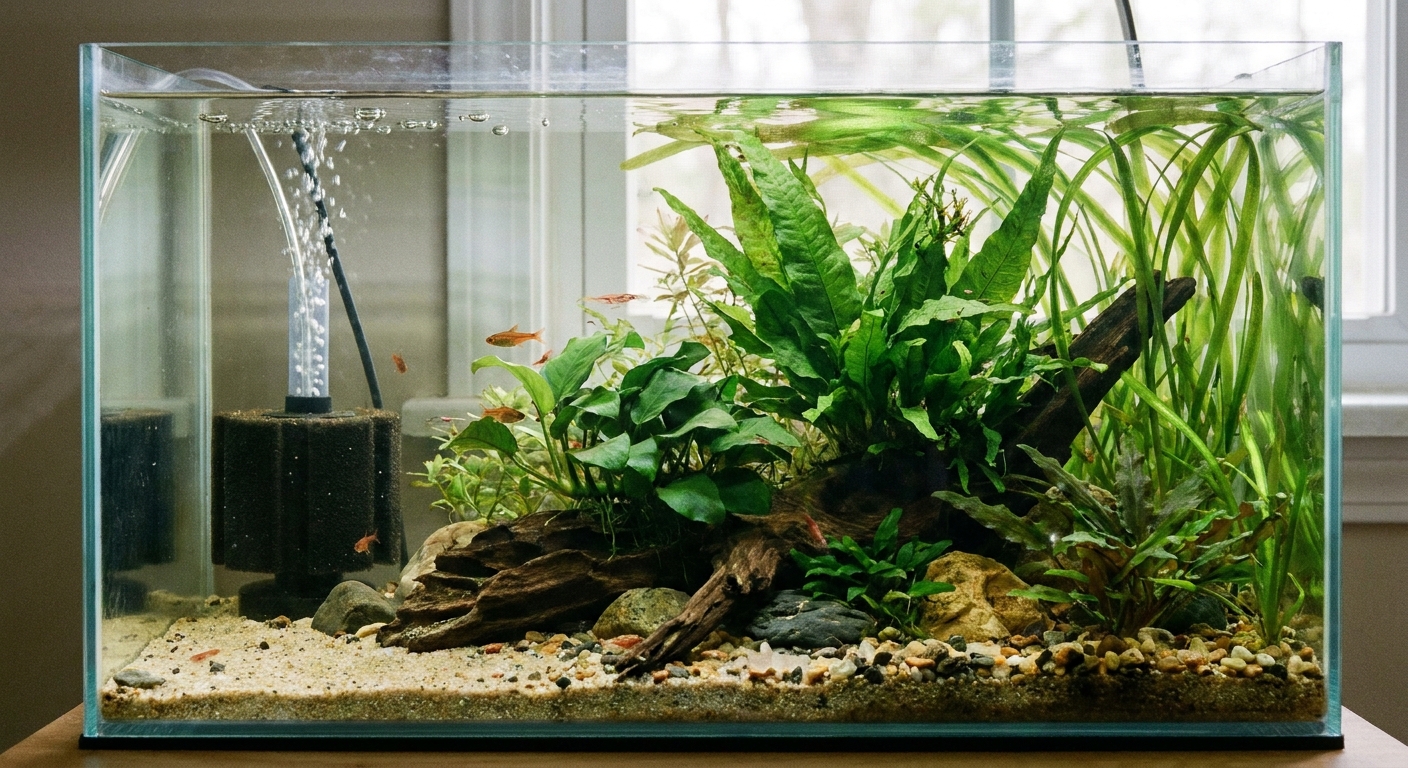
HOB filters can be excellent, especially for tanks with higher waste loads, but they are the most likely to overwhelm a betta if the output creates a strong waterfall or jet.
When a HOB can be a good betta choice
- You have a larger tank where flow can disperse.
- You want more mechanical filtration for messy feeding situations.
- You prefer easy access to media and quick cleaning.
How to make a HOB betta-safe
- Add a prefilter sponge on the intake: this protects fins, reduces suction, and adds extra biological surface area.
- Reduce output splash: keep the tank water level high so the waterfall is minimal.
- Baffle the outflow: aim the output toward glass or plants so the current breaks up instead of blasting across open water.
- Choose adjustable flow: if the filter has a flow dial, use it. If it only has one speed, consider a different model.
Tip: In a betta tank, disposable cartridges are often less helpful than steady, reusable media. Frequent cartridge replacements can remove beneficial bacteria. If a HOB uses a cartridge, see whether it can also hold sponge or ceramic media that stays in place long term.
Internal filters
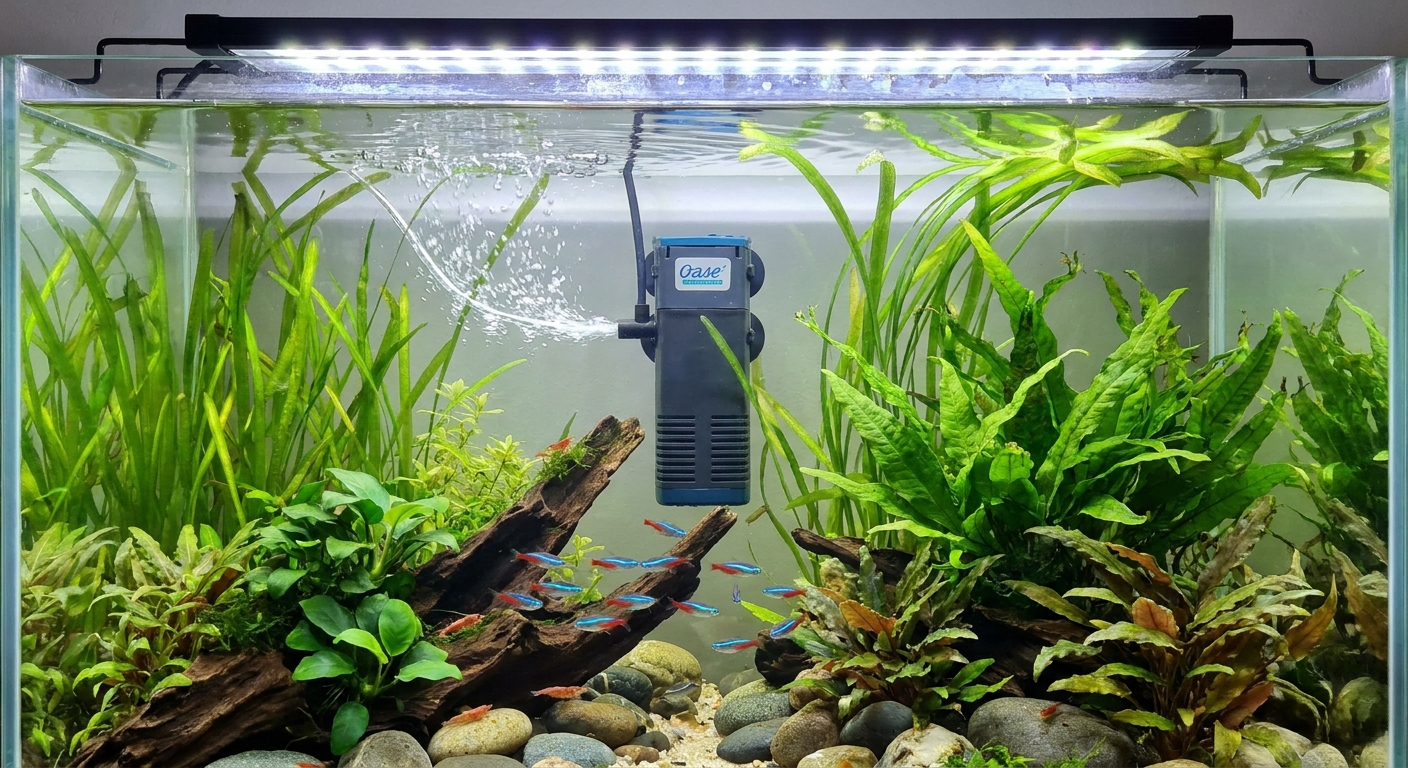
Internal filters sit inside the tank, usually attached with suction cups. They can be a practical choice when a HOB will not fit, or when you want everything contained under the lid. The main betta concern is that many internal filters push water out through a narrow nozzle, which can be surprisingly strong.
When an internal filter makes sense
- Very small setups where you need a compact footprint.
- Rimless tanks where HOB hardware is awkward.
- Temporary or hospital tanks where you want quick setup and removal.
How to keep it gentle
- Aim output at the glass: letting the jet hit the wall diffuses flow.
- Keep it low-flow: prioritize models with adjustable flow or a spray bar style output.
- Watch swimming behavior: if your betta avoids half the tank, the current is likely too strong in that zone.
Picking a filter by tank size
Filter boxes love to brag about high flow rates, but bettas usually do best with modest turnover and calm circulation. A helpful starting point is low to moderate turnover, then adjusting based on your fish’s behavior and how clean the tank stays.
A simple sizing approach
- Prioritize stability over power: steady biological filtration matters more than blasting water.
- Aim gentle first: if you are unsure between two sizes, choose the one you can run quietly and calmly, not the one that turns the tank into a river.
- For long-finned bettas: lean toward sponge filtration or the lowest-flow setting available.
- For short-finned, active bettas: they can often handle slightly more flow, but still avoid strong jets.
Important: tank size and maintenance go together. A smaller tank can be betta-safe, but it requires more careful attention to water quality because waste concentrates faster. Filtration helps, but it does not replace partial water changes.
Cycling basics
A brand-new filter is not instantly “ready.” It takes time for beneficial bacteria to colonize the media. If you are setting up a new tank, plan for a proper cycle before adding a betta whenever possible. If your betta is already in the tank, be extra consistent with testing and water changes while the filter matures. The goal is stable, safe ammonia and nitrite levels while the biofilter builds.
Filter media basics
Most betta tanks do best when you focus on two media types:
- Sponge or floss (mechanical plus biological): catches debris and grows beneficial bacteria.
- Ceramic rings or biomedia (biological): lots of surface area for bacteria.
Activated carbon is optional. It can remove certain dissolved compounds, but it is not required for a healthy betta tank and is often used short term, such as after removing medication. If you are treating a fish, always follow the medication instructions regarding carbon removal.
Is your flow too strong?
Your betta will tell you. Signs the current is too much include:
- Your betta gets pushed off course while trying to swim.
- Constantly resting on the bottom, heater, or decor to avoid swimming.
- Clamped fins or hiding more than usual.
- Food gets swept away immediately before your betta can eat.
Solutions often include lowering the air pump output (sponge filters), raising the water level (HOBs), adding an intake prefilter sponge (HOBs), redirecting the output at glass, and adding plants to break up flow.
If these behaviors persist after you calm the flow, also check water parameters and temperature. Current is a common stressor, but it is not the only one.
Setup tips
Before you turn it on
- Rinse media in dechlorinated water to remove dust.
- Secure cords and tubing with drip loops so water cannot run into outlets.
- Place heater and filter thoughtfully: gentle circulation helps distribute heat evenly without creating a raceway current.
After you turn it on
- Watch the surface: you want mild rippling for gas exchange, not a churning whirlpool.
- Check for buildup spots: a little debris in a quiet corner is normal. If one area is collecting a lot, adjust placement or add a touch more circulation.
- Listen: rattling impellers and loud splashing usually mean something needs adjustment.
Maintenance
The golden rule is simple: never clean everything at once, and avoid chlorinated tap water on your filter media.
A betta-friendly routine
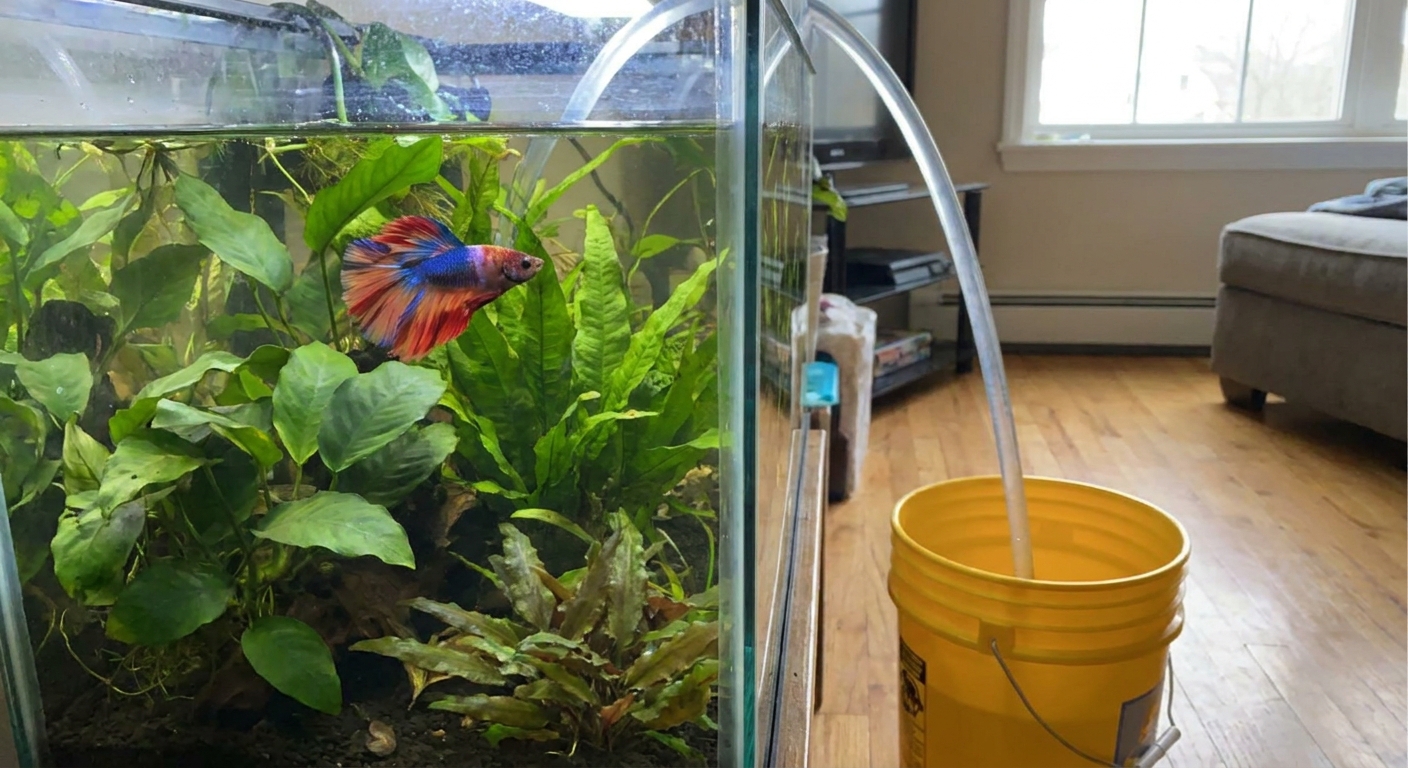
- Weekly or as needed: during a water change, swish the sponge or media gently in a bowl of removed tank water to release debris.
- Monthly: check hoses, impellers, and intakes for buildup.
- Only replace media when it is falling apart: the brown gunk is often beneficial bacteria, not a problem.
If you are working through fin issues or recurring stress behaviors, filtration and flow are worth revisiting alongside other basics. You can also browse Health & Wellness for supportive care topics that pair well with water quality improvements.
Which filter should you pick?
If a betta tank could only pick one most-often-best answer, it would usually be:
- Choose a sponge filter if you want the gentlest, most betta-centered flow, especially for long fins.
- Choose a HOB filter if you need stronger mechanical filtration, but commit to flow control, a high water level, and an intake prefilter sponge.
- Choose an internal filter if space or tank design makes other options awkward, and you can aim or diffuse the output to keep currents soft.
No matter which style you choose, the best filter is the one that keeps your water steady and your betta relaxed. Calm fins, curious exploring, and easy mealtimes are the signs you nailed it.
Want more ways to make the tank feel like a cozy little underwater garden? Visit Behavior & Enrichment for betta-friendly comfort ideas.
Filter FAQ
Do bettas need a filter?
In most home aquariums, yes. A filter supports stable water quality by housing beneficial bacteria and removing debris. Even gentle filtration can make maintenance easier and water conditions more consistent.
Can a filter be too strong even if the tank is clean?
Yes. Water quality and current are separate issues. A tank can have excellent parameters but still stress a betta if the flow is harsh.
Is an air stone enough instead of a filter?
An air stone improves surface agitation and oxygen exchange, but it does not provide the same mechanical filtration and dedicated bio media area as a filter. A sponge filter can combine gentle aeration with real filtration.
What if my betta lives with shrimp or snails?
Tank mates can mean more leftover food risk, and with snails especially, more waste. A sponge filter often works wonderfully here because it is shrimp-safe and provides steady biological filtration without a dangerous intake.