Let’s make your tank the happiest little splash in the house, even when something sneaky tries to dull that sparkle.
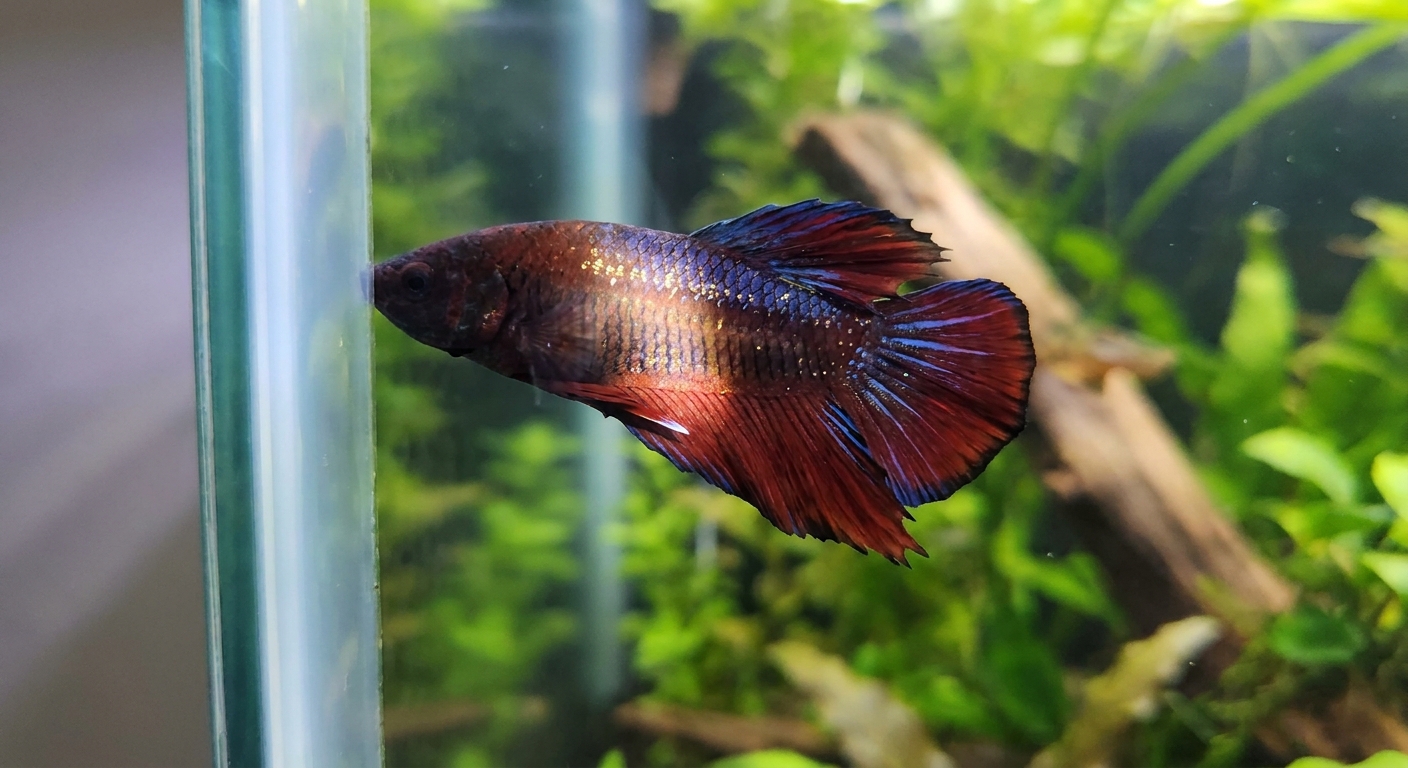
Velvet disease in betta fish is caused by a tiny dinoflagellate parasite commonly called Oodinium in the hobby (you may also see Piscinoodinium in more technical sources). It can look like a soft golden dusting on the body, but it often shows up first as behavior changes and breathing trouble. The good news is that velvet responds well when you catch it early and treat the whole environment, not just the fish.
What velvet is and why it spreads fast
Velvet parasites attach to your betta’s skin and gills. They irritate tissue, stress the immune system, and can make breathing harder. Velvet can move quickly through a tank because its life cycle includes free swimming stages that can reinfect again and again.
Velvet is often introduced through new fish, plants, nets, shared tools, or water from a store bag. It also takes advantage of stress. Cool water, unstable parameters, and poor filtration can all give it an opening.
If your betta’s environment needs a quick stability check while you treat, these guides help you tighten up the basics:
Velvet symptoms in bettas
Velvet can be tricky because the “gold dust” is not always obvious at first. Watch for a cluster of signs, especially if they escalate over a day or two.
Early warning signs
- Clamped fins and a “tucked in” posture
- Hiding more than usual, reduced curiosity
- Flashing (rubbing body against decor or substrate)
- Loss of appetite or spitting food out
- Color looks dull or patchy compared to normal
More advanced signs
- Fine gold, tan, or rusty dust on the body or fins, especially on the head and back
- Rapid breathing or working hard to breathe
- Hanging near the surface or near a filter outflow for oxygen
- Fins fraying from irritation and stress
- Lethargy, resting on the bottom more often
Important: Gills are a common target, so a betta with velvet may act “winded” even before you see the dust.
The flashlight test
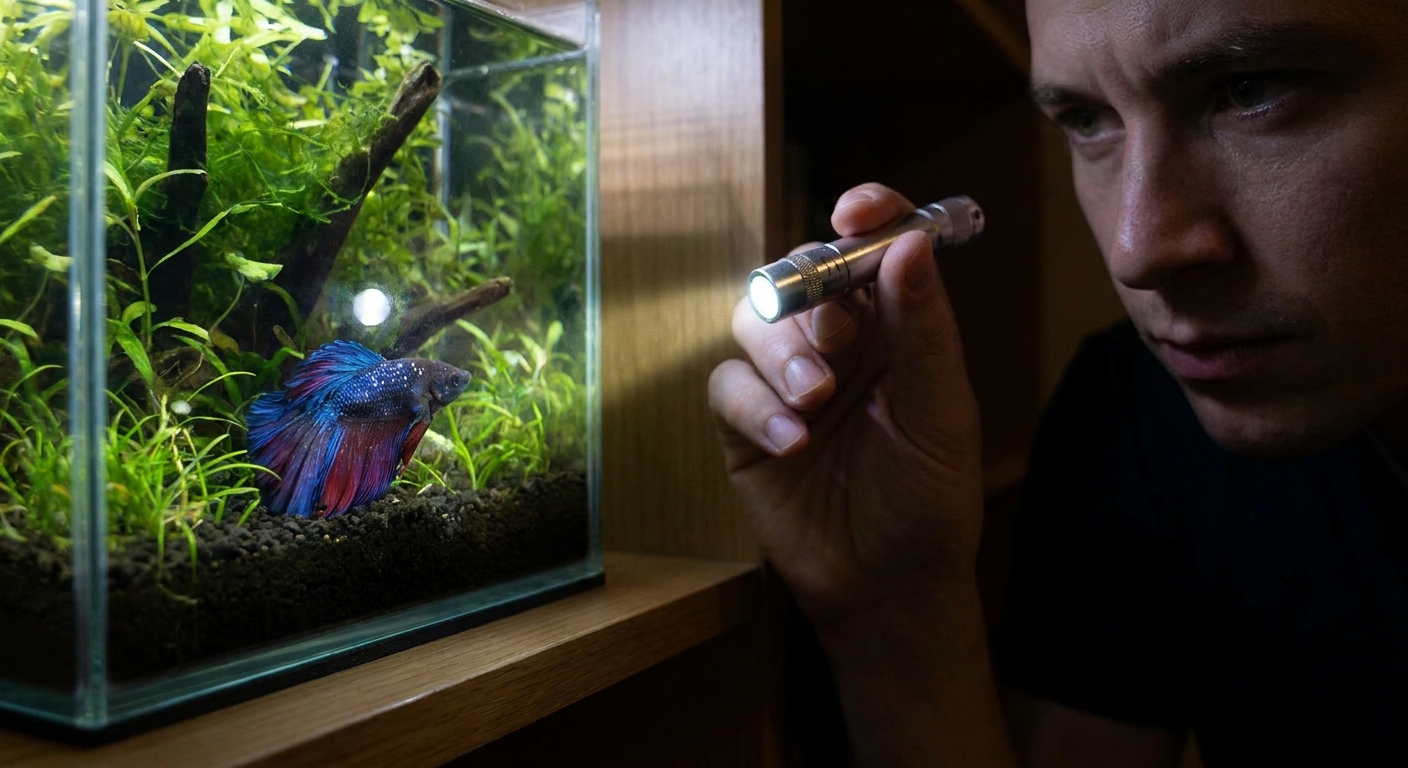
That signature velvet look is easiest to see when you use a focused light at the right angle. This is not a perfect diagnosis tool, but it can help you catch velvet early.
How to do a safe flashlight check
- Dim the room lights. Turn off the aquarium light if it is bright.
- Use a small flashlight or phone light. A narrow beam helps.
- Shine from the side, not straight on. Aim the beam across your betta’s body at a shallow angle.
- Look for a dusty shimmer. Velvet often looks like a very fine gold or copper powdering, not chunky grains.
- Check the head, back, and gill area. These spots commonly show it first.
Velvet vs ich vs fungus
Velvet is often confused with ich or fungal issues. Here are simple, practical differences you can use while you prepare treatment.
- Velvet: very fine dusting or sheen (gold, tan, rusty). Often paired with rapid breathing and clamped fins.
- Ich: distinct white dots like grains of salt. Spots look more “separate” and round. For an ich-specific plan, see Ich in betta fish: signs, treatment, and tank cleanup.
- Fungus: fuzzy, cottony patches that look raised and soft.
- Fin rot: ragged fin edges and progressive fin loss, often darker edges, usually more about water quality and bacteria. See Fin rot in betta fish: identify and treat it.
If you are unsure, treat the situation like an emergency of stress plus parasites: stabilize heat, improve oxygenation, and isolate if possible. Those steps help either way.
First response steps
1) Stabilize the setup
- Check temperature: aim for stable betta-friendly warmth (many keepers target roughly 78 to 80 F). Avoid sudden swings.
- Increase aeration: velvet can hit the gills hard. If you have an adjustable filter, slightly increase surface movement, or add an air stone if available.
- Test water if you can: ammonia and nitrite should be 0, nitrate kept low. If numbers are off, do a partial water change with properly treated water.
If you need a refresher on water prep, see how to prepare tap water for a betta tank.
2) Consider a hospital tank
A simple hospital tank makes treatment easier and protects plants, inverts, and beneficial bacteria depending on the medication used.
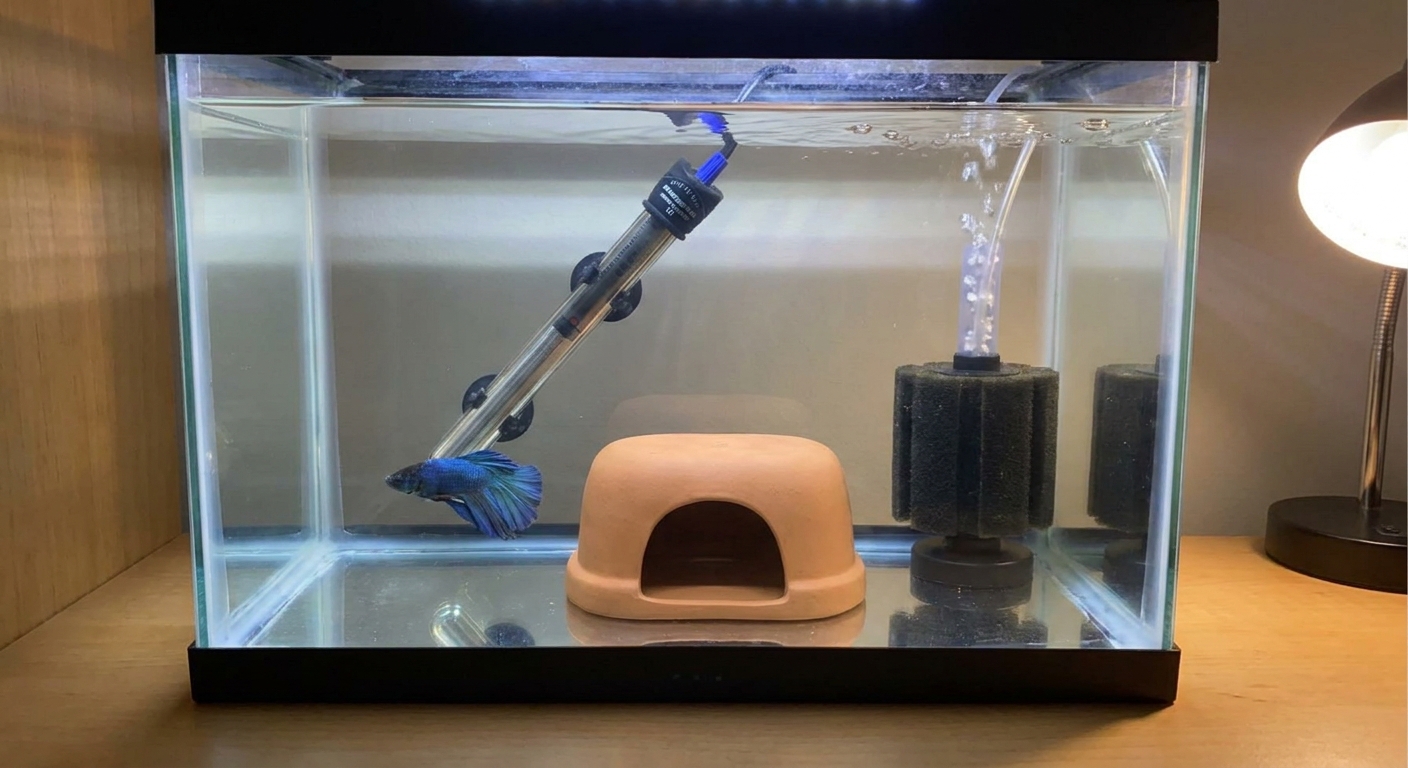
If you can set one up quickly, follow how to set up a hospital tank for a sick betta fish. Keep it bare bottom if possible, with a heater, gentle filter or air stone, and a hiding place.
3) Dim the lights
Many velvet dinoflagellates can use light through chloroplast-like structures, so keep lighting low during treatment. You do not need to panic blackout the tank immediately, but reduce bright light and avoid long photoperiods. This is supportive care, not a replacement for medication.
For long-term light balance after recovery, see betta fish lighting requirements.
How to treat velvet
Velvet treatment works best when you combine medication + supportive care + cleanup. Always follow the medication label directions for your specific product and tank size, and remove chemical filtration like activated carbon during treatment because it can pull medication out of the water.
Step 1: Choose a velvet-appropriate medication
Common velvet medications are based on one of these active ingredients:
- Copper (often chelated copper) which targets free swimming stages effectively
- Malachite green (sometimes combined with formalin), used for external parasites
Safety note: Copper can be dangerous for snails and shrimp and can bind to some substrates. Malachite green and formalin can also be harsh, and extra aeration is a smart move during treatment. If your betta lives with invertebrates, a hospital tank is usually the safest route.
Step 2: Temperature support (use caution)
You will sometimes see advice to gently increase temperature to help the parasite cycle faster. With velvet, this can be helpful in some setups, but it is not a one-size-fits-all rule.
- If your betta is already breathing hard, prioritize oxygenation and stability first. Warmer water holds less oxygen.
- Stay within normal betta-safe ranges and avoid sudden jumps.
- Follow your medication label if it gives temperature guidance, especially for copper and combination meds.
If you need help avoiding hot spots and swings, use betta tank temperature and heater placement.
Step 3: Keep the tank dim during the course
Reduce aquarium lighting and keep the room light low when possible. Think of this as helping the meds, not replacing them.
Step 4: Finish the full course
Velvet can look better before it is actually gone. Finish the full label course even if symptoms fade early. Stopping early is a common reason velvet returns.
Step 5: Clean up after treatment
- Water change per medication directions once treatment is complete.
- Gravel vacuum lightly to remove waste and the parasite’s encysted stage that can settle on surfaces and substrate.
- Restore filtration media like carbon only after treatment is finished, if you use it.
- Rinse and dry tools (nets, siphons). Hot water plus complete drying helps reduce cross-contamination between tanks.
For a steady routine that prevents rebound problems, see our tank cleaning routine and water change schedule.
A quick medication safety reminder
- Do not mix medications unless the label specifically says it is safe.
- Remove carbon and other chemical media during dosing.
- Boost aeration during treatment, especially with malachite green or formalin blends.
Do you need to treat the whole tank?
If your betta is treated in the main tank, then yes, treat the whole tank because velvet has free swimming stages in the environment.
If you move your betta to a hospital tank, you still need to address the display tank:
- Option A: Treat the display tank (especially if other fish are present).
- Option B: Run the display tank fishless for several weeks while maintaining normal filtration and temperature to help interrupt the parasite’s cycle.
Which option fits best depends on what lives in the tank and what medication you plan to use. If there are other fish showing symptoms, treating the display tank is usually the more reliable choice.
Feeding during treatment
A betta fighting velvet may not want to eat much. That is normal, and it is better to feed lightly than to pollute the water with uneaten food.
- Offer small portions once daily, or even every other day if appetite is poor.
- Remove uneaten food within a few minutes.
- Choose easy, high-protein foods your betta recognizes.
If appetite issues are part of what tipped you off, this guide can help you troubleshoot safely: why your betta fish is not eating.
When velvet is an emergency
Velvet can turn serious quickly when gills are heavily affected. Seek urgent, fish-savvy support if possible and act fast with treatment when you see:
- Very rapid breathing or gasping at the surface
- Unable to stay upright or frequent rolling
- Extreme lethargy and refusal to move
- Fast worsening within hours
In the meantime, prioritize oxygenation, stable warmth, and starting an appropriate medication course as soon as you can.
Preventing velvet from coming back
Quarantine new arrivals
New fish, plants, and even decor can bring parasites along. A short quarantine period in a separate tank is one of the best velvet preventers.
Keep the environment stable
- Use an appropriately sized tank and avoid sudden temperature swings.
- Keep ammonia and nitrite at 0 with an established cycle.
- Avoid overfeeding and keep up with water changes.
If you are building stability from the ground up, how to cycle a new betta fish tank is a great foundation.
Reduce stress with shelter and calm flow
Stress does not cause velvet by itself, but it makes it easier for parasites to win. Give your betta hiding spots and gentle resting places near the surface.
Velvet FAQ
Is velvet contagious to other fish?
Yes. Velvet spreads through the water via free swimming stages. If other fish share the tank, assume exposure and watch them closely.
Will a salt bath cure velvet?
Salt can reduce osmotic stress and help with some external issues, but it is not a reliable standalone cure for velvet. Velvet responds best to proven anti-parasite medications combined with supportive care.
Can velvet look like shiny betta color?
It can. Some bettas have natural iridescence, but velvet tends to look like dust or a powdery film that seems “wrong” under a flashlight, often paired with flashing or breathing changes.
How long does it take to recover?
Many bettas perk up within a few days once treatment is working, but full clearance depends on the parasite life cycle and completing the full course. Keep conditions stable for a couple of weeks after treatment and continue observing under a flashlight if you are unsure.
One last gentle reminder
If you suspect velvet, you do not need perfect certainty to start smart supportive steps. Warm, stable water. Extra oxygen. Dim lights. Clean conditions. Then follow a velvet-appropriate medication course carefully.
Your betta’s shine is worth protecting, and with quick action, that golden dust can be sent swirling right out of your tank.