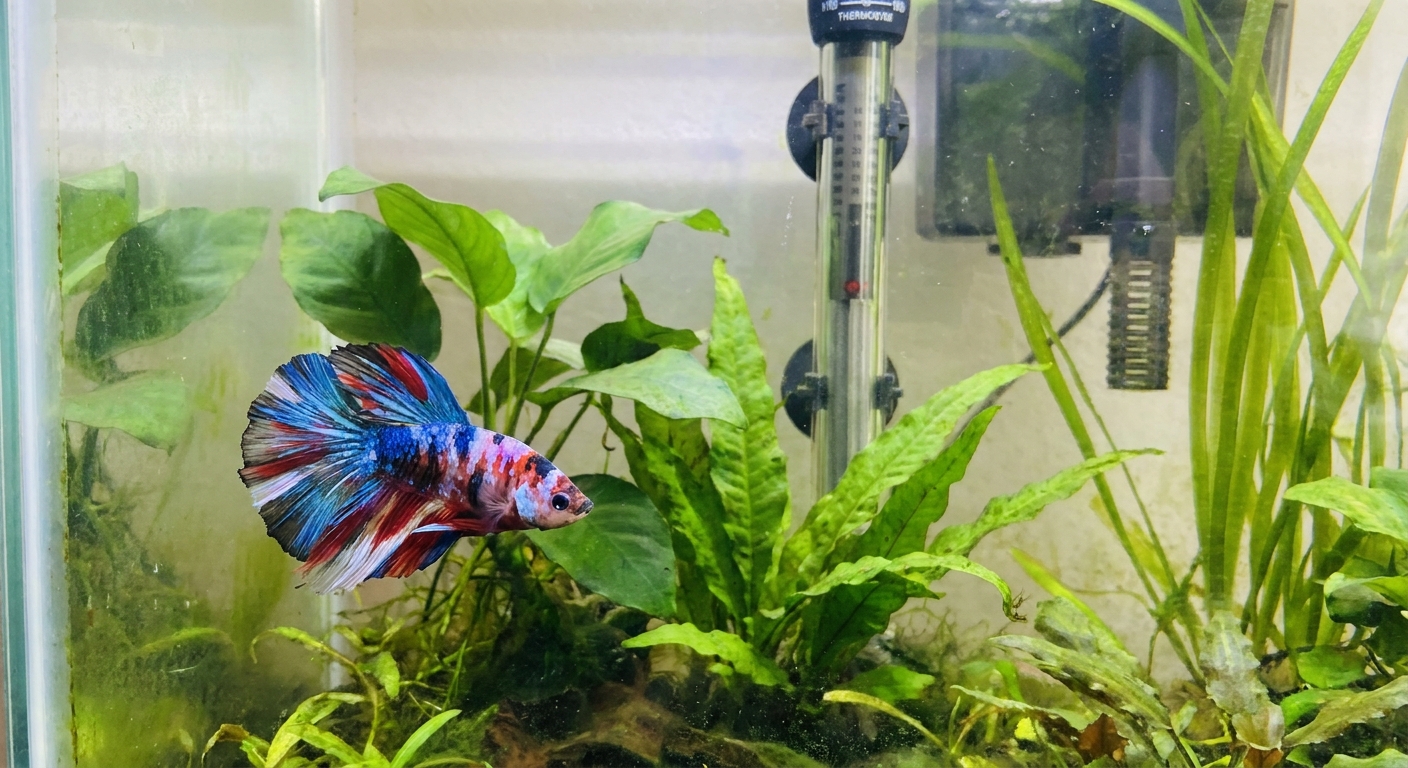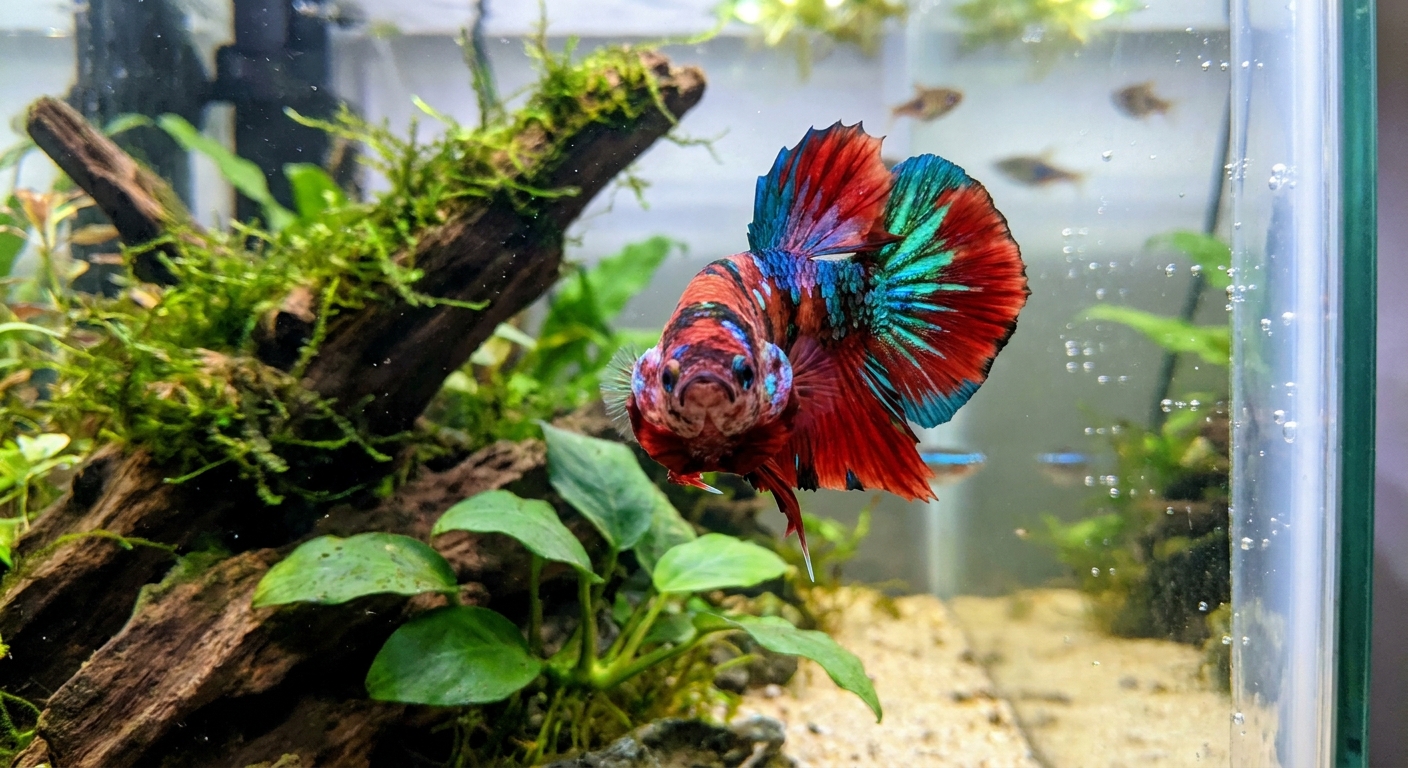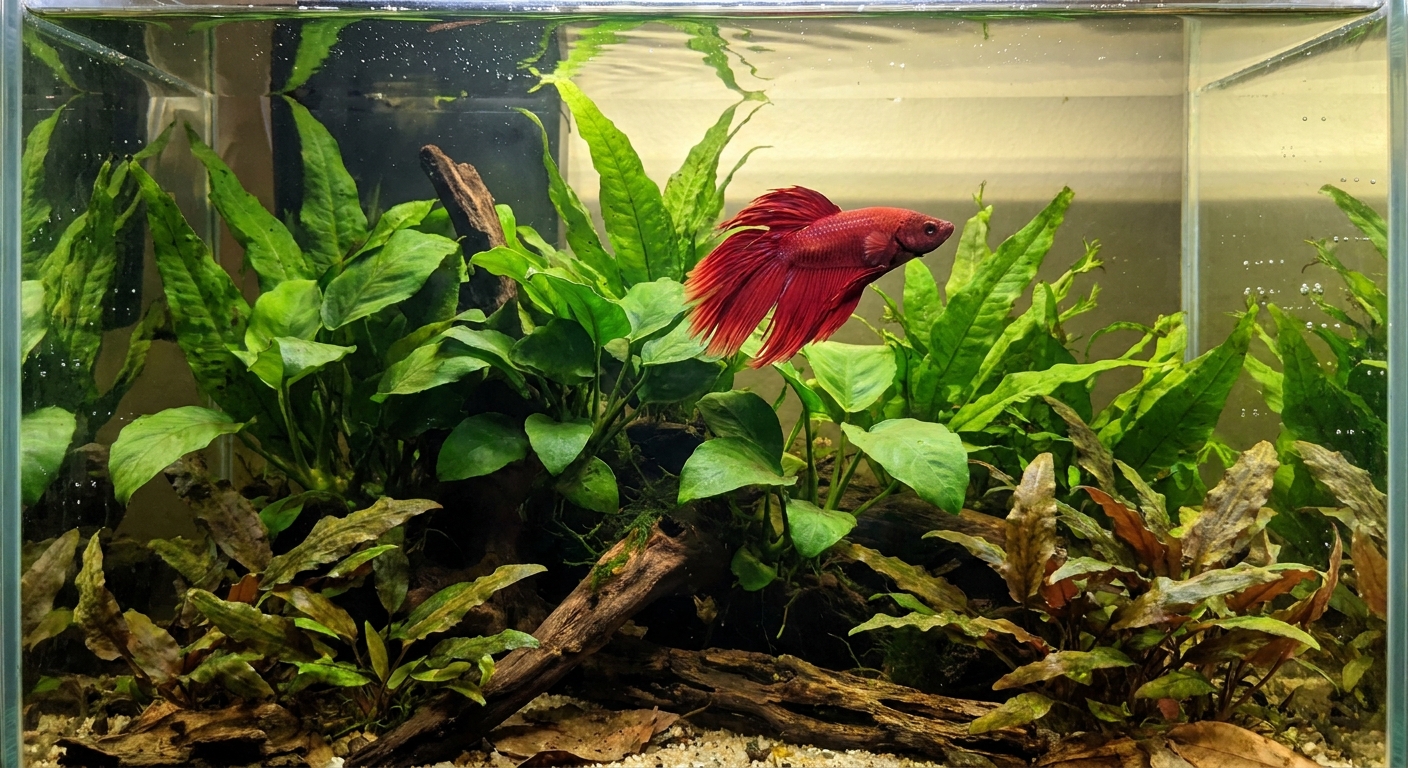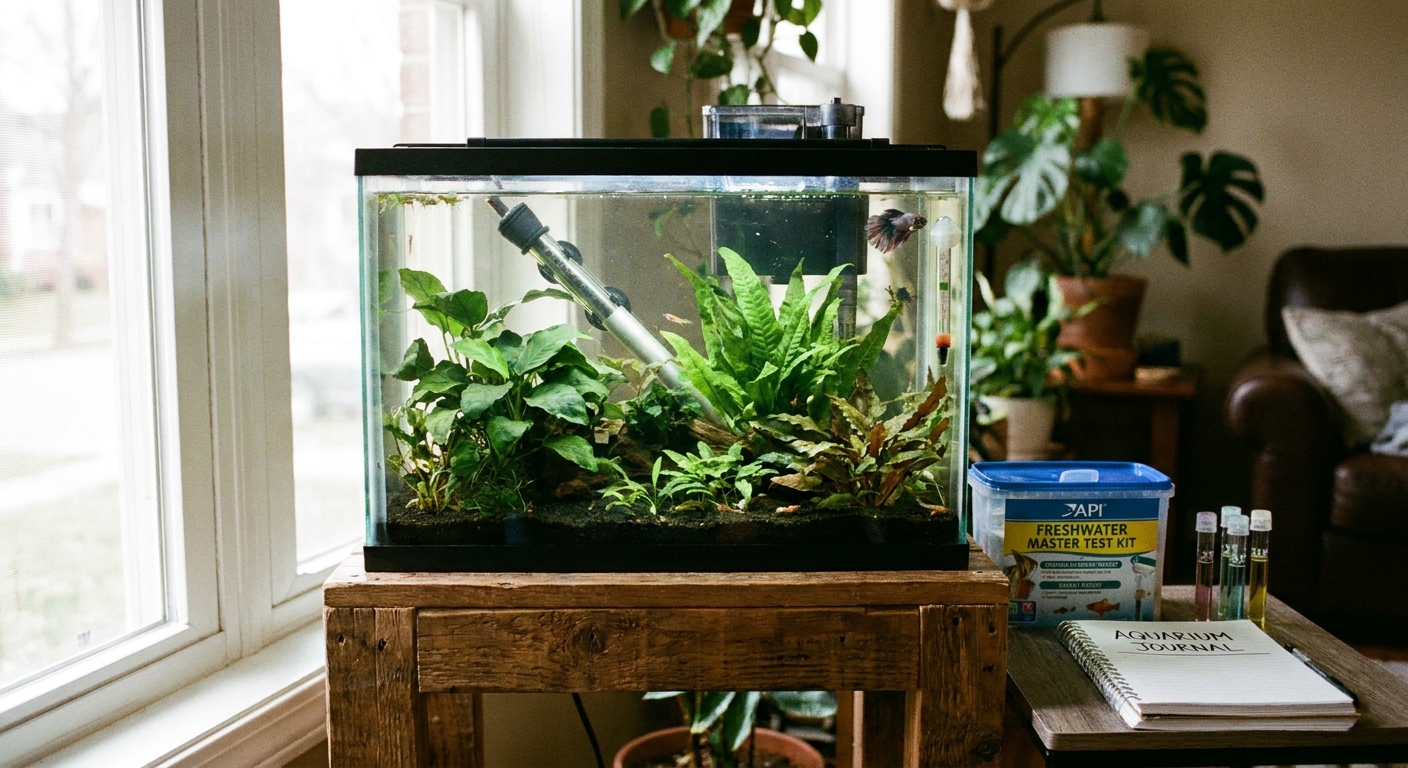

Let’s make your tank the happiest little splash in the house! If your betta is zipping up and down the glass like they are trying to escape, you are seeing a behavior called glass surfing, sometimes described as tank pacing. It is common. It is also your betta’s way of saying, “Something feels off.”
The good news: glass surfing is usually fixable with a few calm, practical changes to the environment.
What it looks like
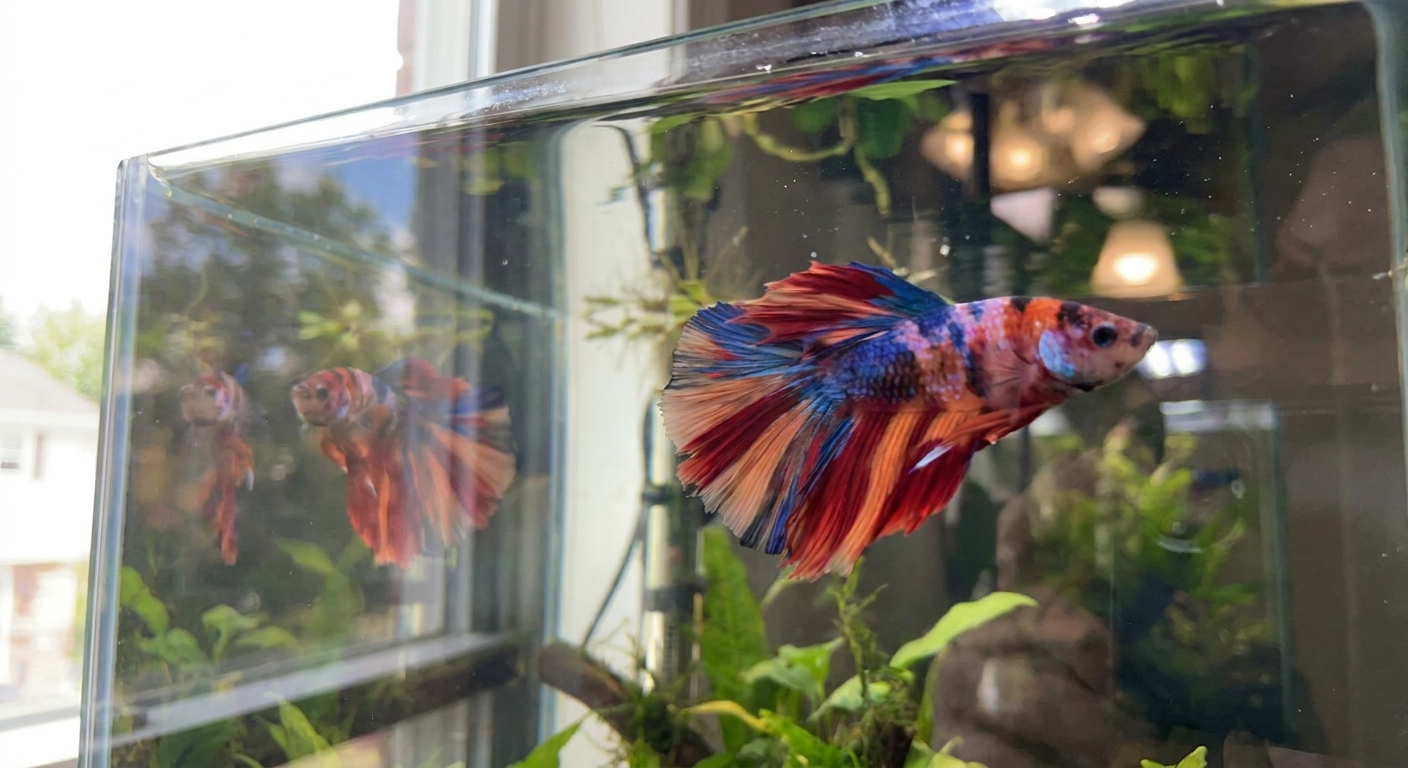
Glass surfing is repetitive, restless swimming along the aquarium walls, often:
- Up and down one corner, like a tiny elevator ride
- Back and forth across the front panel
- Along the sides of the tank where reflections are strongest
Many bettas do it occasionally. It becomes a concern when it is frequent, frantic, or paired with other stress signs like clamped fins, pale color, hiding all day, or refusing food. If you want a quick checklist of broader stress clues, visit 7 signs of stress in betta fish and how to fix their environment.
Why bettas glass surf
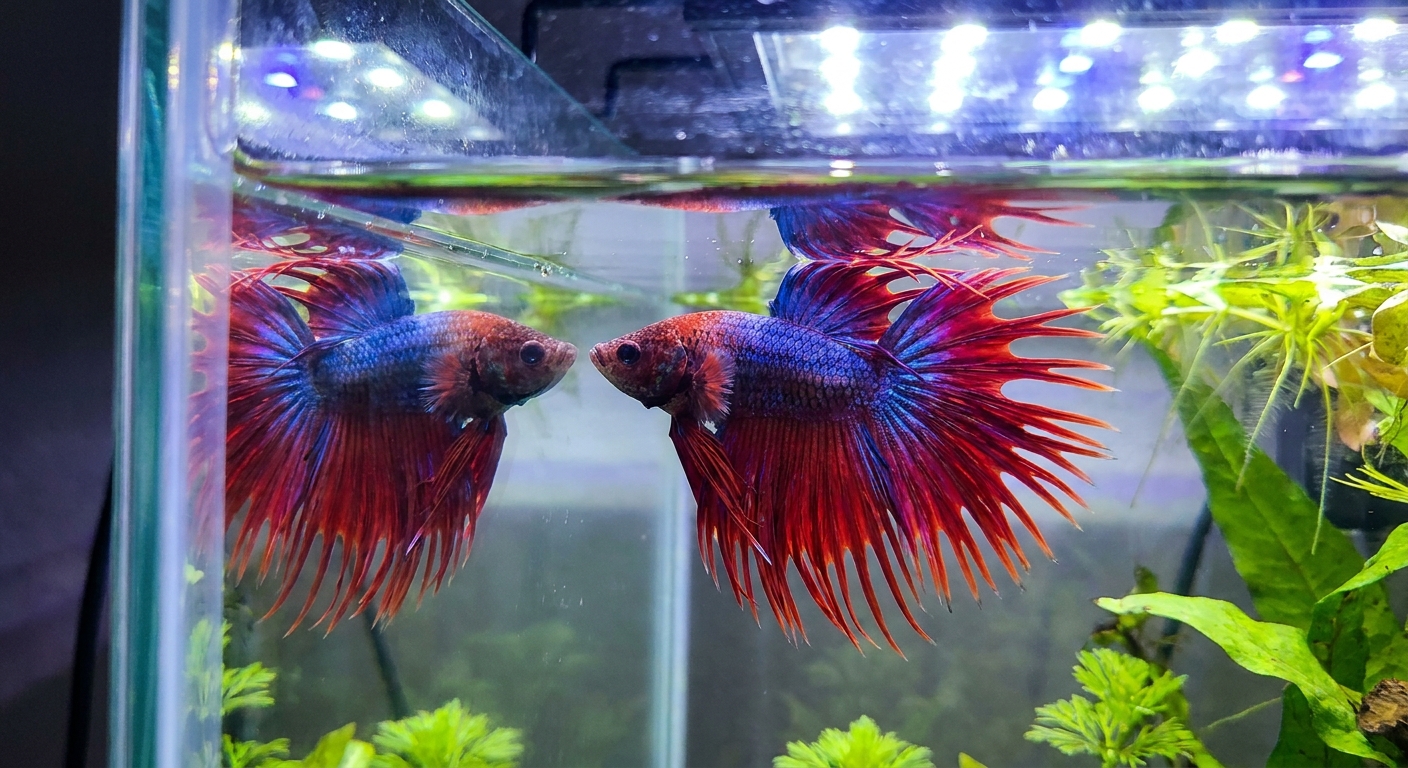
1) Reflection or seeing a “rival”
Bettas are territorial. When the glass acts like a mirror, your betta may think another betta is patrolling their borders. That can trigger pacing, flaring, and agitation.
Clues: Glass surfing happens most near bright lights, near the front pane, or when the room is dark and the tank light is on. You may see flaring at the glass.
2) A new tank or recent change
New home, new decor, new filter, new tank mates, new routine. Bettas like to know their territory. During the first days to a few weeks, glass surfing can be a “settling in” behavior.
Clues: It started right after a move, a rescape, a deep clean, or introducing something new.
If your tank is newly set up, make sure it is safely cycled. An uncycled tank can create unstable water conditions that stress a betta fast. See how to cycle a new betta fish tank.
3) Water quality problems
Pacing can be a stress response when water conditions are irritating or unstable. Bettas do best with steady, clean water, and they are not shy about telling you when something is wrong.
Common culprits:
- Ammonia or nitrite above 0 ppm
- Elevated nitrate (many keepers aim to keep it under about 20 to 40 ppm, but sensitivity varies)
- Sudden pH swings
- Not enough water changes, or very large changes done inconsistently
Clues: Surfing appears with lethargy, clamped fins, gulping at the surface, or a general “on edge” look.
A steady routine helps a lot. Use this betta tank cleaning routine and water change schedule as a baseline.
4) Temperature stress
Bettas are tropical fish. When water is too cool, too warm, or swings around day to night, stress behaviors can show up, including pacing and restlessness.
Clues: Surfing happens most when the heater is struggling, the tank is near a drafty window, or the temperature changes after lights out.
For temperature targets and placement tips, visit betta tank temperature and heater placement.
5) Too much current or not enough rest zones
Strong flow can force a betta to “tread water,” and some bettas respond by hanging out near the glass or corners where the current is lower. Others get overstimulated and pace.
Clues: Your betta struggles to hold position, avoids the filter outflow, or only cruises along the perimeter.
Gentle filtration makes a big difference. See choosing the right filter for a betta tank.
6) Boredom and not enough enrichment
A bare tank can feel like a bright, empty hallway with nowhere to explore. Glass surfing can become a habit when there is little cover, few hiding places, and no “betta things” to investigate.
Clues: The tank has minimal plants or decor, and the betta spends most of the day visible and roaming.
Add safe cover and cozy retreats. A simple upgrade list is in essential tank decorations for betta hiding spots and enrichment.
7) Tank size and layout issues
Small tanks can magnify everything: reflections, temperature swings, waste buildup, and stress. Bettas can live in smaller spaces than many fish, but they still thrive with room to cruise, rest, and explore.
If you are deciding between common setups, see 5 gallon vs 10 gallon tank for bettas.
8) Stress from tank mates
Even peaceful community fish can stress a betta if they are too active, too nippy, or constantly in the betta’s face. Sometimes the issue is not aggression, but nonstop visual stimulation.
Clues: Surfing increases after adding tank mates, or your betta paces the side nearest another tank.
Compatibility matters a lot. Start with best betta tank mates for a 10 gallon aquarium and avoid the common troublemakers in 10 worst tank mates for betta fish. If your betta is territorial, introducing tank mates to a territorial betta can help you slow things down.
9) Stress outside the tank
Sometimes the problem is not the water at all. A high traffic spot, kids or pets pressing up to the glass, tapping (even occasional), loud speakers, or vibrations from a subwoofer can keep a betta in a constant state of alert. Direct sunlight can also cause glare (more reflection) and temperature swings.
Clues: Surfing ramps up when the room gets busy, when the TV is on, or at certain times of day when sunlight hits the tank.
10) Extra shiny glass
New tanks, freshly cleaned glass, and very bright lighting can increase mirror-like reflections. Some keepers notice glass surfing calms down once the tank has a little more “lived in” look. You still want clean viewing panels, of course, but you do not need to scrub every side pane spotless every time if your water quality is good.
How to stop it
Here is a simple order of operations that solves most pacing problems without guesswork.
Step 1: Check the basics (today)
- Test your water if you can. If ammonia or nitrite is above 0 ppm, address that immediately with partial water changes and a cycling plan.
- Confirm temperature stability and correct heater placement. Bettas do best when the temperature stays steady.
- Look at flow. If your betta is being pushed around, baffle the output or switch to a gentler filter.
Step 2: Reduce reflections (today and this week)
- Adjust lighting: reduce the photoperiod, meaning fewer hours of light each day. Many bettas do well with about 6 to 8 hours. Avoid having the tank light on in a dark room. For a betta-friendly lighting routine, see betta fish lighting requirements.
- Add background cover: a dark background on the back (and even sides) can cut mirror effects and help your betta feel less exposed.
- Add plants near the glass: tall plants or floating cover break up sight lines and soften reflections. If you are choosing between plant types, live vs silk plants for bettas is a helpful starting point.
Step 3: Add comfort zones (this week)
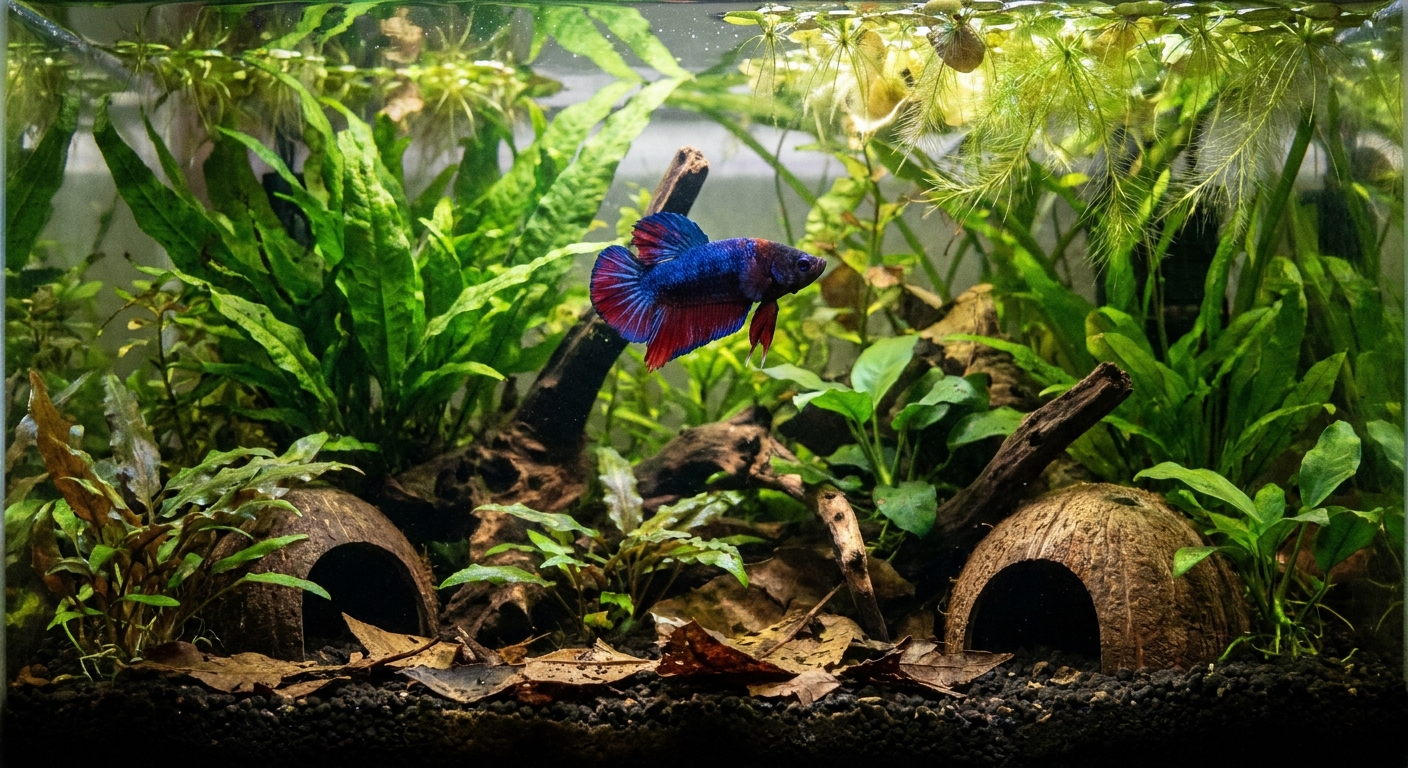
- Hiding spots: caves, arches, and plant thickets help your betta feel secure.
- Resting perches: broad leaves or betta hammocks near the surface reduce restless laps.
- Floating cover: gentle shade from floaters can make the whole tank feel safer.
Step 4: Enrichment without stress (ongoing)
- Rotate decor lightly, and only if your betta tolerates changes. Avoid major rescapes, especially for anxious or territorial fish. Think “one small tweak” occasionally, not a total makeover.
- Feed with intention: drop pellets one at a time in different spots so your betta has to search a little, rather than gulping everything in one place and pacing right after. Use how much and how often to feed a betta fish to keep portions steady.
- Offer variety: mixing quality staples with occasional frozen or live foods can add stimulation. See frozen and live foods for betta color and vitality.
Step 5: If tank mates are involved, simplify
If glass surfing started after adding tank mates, consider a pause. That can mean rehoming the stressor, adding more visual breaks, or switching to a more compatible species. Even “safe” tank mates can be too busy for a particular betta.
How long it takes
It depends on the cause, but here is a realistic (and flexible) timeline:
- Reflection fixes: often improve within 24 to 72 hours after lighting and cover changes.
- New tank jitters: commonly settle within 1 to 2 weeks as your betta maps the territory.
- Water quality or cycling issues: improve as parameters stabilize, usually over days to weeks depending on the situation.
- Habit pacing: if it became routine, it may fade gradually over a couple weeks once the tank feels safer and more interesting.
Some bettas take longer, especially if the stressor has been present for a while. Progress often looks like shorter pacing sessions, more time resting, and calmer, slower swimming patterns.
When it is a red flag
Glass surfing is a behavior, not a disease, but sometimes it shows up alongside medical trouble. Pay extra attention if you see:
- Heavy breathing, gasping, or hanging at the surface (this can also point to low dissolved oxygen, high ammonia or nitrite, or water that is too warm)
- Sudden refusal to eat
- Clamped fins, rapid color loss, or severe lethargy
- Flashing and rubbing on objects (could be irritation or parasites)
- White spots, gold dusting, fuzzy patches, or rapidly worsening fin damage
If you suspect illness, a hospital tank can make treatment safer and less stressful. See how to set up a hospital tank for a sick betta fish. For common conditions that may overlap with stress behaviors, these guides can help you match symptoms: ich in betta fish, betta fish velvet disease, and fin rot in betta fish.
Quick checklist
- Pacing + flaring at glass: reduce reflections, adjust lighting, add plant cover.
- Pacing after a big clean or rescape: give it time, add familiar hides, keep routines steady.
- Pacing + clamped fins: check temperature, flow, and water parameters right away.
- Pacing near filter output: reduce current and add resting areas.
- Pacing started after tank mates: add visual breaks or separate if needed.
- Constant pacing in a bare tank: add hides, plants, and gentle enrichment.
- Pacing in a busy room: reduce tapping, vibration, and sudden activity near the tank.
FAQ
Is it normal?
Short bursts can be normal, especially in a new tank or during high-energy moments like feeding time. Ongoing, frantic pacing usually means stress, reflection, boredom, or water and temperature issues.
Does it mean my betta wants out?
It can look that way, but it is usually your betta reacting to their environment inside the tank, not “wanting a different room.” Fixing reflections, providing cover, and stabilizing conditions typically solves it.
Should I tap the glass to stop it?
No thank you. Tapping usually adds stress. It may interrupt the behavior for a second, but it does not fix the cause.
Will adding a mirror help or hurt?
Mirrors are best used only for brief, controlled enrichment and not as a solution for pacing. If your betta is already glass surfing or flaring at reflections, adding more mirror time usually makes things worse.
A calmer tank
Glass surfing is your betta’s fast little message that something needs adjusting. Start with the basics, soften reflections, add cozy cover, and keep the environment steady. With a few thoughtful tweaks, most bettas trade frantic pacing for relaxed exploring and peaceful leaf lounging.