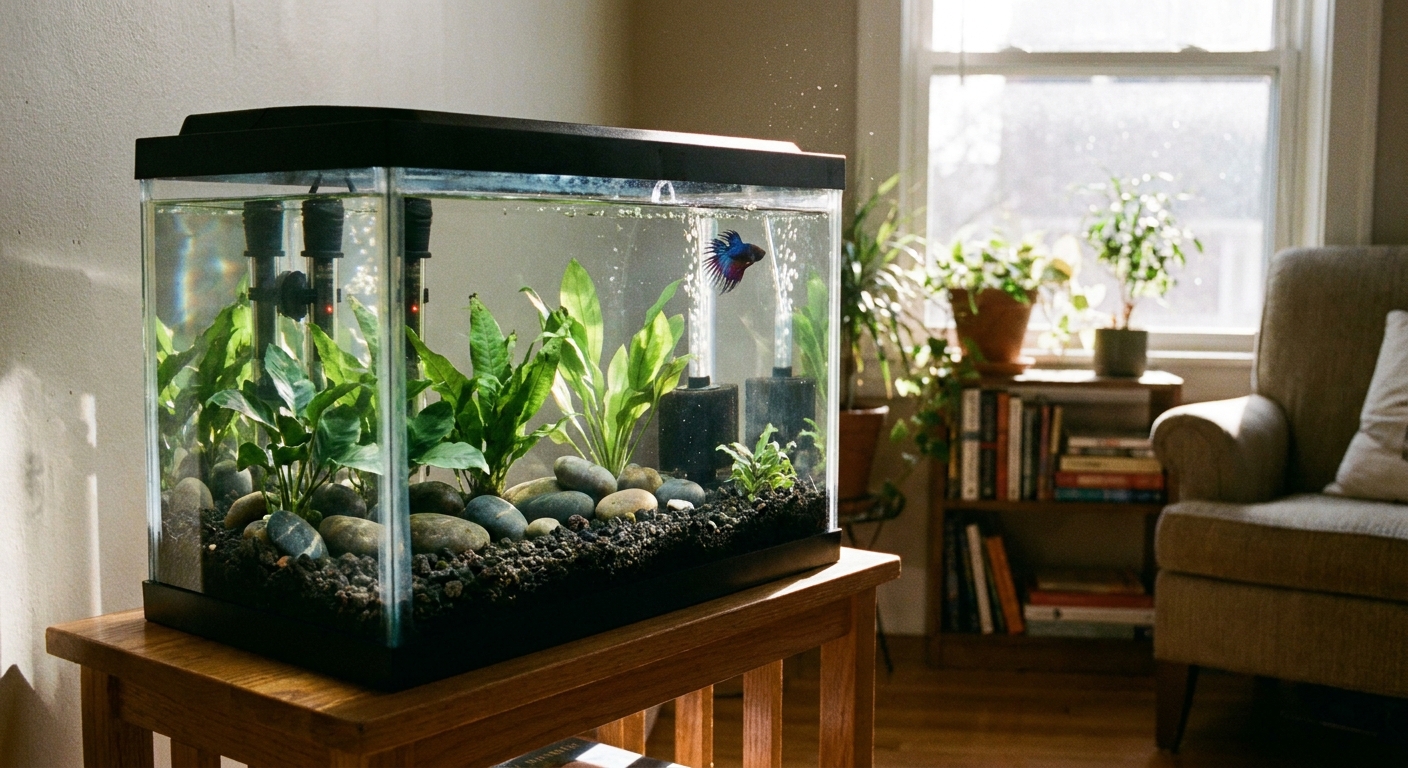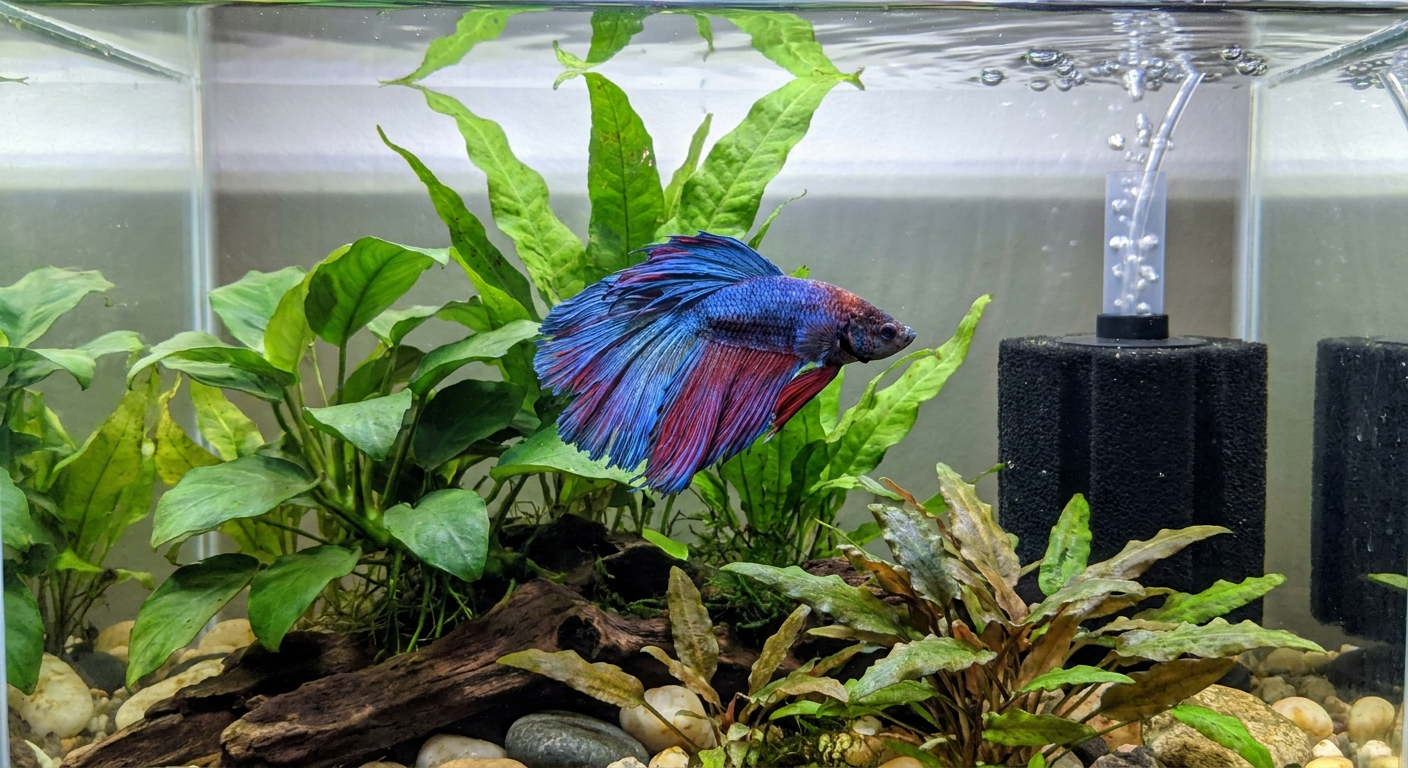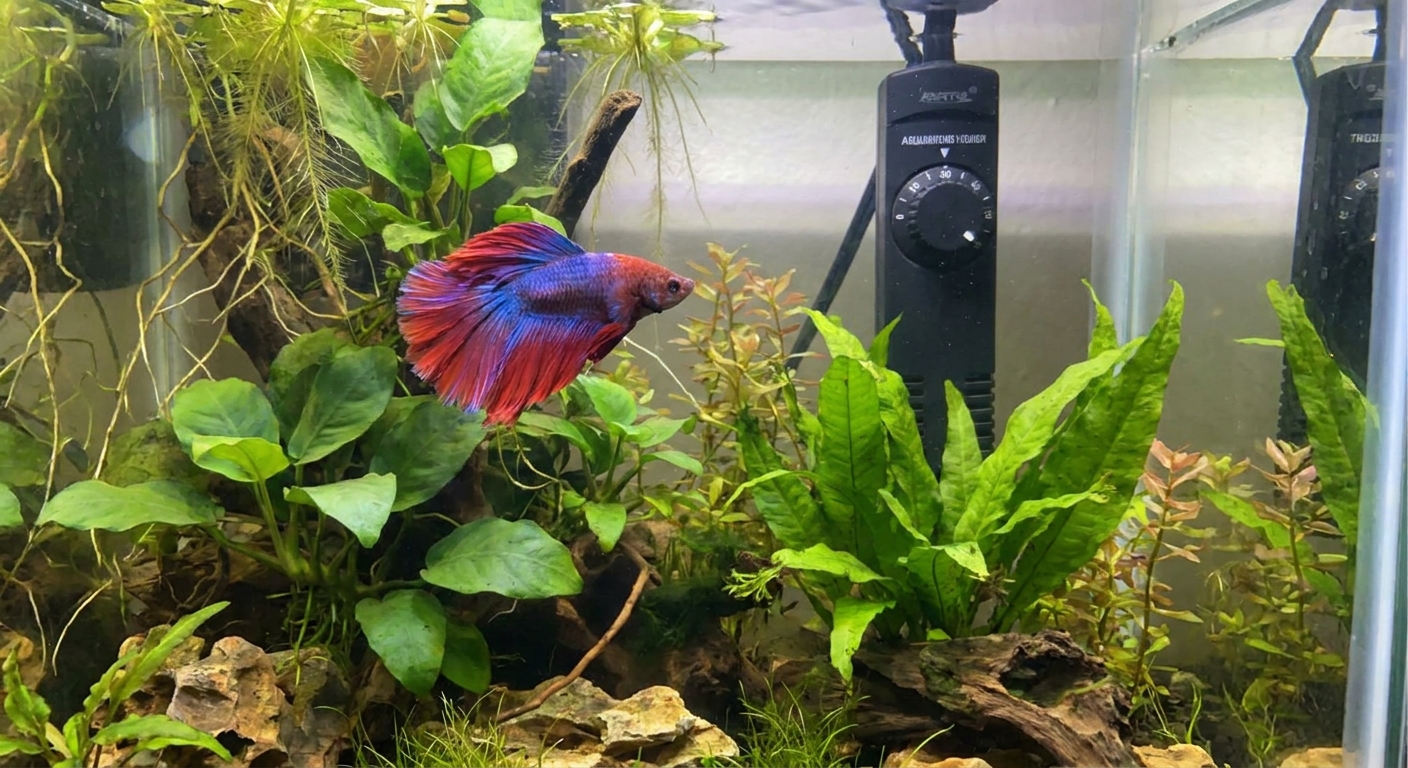

Let’s make your tank the happiest little splash in the house! Before a betta moves in, your aquarium needs a quiet little workforce of beneficial bacteria. These helpful microbes turn toxic nitrogen waste into safer forms, keeping your water chemistry betta-friendly and stable.
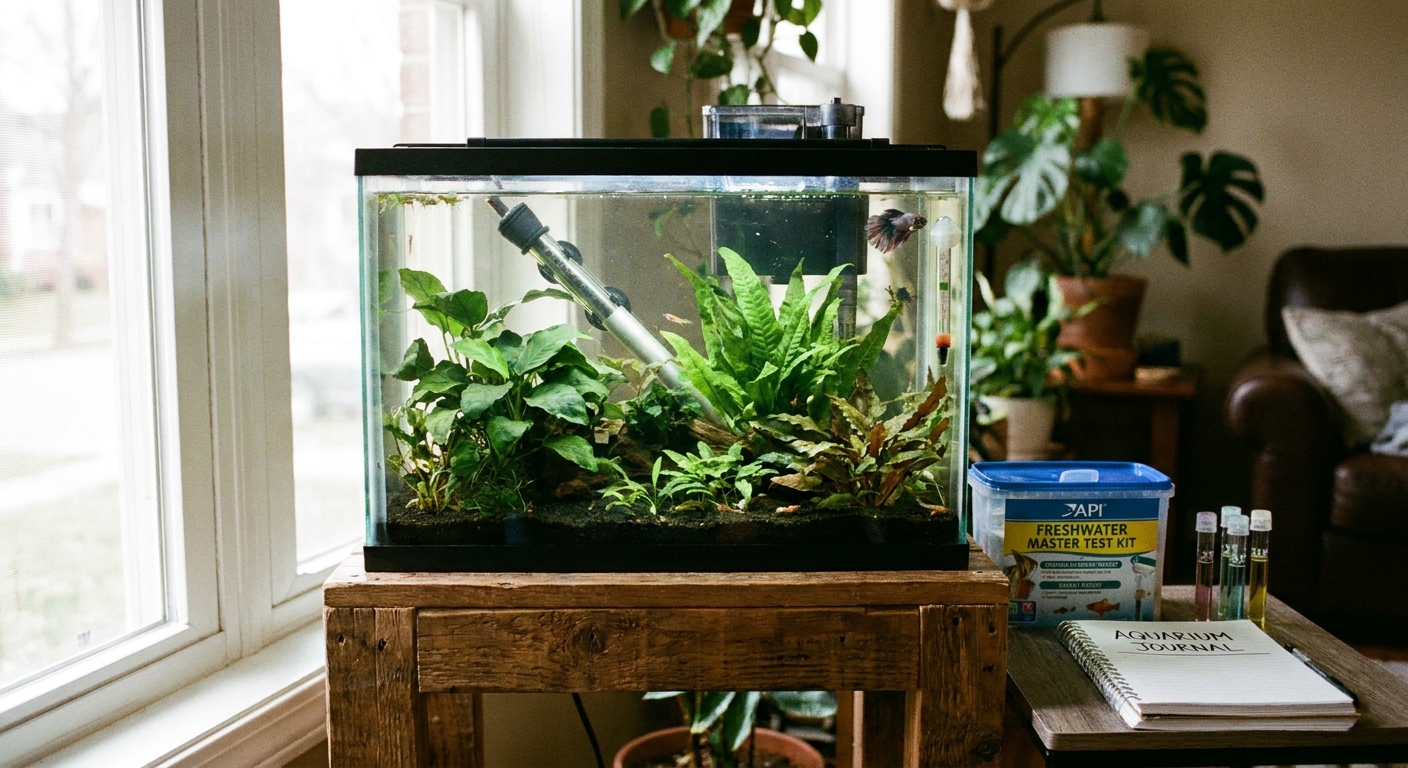
This guide walks you through cycling a new betta tank in a beginner-friendly way, with simple steps, safe target numbers, and what to do if things get wobbly.
What cycling means
Cycling is the process of growing beneficial bacteria that complete the nitrogen cycle:
- Ammonia (NH3/NH4+) appears first. It comes from fish waste, leftover food, and decaying plant bits. Ammonia is toxic.
- Nitrite (NO2-) appears next, as bacteria start consuming ammonia. Nitrite is also toxic.
- Nitrate (NO3-) appears last, as different bacteria consume nitrite. Nitrate is much less toxic and is managed with water changes and plants.
A brand-new tank has little to none of these bacteria, so ammonia can spike fast. Cycling first helps your betta avoid burns to gills and fins, stress, and illness.
Quick reality check: Water can look crystal clear and still be unsafe. Testing is how you know.
What you’ll need
- A tank that is ideally 5 gallons or larger (more water is more stable).
- Filter (gentle flow is best for bettas).
- Heater to keep water stable, typically around 78 to 80 F (25.5 to 26.5 C).
- Thermometer for quick checks.
- Water conditioner that treats chlorine and chloramine.
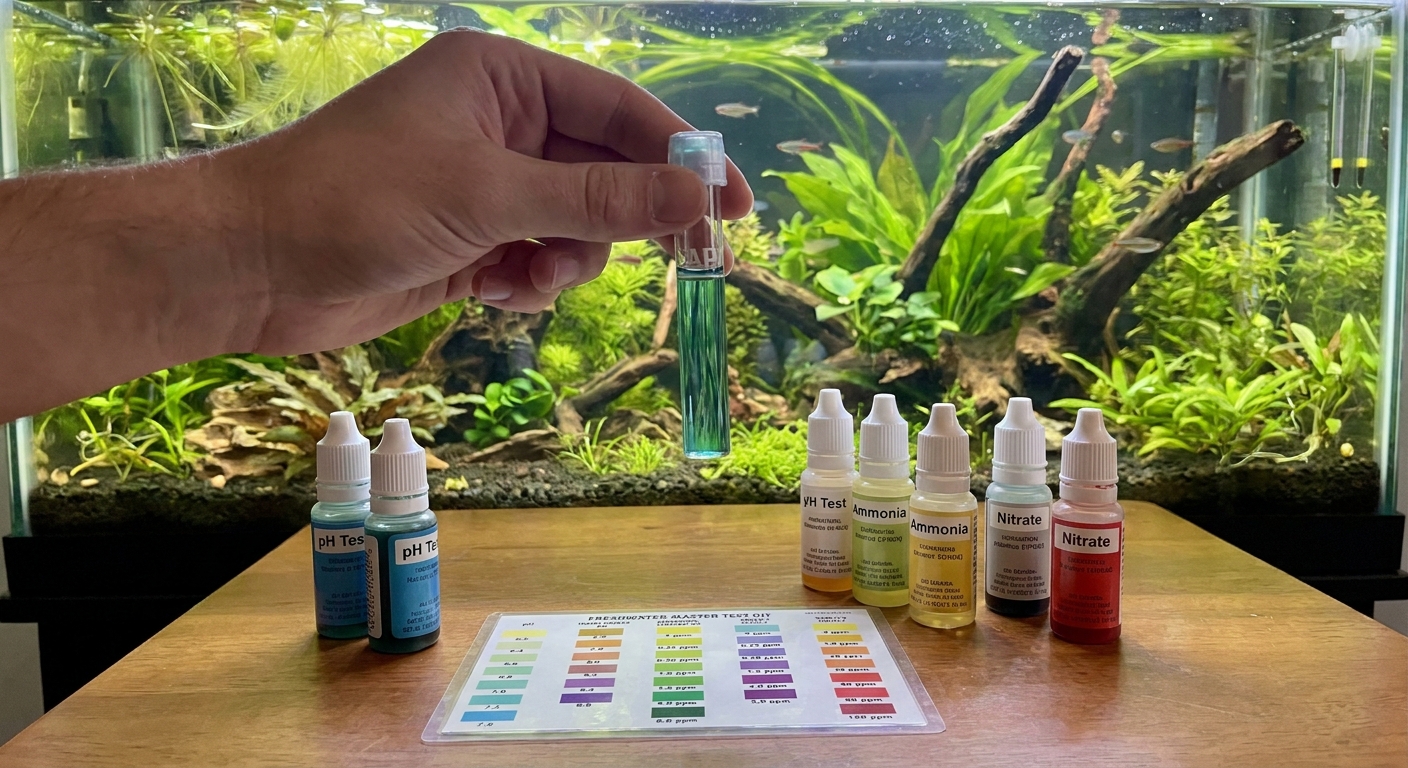
- Liquid water test kit for ammonia, nitrite, nitrate, and pH (more reliable than strips for cycling).
- An ammonia source for fishless cycling (pure household ammonia with no scents or surfactants, or a pinch of fish food).
- Optional but helpful: bottled beneficial bacteria, live plants, and a simple notebook for tracking test results.
If you’re still choosing equipment, the basics of a calm, betta-friendly setup are covered in Tank Setup & Environment.
Fishless cycling
Fishless cycling grows bacteria without exposing a fish to toxins. You feed the tank an ammonia source and let the bacteria populations build naturally.
Step 1: Set up and run equipment
Fill the aquarium, add conditioner, and start the filter and heater. Cycling bacteria need moving, oxygenated water and a stable temperature.
- Place the filter media (sponge, cartridge, biomedia) exactly as you will keep it long-term.
- Set the heater and confirm temperature stays steady for 24 hours.
- Add substrate and decor. If you add wood, it may tint the water slightly, which is normal.
Important: Do not cycle with the filter turned off. The filter media is one of the main homes for beneficial bacteria.
Power outage tip: Try to keep filter media wet and oxygenated. If the filter stops for more than a few hours, bacteria can start to suffer. If it is been off a long time, test as if you are back in cycling mode.
Step 2: Add an ammonia source
You have two beginner-friendly choices:
- Pure ammonia: Add enough to reach about 1 to 2 ppm ammonia.
- Fish food method: Drop in a small pinch daily and let it decay into ammonia (slower and harder to control, but workable).
If you use pure ammonia, make sure it is plain. No fragrances, no dyes, no “foaming” ingredients.
How to dose it without guessing: Add a tiny amount, let the tank circulate for 10 to 15 minutes, then test. Repeat slowly until you land around 1 to 2 ppm.
Safety note: Use household ammonia carefully in a ventilated space, avoid splashes, and keep it away from kids and pets.
Betta-sized tip: Cycling does not need sky-high ammonia. Extremely high levels can stall the cycle. Aim for a gentle, steady feed.
Step 3: Test and watch the phases
During cycling, test ammonia, nitrite, and nitrate. Early on, you’ll see a pattern:
- Phase A: Ammonia rises, nitrite stays at 0, nitrate stays at 0.
- Phase B: Nitrite appears and rises. Ammonia may start dropping.
- Phase C: Nitrate appears and rises. Nitrite starts dropping.
Most new tanks take 2 to 6 weeks to cycle, depending on temperature, filter media, and how much bacteria are introduced.
How often to test: Every 1 to 2 days is great for beginners. At minimum, test a few times per week.
One more sneaky thing: Cycling can slowly lower pH in some tanks, especially if your water is very soft. If pH drops below about 6.5, cycling can slow or stall. If that happens, a partial water change and steadier buffering can help.
Step 4: Keep feeding the bacteria
As ammonia starts converting, your tank may read 0 ammonia but high nitrite. That’s normal.
- Whenever ammonia hits 0, re-dose ammonia back to about 1 to 2 ppm.
- If nitrite climbs extremely high on your kit and seems stuck for many days, do a partial water change to bring nitrite down. Extremely high nitrite and built-up waste can stall progress.
Step 5: Know when you’re done
Your tank is considered cycled when it can process your daily ammonia “meal” quickly.
Most beginner-friendly finish line:
- Add ammonia to reach about 1 to 2 ppm.
- Within 24 hours, you test 0 ppm ammonia and 0 ppm nitrite.
- You have a measurable amount of nitrate (often 5 to 40 ppm, depending on plants and water changes).
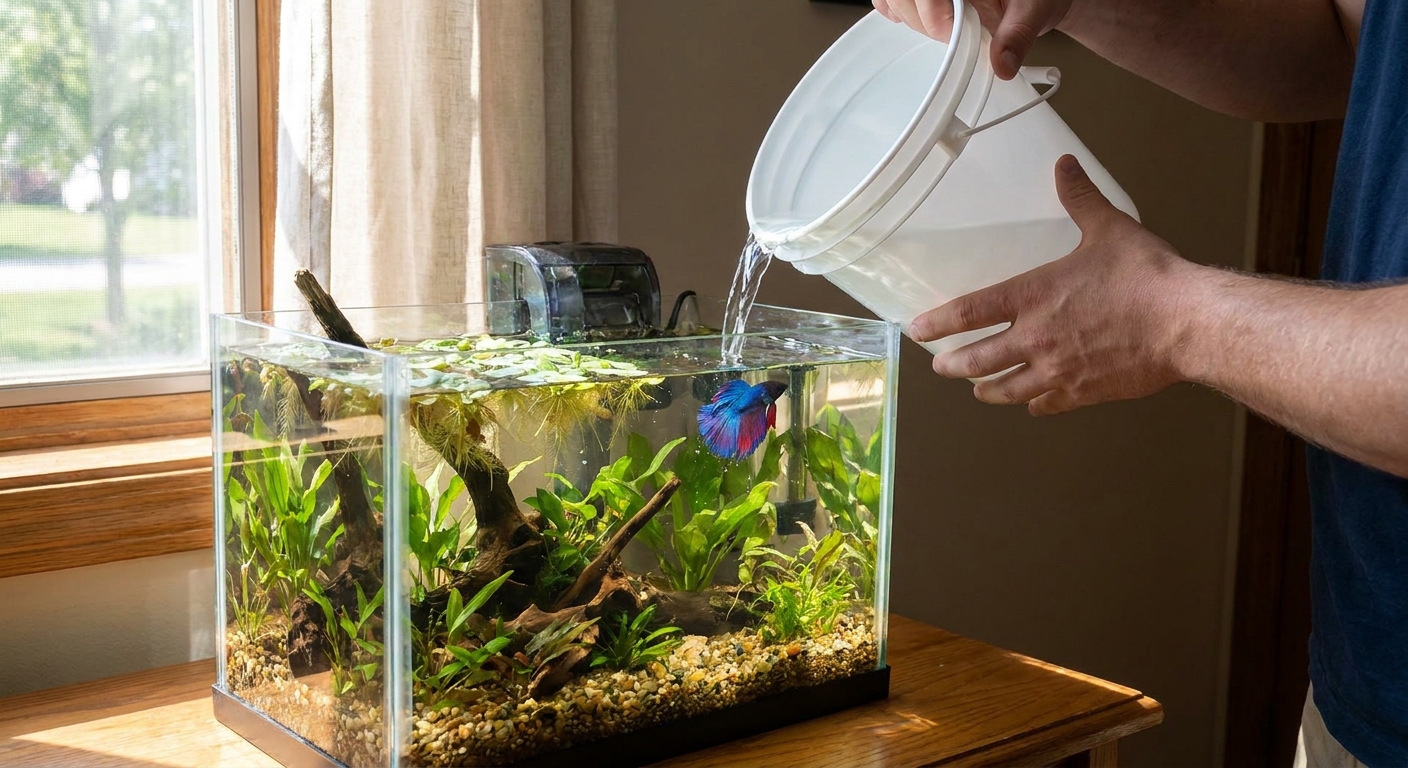
Once you hit that, do a large water change (often 50 to 80%) to reduce nitrate before adding your betta.
- Dechlorinate the new water.
- Match temperature closely before and after the change.
- Skip filter cleaning during and right after the big change. Your bacteria live on that media.
After the water change, test again to confirm 0 ammonia, 0 nitrite, and a comfortable nitrate level before your betta goes in.
Betta-ready parameters
Every water source is a little different, but these targets are widely used for safe betta keeping:
- Ammonia: 0 ppm
- Nitrite: 0 ppm
- Nitrate: ideally under 20 ppm (under 40 ppm is a common upper limit for many community tanks, but bettas appreciate cleaner water)
- Temperature: typically 78 to 80 F (25.5 to 26.5 C)
Chasing an exact pH number is usually less important than keeping pH stable. Stability makes bettas feel secure.
Fish-in cycling
This is called a fish-in cycle. It’s possible, but it is harder and riskier because the fish is exposed to toxins. If a betta is already in an uncycled tank, the goal is to keep ammonia and nitrite as close to zero as possible with frequent testing and water changes while bacteria slowly build.
If you’re in that situation, focus on:
- Testing daily for ammonia and nitrite.
- Water changes if you see any clearly detectable rise, especially 0.25 ppm or higher on common liquid kits.
- Conditioner dosed appropriately for the new water.
- Feeding lightly to reduce waste.
- Keeping the filter running 24/7.
For more wellness support while a tank stabilizes, visit Health & Wellness.
Common mistakes
- Replacing filter media too often: Beneficial bacteria live on the media. Replacing it can crash your cycle. If you must change it, try to keep some old media running alongside the new.
- Rinsing media in tap water: Chlorine or chloramine can harm bacteria. Rinse in old tank water during a water change.
- Not using conditioner: Untreated tap water can damage bacteria and is unsafe for fish.
- Overdosing ammonia: Very high ammonia can stall progress. Aim for 1 to 2 ppm during cycling.
- Stopping the filter: Bacteria need oxygenated flow. Long outages can cause die-off.
- Adding fish too early: “Clear water” does not mean “safe water.” Only testing confirms a cycle.
Speed it up
You cannot truly skip cycling, but you can help bacteria establish faster:
- Use bottled beneficial bacteria from a reputable brand and follow the label directions.
- Add live plants, which can use some nitrogen waste and help stabilize the environment.
- Seed with established media from a healthy, disease-free aquarium (a piece of sponge or biomedia in your filter is the best kind of starter).
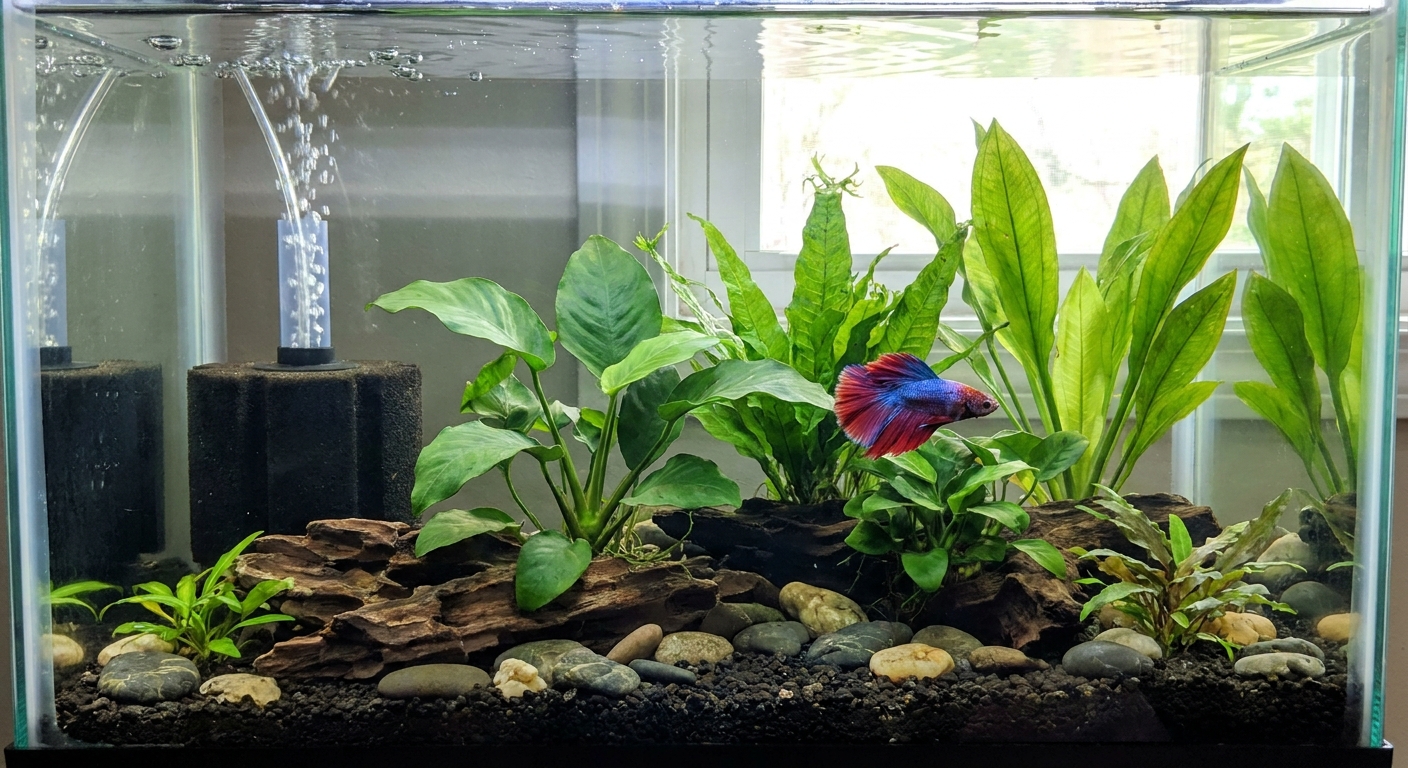
Even with seeding, keep testing. A boosted start is still a start, not a finish line.
First week with your betta
Once your betta arrives, keep things calm and consistent while the tank adjusts to a real bioload.
- Test daily for the first week (ammonia, nitrite, nitrate).
- Feed lightly at first. A little food goes a long way for a betta tummy.
- Do small water changes as needed to keep nitrate in a comfy range.
- Watch behavior: relaxed swimming, curious exploring, and confident fins are happy signs.
Once your tank is stable, adding enrichment like resting leaves, gentle hides, and plant jungles can make your betta feel like royalty. More cozy ideas live in Behavior & Enrichment.
Quick checklist
- Filter and heater running 24/7
- Water conditioned for chlorine and chloramine
- Ammonia added to about 1 to 2 ppm
- Testing shows ammonia rises, then nitrite rises, then nitrate rises
- Tank can turn 1 to 2 ppm ammonia into 0 ammonia and 0 nitrite within 24 hours
- Big water change done to lower nitrate before adding your betta (dechlorinate and avoid cleaning filter media)
Cycle first, then celebrate. Your betta will thank you with bright color, smooth fins, and that confident little “I own this place” swim.
FAQ
How long does it take to cycle a betta tank?
Commonly 2 to 6 weeks. It can be shorter with seeded media and stable warmth, or longer if the tank is cool, the ammonia level swings wildly, or filter media is replaced during cycling.
Should I do water changes during a fishless cycle?
Usually you can do fewer water changes during fishless cycling, but it is fine to do a partial change if ammonia or nitrite gets extremely high, if pH drops low, or if nitrate climbs high and you want to keep things reasonable.
Why is my nitrite stuck high?
This is common. The second group of bacteria (the nitrite-eaters) often takes longer to establish. Keep the filter running, keep temperature stable, consider a partial water change to reduce extremely high nitrite, and keep testing.
Can I add my betta as soon as I see nitrate?
Not yet. Nitrate is a good sign, but the tank is only betta-safe when ammonia is 0 and nitrite is 0 consistently, and the tank can process an ammonia dose within about 24 hours.
Do I need a special bacteria product?
No, cycling can happen naturally with time. Bottled bacteria can help, but your test kit is what confirms success.