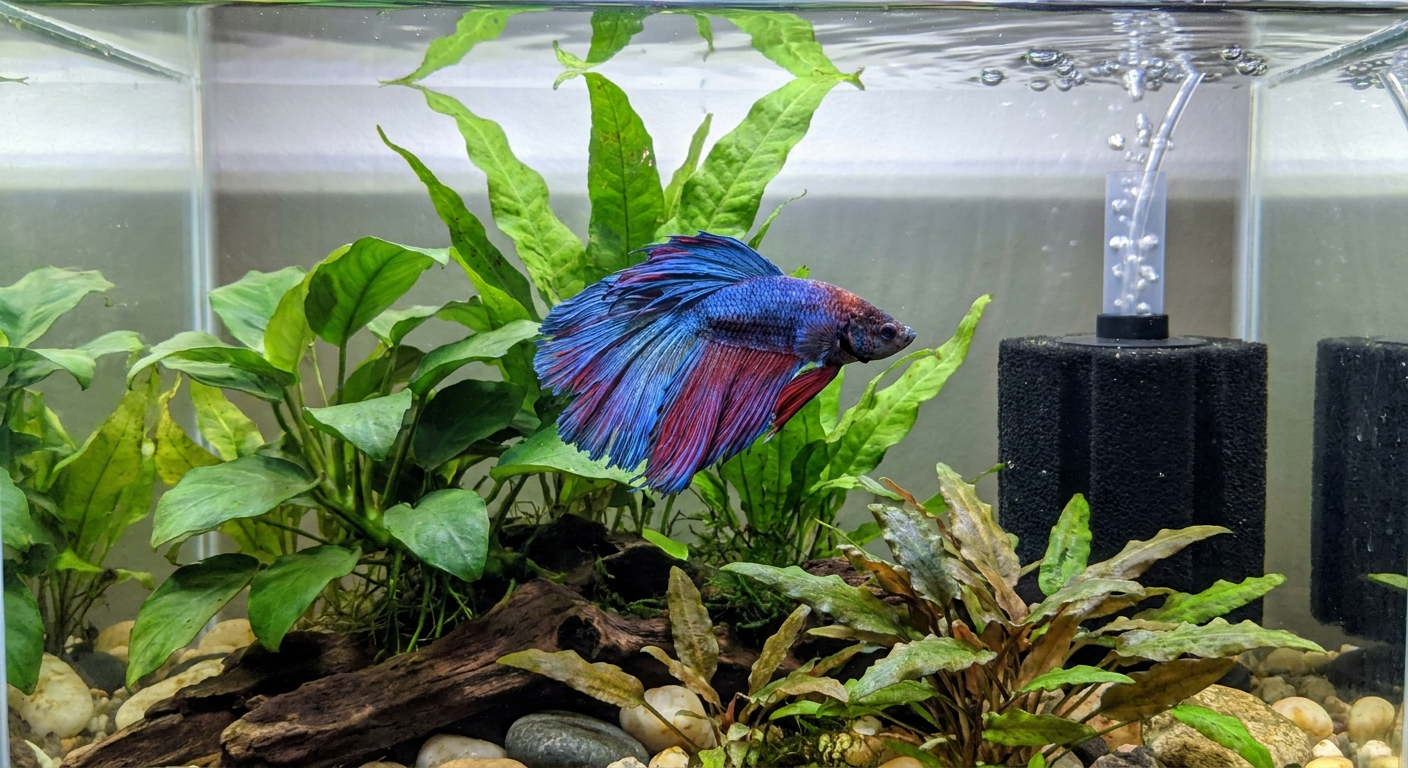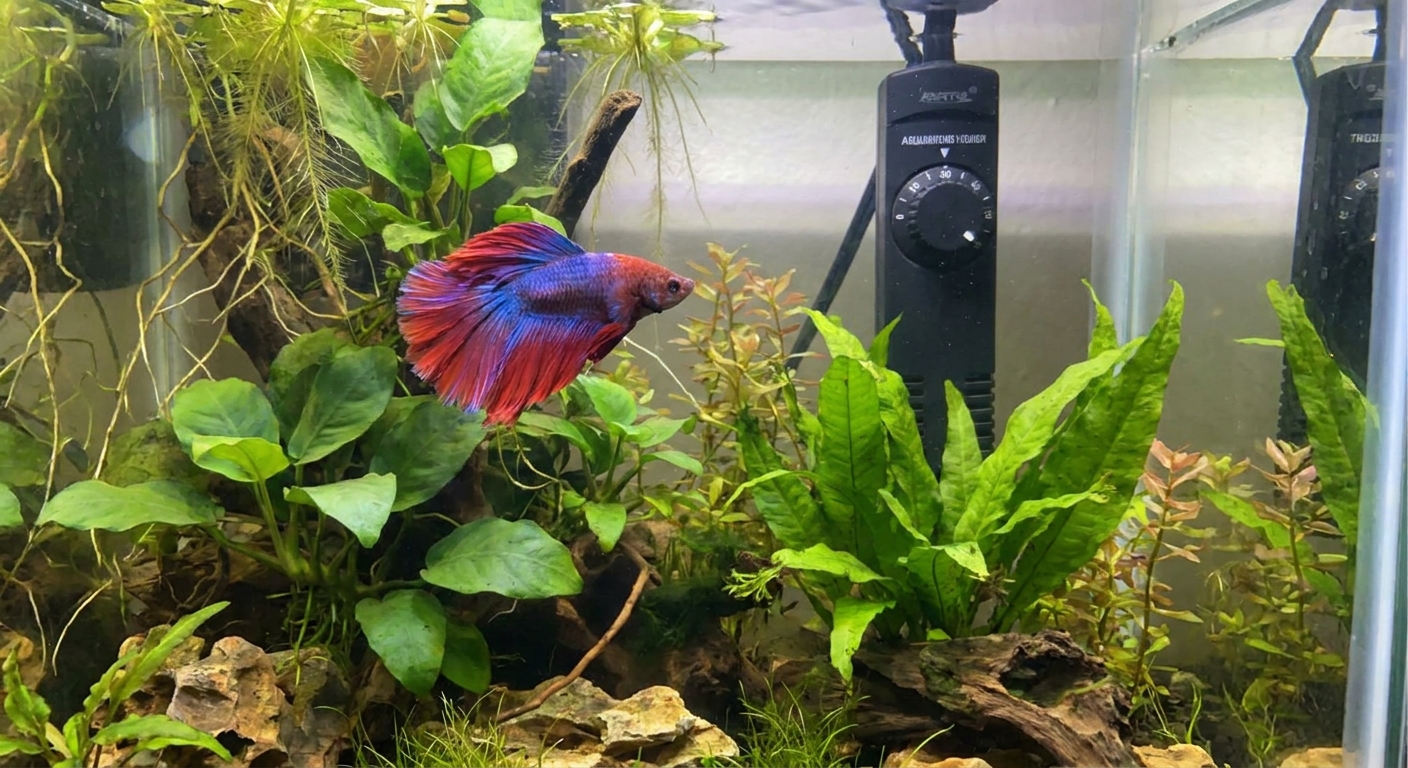

Let's make your tank the happiest little splash in the house! A steady cleaning routine keeps your betta comfortable, your water sparkling, and your beneficial bacteria hard at work. The goal is not to sterilize the tank. It is to remove waste and dissolved organics, then refresh the water's buffering capacity and minerals as needed, all while protecting the nitrogen cycle that keeps ammonia and nitrite under control.
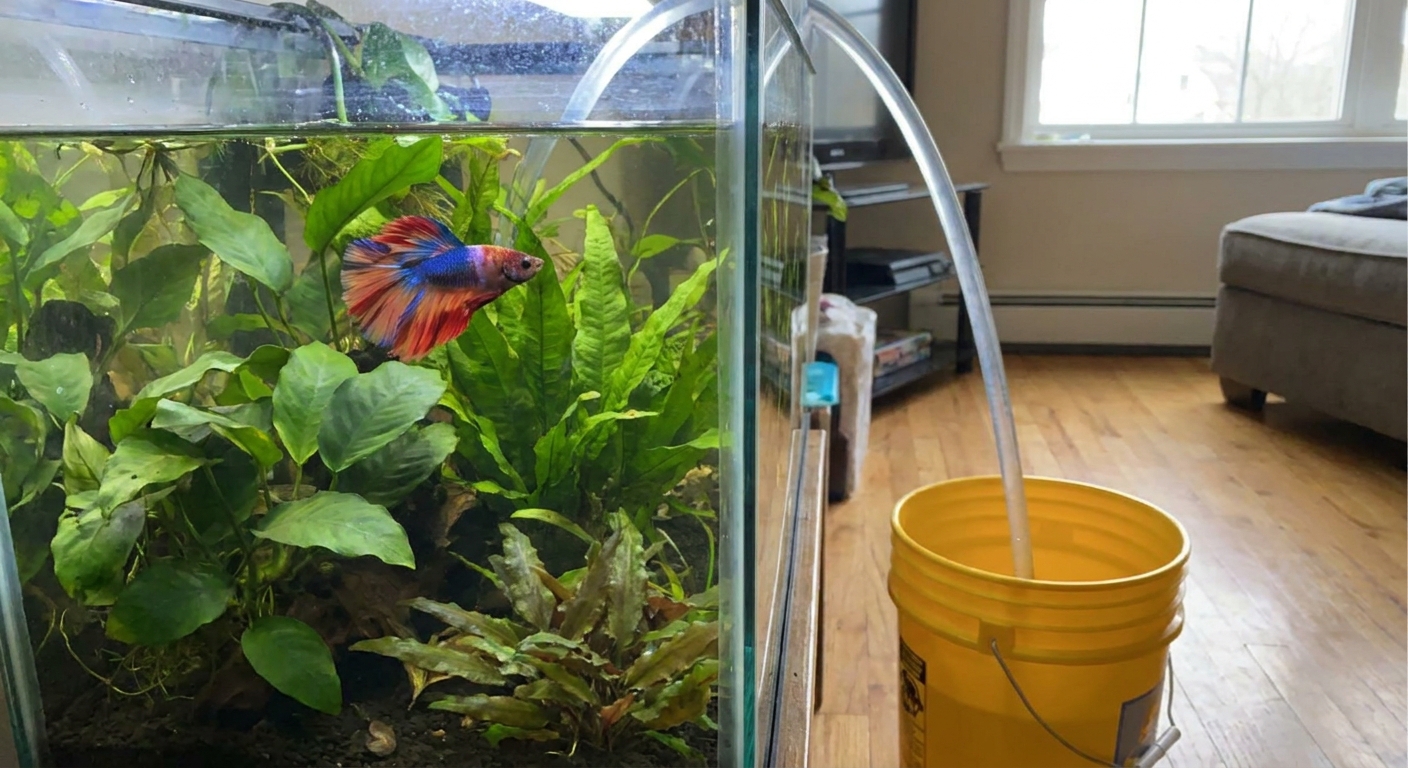
The golden rule: clean gently
Bettas do best with stable water. Most tank problems happen when maintenance is too aggressive, too infrequent, or done with tap water on important surfaces (like filter media). A healthy routine focuses on:
- Partial water changes to dilute nitrate and remove dissolved waste
- Light gravel vacuuming to lift uneaten food and waste without stripping the whole substrate
- Careful filter cleaning so your cycle stays alive
If your tank is still new or recently disturbed, prioritize cycling basics first. This guide works best once the tank is cycled, or as a safer approach while it is getting there. If cycling is new to you, start here: How to cycle a new betta fish tank.
Ideal schedule (by setup)
There is no single perfect schedule for every aquarium because stocking level, feeding, plants, and filtration all matter. Use this as a reliable starting point, then adjust based on water test results and how quickly debris builds up.
Quick schedule table
| Tank situation | Water change | Gravel vacuum | Filter cleaning | Glass and decor |
|---|---|---|---|---|
| 5 gallon, filtered, heated, lightly planted | 25 to 35% weekly | Light section each week | Every 3 to 6 weeks | As needed |
| 10 gallon, filtered, heated, planted | 20 to 30% weekly or every 10 days | Light section every 1 to 2 weeks | Every 4 to 8 weeks | As needed |
| Any size, new tank or not fully cycled | 10 to 30% as needed based on tests | Very light, only visible waste | Only if flow is clogged | Minimal |
| Small tank under 5 gallons (not recommended) | 30 to 50% 2 to 3 times per week | Light, frequent | Every 2 to 4 weeks | As needed |
Nano tank caution: In tiny volumes, changes can swing temperature, pH, and hardness fast. Match temperature, dechlorinate, and keep parameters consistent. If your tap water is very different from your tank water (for example, RO mixes or softened water), smaller changes more often are usually gentler than big resets.
Tank size makes maintenance easier and more stable. If you are choosing between common options, this can help: 5 gallon vs 10 gallon tank for bettas.
Before you start
Keeping a simple “water change kit” together makes the whole routine quick and calm.
- Dedicated bucket (aquarium only, no soap residue)
- Gravel vacuum or siphon
- Water conditioner that neutralizes chlorine and chloramine
- Thermometer
- Small algae sponge or aquarium-safe scraper
- Clean towel
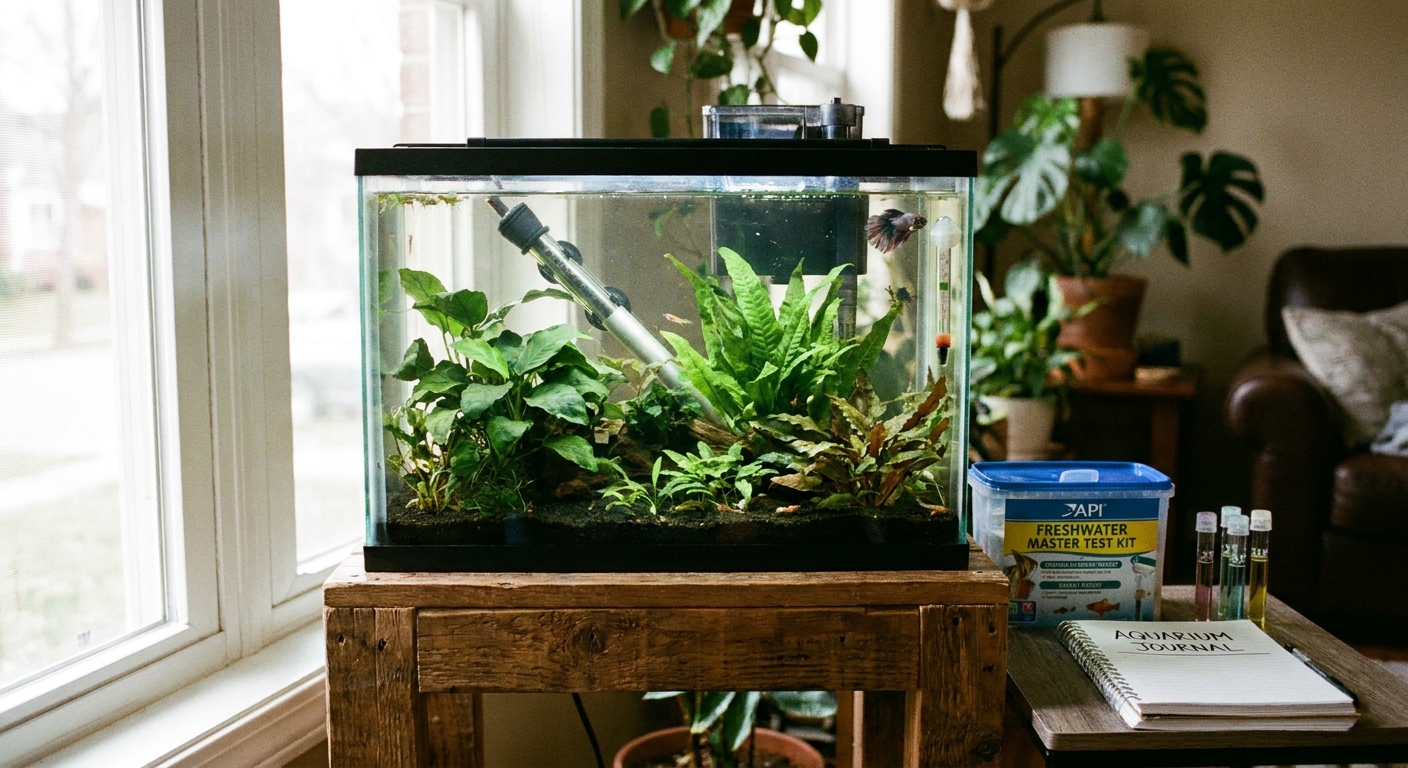
- Water test kit for ammonia, nitrite, nitrate
Temperature tip: Match new water temperature to the tank as closely as possible to reduce stress. Bettas like warm, steady water. For heating guidance, visit Betta tank temperature and heater placement.
Parameter tip: Dechlorinate the new water before it enters the tank. And if your source water has a very different pH, KH, or GH than your aquarium, lean toward smaller, more frequent changes to avoid swings.
Partial water change (step by step)
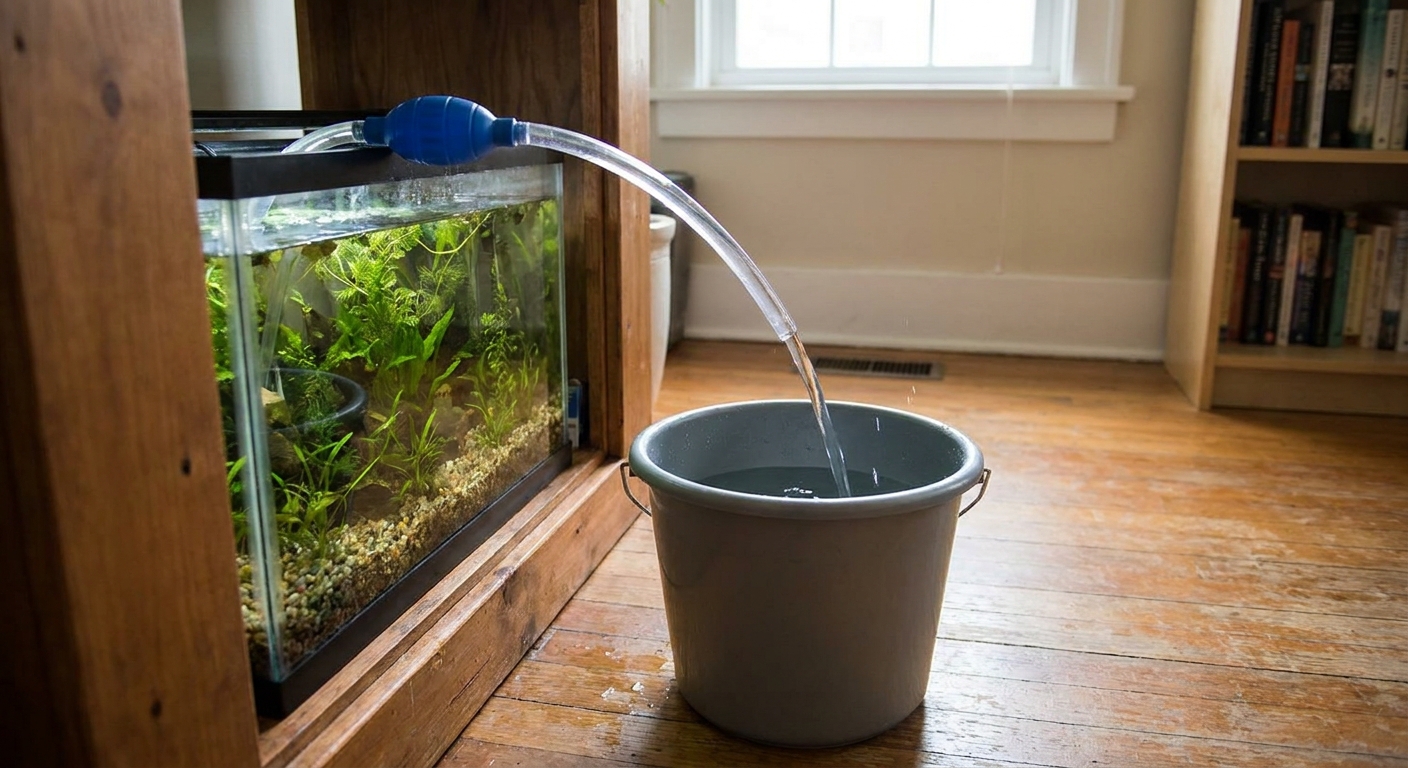
- Wash hands well and rinse thoroughly. Avoid lotions or soaps near the tank.
- Unplug heater and filter before the water level drops. A heater running in air can crack.
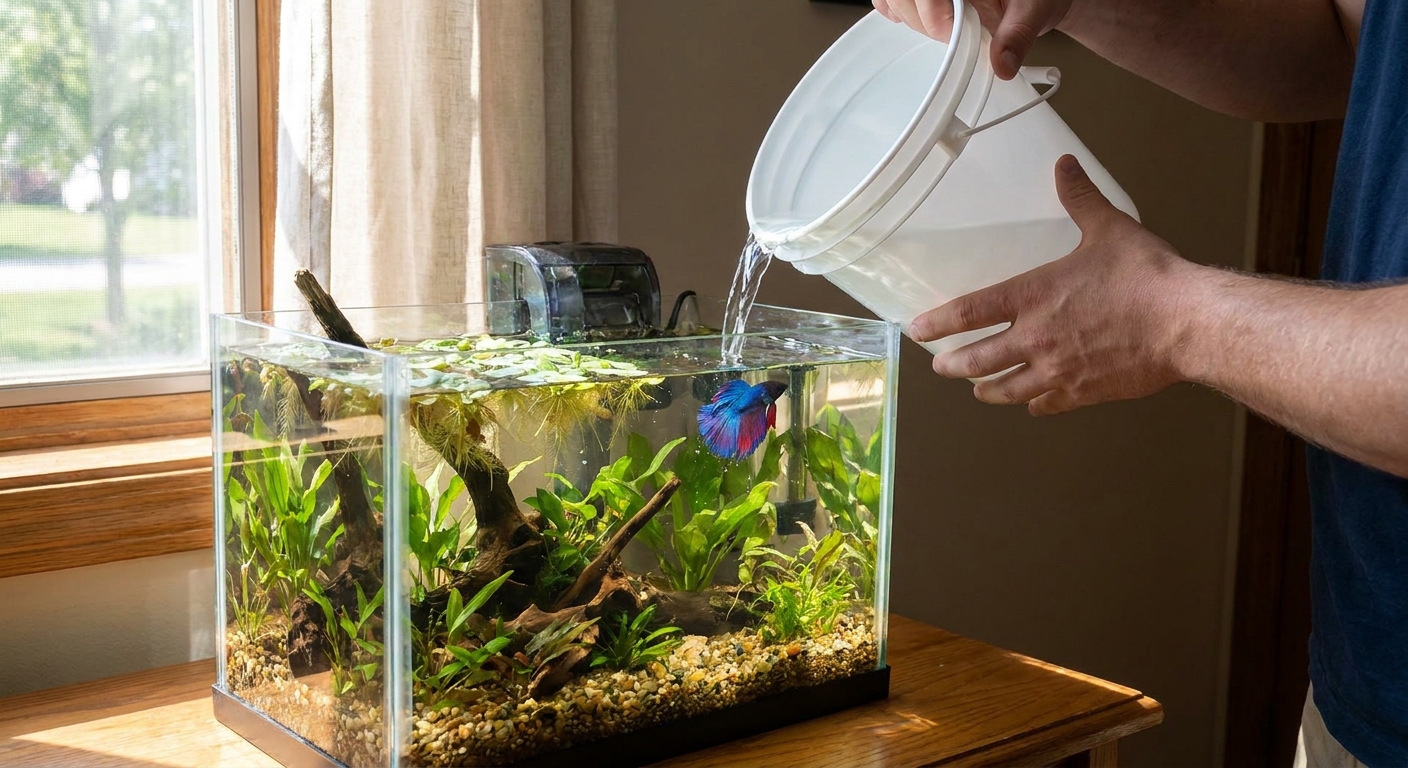
- Start the siphon and remove the planned percentage (often 25 to 35%).
- Vacuum lightly as you siphon (more on that below). If you prefer, siphon first and vacuum second, but most keep it together.
- Prepare replacement water in a bucket. Add conditioner for the full bucket volume, then mix.
- Slowly add the new water back to the tank. Pour onto a dish or into a gentle stream to avoid blasting the substrate.
- Plug equipment back in once water level is normal. Confirm the filter is flowing and the heater is fully submerged.
How much water is too much? For a cycled, stable betta tank, routine changes are usually 20 to 40%. Very large changes are mainly for emergencies or very high nitrate, and they should be done carefully to avoid temperature and parameter swings.
Vacuum gravel safely
Gravel vacuuming removes solid waste that would otherwise break down into ammonia and nitrate. The trick is to clean in sections, not all at once.
A gentle gravel vacuum routine
- Choose one zone per session, about 1/3 of the substrate area.
- Push the vacuum down until gravel lifts and tumbles, then lift it back out. Waste floats up and gets siphoned away while gravel falls back down.
- Skip planted roots whenever possible. If debris collects around plants, hover lightly above the surface instead of digging deep.
- Focus on messy spots like under the betta’s favorite perch, around feeding areas, and near decor where waste collects.
If you use sand: hover the siphon just above the surface. Sand compacts, so you want to lift waste without sucking the sand bed itself.
Clean the filter safely
Your filter is a helpful little home for beneficial bacteria. Cleaning it the wrong way can cause a mini cycle crash. The safest approach is to remove gunk while keeping bacteria wet and protected from chlorine.
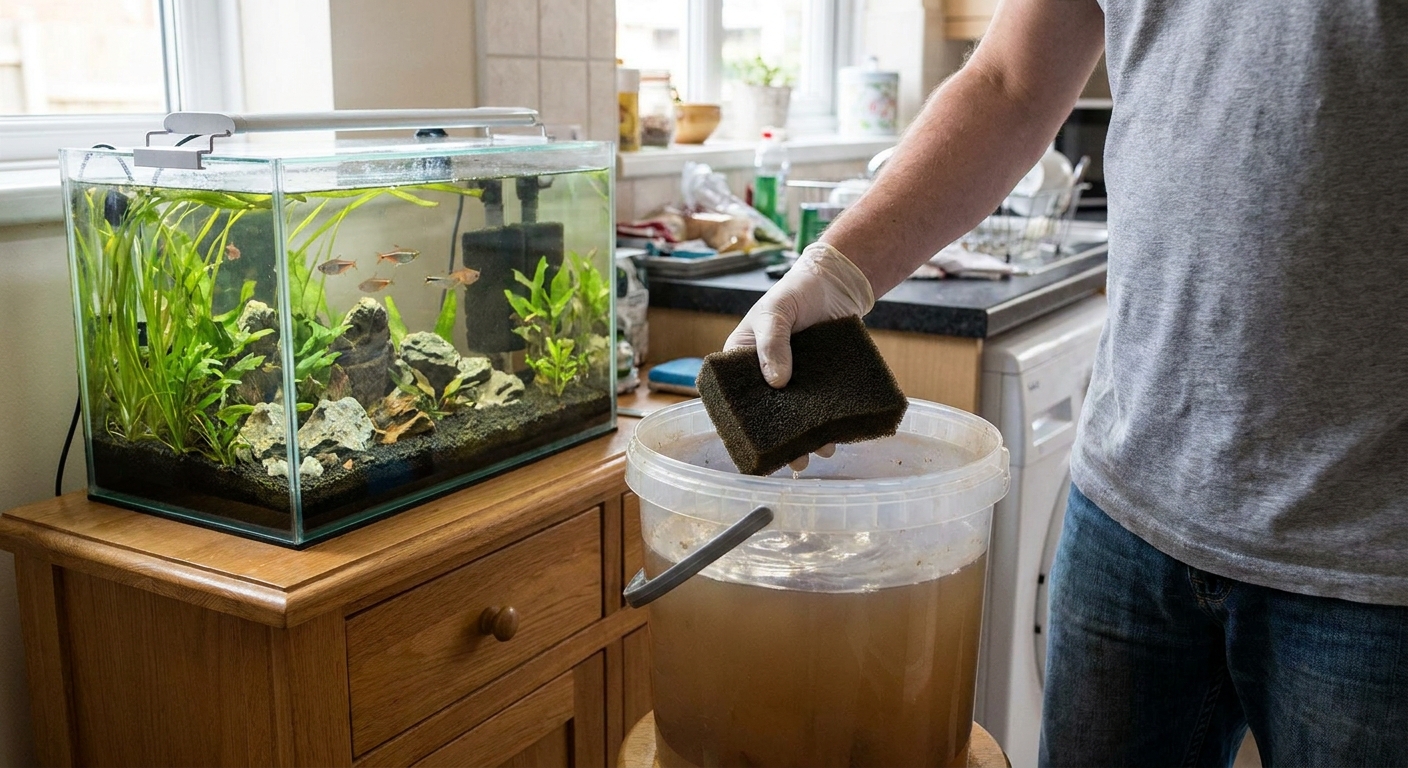
Filter cleaning steps
- During a water change, save a bucket of old tank water.
- Turn off and open the filter (or remove the sponge filter).
- Swish and squeeze media in old tank water until water runs less dirty. Do not scrub it spotless.
- Reassemble and restart. Confirm normal flow.
What not to do
- Do not rinse filter media under tap water unless it is dechlorinated water. Chlorine and chloramine can damage your bacteria.
- Do not replace all media at once. Many “cartridge” instructions encourage frequent replacement, but that can remove much of your biological filtration.
- If your tank is unstable or sensitive, avoid doing a heavy filter clean and a heavy substrate clean on the same day. Routine light vacuuming during water changes is usually fine.
If you must replace a cartridge
- If possible, run the old and new media together for a couple of weeks.
- Or, move any sponge or bio media (if your filter allows it) into the new setup so bacteria are not starting from scratch.
If you are choosing a filter or trying to reduce strong flow for long fins, this guide helps: Choosing the right filter for a betta tank.
Glass, decor, and plants
Some algae is normal. A little biofilm is normal too. The goal is a healthy, comfortable tank, not a sterile one.
- Front glass: wipe as needed so you can enjoy your betta’s sparkle.
- Rocks and decor: swish in old tank water if they look dirty. Avoid soap and household cleaners.
- Silk plants: rinse and gently rub in old tank water.
- Live plants: remove dying leaves, thin out overgrowth, and lightly siphon around the base if debris collects.
Avoid full-tank tear-down cleans unless it is a true emergency. Replacing all water, washing everything, and changing filter media together is a common way to trigger ammonia spikes afterward.
How to tell it is working
Your water tests and your betta’s behavior will tell you if the routine needs a tweak.
Target ranges for a cycled betta tank
- Ammonia: 0 ppm
- Nitrite: 0 ppm
- Nitrate: lower is generally better. Many keep it under 20 ppm when possible, and under 40 ppm is a common upper limit in freshwater tanks
Signs you may need more frequent water changes: rising nitrate, cloudy water that returns quickly, more algae than usual, debris buildup, or a stale odor.
Signs you may be cleaning too aggressively: sudden ammonia or nitrite readings after maintenance, stressed behavior right after big cleanings, or a tank that cannot seem to stabilize.
If nitrate stays high anyway
- Feed a bit less and remove uneaten food
- Check stocking (extra tank mates create extra waste)
- Look for detritus traps (behind decor, dense gravel corners) and siphon those spots
- Add or increase live plants if you can manage them
- Make sure filter flow is not clogged or reduced
Special situations
If the tank is not cycled yet
In an uncycled or fish-in cycling situation, the schedule is driven by test results, not the calendar. Use partial water changes to keep ammonia and nitrite as low as possible, and avoid heavy filter cleaning unless flow is blocked. Cycling details here: How to cycle a new betta fish tank.
If you just treated with medication
Follow the medication directions carefully, especially about carbon use. Many meds have you remove carbon during treatment, then do partial water changes afterward to remove residues. Avoid deep-cleaning everything at once unless the directions specify it.
If you are leaving for a trip
- Do a normal partial water change the day before you leave.
- Do not do major extra cleaning right before traveling. Stability is kinder than perfection.
- Skip new gadgets unless you have tested them. Auto-feeders can dump too much food.
- Keep feeding simple. Underfeeding for a short trip is usually safer than overfeeding.
Tiny weekly checklist
- Test water (especially nitrate, and ammonia or nitrite if anything seems off)
- Do your planned partial water change (use the table as your baseline)
- Vacuum one section of substrate
- Wipe front glass if needed
- Quick equipment check: heater, filter flow, thermometer reading
FAQ
How often should I change betta water?
For a filtered, heated 5 to 10 gallon betta tank, a weekly 20 to 35% water change is a great starting point. If nitrate climbs quickly, increase either the percentage or the frequency. If your pH or hardness is very different between tap and tank, smaller changes more often can be gentler.
Do I need to remove my betta during cleaning?
Usually, no. Most bettas are fine staying in the tank during a gentle partial water change and light vacuuming. Keeping the process calm and avoiding sudden temperature changes matters more than moving your fish.
Should I change the filter cartridge every month?
Not automatically. Replacing media too often can remove beneficial bacteria. If your filter uses cartridges, focus on rinsing in old tank water and only replacing media when it is falling apart and cannot function. If you must replace, avoid replacing everything at once, and run old and new media together when possible.
Can I do a 100% water change to reset the tank?
It is rarely the best fix. Big resets often cause parameter swings and can disrupt the cycle. For most problems, smaller, repeated partial water changes paired with testing is the safer path.
Keep it steady
A happy betta tank is all about gentle consistency. Pick a simple schedule, test your water, and adjust slowly. With steady partial water changes, light substrate cleaning, and careful filter care, your tank stays clear and your cycle stays strong.
If you want more tank comfort ideas, glide over to Tank Setup & Environment for more cozy, betta-friendly upgrades.