
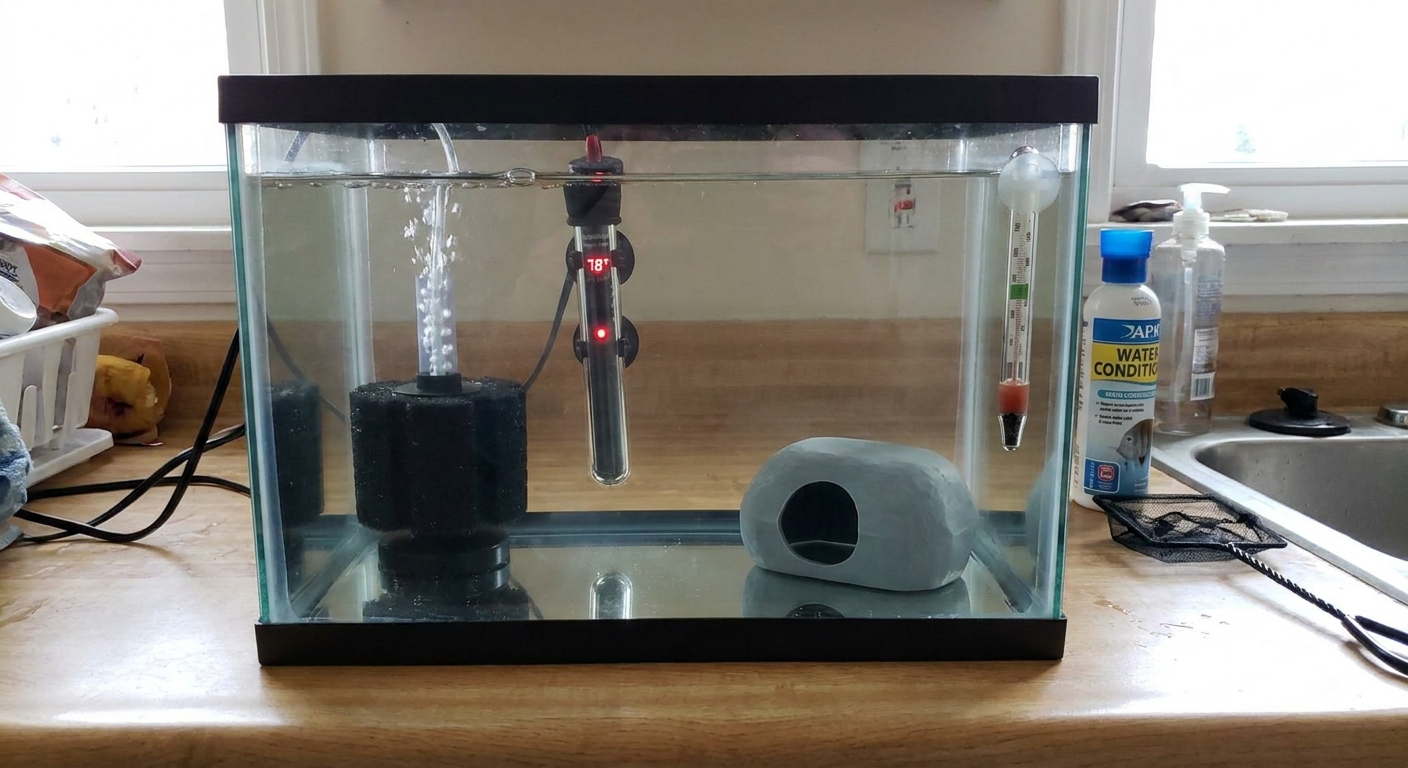
Let’s make your tank a calm little safe zone, even on the tough days. A hospital tank is a clean, simple, easy-to-control space where your betta can rest, be treated safely, and be watched closely without stressing the main tank or exposing tank mates to medication.
What a hospital tank is (and why it helps)
A hospital tank is a temporary treatment setup used to:
- Control medication dosing in a known water volume.
- Monitor symptoms like breathing, buoyancy, appetite, and waste without distractions.
- Reduce stress by keeping the environment quiet and uncluttered.
- Protect the main tank from medications that can harm beneficial bacteria, plants, snails, and other fish.
If your betta is currently in a community tank or a heavily planted display tank, treating in a hospital tank is often the safest, cleanest choice.
Before you move your betta
Moving a sick fish is sometimes the right call, and sometimes it adds stress without much benefit. Consider a hospital tank when you need controlled dosing, close observation, or isolation from tank mates.
Pause and get help if you see severe bloating with raised scales (pineconing), fast decline over hours, heavy bleeding, repeated rolling or inability to right himself, or extreme lethargy with labored breathing. In those cases, reaching out to a veterinarian (or an experienced fish health professional in your area) can make a real difference.
If the main tank is the problem (ammonia or nitrite present, big temperature swings, or a dirty substrate), fixing the main tank quickly can be just as important as setting up a hospital tank. Clean, stable water is the foundation either way.
Hospital tank vs quarantine tank
These setups look similar, and the terms are often confused, but the goal is different:
- Quarantine tank: used for new fish or mild observation, usually for a few weeks, with stable, cycled filtration when possible.
- Hospital tank: used for active illness or injury, often bare-bottom and intentionally minimal so waste is easy to remove and meds are easy to dose.
If you are actively treating, think “hospital”: clean, simple, and easy to keep pristine.
Supplies checklist
Here’s what to gather before moving your betta. Having everything ready reduces stress and prevents temperature swings.
Tank and core gear
- Tank: 5 to 10 gallons is ideal for stability. A 2.5 gallon can work in a true emergency or very short-term treatment, but expect tighter monitoring, more frequent testing, and more water changes.
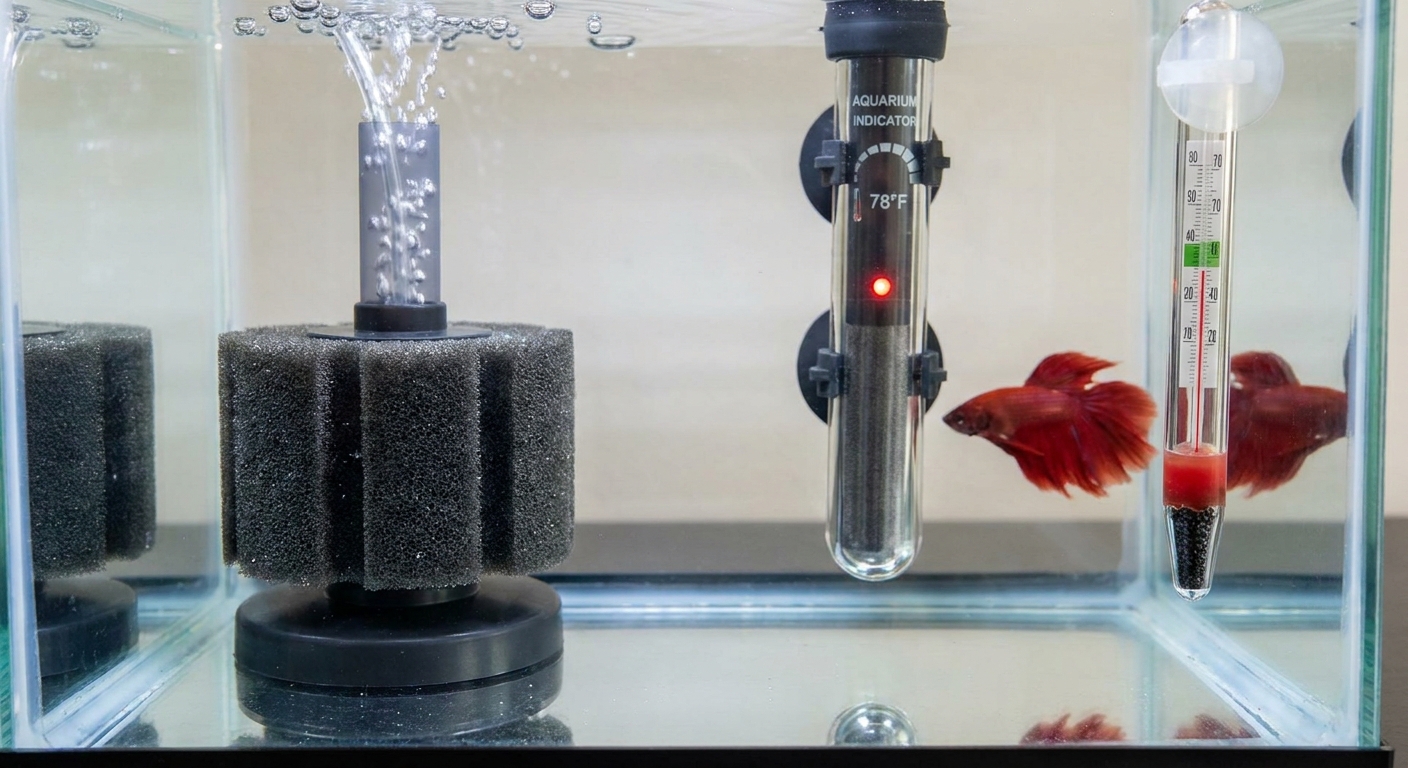
- Heater: adjustable is best so you can hold a steady temperature. For heater placement and target temps, see Betta Tank Temperature and Heater Placement.
- Thermometer: so you can verify the heater is doing its job.
- Filter: ideally a gentle sponge filter. If you need help choosing, see Choosing the Right Filter for a Betta Tank.
- Air pump and airline tubing (for a sponge filter).
- Lid or cover: bettas can jump, especially when stressed.
- Light: optional. Dim is usually better for healing.
Comfort and safety
- Hide: a smooth cave or a simple betta hammock. Keep it easy to disinfect.
- Resting spot near the surface: a soft silk plant or a floating log can help tired bettas breathe comfortably.
- Plain background or towel around 2 to 3 sides: reduces visual stress.
Water and testing
- Dechlorinator: essential for any tap water. Use an aquarium water conditioner (dechlorinator) dosed for the full volume. For the full prep routine, visit How to Prepare Tap Water for a Betta Tank.
- Water test kit: especially important in a small, possibly uncycled hospital tank. Ammonia and nitrite must stay at 0.
- Dedicated siphon, bucket, and net: keep hospital tools separate to avoid cross-contamination.
Step-by-step: Setting up a bare-bottom hospital tank
1) Pick the right size and location
Choose a tank size you can keep warm and stable. Place it somewhere quiet, away from drafts, direct sun, and loud foot traffic.
- Smaller tank benefit: easier to medicate accurately and clean quickly.
- Larger tank benefit: more stable temperature and water chemistry.
If you are deciding between common sizes, 5 Gallon vs 10 Gallon Tank for Bettas can help you think through stability and maintenance.
2) Go bare-bottom on purpose
Skip gravel and sand in a true hospital setup. A bare bottom makes it easy to spot uneaten food, waste, and shed slime coat, and it lets you siphon debris fast.
If you do need substrate for a longer-term quarantine, keep it thin and simple. For display tanks, Gravel, Sand, or Soil for Betta Tanks explains the pros and cons.
3) Add a heater and thermometer first
Warm, stable water helps most bettas handle stress and heal, but it still needs to stay within a safe range and be appropriate for the condition and medication. Set the heater, place the thermometer, and let the tank warm up before your betta goes in.
4) Use a gentle filter (and decide how to handle cycling)
In a perfect world, the hospital tank is already cycled. In the real world, sick fish do not always wait.
Best option: seeded sponge filter
If you keep an extra sponge filter running in your main tank all the time, you can move it to the hospital tank when needed. That carries beneficial bacteria over and helps prevent ammonia spikes.
If you do not have a seeded filter
You can still use a sponge filter or other gentle filter, but treat the hospital tank like it is uncycled and test water daily. Expect more frequent water changes. If you want a deeper dive on cycling basics, see How to Cycle a New Betta Fish Tank.
Important: Some medications, especially antibiotics, can reduce beneficial bacteria. Even if the filter is seeded, keep testing.
5) Fill with conditioned water that matches the main tank
Condition new water and aim to match:
- Temperature (very important)
- pH (steady is better than perfect)
- Hardness if your water is extreme
Matching parameters helps avoid extra shock when moving a fish that is already unwell.
6) Add one simple hide and one soft resting spot
Choose items that are smooth, easy to sanitize, and unlikely to hold onto residues.
- A clean ceramic hide or smooth plastic cave
- A small silk plant or floating rest near the surface
Avoid porous décor like driftwood, thick botanicals, and highly textured rocks during active dosing unless a veterinarian or trusted fish health professional recommends otherwise. Porous items can hold residue and are harder to disinfect thoroughly.
7) Dim the lights and keep things calm
Bright lights can stress sick bettas. Keep lighting low and consistent, and avoid tapping the glass or moving the tank repeatedly.
Moving your betta gently
Sick fish can spiral quickly with rough handling. Keep the transfer gentle and unhurried.
- Wash hands and keep soaps and lotions far away.
- Use a cup method when possible: gently guide your betta into a clean cup or container filled with his current tank water.
- Float and match temperature: float the cup in the hospital tank for 10 to 15 minutes.
- Slowly mix water: add small amounts of hospital tank water to the cup over another 10 to 15 minutes.
- Release gently without chasing.
If your betta is gasping at the surface, lying on the bottom, or extremely weak, keep the water level a bit lower so it is easier to reach air, and provide a surface rest.
Medication dosing basics
Hospital tanks shine because dosing is straightforward, but only if the water volume is known.
Know your real water volume
- A “5-gallon tank” might only hold about 4 gallons once equipment is in.
- Lowering the water level changes the dose.
When in doubt, slightly underfilling and calculating dose for the actual filled volume helps avoid accidental overdoses.
Remove chemical filtration
If your filter uses carbon, Purigen, or other chemical media, remove it during treatment unless the medication directions say otherwise. These materials can adsorb meds and make dosing ineffective.
Increase oxygenation when needed
Some treatments and higher temperatures reduce dissolved oxygen. A sponge filter with steady bubbles often helps. Watch for rapid gill movement or surface gasping.
Follow the label exactly
Different illnesses require different meds, and mixing medications can be risky. Use one treatment plan at a time unless a veterinarian or qualified aquatic professional directs otherwise.
Do water changes the way the label expects
Many medications are dosed on a schedule that includes water changes. Typically:
- Do the recommended water change.
- Replace medication for the amount of water you changed, if instructed.
- Re-dose the full tank only when the directions say to.
This is also why bare-bottom is so handy: it is easier to keep water clean between doses. For general cleaning cadence help, see Betta Tank Cleaning Routine and Water Change Schedule.
Daily hospital tank routine
Consistency is your betta’s steady ground. A simple daily routine helps you spot improvement or trouble fast.
Check these every day
- Temperature: stable and in a betta-safe range.
- Ammonia and nitrite: keep at 0, especially in an uncycled setup.
- Breathing: is gill movement calmer or more frantic?
- Posture and buoyancy: upright swimming, sinking, floating, listing sideways.
- Appetite: interest in food, chewing and spitting, refusal.
- Fins and scales: clamping, fraying, redness, raised scales.
- Waste: color and consistency, and how much uneaten food is left.
Feed lightly and remove leftovers
Overfeeding is extra risky in a small hospital tank because waste builds fast. Offer a small, high-quality meal and siphon leftovers within 2 to 3 minutes.
If your betta is not eating, this guide can help you troubleshoot: Why Is My Betta Fish Not Eating? 8 Common Causes and Solutions.
Water change tips for hospital tanks
Hospital tanks often need more water changes than display tanks, especially if they are not fully cycled.
Helpful habits
- Use pre-warmed, conditioned water so temperature stays stable.
- Siphon waste daily in bare-bottom setups. Focus on waste and uneaten food.
- Test first, then change water so you know what you are fixing.
- Re-dose medication correctly based on how much water you replaced and what the product directions say.
If you need a simple structure to follow, Betta Tank Cleaning Routine and Water Change Schedule is a great companion read, just remember that hospital tanks usually require extra attention.
When to stop treatment and transition back
Once your betta is improving, it is tempting to rush him back to the main tank. A calm, steady transition usually works better.
Signs it may be time to wrap up treatment
- Appetite is back for several days in a row.
- Breathing looks normal.
- Activity level is improving and he can rest comfortably.
- Visible symptoms are resolving (as appropriate for the condition).
Finish the full course if the medication directions specify a complete treatment window, even if symptoms improve early.
Clearing medication from the hospital tank
After treatment is complete:
- Do a few partial water changes over 1 to 2 days.
- You may add fresh activated carbon to the filter briefly to remove residual medication, then remove it again if you plan to medicate more.
Acclimate back to the main tank
Match temperature and water parameters and use a gentle acclimation process similar to the transfer into the hospital tank. If the main tank caused stress in the first place, check the basics before reintroducing your betta, especially temperature, filtration flow, and maintenance routine.
Resetting the hospital tank after use
When treatment is done, a quick reset makes the next emergency so much easier.
- Never use soap. Rinse the tank and equipment thoroughly with hot water.
- Disinfect if needed using a fish-safe method you trust, then rinse well and let everything dry completely. Drying helps inactivate many common pathogens.
- Replace anything hard to clean (like heavily scratched plastic hides or old tubing) if you cannot sanitize it confidently.
- Keep hospital tools separate from your main tank tools to reduce cross-contamination.
Common mistakes (and how to avoid them)
- Guessing water volume: inaccurate dosing can be dangerous. Measure your fill level as closely as possible.
- Skipping the heater: unstable temps stress bettas and slow recovery.
- Overfeeding “to help him heal”: extra waste can quickly turn into ammonia trouble.
- Using strong filter flow: sick bettas need calm water. Baffle flow or switch to a sponge filter.
- Mixing multiple meds at once: combinations can interact and overwhelm a weakened fish.
- Treating the whole display tank by default: some medications can harm plants or inverts and can damage beneficial bacteria.
Quick FAQ
Can I use a plastic storage bin as a hospital tank?
Yes, many keepers do, as long as it is clean, aquarium-safe, and used only for fish care. It must have a heater (safe for the container), thermometer, and ideally a gentle filter or at least strong aeration. A secure lid is important because bettas jump.
Do I need a filter in a hospital tank?
A gentle filter is strongly recommended for oxygenation and biological support, but the tank may still behave like it is uncycled. If a filter is not possible, plan for more frequent water changes and close testing.
Should I add aquarium salt?
Sometimes, but salt can be helpful in some situations and harmful in others. If you use it, use aquarium salt (not table salt), dose conservatively, and avoid combining salt with medications unless you are sure they are compatible. Also remember that salt can be rough on many plants and invertebrates.
How long should a betta stay in a hospital tank?
Long enough to complete treatment and see stable improvement. For many issues this can be 1 to 2 weeks, but it varies widely based on what you are treating and how severe it is.
A calm, clean space helps healing
A hospital tank does not need to be fancy. It needs to be warm, gentle, and easy to keep spotless. With a bare bottom, a soft hide, and careful dosing, you can give your betta the best possible chance to rest and recover, one clean water change at a time.
If you want to keep reading in this category, head to Health & Wellness.