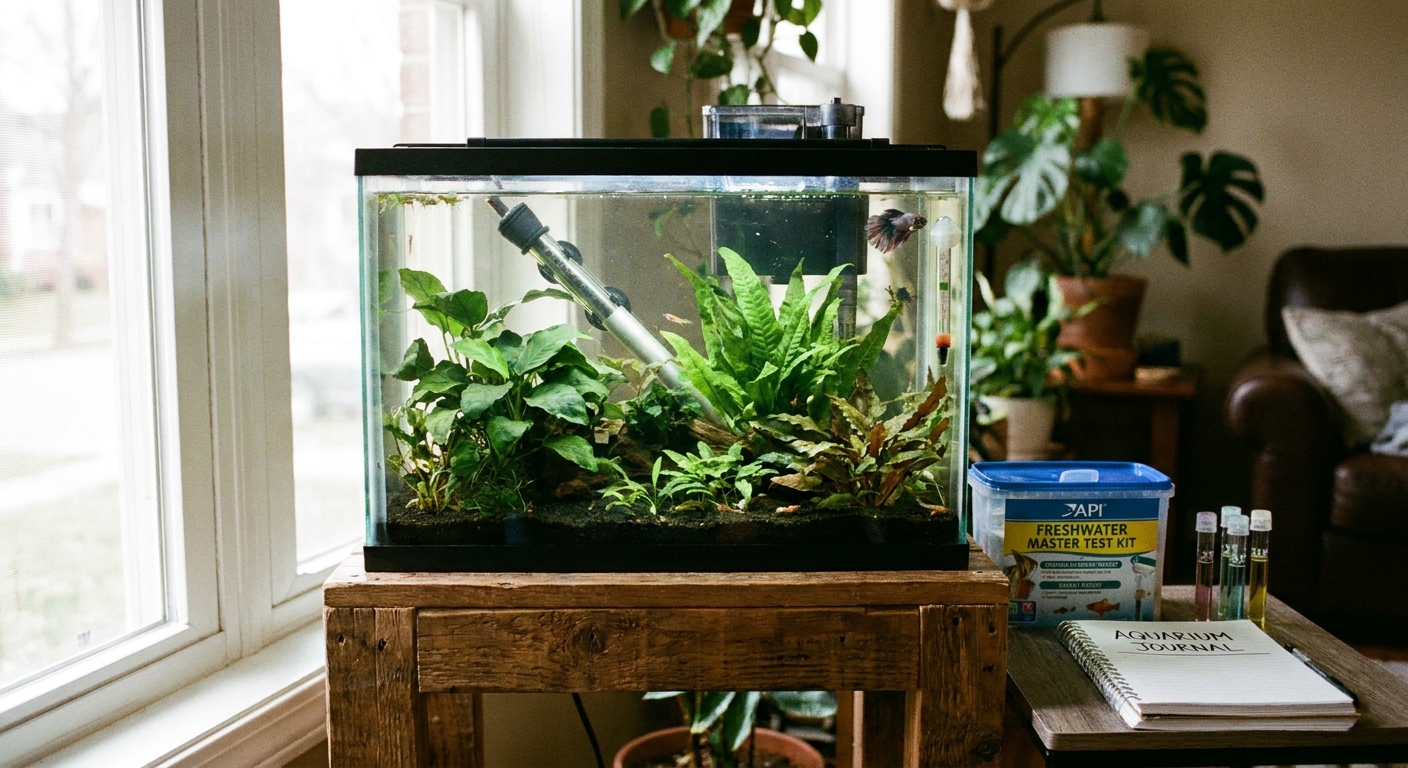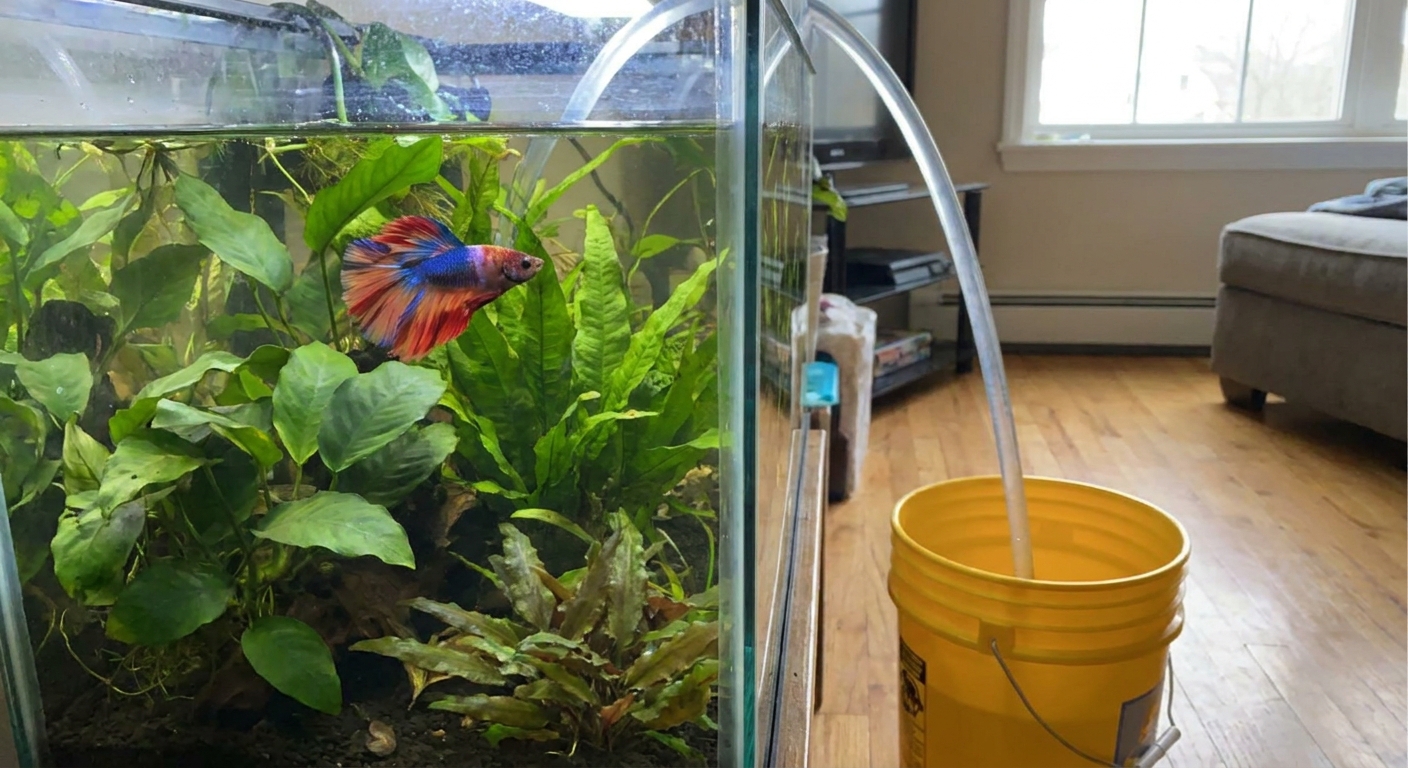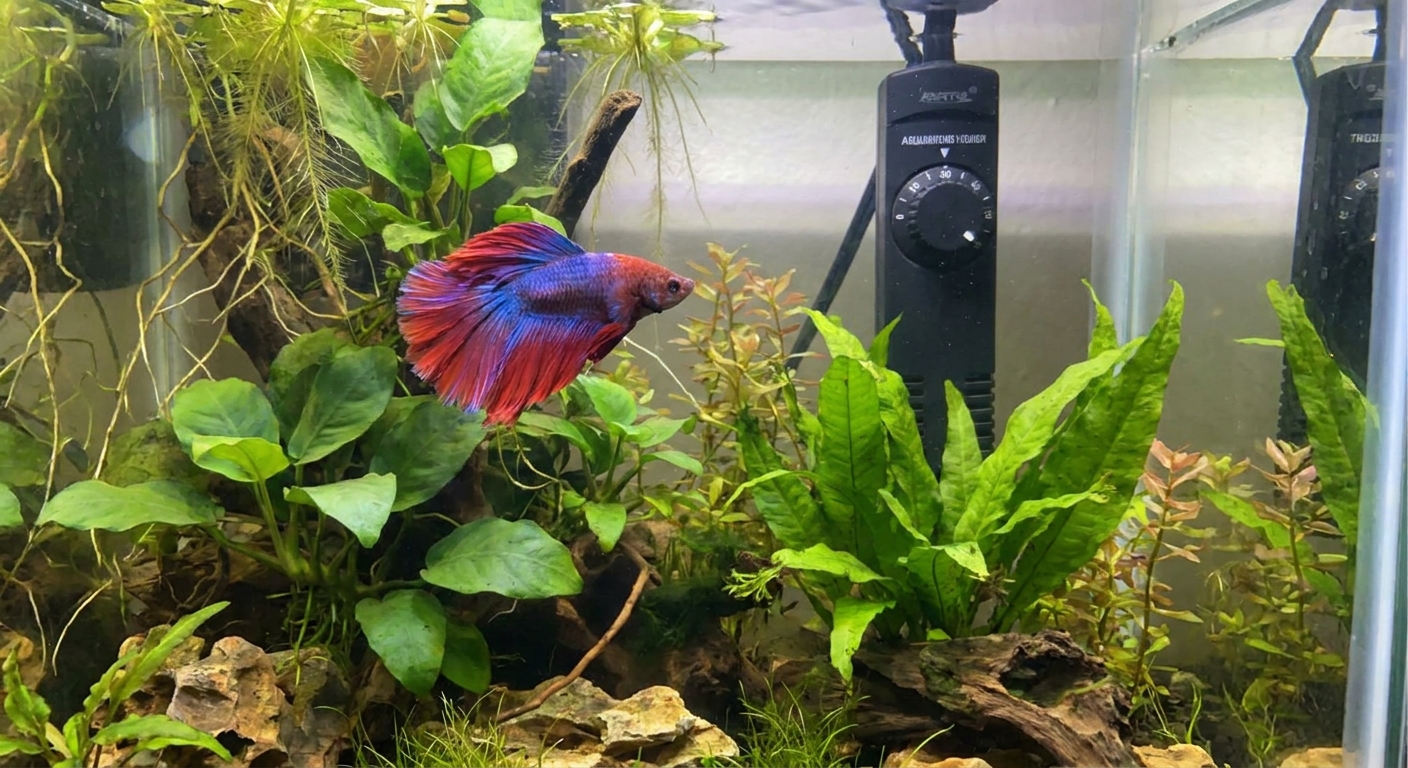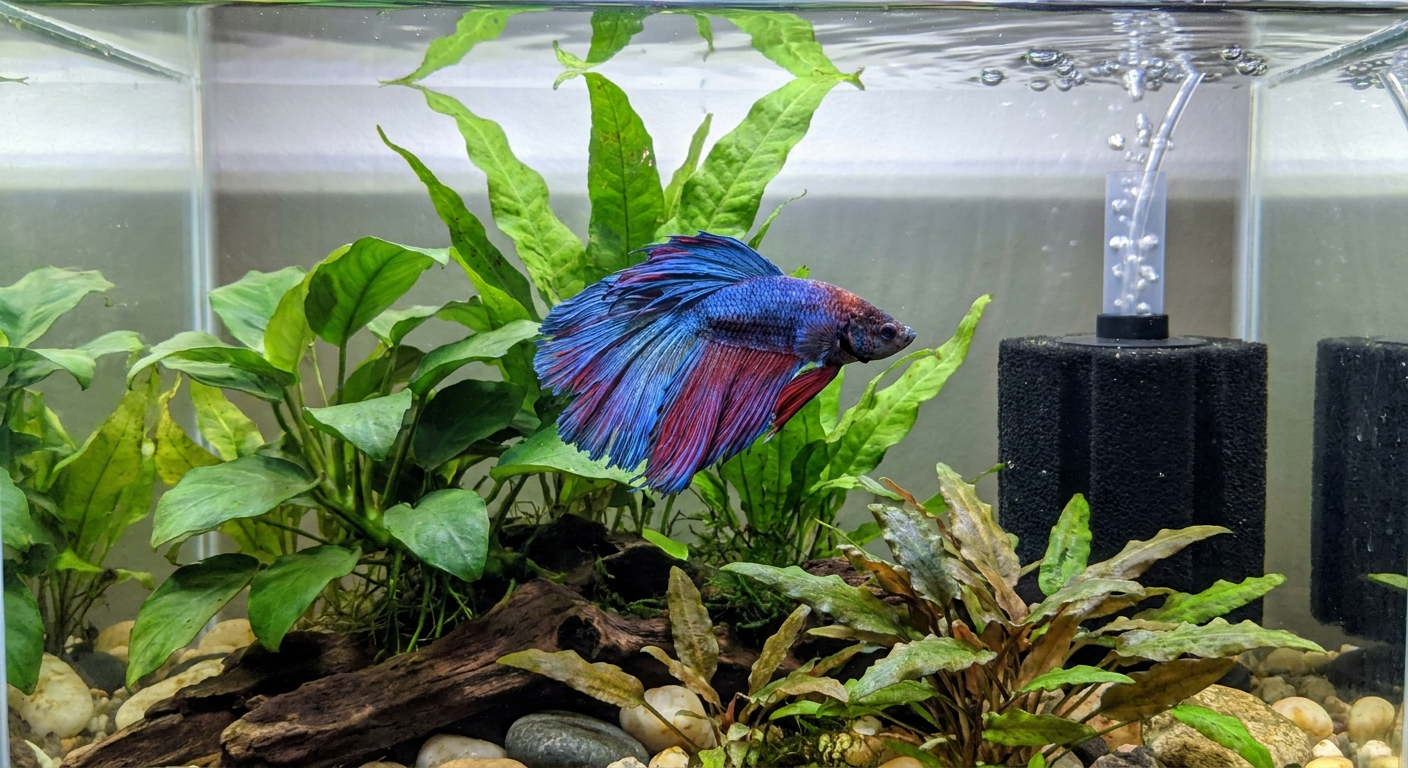
Let’s make your tank the happiest little splash in the house! When a betta feels stressed, they show it in their body, their colors, and their behavior. The good news is that a lot of stress triggers come from the environment, which means you can usually fix them with a few calm, steady adjustments.
Quick note: Stress signs can overlap with illness. If your betta is struggling to breathe, can’t stay upright, has rapid decline, or has obvious injury, treat it as urgent while you stabilize the tank. When breathing or swimming looks “off,” testing ammonia and nitrite right away is one of the fastest ways to spot a true emergency.
First, where betta stress comes from
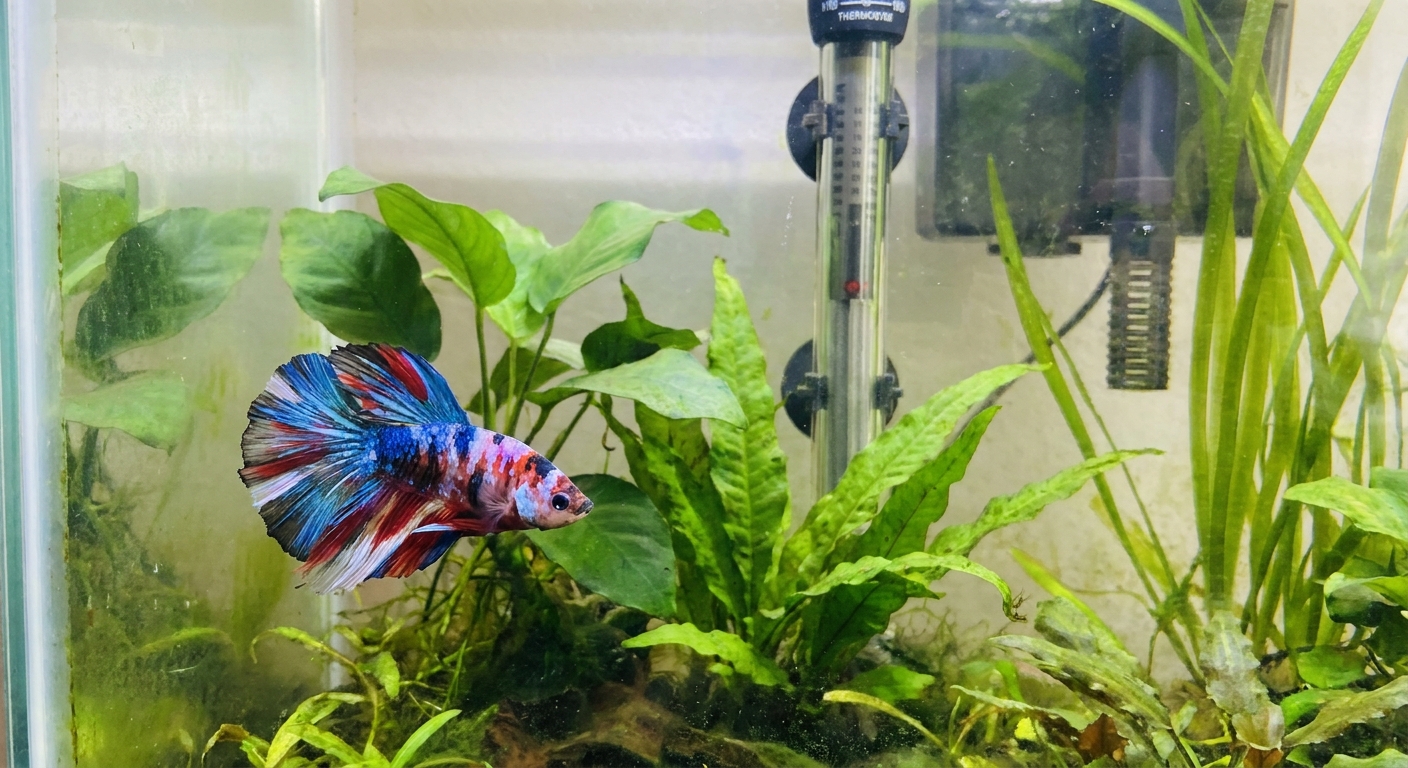
In most home aquariums, stress is often tied to the setup and day-to-day conditions. Think of it like living in a room where the temperature keeps changing, the lights never dim, and the air feels “off.” Common triggers include:
- Uncycled or unstable water (ammonia or nitrite present, or big parameter swings)
- Water temperature too low, too high, or fluctuating
- Too much flow from the filter
- Bright lighting with no shaded areas
- Not enough hiding spots or resting places near the surface
- Poor water quality from missed maintenance or overfeeding
- Stressful tank mates or constant reflections
If you want a solid baseline for a calm setup, start with Setting Up a Betta Tank for the First Time and make sure your nitrogen cycle is established with How to Cycle a New Betta Fish Tank.
7 stress signs (and how to fix the environment)
1) Glass surfing and frantic pacing
What it looks like: Your betta repeatedly swims up and down the glass, “patrolling” the tank wall, or zooming around restlessly.
Common environmental causes: Reflections, too much light, boredom in a bare tank, new surroundings, strong current, or being able to see another betta or fish that feels like a rival.
Fix it:
- Reduce reflections: Dim the room light, shorten the tank light period, and add plants or decor along the glass. A background on the back and sides can help.
- Add cover and enrichment: More plants and hiding spots break up sightlines. See ideas in 7 Essential Tank Decorations for Betta Hiding Spots and Enrichment and browse Behavior & Enrichment.
- Check flow: If your betta looks like they are “fighting” the water, choose a gentler setup or baffle the output. This is covered in Choosing the Right Filter for a Betta Tank.
- Block outside stressors: Move the tank away from constant foot traffic, speakers, or direct window glare.
2) Stress stripes or sudden color changes
What it looks like: Horizontal striping (often called stress stripes), washed-out color, or a dull look that appeared quickly.
One important detail: Horizontal bars are the classic stress look. Vertical bars are common on female bettas and can be related to breeding condition or general maturity, not necessarily stress.
Common environmental causes: Chilly water, unstable parameters, ammonia or nitrite exposure, bright lighting with no cover, recent transport, or social stress.
Fix it:
- Test first: If stripes appear suddenly, check ammonia and nitrite right away, especially in newer tanks or after a big cleaning.
- Stabilize temperature: Bettas do best with steady warmth. Use a reliable heater and avoid daily swings. For placement and stability tips: Betta Tank Temperature and Heater Placement.
- Protect water quality: If the tank is new or recently disrupted, focus on cycling and avoiding big swings. Review How to Cycle a New Betta Fish Tank.
- Make lighting gentler: Provide shaded zones with plants and reduce intensity or duration. More on that here: Betta Fish Lighting Requirements.
3) Clamped fins (fins held tight to the body)
What it looks like: Instead of relaxed, fanned fins, the fins look folded or pinched close, sometimes for long stretches.
Common environmental causes: Poor water quality, temperature issues, too-strong flow, or ongoing stress from harassment or lack of security. (Clamped fins can also show up with illness, so treat it as a “check everything” signal.)
Fix it:
- Do a gentle water quality reset: Test ammonia and nitrite, then do a partial water change if anything looks elevated or if you are unsure. Keep changes consistent and avoid over-cleaning your filter media. Follow a stable routine with Betta Tank Cleaning Routine and Water Change Schedule.
- Check current: Bettas should not be tossed around. Adjust filter choice, output direction, or add a baffle if needed. See Choosing the Right Filter for a Betta Tank.
- Increase cover: Add plants and hides so your betta can relax without feeling exposed. If you want a simple plan, use the checklist near the end of this guide.
4) Hiding constantly or “vanishing” for hours
What it looks like: Your betta stays behind the heater, under decor, wedged in a corner, or tucked into plants all day.
Common environmental causes: Too much light, not enough safe cover, noisy surroundings, aggressive tank mates, or feeling exposed in a wide open tank. (Like clamped fins, hiding can also be a quiet illness sign, especially if it is paired with heavy breathing.)
Fix it:
- Create safe zones: Aim for multiple hiding spots plus leafy areas to weave through. Start with these enrichment-friendly decorations.
- Add soft, betta-safe plants: Live plants or smooth silk plants help your betta feel secure. If you are deciding, read Live vs Silk Plants for Bettas.
- Dial back lighting: Reduce brightness and provide shaded areas. See Betta Fish Lighting Requirements.
- Recheck tank mates: If other fish are present, confirm compatibility and watch for fin nipping or chasing. Use Tank Mates & Compatibility as your guide.
5) Gasping at the surface or rapid breathing
What it looks like: Frequent trips to the surface for air (more than normal), fast gill movement, hanging near the top, or acting “winded.”
Common environmental causes: Ammonia or nitrite irritation, dirty water, chemicals (like untreated tap water or aerosols near the tank), and overheating. Bettas can gulp air because they are labyrinth fish, so surface breathing does not always mean “low oxygen” the way it might with other fish. Still, poor gas exchange at the surface can make a bad situation feel worse, especially if the water is warm and still.
Fix it:
- Test for toxins first: Check ammonia and nitrite immediately. If either is present, do a partial water change and focus on stabilizing the tank and cycle. If you need help with new tank water, start with How to Cycle a New Betta Fish Tank.
- Address water safety every time: Make sure tap water is conditioned properly with each water change. Follow How to Prepare Tap Water for a Betta Tank.
- Keep the tank clean and stable: Use a steady change schedule and avoid major swings. See this cleaning routine.
- Improve gas exchange gently: You do not need roaring bubbles, but a mild surface ripple helps. Overheating plus low surface movement can compound breathing stress, so keep things warm but stable and avoid a glassy-still surface.
- Keep aerosols away: Avoid spraying cleaners, perfumes, or air fresheners near the aquarium.
6) Loss of appetite or spitting out food
What it looks like: Ignoring food, taking a bite then spitting it out, or eating much less than usual.
Common environmental causes: Cold water slowing digestion, stress from bright lights or strong flow, poor water quality, or frequent changes to routine. Non-environmental issues can also play a role, like constipation from overfeeding, food that is too large, mouth injury, or internal parasites, so keep an eye on the full picture.
Fix it:
- Confirm temperature is steady: Chilly water is a very common appetite-killer. Review heater placement and temperature basics.
- Keep feeding calm and consistent: Offer small portions, remove leftovers, and do not “chase” your betta with food. Use How Much and How Often to Feed a Betta Fish.
- Upgrade food quality and variety: Try a high-quality pellet base and rotate in frozen or live options as treats for stimulation. See 7 Best Frozen and Live Foods for Betta Color and Vitality and Pellets vs Flakes for Betta Fish.
- Check for overfeeding effects: Stress and bloating can spiral together. If you suspect too much food, read Signs You Are Overfeeding Your Betta Fish.
7) Fin damage, ragged edges, or worsening tears
What it looks like: Frayed fins, splits, chunks missing, or fins that keep getting worse.
Common environmental causes: Sharp plastic decor, rough intake grates, strong current, fin-nipping tank mates, or chronic stress plus dirty water (which slows healing).
A helpful distinction: Clean splits or single tears often point to mechanical damage (snags, suction, or nipping). If fin edges look blackened, red, fuzzy, or keep receding even after you remove hazards, that can lean more toward fin rot or infection, and water quality becomes even more important.
Fix it:
- Remove sharp hazards: Swap rough plastic for silk or live plants and smooth decor. Look for snag points around caves and ornaments.
- Make the filter betta-safe: Protect delicate fins from intakes and reduce turbulence. See Choosing the Right Filter for a Betta Tank.
- Re-evaluate tank mates: Even “peaceful” community fish can nip. Use Tank Mates & Compatibility and observe behavior at feeding time.
- Support healing with clean, stable water: Consistency matters more than constant tinkering. Use a steady maintenance schedule.
A calm-down checklist
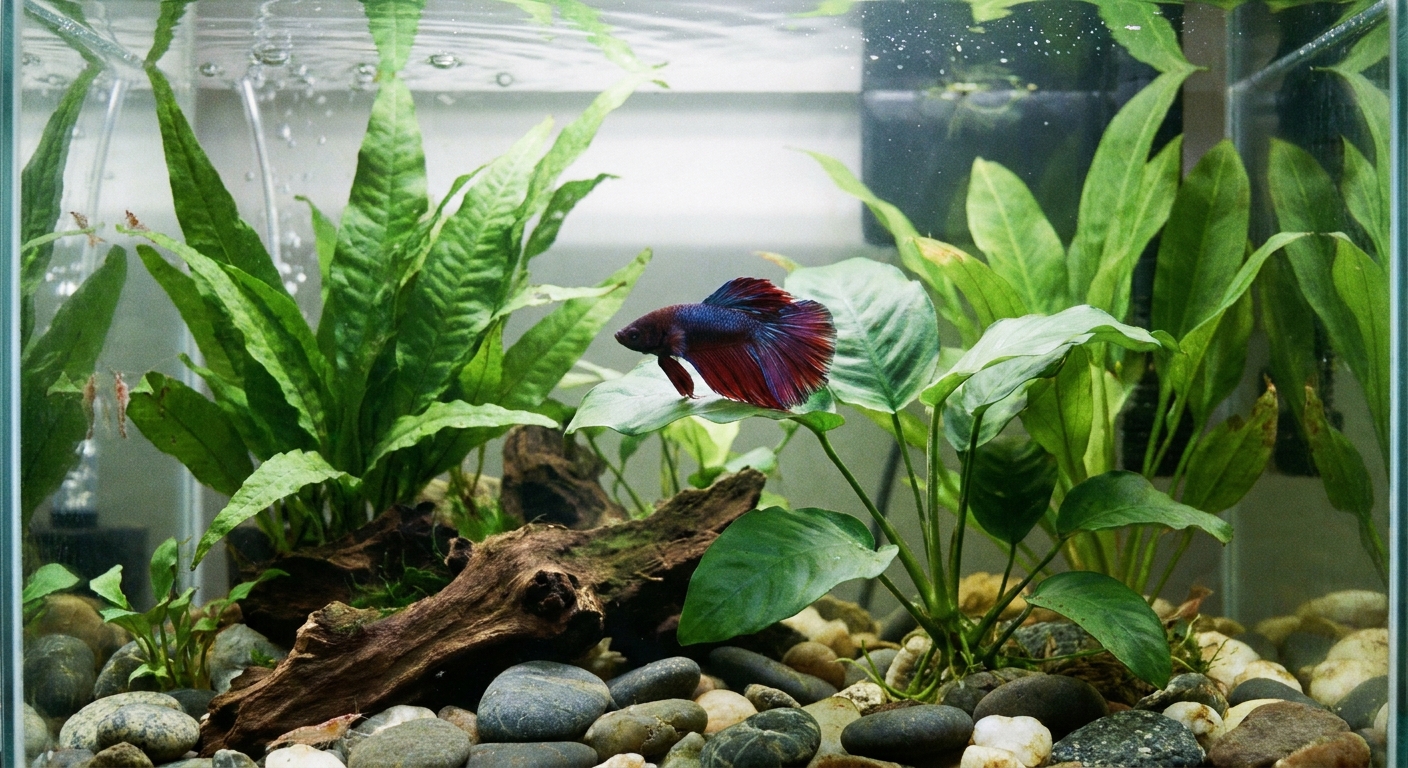
If your betta is showing multiple stress signs, focus on the basics in this order:
- Stabilize temperature with a heater and avoid swings. Reference temperature and heater placement.
- Protect water quality with consistent maintenance. Use this cleaning and water change schedule.
- Confirm the tank is cycled and avoid major disruptions. See cycling steps here.
- Reduce flow so your betta can glide, not battle the current. See filter choices for bettas.
- Soften lighting and add cover using plants and hides. Start with lighting guidance and enrichment decor ideas.
When it is more than stress
Stress can be the first domino before illness, so watch closely if you see:
- Persistent bottom-sitting with heavy breathing
- Not eating for several days in a row
- Visible white spots, fuzzy patches, or pineconing scales
- Severe bloating or stringy white feces
- Sudden inability to swim normally (floating, sinking, rolling)
If appetite is the main symptom, this guide can help you narrow it down: Why Is My Betta Fish Not Eating? 8 Common Causes and Solutions.
FAQ
How long does it take a stressed betta to calm down?
For mild stress, you may see improvement within a day or two after stabilizing temperature, reducing flow, and adding cover. If the cause is cycling or water quality, it can take longer because the environment needs time to become stable. Consistency is your best friend.
Can a small tank cause stress?
Yes, smaller volumes can swing faster in temperature and water quality, which can keep a betta on edge. If you are choosing a size, see 5 Gallon vs 10 Gallon Tank for Bettas.
Will turning off the light reduce stress?
Lowering or shortening lighting can help, especially if reflections and exposure are the issue. Instead of permanent darkness, aim for a gentle day and night rhythm with plenty of shaded areas. Use this lighting guide to set a comfortable schedule.
Gentle reminder from Bloop
Stress fixes are usually not about doing more. They are about doing the right few things consistently. Warm, clean, calm water plus cozy cover can turn a frantic betta into a confident little explorer again.
If you want to keep building a stress-free home, swim over to Health & Wellness and Tank Setup & Environment for more Betta Bliss care notes.