Let’s make your tank the happiest little splash in the house. If you’ve ever seen your betta puff up, spread those fins wide, and throw a fierce little “back off” face, you’ve witnessed flaring. It can be normal, and it can even be enriching in tiny doses. But too much flaring can tip from confident show-off into chronic stress.
What flaring is
Flaring is a betta’s built-in display behavior. In the wild, Betta splendens and close relatives are found in shallow, plant-filled waters like floodplains, canals, and rice paddies. They can be territorial, especially males, and that intensity can shift with season, space, and how many fish are around.
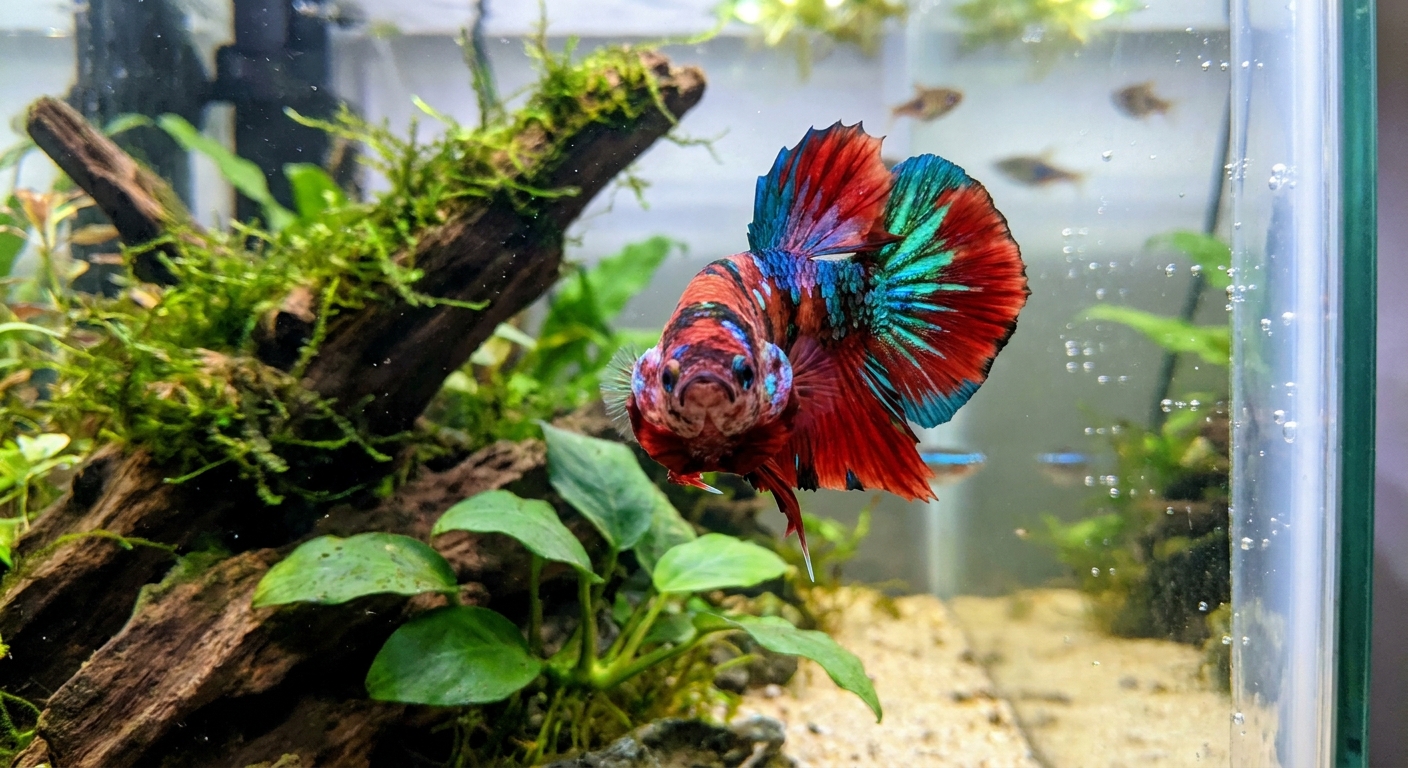
What you’re seeing during a flare
- Opercula (gill covers) extend outward like little shields.
- Fins fan out to increase apparent size.
- Body posture stiffens, often with quick turns or short darting.
- Color may intensify as chromatophores respond to arousal and stress hormones.
This is a normal part of betta communication. It’s not automatically “bad behavior.” It’s information: your betta thinks there’s competition nearby.
Healthy or too much?
Flaring sits in a tricky middle zone. A small, controlled flare can act like a quick “stretch and display” session. But prolonged or frequent flaring keeps the body in a revved-up state, and that’s where problems can start.
When flaring is usually healthy
- It happens briefly, then your betta returns to cruising, exploring, or resting.
- Your betta keeps eating normally and behaves normally after.
- There are no torn fins, scraped noses, or frantic glass surfing.
- It occurs occasionally, like when you approach the tank, then quickly fades.
When flaring acts like a stressor
- It lasts many minutes at a time, multiple times per day.
- Your betta seems stuck on patrol, repeatedly checking one wall of the tank.
- You see glass surfing (rapid back-and-forth pacing).
- Your betta stops eating, hides constantly after flaring, or seems jumpy.
- Fins look increasingly ragged or clamped, or your betta bonks the glass while charging.
One more reassuring note: it’s also common to see extra flaring during the first days in a new home, after a move, or after a big tank rearrange. Many bettas settle as the environment starts to feel familiar and secure.
If you’re not sure whether you’re seeing normal excitement or harmful stress, this guide can help you spot the full picture: 7 Signs of Stress in Betta Fish (and how to fix their environment).
Common triggers
Sometimes flaring is “on purpose” because something truly looks like a rival. Other times it’s an accidental trigger built into the room setup.
Most common flaring triggers
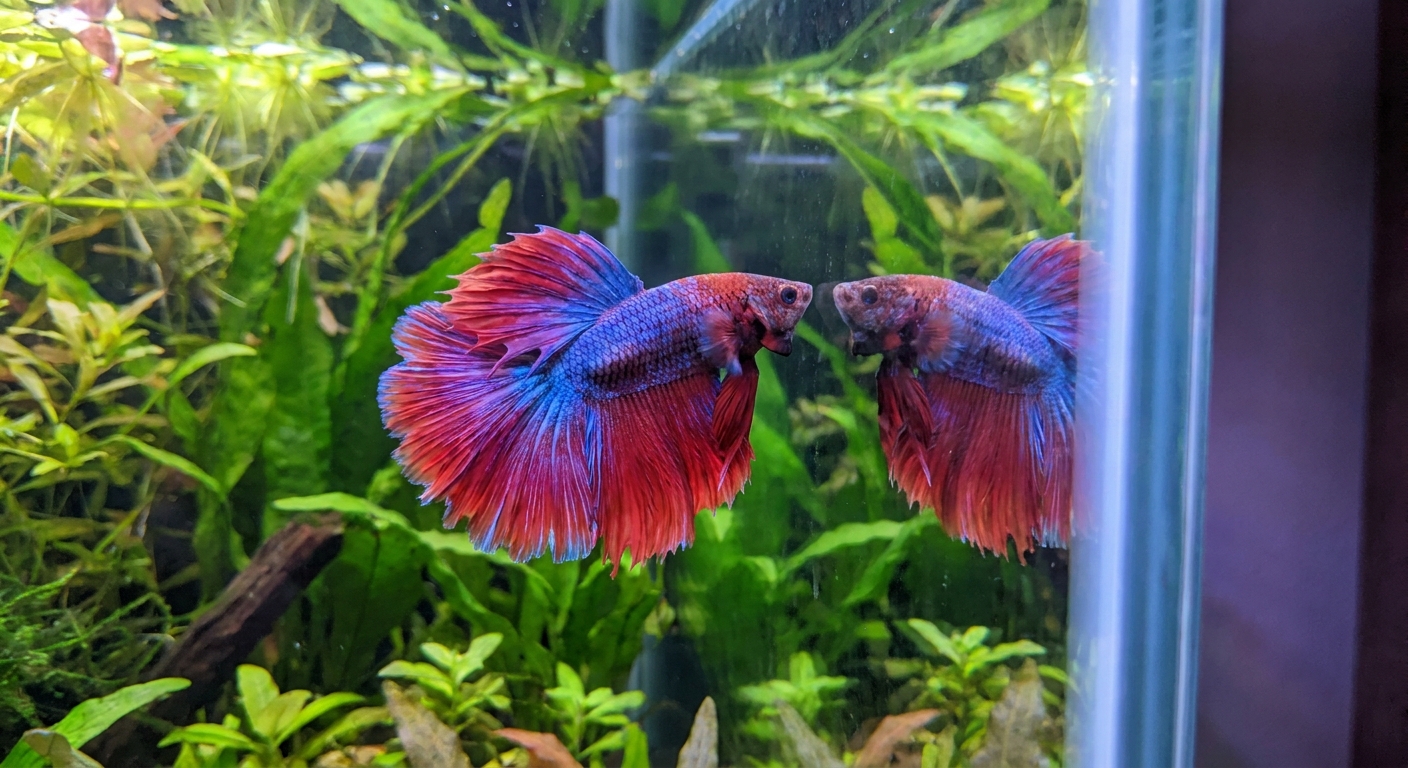
- Reflections in the glass, especially when the tank is brighter than the room (evening, night, or strong tank lights).
- Another betta in a nearby tank, even across the room.
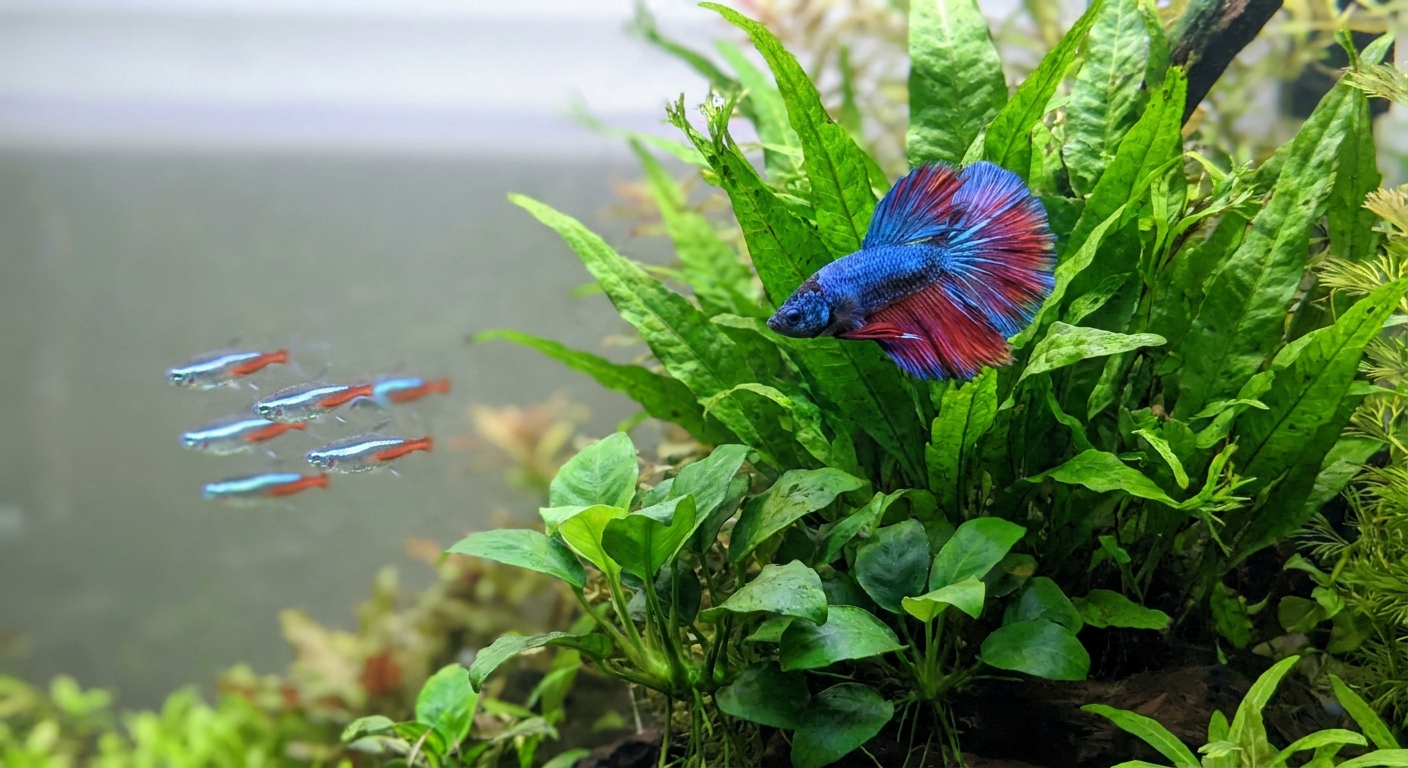
- Colorful fish with flowing fins or bold patterns that resemble a betta.
- Sudden movement near the tank that startles your betta into defensive mode.
- New decor or rearranged territory that makes your betta feel unsettled.
Mirror time
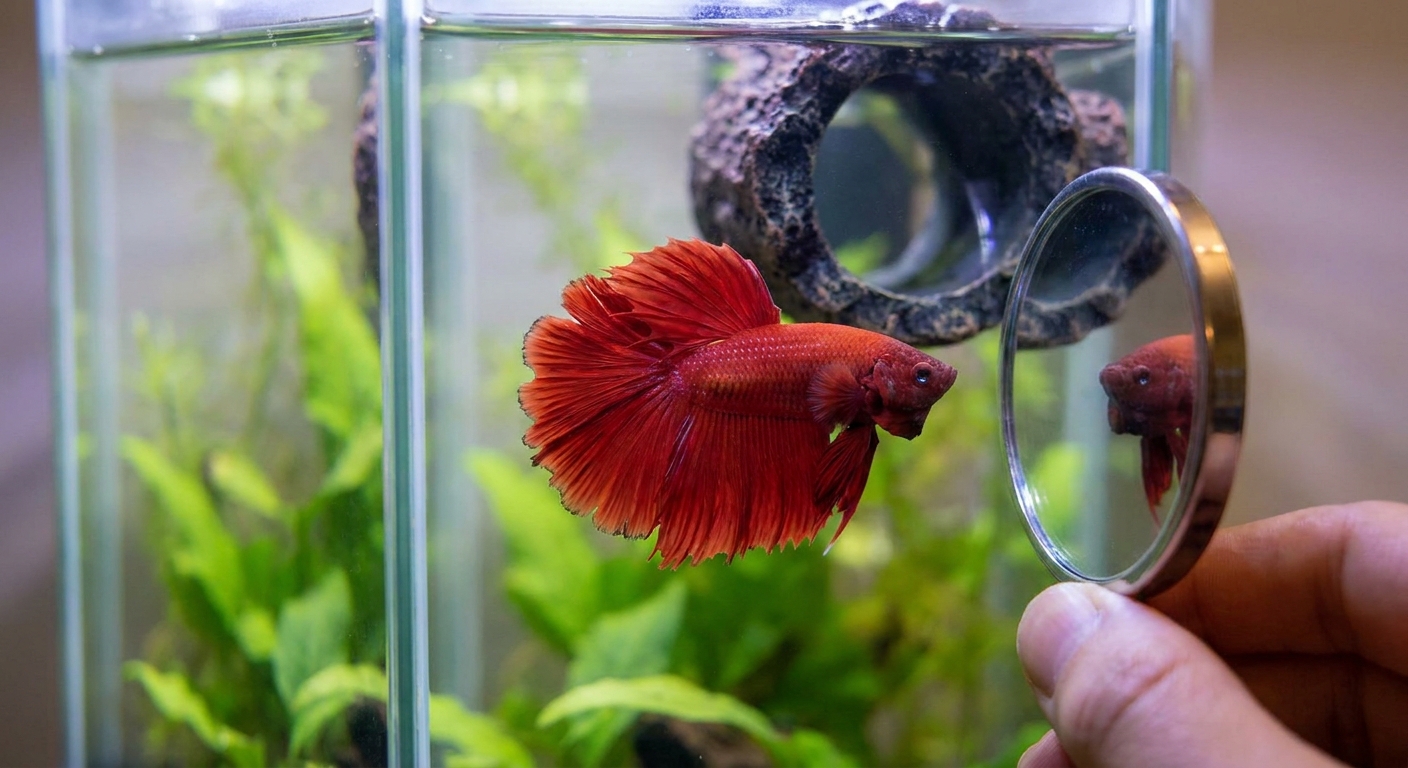
An aquarium mirror can be a fun, controlled enrichment tool when used carefully. The goal is a short burst of display, then a calm return to normal life. Think of it like a quick game, not an all-day argument.
Safe mirror rules
- Start short: many keepers begin with about 10 to 30 seconds.
- Cap frequency: a few times per week is plenty for many bettas, and some do best with less.
- Always supervise: remove the mirror if your betta rams the glass or escalates into frantic behavior.
- Never leave a mirror in the tank or set it up for long, unattended sessions.
- End on a calm note: take the mirror away before your betta looks exhausted or distressed.
- Provide a cool-down area: plants, caves, or driftwood so your betta can retreat and relax.
Step-by-step: introducing a mirror
- Choose a small mirror intended for aquarium use or a clean, smooth mirror surface that can be held outside the tank.
- Pick a low-stress moment, not right after feeding, water changes, or major tank rearranging.
- Place the mirror briefly at one end of the tank. Hold it steady.
- Watch behavior closely. A few flares and a confident posture can be normal. Persistent charging, panicked pacing, or rapid breathing are not.
- Remove the mirror within your short time window, then let your betta explore and settle.
When not to use a mirror
- If your betta is sick, injured, or recovering.
- If your betta is showing signs of ongoing stress already.
- If mirror sessions consistently lead to hours of agitation afterward.
If you need a calmer enrichment plan, try habitat upgrades instead of “rival” stimulation. Cozy cover and exploration zones make a huge difference: 7 Essential Tank Decorations for Betta Hiding Spots and Enrichment.
Reduce excessive flaring
If flaring is happening too often, the solution is usually not “train the betta to stop.” It’s more effective to remove the triggers and make the environment feel secure.
Fix reflections first
- Reduce harsh lighting in the room or dim the tank light if it is very bright.
- Turn off the tank light at night. A lit tank in a dark room is a reflection factory.
- Add plants near the front or sides to break up sightlines and soften reflections.
- Adjust the tank angle slightly if it’s reflecting a window or bright lamp.
Lighting balance matters for behavior and rest cycles. If you want a simple routine, swim over here: Betta Fish Lighting Requirements.
Break up sightlines
Bettas tend to flare more when they can see long, open stretches. Create zones so your betta can claim a favorite nook without feeling exposed.
- Use tall plants (live or silk) to create vertical cover.
- Add driftwood, caves, or arches so your betta can move between areas.
- Avoid a bare tank with all decor pushed to the edges.
Need help picking plant types? Here’s a gentle guide: Live vs Silk Plants for Bettas.
Check tank size and layout
Cramped spaces can raise tension because there’s no “personal bubble.” While a betta can survive in small setups, many behave more calmly with more swimming room and more territory structure.
If you’re deciding between common starter sizes: 5 Gallon vs 10 Gallon Tank for Bettas.
Keep water and temperature steady
When a betta feels physically off, irritability can rise. Poor water quality or temperature swings do not directly “cause flaring,” but they can make your fish less resilient and more reactive.
- Aim for a stable, warm range, often around 78 to 80°F (about 25.5 to 26.5°C).
- Follow a steady water change routine.
- Avoid strong filter flow that constantly pushes your betta around.
For two basics that smooth out behavior and stress levels: Betta Tank Temperature and Heater Placement and Betta Tank Cleaning Routine and Water Change Schedule.
Flaring and tank mates
Some bettas flare because a tank mate looks like competition, invades personal space, or moves too fast. Others flare because they can see fish in a neighboring tank. If you’re planning companions, prioritize peaceful species and a roomy layout with lots of cover.
High-conflict tank mate types
- Bright, flashy fish with flowing fins
- Fin nippers
- Hyperactive swimmers that constantly enter the betta’s zone
- Anything that resembles another betta in silhouette or color
If you’re building a community setup, these compatibility notes can help you avoid the biggest headaches: 10 Worst Tank Mates for Betta Fish and Introducing Tank Mates to a Territorial Betta.
Quick troubleshooting
If flaring has become constant, try this calm-down sequence.
- Check for reflections: lights, windows, nighttime tank glow.
- Add cover: plants and a hide near the area your betta patrols.
- Block visual stress: if another tank is nearby, add a divider or reposition so they cannot see each other.
- Review flow: if the current is strong, your betta may be on edge.
- Confirm basics: temperature stability and a consistent cleaning schedule.
If your betta is flaring plus refusing food, that’s a big clue something is off. This walkthrough helps sort the common causes: Why Is My Betta Fish Not Eating? 8 Common Causes and Solutions.
When to worry
Flaring is just one behavior, so look at the whole fish. If you’re seeing constant flaring paired with lethargy, labored breathing, clamped fins, rapid weight loss, swelling, or visible spots or fuzz, treat it like a bigger health issue and get help from an experienced aquatic vet or fish-savvy local shop as soon as you can.
FAQ
Can flaring tear fins?
Flaring itself is a posture and display, but the behavior around it can cause damage. If your betta repeatedly charges the glass, wedges into tight decor, or spirals into frantic pacing, fins can split or fray.
Does flaring mean my betta is happy?
Not exactly. Flaring means your betta is aroused and alert, usually due to territorial instinct. In tiny doses, it can be a stimulating activity. If it’s frequent or intense, it’s more likely stress than joy.
Should I let my betta flare at their reflection?
Occasional brief reflection flares are common. But if your tank setup causes constant reflection battles, it’s worth adjusting lighting and adding cover so your betta can relax.
Do female bettas flare too?
Yes. Many females flare, especially at reflections or perceived rivals. The same safety rules apply: short, infrequent enrichment is fine, and constant agitation is not.
A gentle rule
A little flare can be a healthy flex. A lot of flare is your betta saying, “I can’t turn off defense mode.” Aim for a tank that makes your fish feel secure: warm, clean, plant-filled, and full of cozy breaks in the view. That’s where confident behavior shines without tipping into stress.
If you’d like more calm, enriching behavior ideas, you can browse the full collection here: Behavior & Enrichment.