
Let’s make your tank the happiest little splash in the house. Introducing new tank mates to a territorial betta is all about planning, patience, and giving everyone plenty of places to hide and rest. Below is a step-by-step method you can follow to stack the odds toward peaceful co-living.
Before you add anyone: the non-negotiables
If these basics are not in place, even the gentlest tank mate intro can turn into a chase scene.
1) Confirm the tank is truly ready
- Tank is cycled with stable parameters. If you are still setting up, start here: How to cycle a new betta fish tank.
- Temperature is stable (bettas do best in warm, consistent water). A stressed, chilly betta is crankier. See: Betta tank temperature and heater placement.
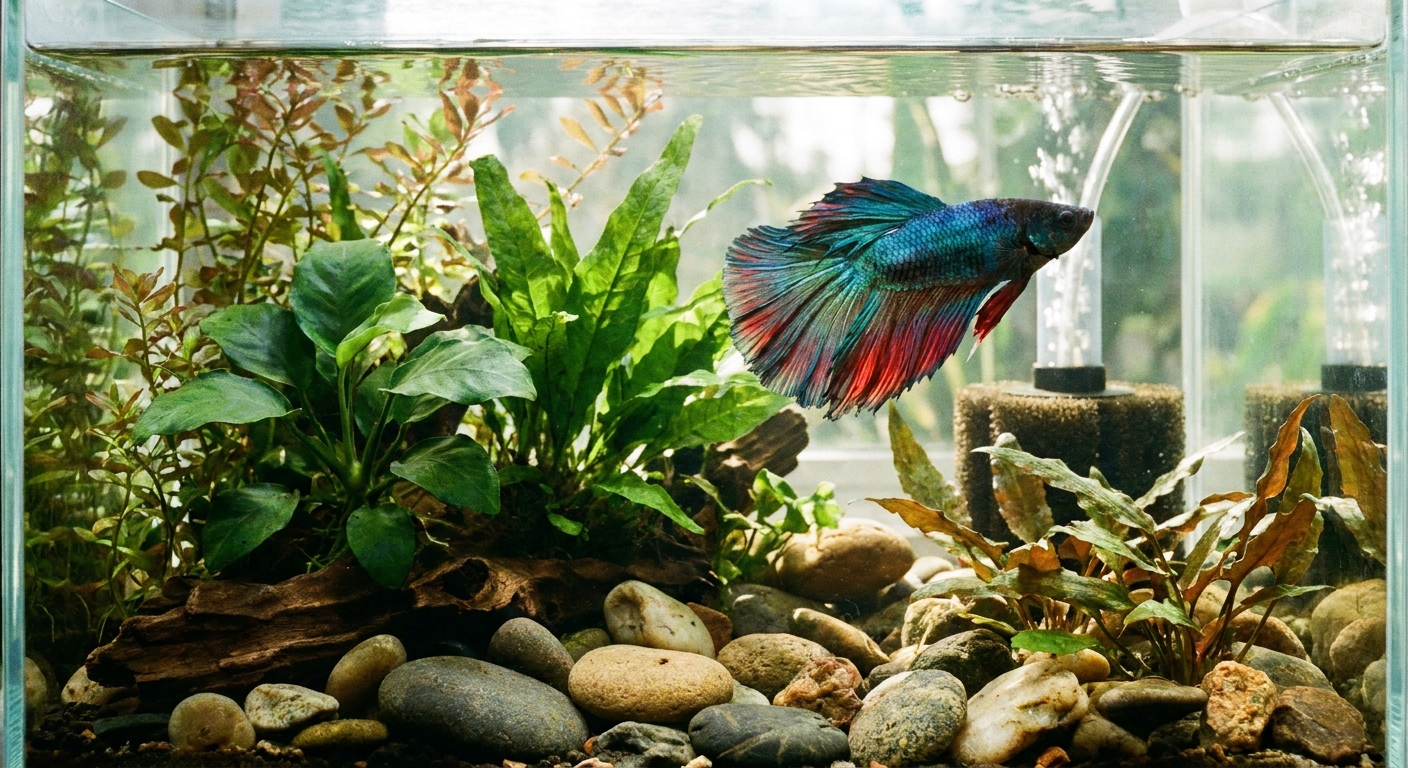
- Filter flow is gentle. Too much current keeps everyone on edge. If you need help matching filtration to bettas: Choosing the right filter for a betta tank.
- Plan for the extra bioload. More animals means more waste. Be ready to test for ammonia and nitrite after you add new tank mates, and keep water changes easy to do.
2) Start with the right tank size and layout
Territory problems shrink when the space grows and the sightlines break up.
- Bigger is easier. A 10 gallon is typically more forgiving than a 5 gallon, especially for a betta plus snail(s) and sometimes shrimp. For fish tank mates, most setups do better with a larger footprint (often 15 to 20 gallons or more, depending on species) because many schooling fish need group space and horizontal swimming room.
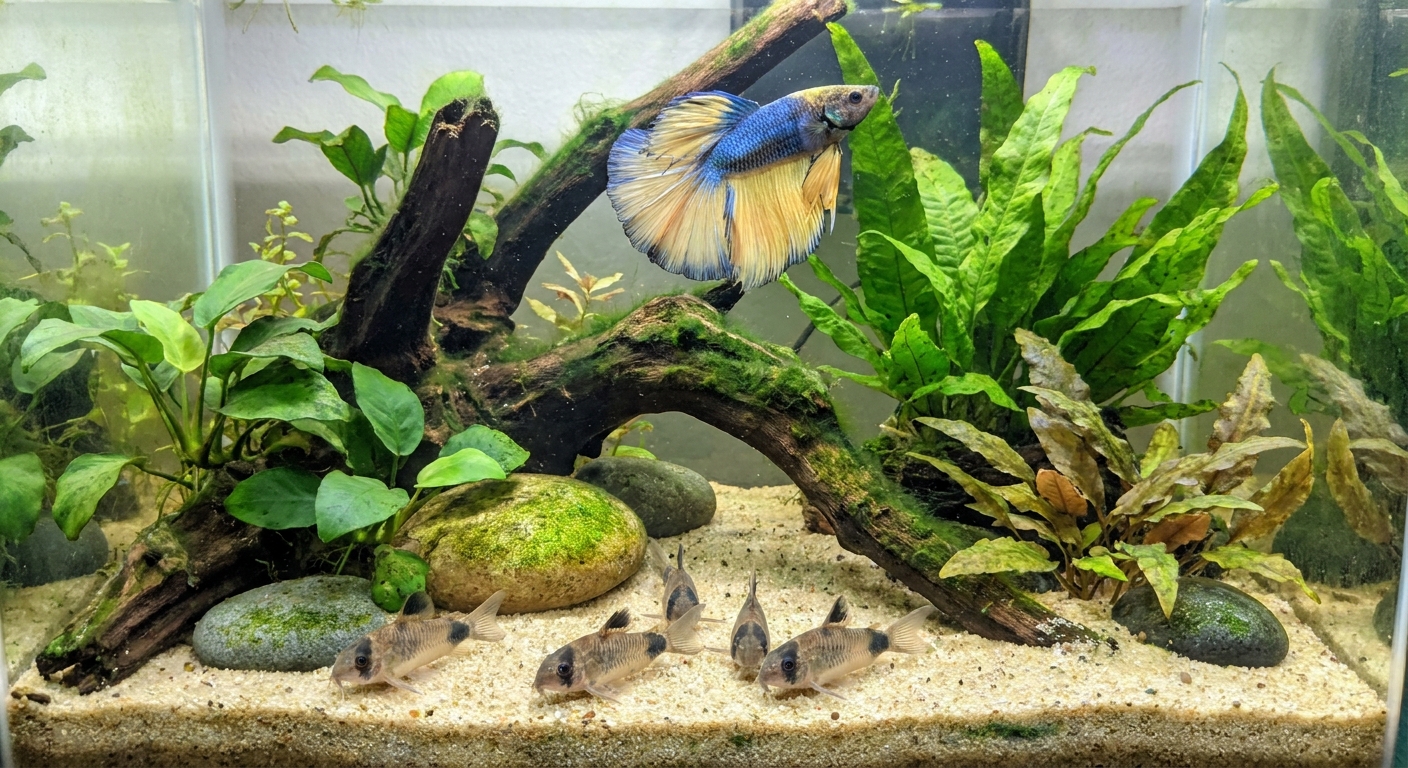
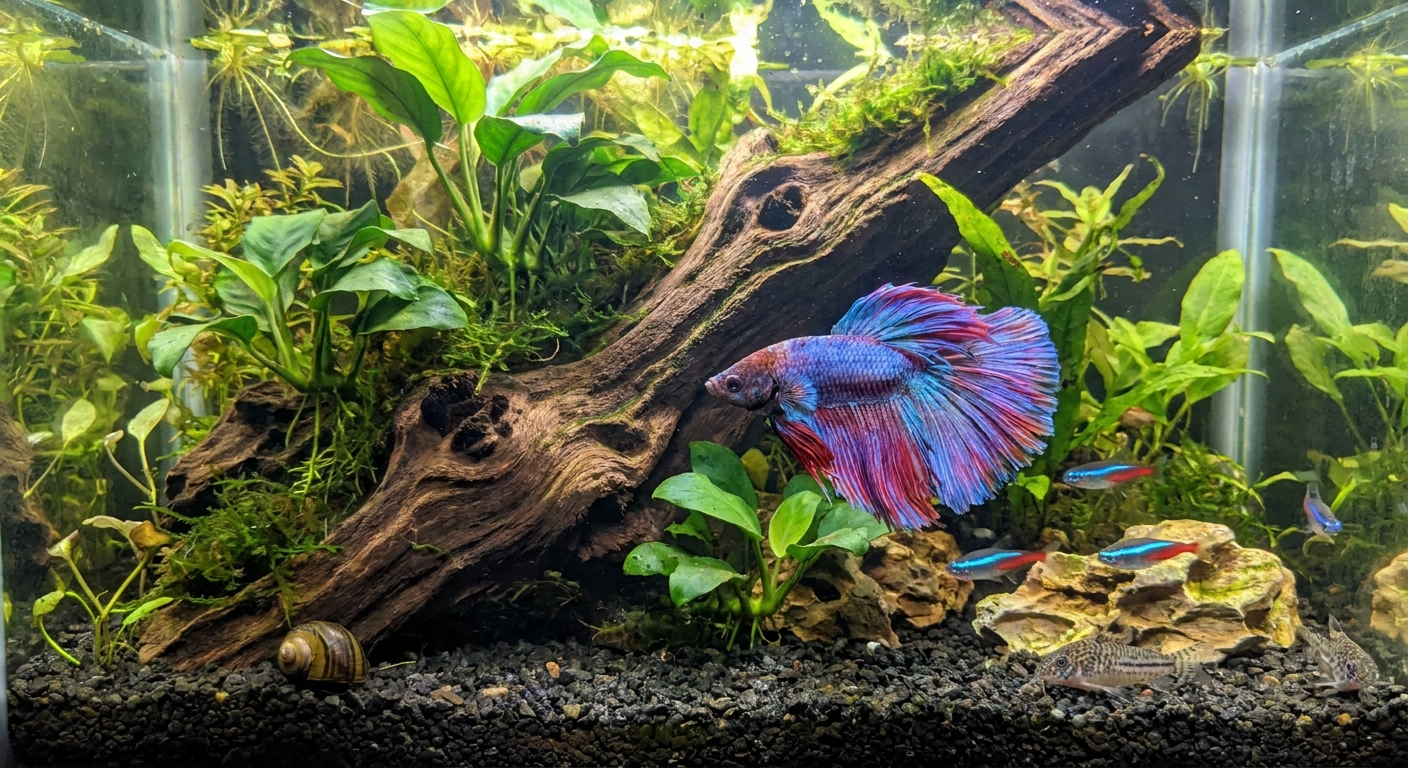
- Plant cover and hiding spots are required. New tank mates need places to disappear immediately, and your betta needs visual breaks so they cannot patrol the whole tank at once. Ideas: Tank decorations for hiding spots and enrichment and Live vs silk plants for bettas.
3) Choose compatible species, not just “peaceful” ones
Compatibility is about more than temperament. Think fin-nipping risk, speed, feeding style, and whether your betta reads them as “intruders” or “snacks.” A great starting point is snails, then shrimp, then carefully selected fish.
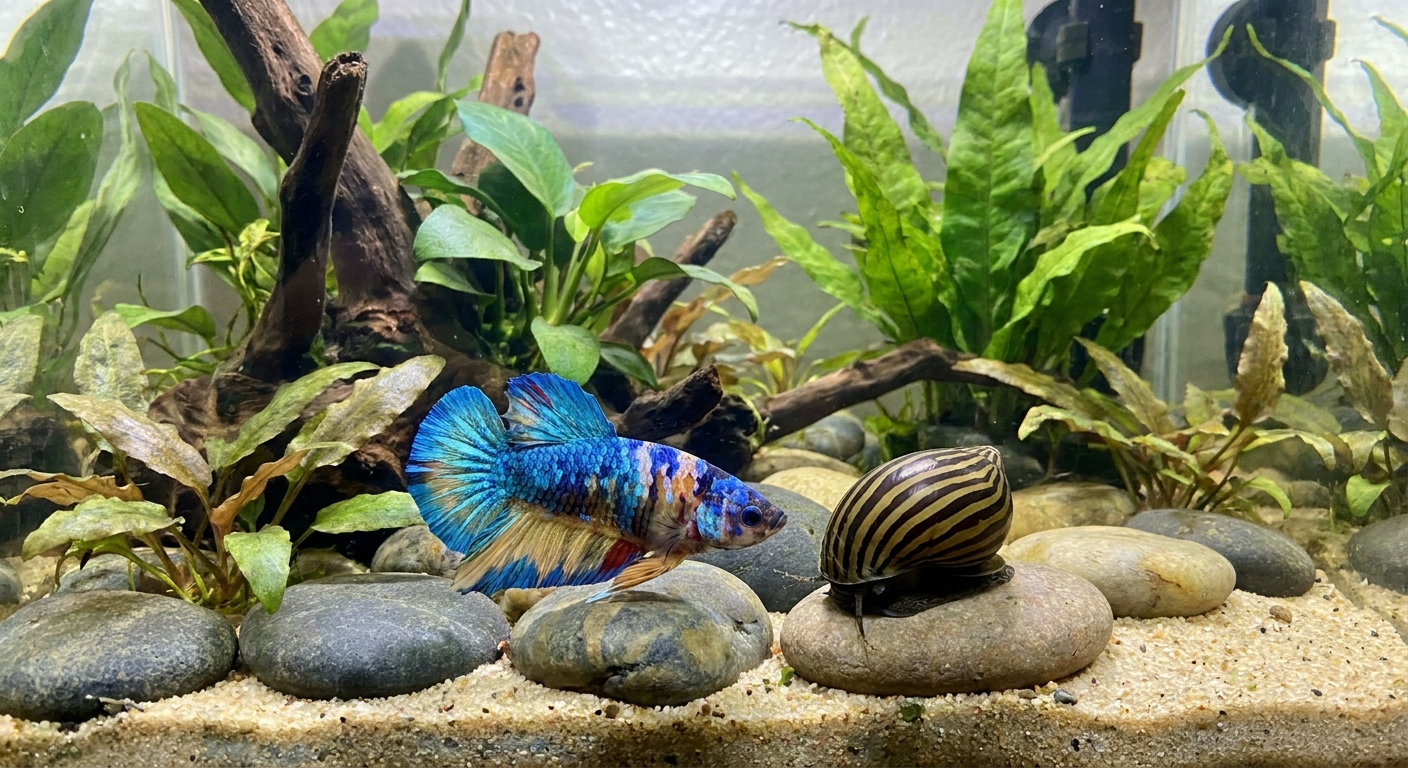
- Snails: Often the safest first try. See options and cautions: The 5 best snails to keep with betta fish (and which to avoid).
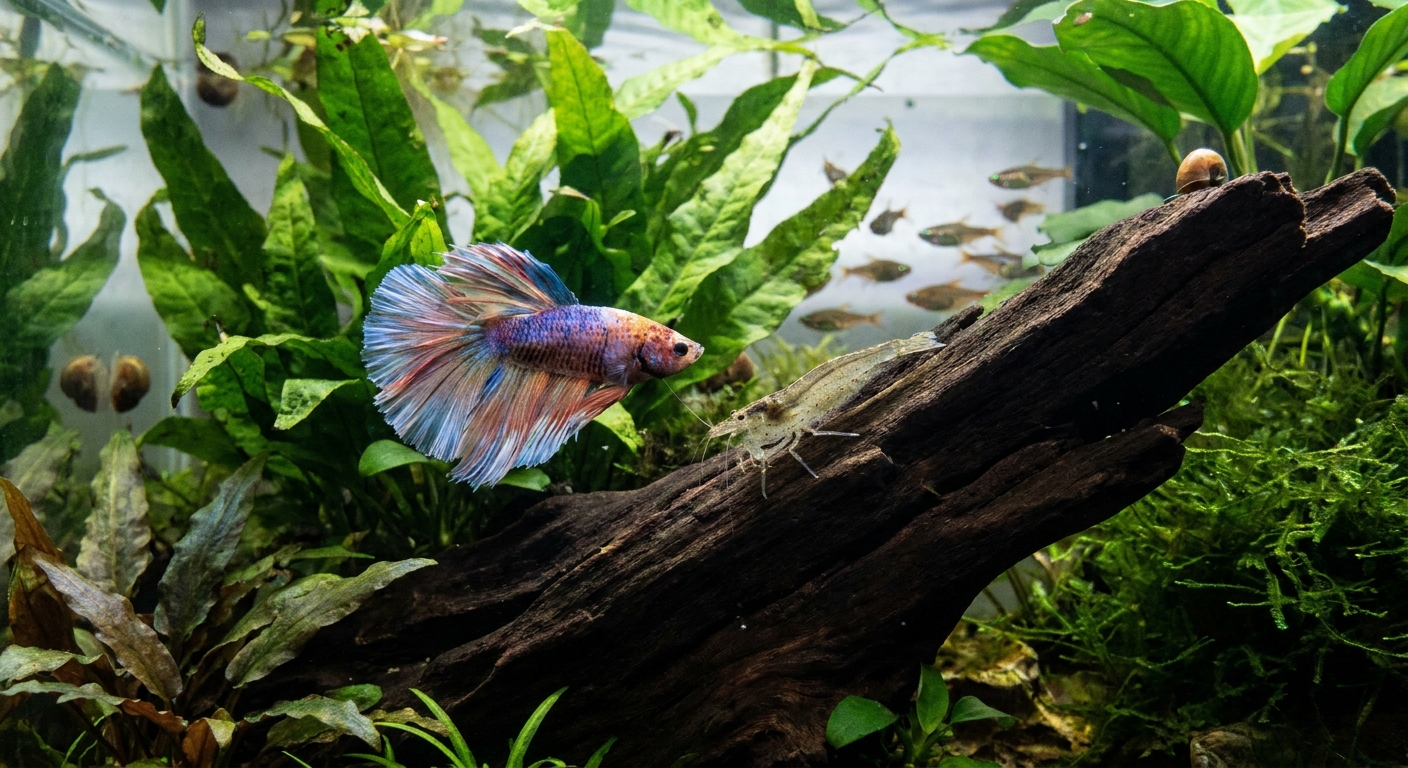
- Shrimp: Possible, but many bettas will hunt them, especially small shrimp. Adult Amano shrimp are generally harder to swallow than tiny dwarf shrimp.
- Fish: Risk goes up. Avoid long fins (competition), aggressive fish, fin nippers, and flashy fish that trigger sparring.
4) Quarantine new arrivals if you can
A territorial betta is not the only risk. New animals can bring illness. A simple separate container with heater, cover, and frequent water changes helps you watch for problems before everyone shares water. If you need a clear setup plan: How to set up a hospital tank.
5) Quick note: this is for a single betta
This guide is about adding non-betta tank mates to a tank with one betta. Multi-betta setups (sororities) are a separate, advanced topic with very different risks.
Supplies checklist (simple, but powerful)
Gather these before you start so you are not scrambling with wet hands.
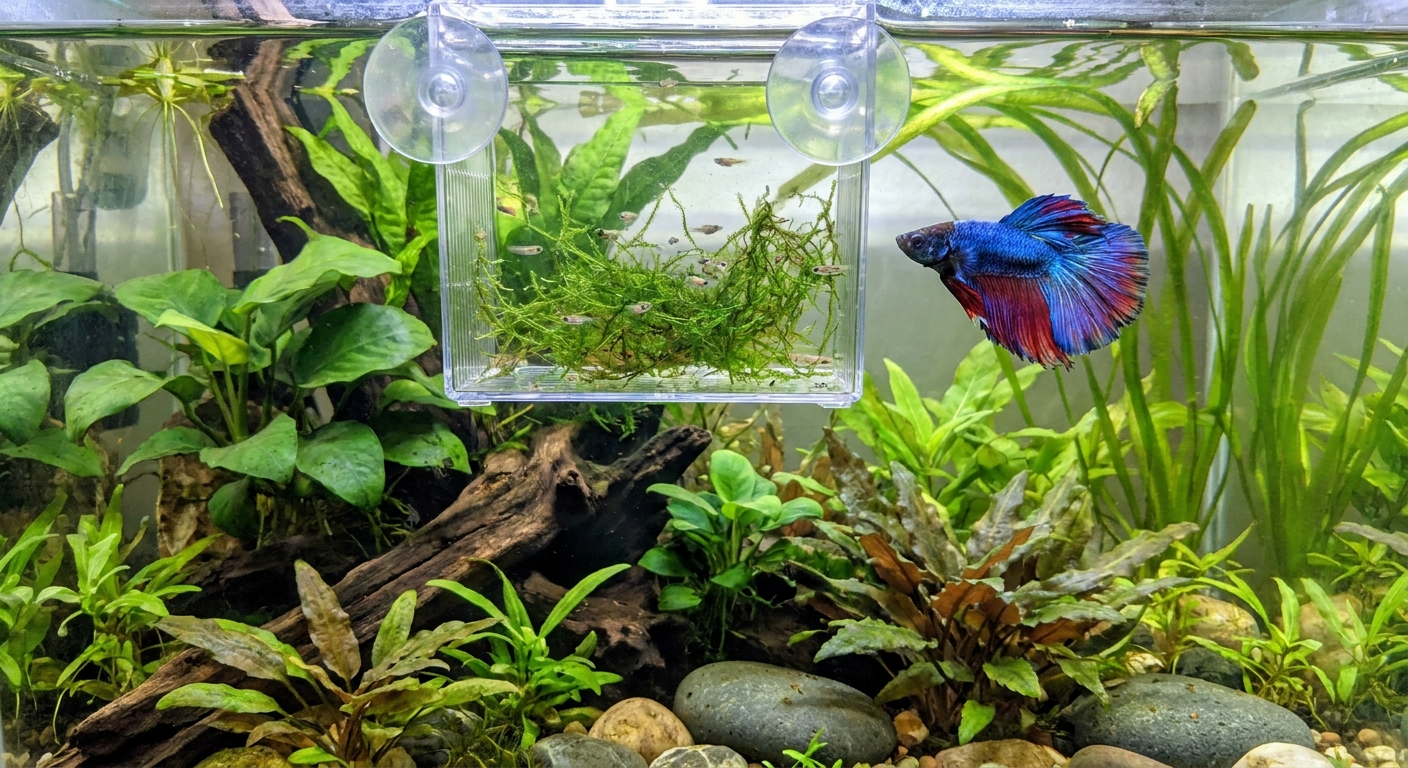
- A breeder box or clear acclimation box that hangs inside the tank (great for fish introductions)
- A fine mesh net (for shrimp, use soft mesh to reduce injuries)
- Extra plants and hides (even temporary ones)
- Lights on a timer or a plan to keep the tank dim the first day (see: Betta fish lighting requirements)
- A backup plan: a spare tank, divider, or container with heat for emergency separation
- Water conditioner and a way to do a quick water change
Safety reminder: set your separation plan up before you open the bag. If the intro goes sideways fast, you will be very glad you did.
Step-by-step: the calmest way to introduce tank mates
Step 1: Rearrange the betta’s territory
Right before introductions, do a small remodel. Move a piece of wood, rotate a cave, shift a plant cluster. The goal is to gently reset the map so your betta is less locked into a single patrol route.
- Add or reposition hides so there are multiple sheltered areas, not one “main cave.”
- Break long open swimming lanes with tall plants or decor.
Step 2: Feed your betta first
A hungry betta is more likely to chase. Offer a normal meal 30 to 60 minutes before the introduction. Keep portions sensible to protect water quality and prevent bloat. If you want a tighter feeding routine: How much and how often to feed a betta fish.
Step 3: Match temperatures and water parameters
For shrimp, snails, and fish, slow acclimation reduces shock and frantic swimming.
- Float the bag for 15 to 20 minutes to equalize temperature.
- Then mix small amounts of tank water into the bag or container over 20 to 40 minutes.
- Avoid pouring store water into your tank if possible. Net or gently transfer the animals instead.
Shrimp note: shrimp can be extra sensitive to swings in pH and mineral content. If the new shrimp came from very different water, use a slower method (many keepers do a longer, drip-style acclimation) and take your time.
Step 4: Use protected contact first (best for fish and shrimp)
This is one of the gentlest methods for a territorial betta: let everyone see each other without allowing chasing.
- Place the new tank mate in a clear acclimation box inside the tank.
- Keep the lights low.
- Watch your betta’s reaction for 15 to 30 minutes.
Important: if you keep a fish in an acclimation box for hours (sometimes useful with reactive bettas), make sure the box has good water exchange and gentle flow. Do not overcrowd it, and do not leave a stressed animal confined longer than necessary.
What you want to see: curiosity, a few short flares, then your betta loses interest and swims away.
What you do not want to see: relentless pacing at the box, repeated ramming, or nonstop flaring that does not calm down.
Step 5: Release at the right time of day
Choose a calm window when you can supervise.
- Evening release often helps. Dim lighting makes it easier for newcomers to find cover.
- Avoid introducing new animals right before you leave the house.
Step 6: Distract with a calm, targeted feed
Right after release, offer a small feeding at one end of the tank so your betta has a job to do that is not patrolling. Example: feed your betta on the opposite side of the tank from the main hiding area, so the new arrival can tuck in and settle. For fish communities, feed lightly so food does not rot.
Step 7: Observe closely for the first hour, then again over 48 hours
Territorial behavior can spike immediately, but delayed aggression is common once the betta decides the newcomer is still there tomorrow.
- Check fins, breathing rate, and hiding behavior.
- Make sure everyone is able to eat.
- Look for cornering, where a betta traps a tank mate against glass or decor.
If you notice stress signals, use this guide to decode them: 7 signs of stress in betta fish (and how to fix their environment).
Species-specific tips
Adding snails
- Add snails first in brand-new community plans. In established betta tanks, snail intros are still usually smooth.
- Protect the antennae. Some bettas nip. Provide lots of cover and avoid tiny snails if your betta is a persistent nibbler.
- Check for escape routes. Snails climb. Ensure the lid is snug.
Adding shrimp
- Assume shrimp may be hunted. Plan for it emotionally and logistically.
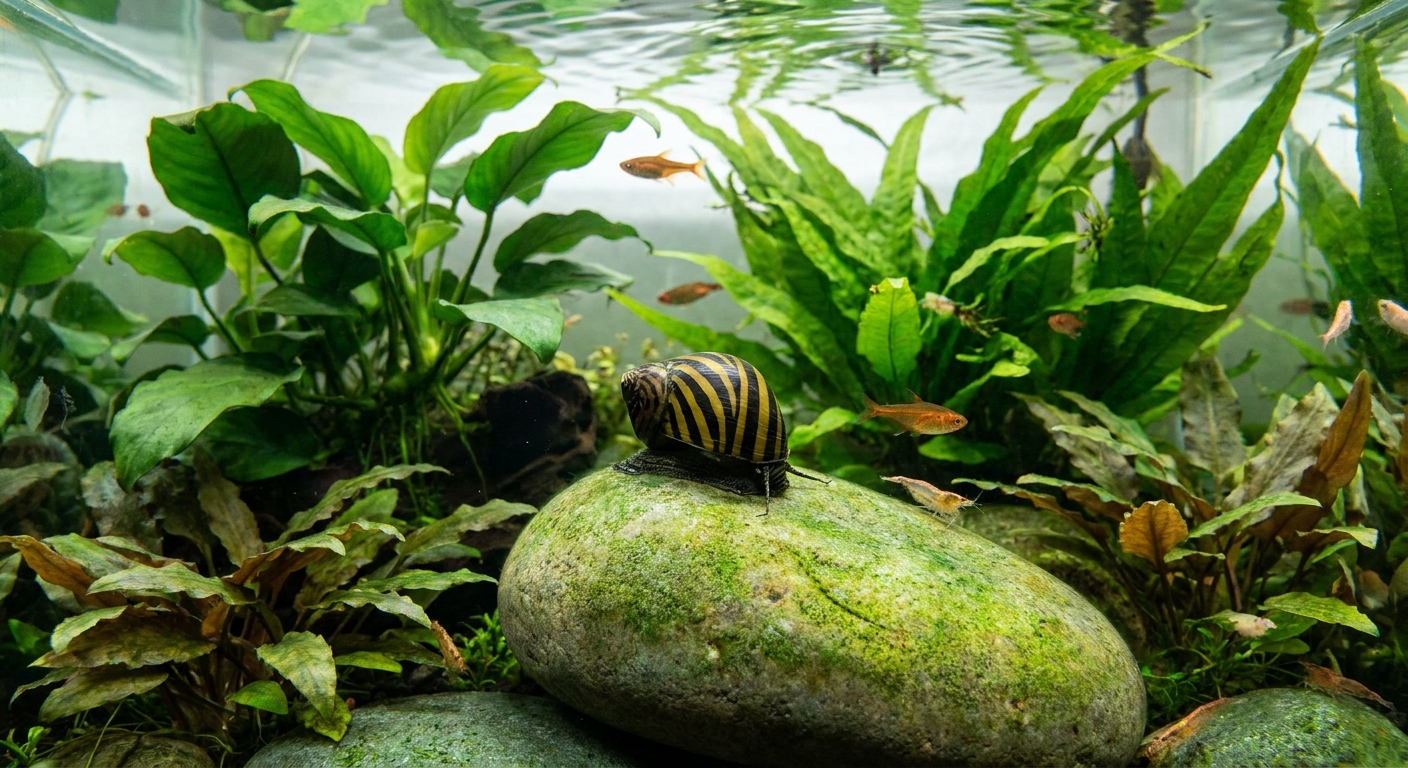
- Dense cover is everything. Moss, fine-leaf plants, and layered hardscape give shrimp survival lanes.
- Add shrimp after lights-out so they can settle into hides before your betta patrols.
- Start with larger shrimp when possible (Amano shrimp are often a better test than tiny juveniles).
Adding fish
Fish tank mates are the most complicated match for a territorial betta. Even when compatible, personalities vary, and stocking rules matter.
- Tank size guardrail: a 10 gallon is often not enough for most schooling fish. Many fish options do better in 15 to 20 gallons or larger, depending on the species and group size.
- Group needs: many small community fish are schooling or shoaling fish that need a proper group. Too few can raise stress and make nipping more likely.
- Space needs: look for fish that use different parts of the tank than your betta, and make sure there is real horizontal swimming room.
- Avoid fin-nippers and fast bullies that harass your betta.
- Avoid long-finned, betta-like fish that trigger sparring behavior.
- Use the acclimation box method longer, sometimes several hours, if the betta is reactive (with good water exchange and no crowding).
When it is not working: intervene early
A little posturing is normal. Ongoing harassment is not. If you are unsure, lean toward safety and separate sooner rather than later.
Red flags that mean separate now
- Repeated biting or torn fins
- One animal pinned in a corner or behind equipment
- New tank mate stops eating or stays hidden all day
- Betta is glass surfing, flaring nonstop, or breathing heavily
- Shrimp are disappearing rapidly and you intended them as tank mates, not live snacks
Fast fixes to reduce tension
- Dim the lights for the rest of the day.
- Add more cover immediately (even extra silk plants can help).
- Do a partial water change to improve water quality and dilute waste and irritants. If you need a steady schedule: Betta tank cleaning routine and water change schedule.
- Use an acclimation box again for the new arrival while you decide next steps.
Plan B is not failure
Some bettas are simply solo swimmers. If your betta is consistently aggressive, it is kinder to run a betta-only tank than to force roommates into constant fear.
Quick timeline
- Day 0: Prep extra hides, check temperature and flow, confirm your separation plan is ready, feed betta normally.
- Day 0 evening: Acclimate new tank mate slowly, use a breeder box when possible.
- Day 0 night: Release with lights dim, then observe for 60 minutes.
- Days 1 to 2: Watch feeding time closely, check for injuries, keep the layout stable, and test water if anything seems off.
- Days 3 to 7: If peaceful, gradually return lighting to normal and keep up with water quality.
FAQ
Will my betta ever accept tank mates?
Some do, some do not. Betta personalities vary a lot. Your best odds come from a larger, well-planted tank with line-of-sight breaks and a cautious introduction method.
Is flaring always a bad sign?
A short flare is normal communication. The concern is constant flaring, ramming, or fixation that does not fade after the first 15 to 30 minutes.
Should I add tank mates before or after the betta?
In general, adding tank mates to an established betta tank is harder because the betta already owns the space. If you are building a new setup, adding tank mates first and introducing the betta last can reduce territorial intensity, as long as the tank is fully cycled and stable.
Do mirrors or flare time help before introductions?
Skip it. Revving up a territorial fish right before adding roommates often increases aggression rather than reducing it. Calm and steady wins this race.
If your betta seems unusually cranky lately, it may be discomfort, stress, or water quality rather than pure attitude. This guide can help you troubleshoot: Signs of stress in betta fish.