Let's make your tank the happiest little splash in the house! A steady feeding routine keeps your betta's energy bright, their colors glowing, and their belly comfy. Below is a simple, actionable schedule with starter portions you can follow starting today.
Quick note before we begin: pellet sizes vary a lot by brand. Use the portions below as a baseline, then fine-tune using leftovers, belly shape, and body condition.
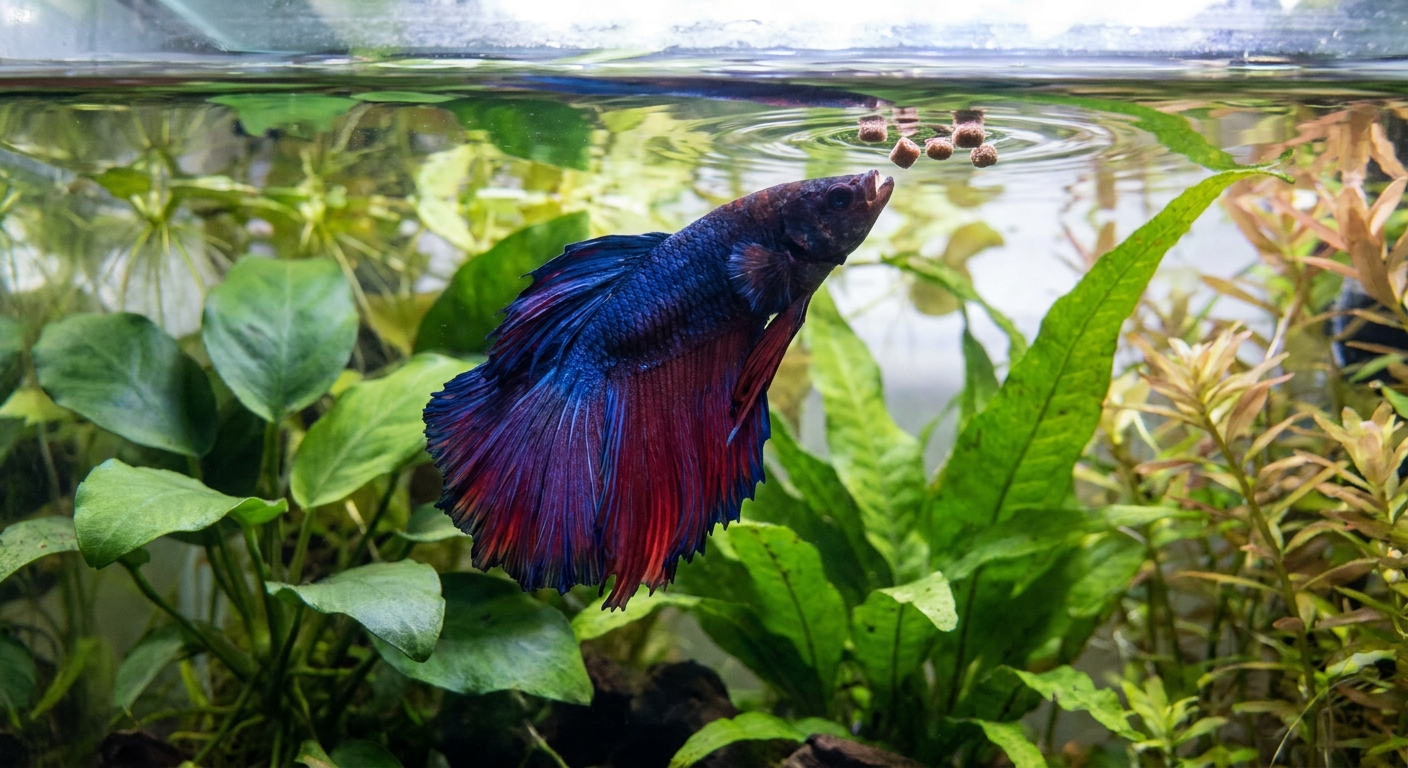
The golden rule: feed what they finish
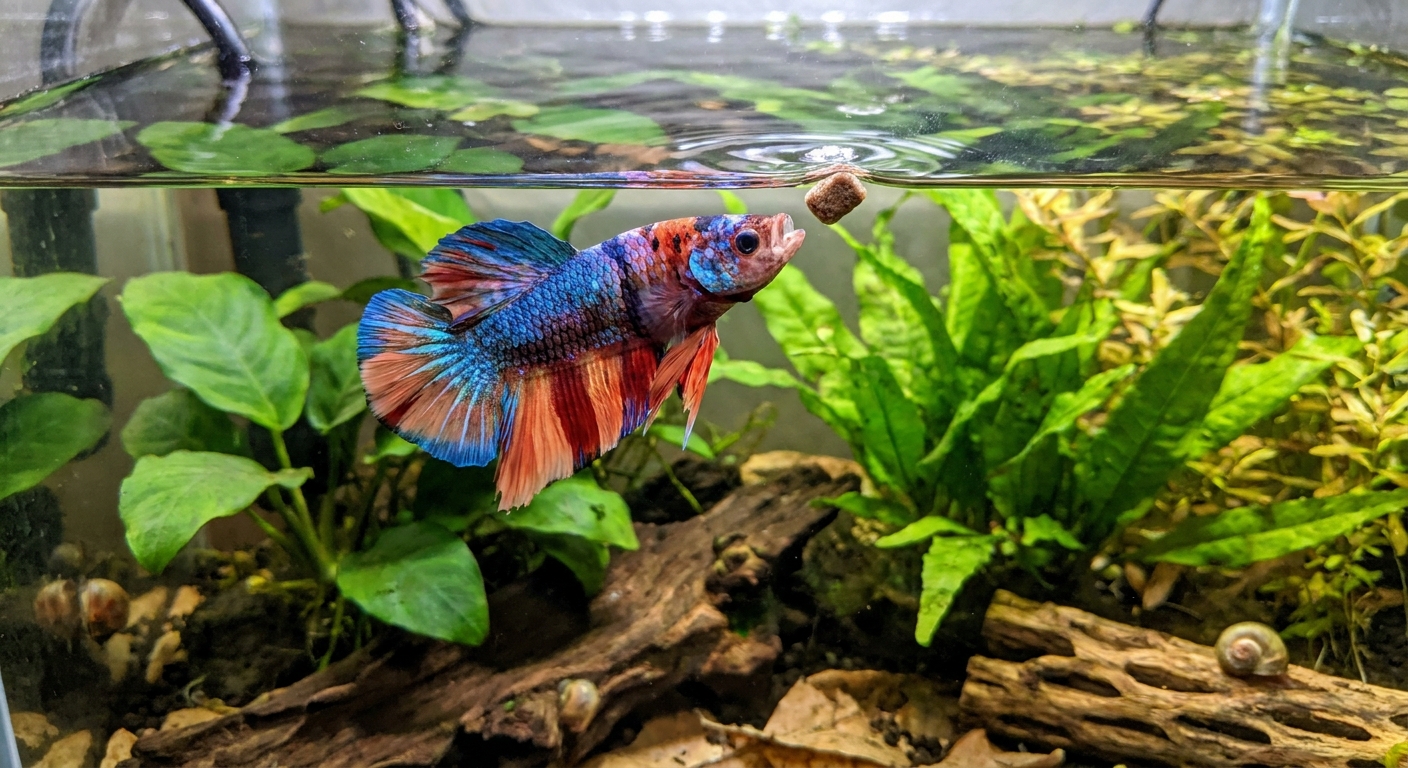
A betta's stomach is tiny. A helpful rule of thumb is that it's roughly comparable to the size of their eye, which is why bettas do best with small portions rather than big meals.
- Aim for a quick cleanup: your betta should finish each mini portion in about 30 to 60 seconds.
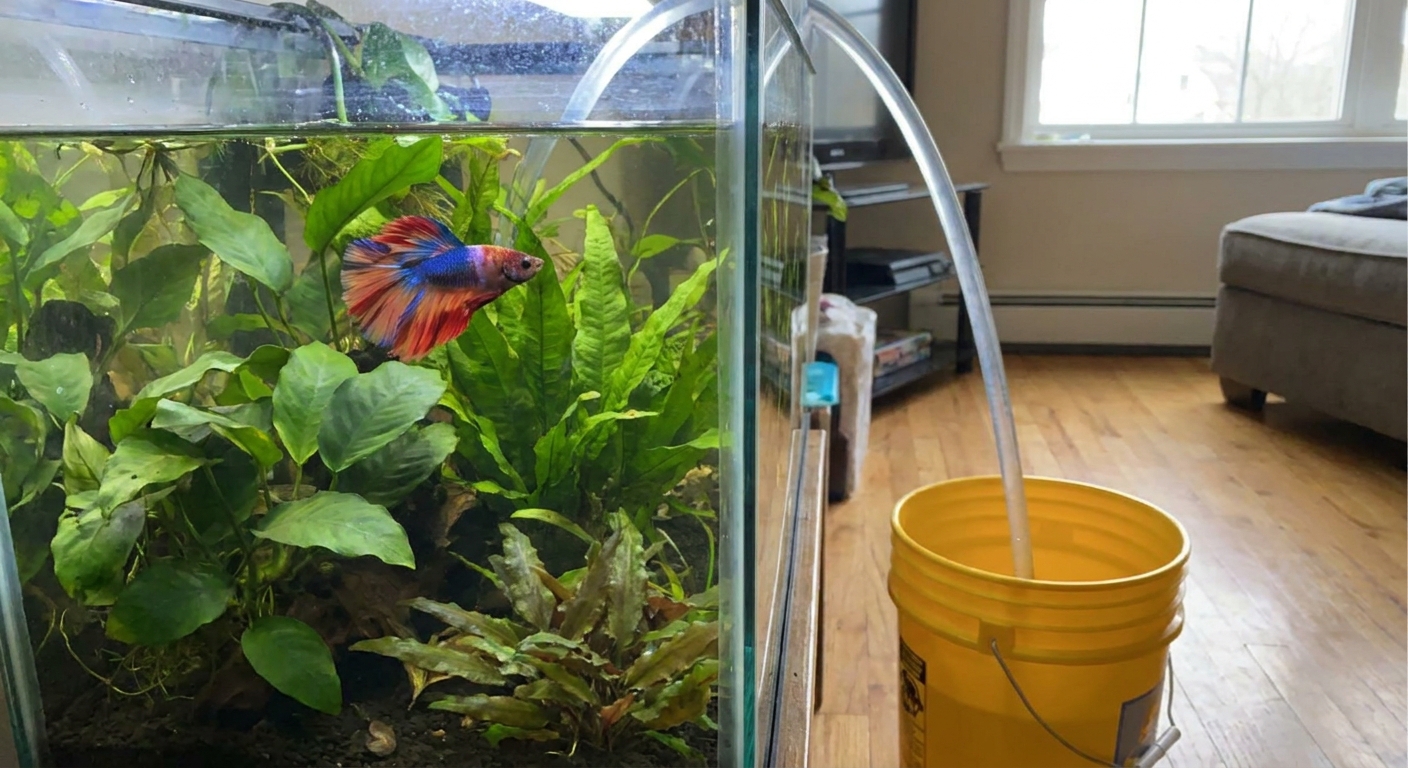
- If food is still drifting around after 2 minutes, that's too much for that feeding. Remove leftovers to protect water quality.
- Consistency beats big meals: two small feedings are usually easier on digestion than one heavy feeding.
Daily feeding schedule (adult bettas)
For most healthy adult bettas, this routine is a great starting point:
Twice a day
- Morning: 2 to 3 small pellets
- Evening: 2 to 3 small pellets
Total per day: usually 4 to 6 small pellets. If your pellets are on the larger side, start at the lower end.
If you can only feed once a day
- Once daily: 3 to 4 small pellets, given one at a time
Once-daily feeding can work for many bettas, but keep portions modest to reduce the odds of bloating.
Exact portions by food type
Different foods pack different punch. Use these portion guides to avoid accidental overfeeding.
Pellets (staple food)
- Small pellets: 2 to 3 per meal (twice daily)
- Medium or larger pellets: 1 to 2 per meal (twice daily)
- Feed one pellet at a time so none drift into decor, get ignored, and decay later.
Nutrition tip: choose a betta-specific, high-protein pellet as your main food, and treat flakes and treats as extras.
Flakes (easy to overdo)
- Offer a tiny pinch, then use the cleanup rule above to judge if it was too much.
- Crumble big flakes so your betta can eat slowly and cleanly.
Freeze-dried foods (treat, not a staple)
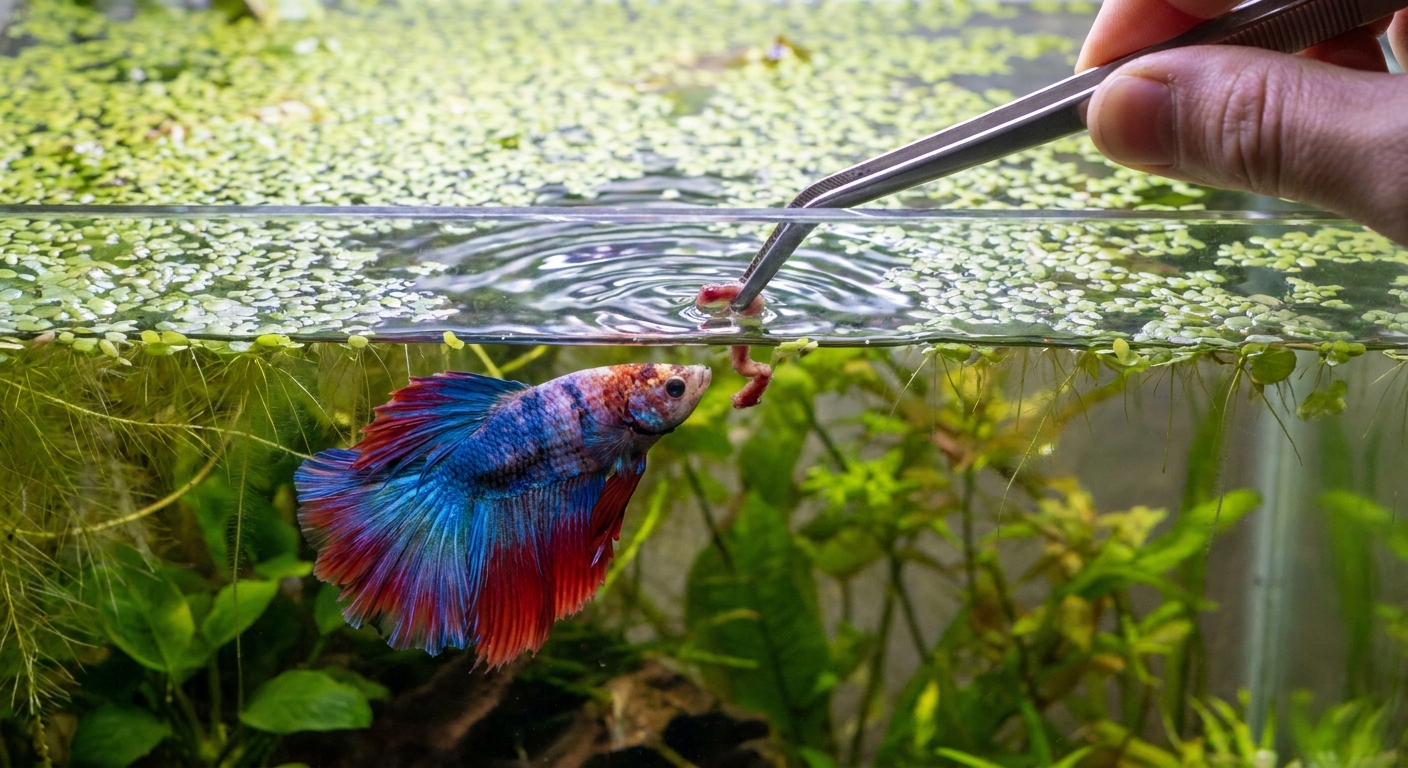
Freeze-dried bloodworms and similar treats are concentrated and can swell in the gut.
- Portion: 1 small piece or 2 tiny bits
- How often: 1 to 2 times per week
- Extra tummy safety: soak in tank water for a minute before feeding.
Frozen foods (great for variety)
When thawed and portioned correctly, frozen foods can be gentler than freeze-dried for many bettas.
- Portion: a piece about the size of one to two pellets
- How often: 2 to 4 times per week as part of the weekly plan below
- Thaw in a small cup of tank water and feed a little at a time.
A simple weekly schedule
This routine keeps portions steady and adds variety without overloading the belly.
| Day | AM | PM |
|---|---|---|
| Mon | 2 to 3 pellets | 2 to 3 pellets |
| Tue | 2 to 3 pellets | Small portion frozen food (pellet-sized) |
| Wed | 2 to 3 pellets | 2 to 3 pellets |
| Thu | 2 to 3 pellets | Small portion frozen food (pellet-sized) |
| Fri | 2 to 3 pellets | 2 to 3 pellets |
| Sat | 2 to 3 pellets | Optional treat: 1 small freeze-dried piece (soaked) or a tiny frozen portion |
| Sun | Light day (optional): skip feeding, or feed a half-portion if your betta does better with food daily | |
About the light day: Some bettas do well with a lighter day now and then, while others do best with consistent daily feeding. If your betta is young, underweight, or recovering from illness, choose a half-portion day instead of fasting unless your aquatic vet advises otherwise.
Adjusting for age and body
Baby and juvenile bettas
Young bettas are growing fast and often do better with smaller, more frequent meals.
- Frequency: 2 to 3 times per day
- Portion: 1 to 2 tiny pellets per meal, or appropriately sized small foods
- Keep water pristine since extra feeding can raise waste faster.
Adult bettas
- Frequency: 1 to 2 times per day
- Portion: typically 4 to 6 small pellets total per day
Older bettas
As metabolism slows, many seniors do better with slightly smaller portions.
- Frequency: 1 to 2 times per day
- Portion: reduce by 1 pellet per meal if you notice bloating or leftovers
Underweight vs overweight
- Underfed signs: thin body behind the head, low energy, always frantic at feeding time. Increase slowly by 1 pellet per day and reassess after a week.
- Overfed signs: rounded belly that stays round, sluggishness, more waste, uneaten food. Cut portions by 25 to 50 percent and keep treats minimal.
Preventing bloating and constipation
Bloating and constipation are common betta hiccups, especially with rich foods and big portions. Many mild cases improve with routine tweaks, but persistent swelling is a sign to look deeper.
Habits that help
- Feed slowly: one pellet at a time, letting your betta swallow before the next.
- Do not top off if they beg. Bettas are dramatic little performers.
- Limit freeze-dried treats and soak them first.
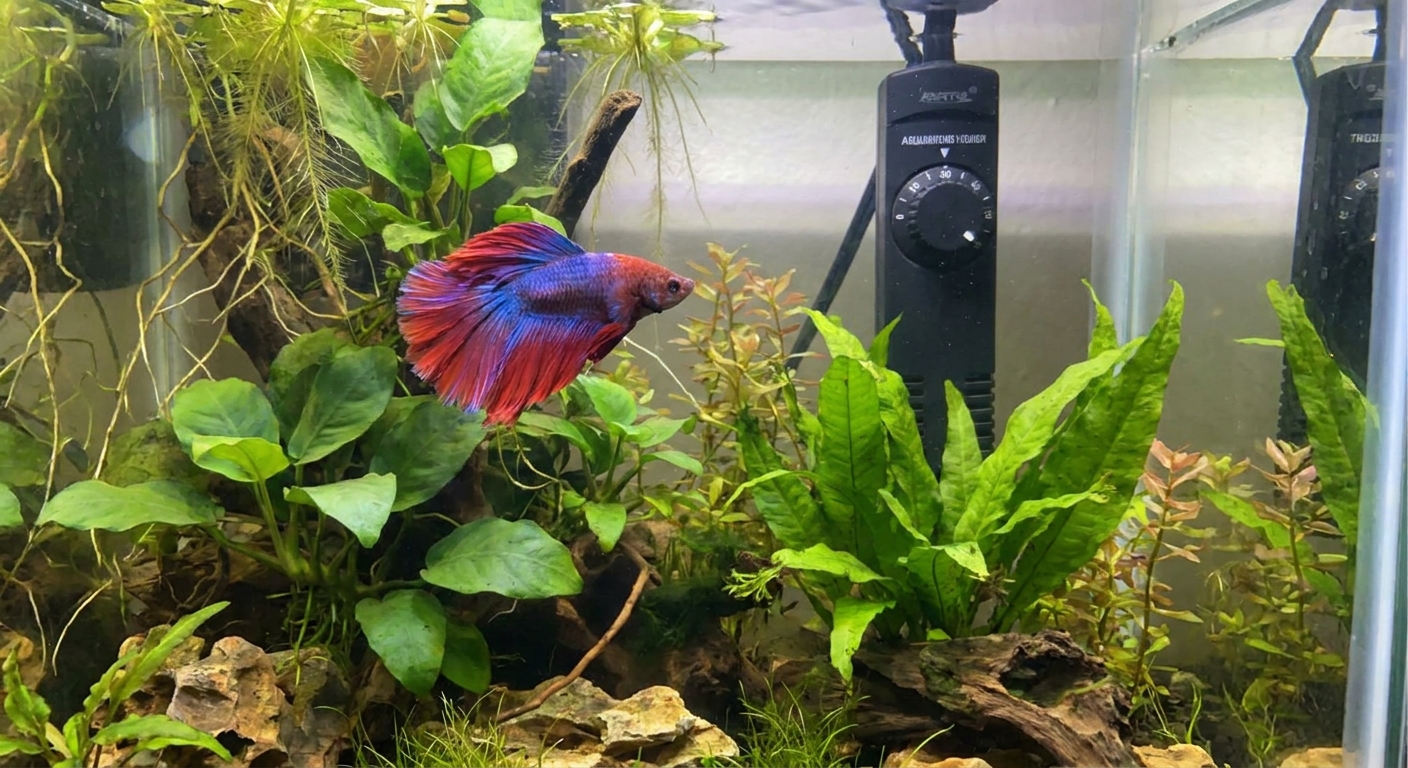
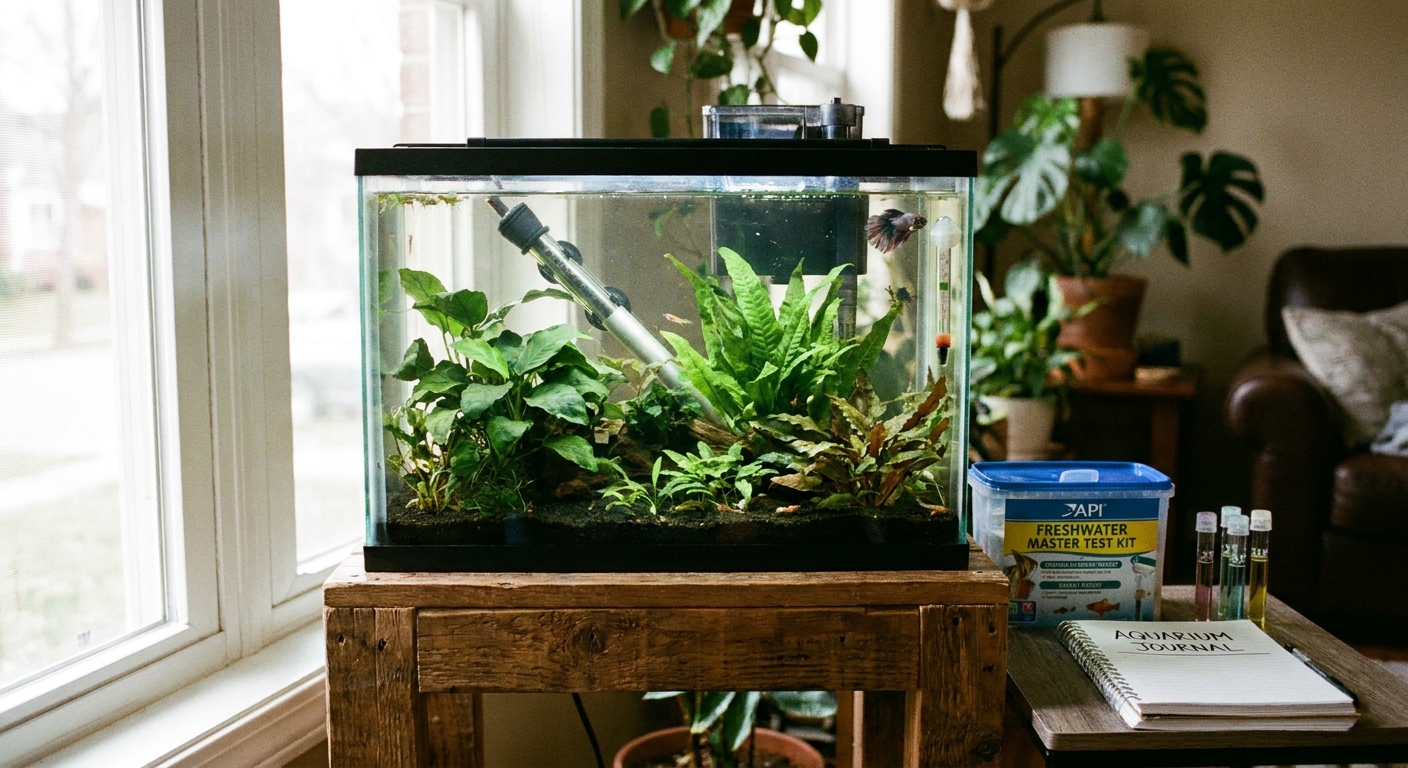
- Keep water warm and stable: cool water can slow digestion. See betta tank temperature and heater placement for an easy comfort zone setup.
- Protect water quality: leftover food raises ammonia risk. If you are starting a new tank, cycle first using how to cycle a new betta fish tank.
If your betta looks bloated today
- Pause feeding for 24 hours (or switch to a very small half portion if your betta is young or frail).
- Check temperature and keep it stable in the proper range.
- Resume with small portions (1 to 2 pellets per meal) and avoid treats for a week.
Red flags: if swelling is severe, your betta is pineconing (scales sticking out), they are struggling to swim, they refuse food for more than 2 to 3 days, you see long stringy white poop, or the belly keeps enlarging quickly, treat it as a health issue. Some cases involve parasites, infection, organ problems, or egg-binding in females, and need professional fish veterinary guidance.
Feeding tips made easy
- Pick a staple pellet and make treats the exception. Stable nutrition helps keep digestion predictable.
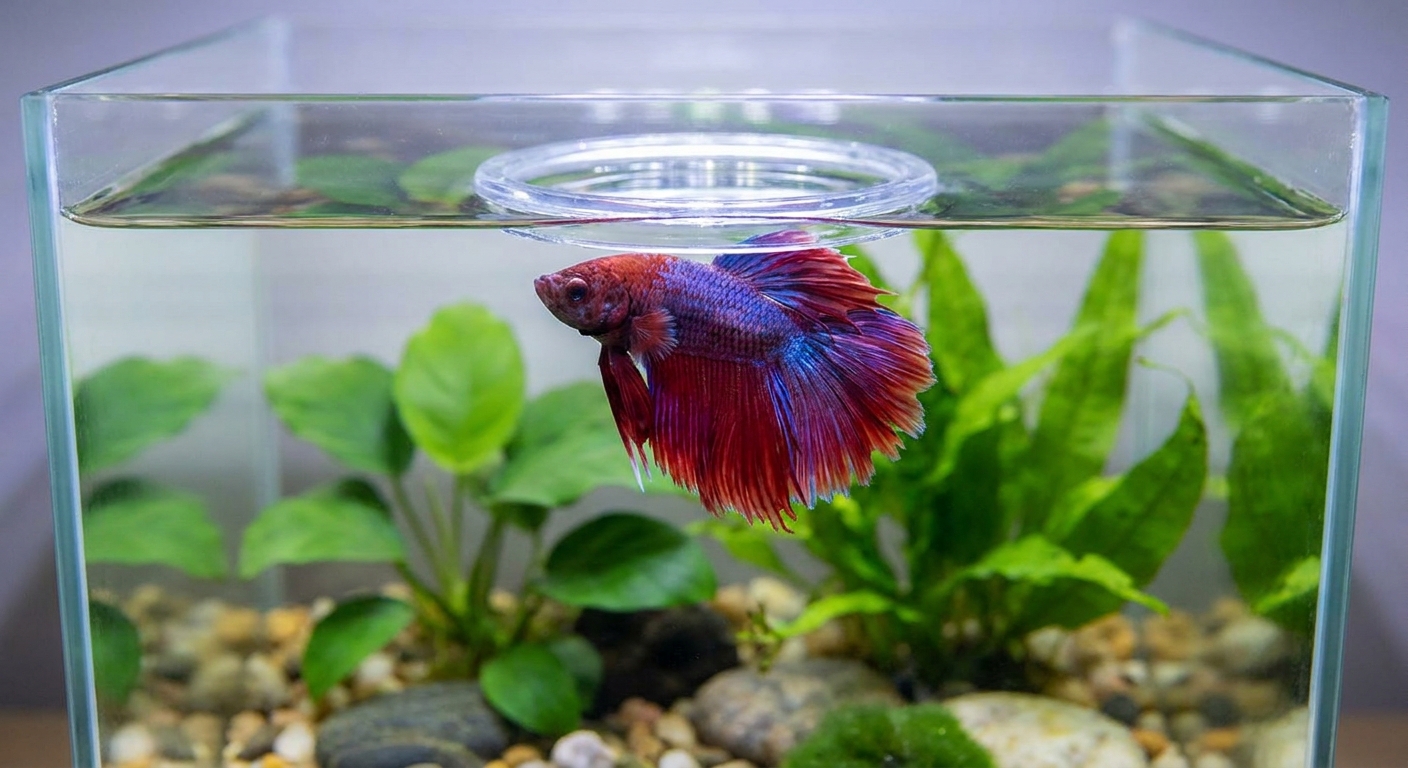
- Use a feeding ring or feed in one corner so food does not scatter into plants and decor.
- Skip vacation food blocks: they often pollute water. If you travel, use a tiny measured feeder or have a helper feed pre-portioned servings.
- Watch the belly, not the begging: a slightly rounded belly right after eating is normal. A belly that stays swollen into the next day is a red flag.
Quick FAQ
How many pellets should I feed my betta per day?
Most adult bettas do well with 4 to 6 small pellets per day, split into two meals. If pellets are larger, start at 2 to 4 per day total and adjust based on body condition and leftovers.
Should I fast my betta one day a week?
Some healthy adult bettas benefit from an occasional light day, but it is not required for every fish. If your betta is young, underweight, or recovering, use a half portion day instead unless advised otherwise by a vet.
My betta always acts hungry. Am I underfeeding?
Not necessarily. Bettas often beg even when perfectly fed. Use the schedule as a baseline and watch for stable weight, normal activity, and no persistent bloating.
How long can a betta go without food?
It depends on age, health, and tank conditions, but a healthy adult betta can often manage a short trip of a few days without food. For anything longer, it is usually safer to plan small pre-portioned feedings rather than risk a big overfeeding event.
One last splashy summary
- Best baseline: feed an adult betta 2 to 3 small pellets twice daily.
- Keep treats tiny: frozen foods in pellet-sized portions, freeze-dried treats only 1 to 2 times weekly (and soaked).
- Prevent bloating: slow feeding, stable warm water, a light day only if it suits your fish, and no leftovers.
If you want more cozy routine wins beyond feeding, explore the Betta Bliss Diet & Nutrition hub for more gentle, fish-friendly care notes.