
Let’s make your tank the happiest little splash in the house! A female betta sorority can be beautiful and fascinating, but it is not a “set it and forget it” community. Success comes from space, dense cover, careful introductions, and a fast response when tensions rise.
This guide walks through a practical, step-by-step sorority setup, plus the day-to-day habits that keep fins peaceful.
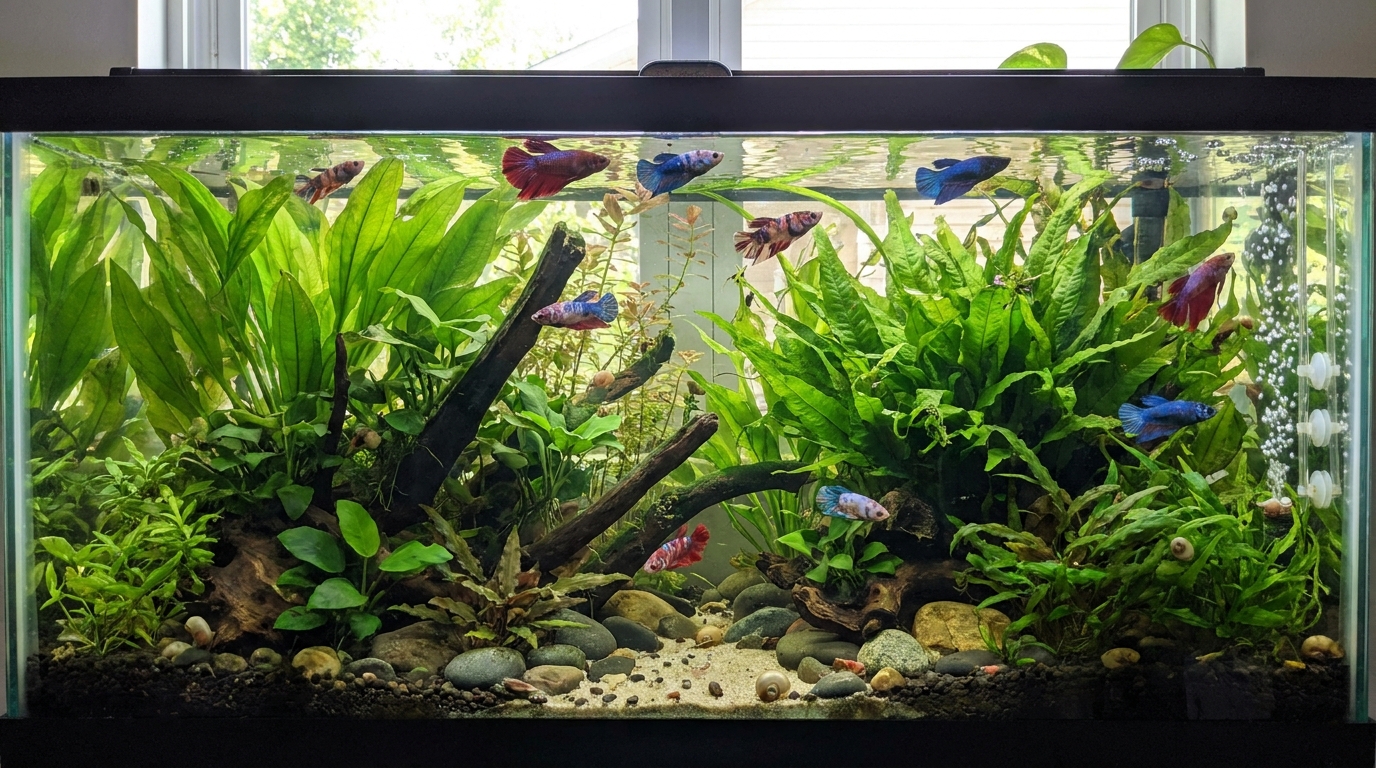
Before you start: is a sorority right for you?
A sorority is housing multiple female bettas together in one tank. Some groups settle in well. Some never do, even with perfect care. Even a “successful” sorority can unravel months later after a rescape, a growth spurt, a stress event, or seemingly no reason at all. Plan for ongoing monitoring for the life of the tank, and plan for the possibility that one or more fish will need to live separately.
Good reasons to pause or skip a sorority
- You cannot keep a backup tank ready. A spare tank is not optional for sororities.
- You want a low-maintenance community. Sororities need extra observation and quick interventions.
- Your tank is under 20 gallons. Small tanks are the most common failure point.
- You are new to cycling and water stability. Start with one betta first and build confidence.
If you are still building your basics, start here first: Setting Up a Betta Tank for the First Time and How to Cycle a New Betta Fish Tank.
Step 1: Choose the right tank size and stocking plan
Space is your best peacekeeper because it reduces forced encounters. It gives each female room to move away, cool down, and claim a small “bubble” without constantly bumping into other fish.
Recommended tank sizes
- 20 gallons long: A commonly recommended minimum starting point because it offers usable footprint space.
- 29 gallons and up: More stable water parameters and more room to break up sight lines.
- 40 breeder and up: A sweet spot for many keepers who want bigger safety margins and calmer dynamics. Some experienced keepers prefer 30 to 40+ gallons as their true minimum for long-term stability.
How many female bettas?
There is no magic number that guarantees harmony. Temperament, space, cover, and the individual “mix” matter more than a fixed stocking formula. Still, most readers want a ballpark. As a cautious starting range, many keepers try 5 to 7 females in a 20 long to 40 breeder, with heavy planting and a firm exit plan. More fish can sometimes reduce single-target bullying, but it is a tradeoff: it may lower obvious chasing while increasing waste, competition, and chronic stress if the tank is not large and stable enough.
- Avoid pairs. Two females often become a constant rivalry.
- Aim for room, not crowding. Prioritize footprint, cover, and water quality over “balancing” behavior with bodies.
- Have an exit plan. Assume at least one fish may need to be removed.
If you are deciding between smaller starter tanks, this comparison can help you think in terms of stability and footprint: 5 Gallon vs 10 Gallon Tank for Bettas. For sororities, scale that thinking up.
Step 2: Build a tank layout that prevents staring contests
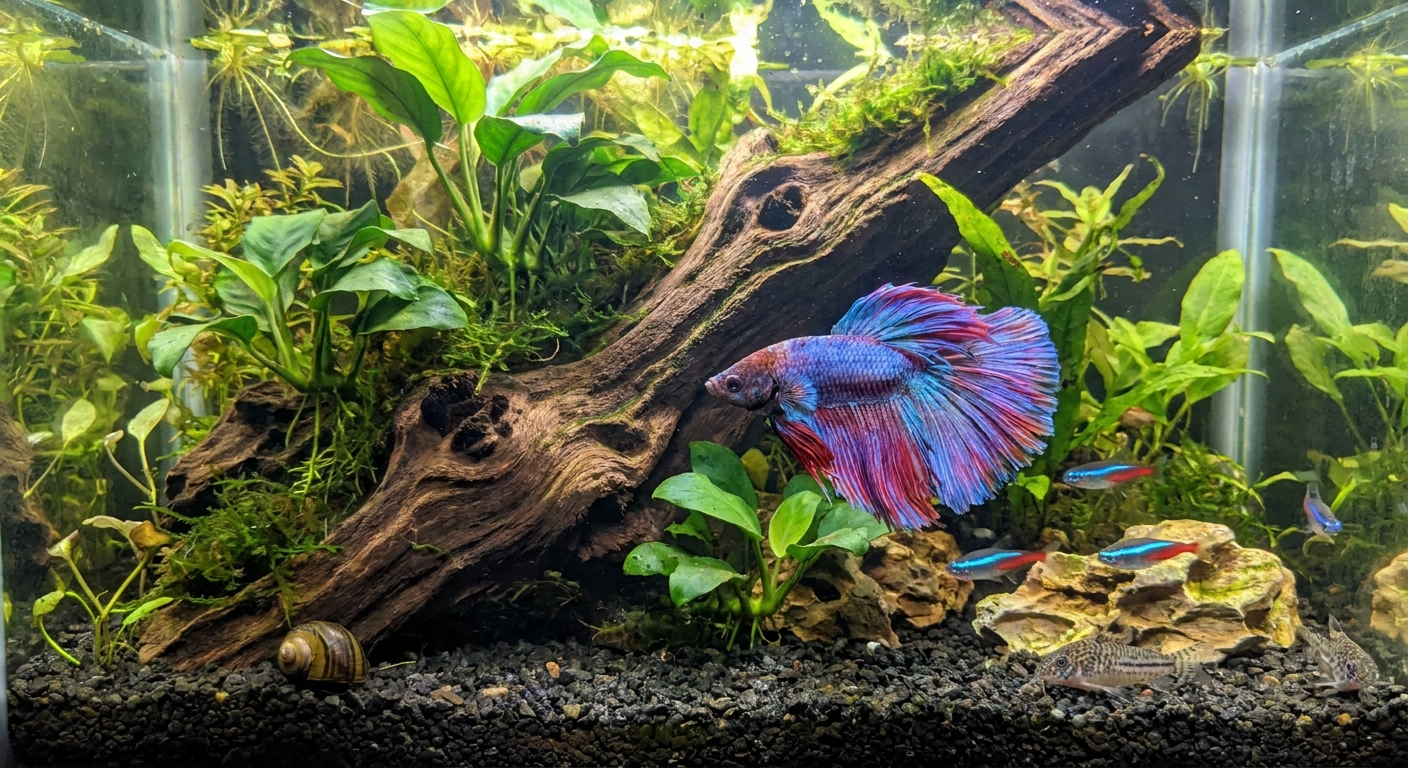
Most sorority problems start with line-of-sight pressure. If one fish can see another across open water all day, the urge to chase and posture stays high. Your goal is a tank that looks like a tiny underwater garden maze.
Planting density: more than you think
Dense planting is not just pretty. It is a behavior tool.
- Fill the midground. Stems, crypts, and other bushy plants break up swimming lanes.
- Choose plants that fit your tank. Bigger plants (like many sword types) can outgrow smaller setups, so match species to your footprint, light, and maintenance style.
- Add floating cover. Floaters dim light and reduce surface-level dominance patrols.
- Create multiple “rooms.” Use plants and hardscape to make visual barriers from left to right.
Live plants are wonderful, but soft silk plants can also work well when used generously. This guide can help you choose: Live vs Silk Plants for Bettas.
Add hides and territory breaks
- At least one hide per fish, plus extras. Think caves, tunnels, and plant thickets.
- Spread cover across the whole tank. Avoid one “mega cave” that becomes a prize worth fighting over.
- Keep openings smooth. No sharp edges that can tear fins during a chase.
Decoration ideas that double as enrichment: Essential Tank Decorations for Hiding Spots and Enrichment.
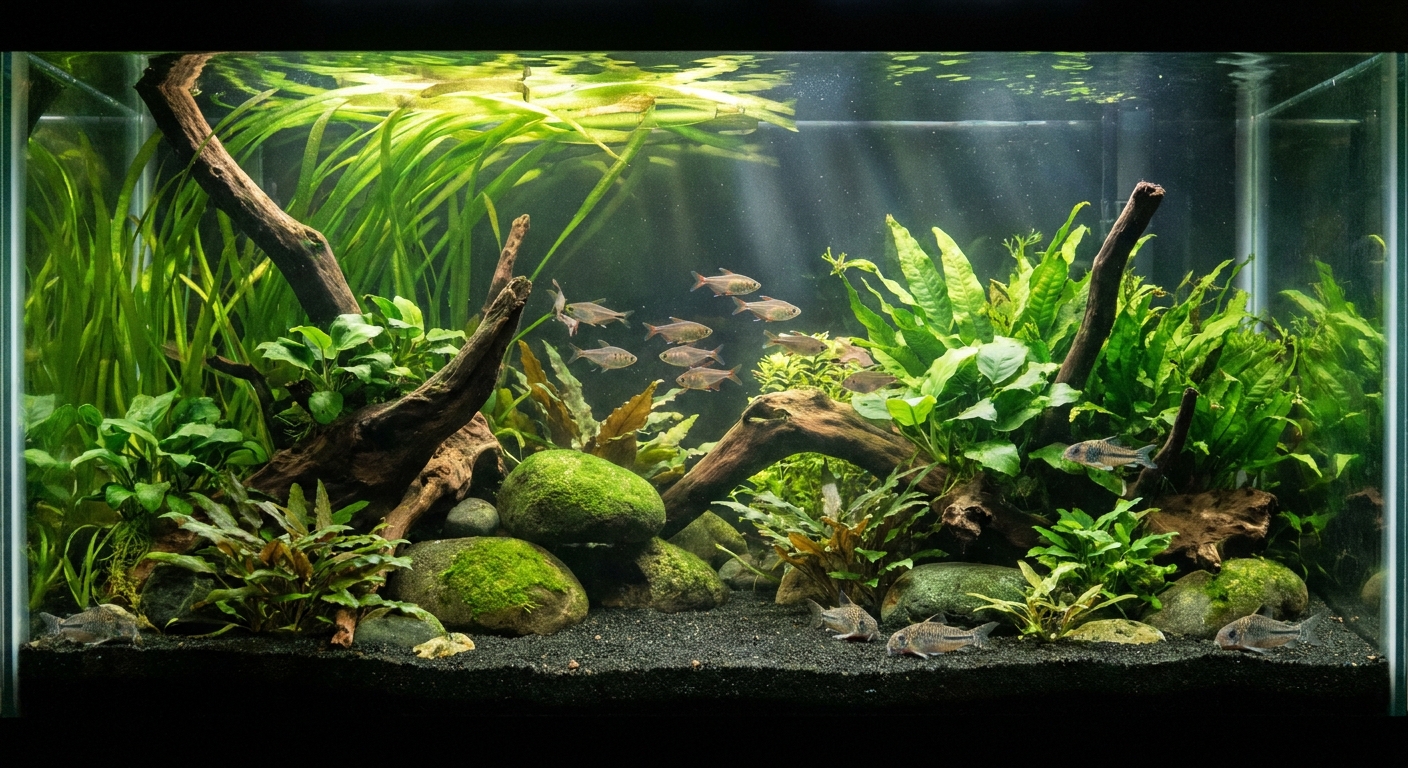
Step 3: Set stable water, heat, and filtration
Sororities need calm water and stable parameters. Stress from poor water quality makes aggression and illness more likely. Keep your targets simple and non-negotiable: 0 ammonia, 0 nitrite, and as low nitrate as you can reasonably maintain through routine water changes and plant growth.
Temperature
Keep the tank in a steady tropical range, and avoid swings. Bettas are sensitive to rapid changes.
Helpful setup details here: Betta Tank Temperature and Heater Placement.
Filtration and flow
- Choose gentle flow. Sorority tanks should not feel like a treadmill.
- Prioritize biological filtration. More fish means more waste, so your filter needs mature bacteria.
- Add a prefilter sponge if needed. It reduces intake risk and softens flow.
More guidance: Choosing the Right Filter for a Betta Tank.
Water prep and cycling
Cycle the tank fully before adding any bettas. In a sorority, “almost cycled” becomes “everyone is stressed” fast.
Step 4: Pick sorority candidates thoughtfully
Temperament varies fish to fish. You cannot fully predict it from looks, but you can reduce risk with smart choices.
What to look for
- Healthy, alert fish. Clear eyes, intact fins, steady swimming, and strong appetite.
- Similar size and age range. Big size gaps can turn into easy targeting.
- Avoid obvious bullies. A fish that flares nonstop in the cup may not settle in well.
Quarantine is a kindness
Whenever possible, quarantine new fish before they join the group. Quarantine is for observation and prevention. A hospital tank is for treatment when a fish is already unwell, even though the setups can look similar.
If you need a simple treatment setup plan: How to Set Up a Hospital Tank.
Step 5: Introduce the group the right way
Introductions are where many sororities succeed or fail. The goal is to prevent one resident fish from claiming the whole tank before everyone arrives.
Best practice: add all females at the same time
- Rearrange decor right before introduction. This removes established “ownership.”
- Dim the lights. Lower light can reduce immediate posturing.
- Feed a small meal 30 to 60 minutes beforehand. Not stuffed, just not hungry.
- Release in different areas. Spread them out so one fish does not instantly corner another.
What you should see in the first hours
Some chasing and short flares can be normal as they sort out spacing. The key word is short.
- Acceptable: quick chase, brief flare, then separation
- Not acceptable: relentless pursuit, pinning, biting, or preventing a fish from reaching food or air
Keep tools ready during introduction week
- A breeder box or divider for immediate separation
- A spare heated tank for removals
- Extra containers and heaters in case more than one fish needs to come out
- Extra hides you can drop in quickly to break sight lines
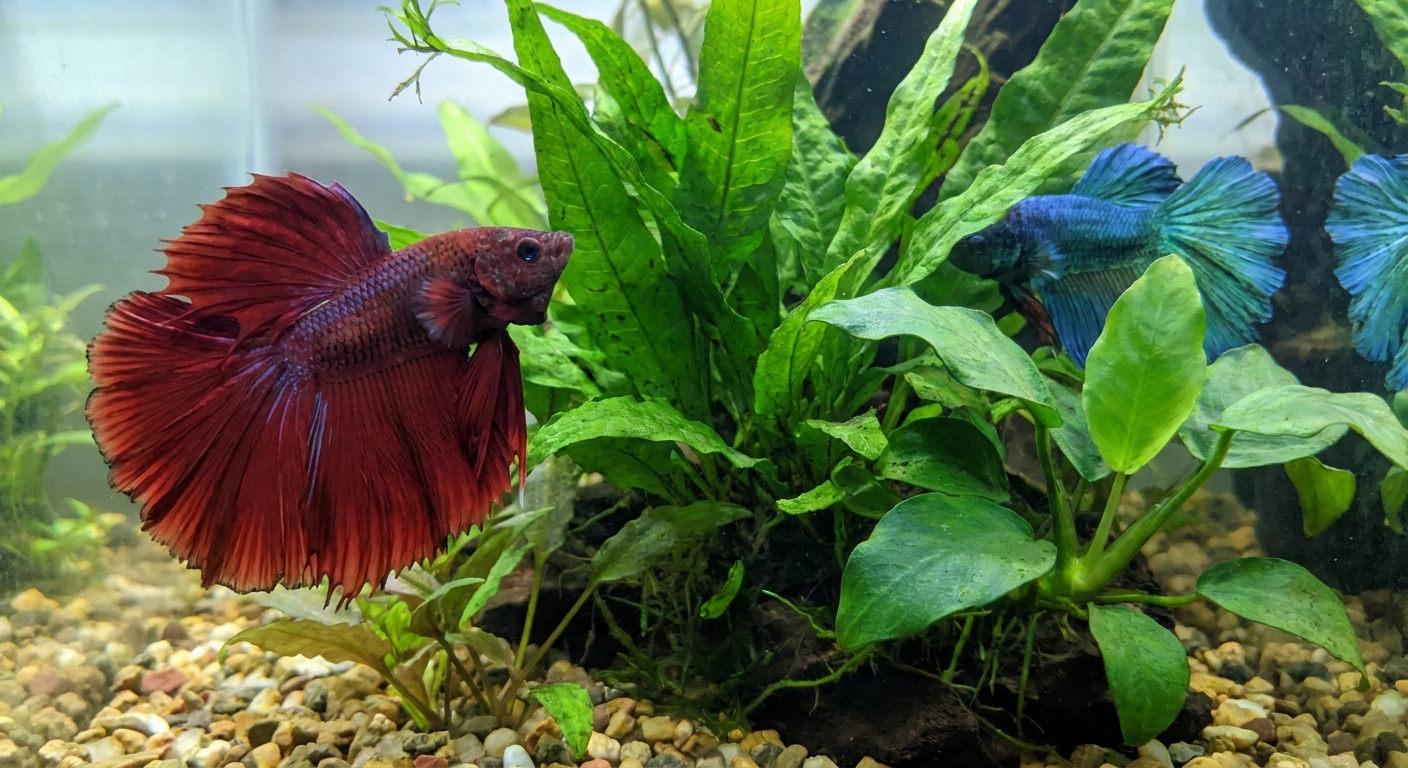
Step 6: Manage aggression early and confidently
Sorority harmony is mostly about catching problems early, before stress builds into injury. The first 1 to 2 weeks are your highest-alert period, but keep checking in long term. Dynamics can shift after rescapes, big trimming sessions, power outages, illness, or changes in feeding.
Common signs the tank is too tense
- One fish is always at the surface or always hiding
- Ragged fins, missing scales, or fresh bite marks
- Clamped fins, pale color, glass-surfing, frantic darting
- A “queen” fish patrolling the whole tank and chasing nonstop
Use this stress checklist to confirm what you are seeing: Signs of Stress in Bettas and How to Fix the Environment.
What to do if you see bullying
- Add cover immediately. More plants and more hides can reduce contact.
- Temporarily separate the bully or the targeted fish. Choose the option that stops injury fastest.
- Rearrange the layout. Reset territories and break patrol routes.
- Check water parameters. Poor water quality makes everyone crankier.
- Be willing to permanently separate. Some females simply cannot share.
Injury and illness: act fast
Not every torn fin is fin rot. Small nips and mechanical tears can heal beautifully with warm, clean, stable water and low stress. Suspect true fin rot or another infection when damage keeps creeping back, edges look inflamed or dark, or tissue seems to be melting away rather than regrowing.
If you are unsure, start by reviewing: Fin Rot in Betta Fish. If you see white spots or dusting, look at: Ich and Velvet.
Step 7: Feed without starting a food war
Food is a common flashpoint. Bettas are enthusiastic eaters, and one confident fish can hog meals while others go hungry and stressed.
Feeding tips that reduce conflict
- Feed in multiple zones. Drop small portions in 2 to 4 different areas.
- Use floating and slow-sinking options. Many betta foods float or hover. Slow-sinking pieces can help spread fish out, but do not rely on food that drops straight to the bottom if your group is mostly surface-oriented.
- Consider target feeding. A quick “one pellet per fish” pass can make a big difference for timid eaters.
- Keep portions modest. Overfeeding increases waste and irritability.
- Watch each fish eat. The timid ones need confirmation, not hope.
Portion basics here: How Much and How Often to Feed a Betta Fish. For variety, add high-quality frozen or live treats: Frozen and Live Foods for Betta Color and Vitality.
Step 8: Maintenance for a stable sorority
Clean, stable water helps keep immune systems strong and moods calmer. In a tank with multiple bettas, consistency matters even more than perfection.
Weekly rhythm
- Test water regularly. Especially during the first 4 to 8 weeks and after any big changes.
- Do routine water changes. Adjust frequency based on tank size, stocking, and test results.
- Gravel vac gently. Remove waste without ripping up plant roots and territories.
- Rinse filter media in tank water. Protect beneficial bacteria.
Use this schedule as your backbone: Betta Tank Cleaning Routine and Water Change Schedule.
Lighting and stress
Very bright lighting with little surface cover can keep fish feeling exposed. Consider floaters, planted shade, and a consistent day-night cycle.
More here: Betta Fish Lighting Requirements.
Optional tank mates: proceed carefully
It can be tempting to add extra species, but a sorority already has a lot of social complexity. I generally recommend keeping the tank sorority-only at first. Once the group has been stable for several weeks and everyone is eating well, you can consider calm additions one step at a time.
Snails can be a good fit
Many sororities do well with snails, but not all snail species are equal for betta tanks. This guide covers safe picks: Best Snails to Keep With Bettas.
Sorority troubleshooting
Is constant flaring normal?
Brief flares can be normal in the first days. Constant flaring and chasing that does not stop is a sign the setup needs intervention, or the group is incompatible.
Should you remove the bully or the targeted fish?
Remove whoever is in immediate danger first. If one fish is clearly instigating nonstop and multiple fish are stressed, separating the aggressor often calms the whole tank. If one fish is persistently targeted, move the targeted fish to safety.
Can you add more females later?
Adding one new fish to an established group is risky, because the newcomer is easy to single out. If you must add, treat it like a full reintroduction: rearrange decor, dim lights, and watch closely. Even then, be prepared to separate.
What best predicts success?
A large, heavily planted, fully cycled tank plus a keeper who is ready to separate fish quickly. Space and cover prevent many conflicts before they start, and stable water keeps stress from turning small spats into big problems.
A gentle sorority promise
The goal is not a tank where nobody ever flares. The goal is a tank where every female can eat, rest, and explore without fear. If a fish cannot thrive in a group, giving her a peaceful solo home is not failure. It is excellent care.
When you build with space, plants, and a solid backup plan, you give your sorority its best chance to sparkle.