
Let’s make your tank the happiest little splash in the house! Clean, conditioned water is one of the most important ways to keep your betta comfy, colorful, and stress-free. The good news is that most tap water can be made perfectly betta-safe with a few simple steps.
Why tap water needs prep
Tap water is made for people, not delicate fish gills. It often contains disinfectants and can have parameter swings that are harmless to humans but stressful to a betta. When I say “parameters,” I mean things like pH, temperature, ammonia, nitrite, and nitrate.
- Chlorine can irritate and damage gill tissue.
- Chloramine (a disinfectant made by combining chlorine with ammonia) is common and needs a conditioner that treats chloramine, not just chlorine.
- Heavy metals can be present from plumbing and can stress fish at higher levels.
- Temperature and pH changes can shock a betta during water changes if the new water is very different.
Conditioning is not “extra.” It is the bridge between tap water and a safe aquarium.
What you need
- A dedicated, clean bucket used only for aquarium water (no soap residue, no household cleaners)
- A tap water conditioner that treats chlorine and chloramine (and ideally helps bind the ammonia released from chloramine)
- A thermometer (tank thermometer works great)
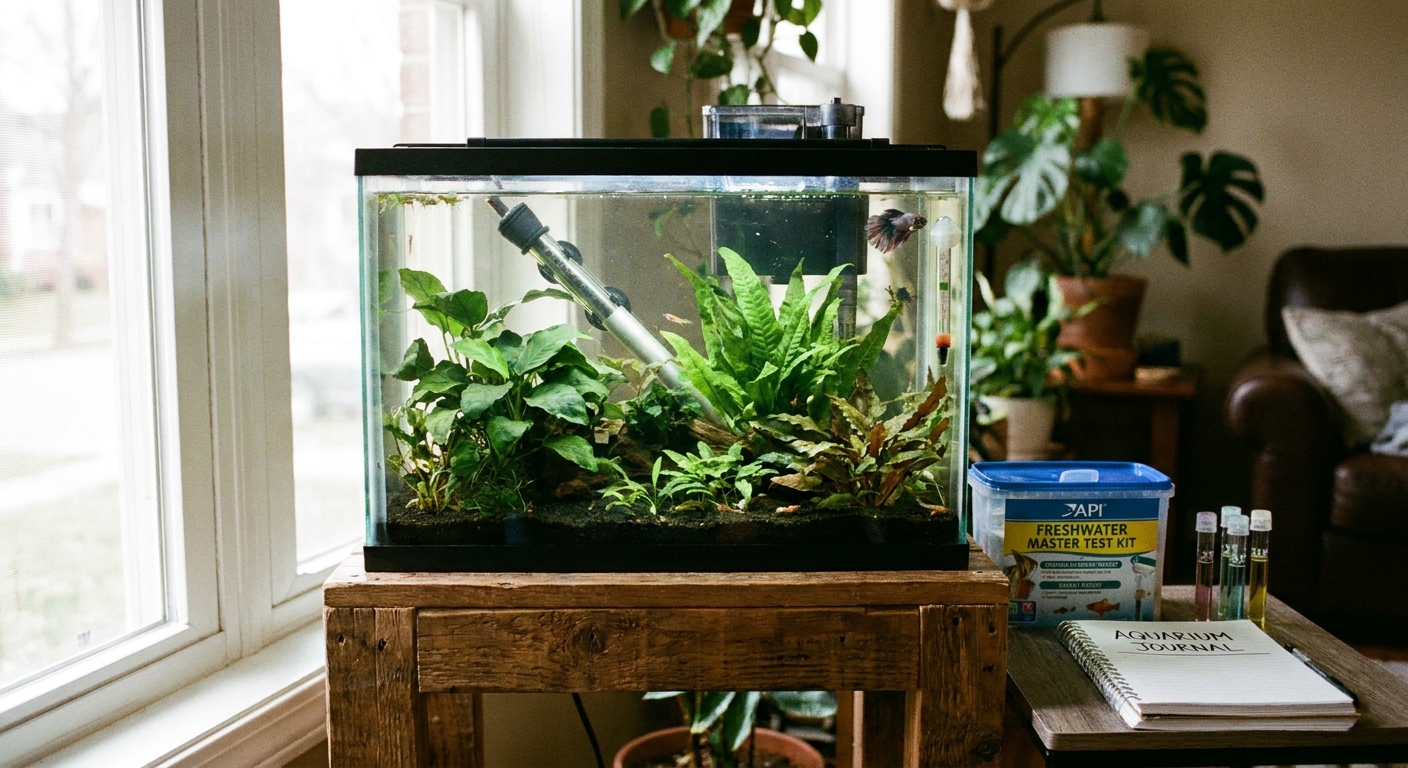
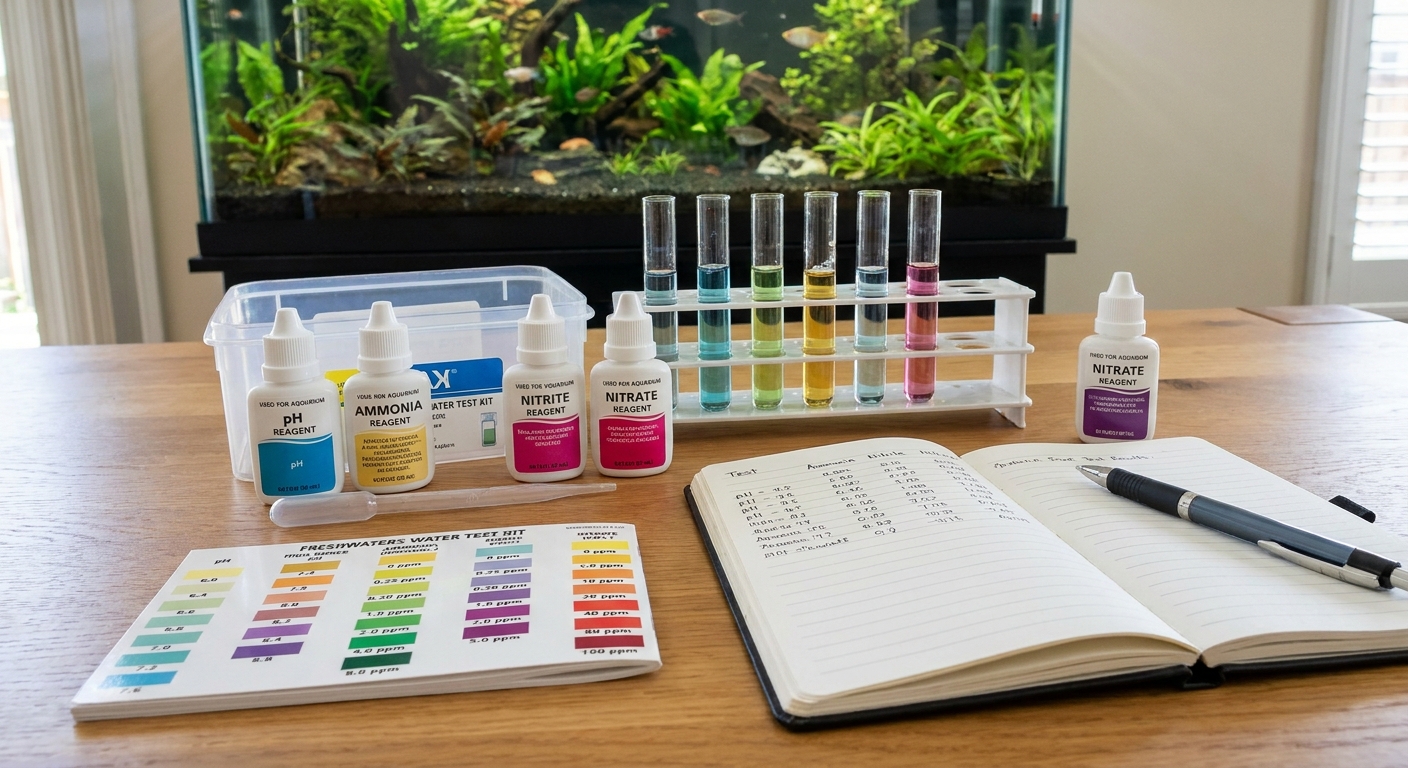
- A water test kit for ammonia, nitrite, nitrate, and pH (liquid kits are usually easier to read than strips)
- (Optional but helpful) A way to gently mix water in the bucket, like a clean stirring tool reserved for tank use
Step-by-step prep for water changes
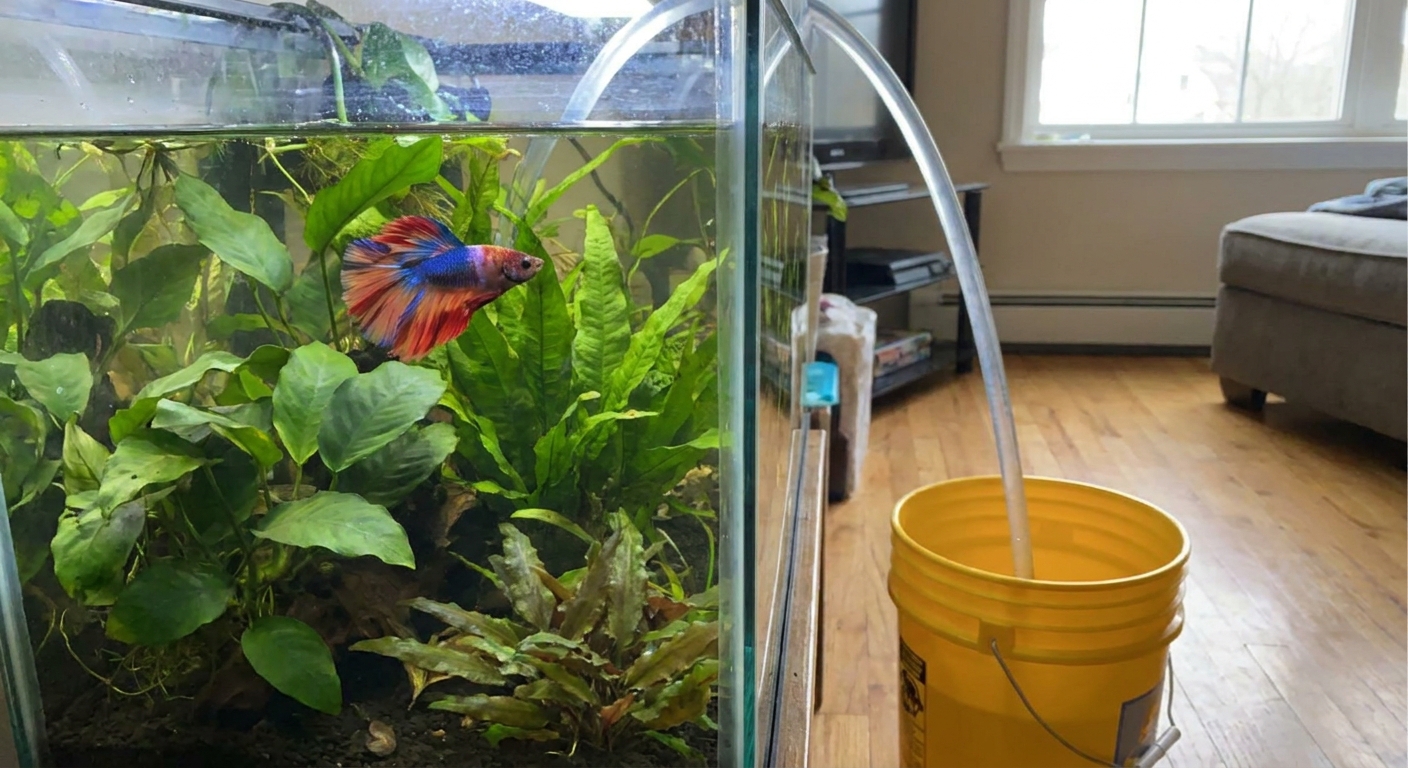
1) Fill a bucket with the amount you plan to replace
Most betta keepers do partial changes. The exact schedule depends on tank size, stocking, plants, and filtration, but the prep steps are always the same.
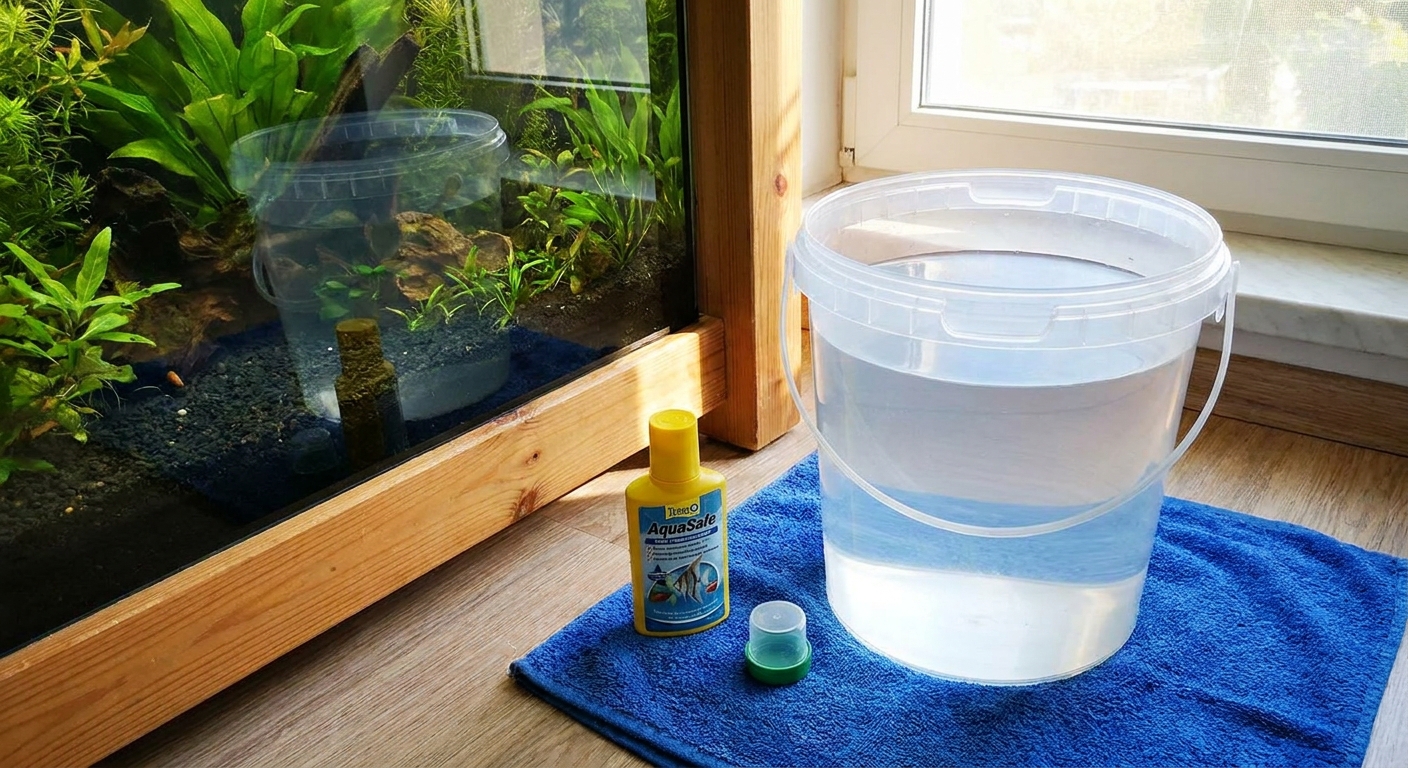
2) Add water conditioner to the bucket
Use the dosage on the bottle for the full bucket volume. Conditioners work fast, but always treat the water before it goes into the tank.
- If your city uses chloramine, make sure the product explicitly treats chloramine, not only chlorine.
- Many conditioners neutralize the chlorine portion and temporarily bind the ammonia portion. That helps with safety in the moment, but it does not replace a cycled tank and biological filtration.
- Do not guess the dose. If you are between markings, measure as closely as possible.
If you want a calm, confidence-boosting routine, give the bucket a gentle stir and wait 1 to 5 minutes after dosing (or follow your bottle’s directions) before you pour.
3) Match the temperature to your tank
Bettas are tropical fish and dislike sudden temperature shifts. Aim to get the new water close to the tank temperature.
- Target range: many betta tanks do well around 78 to 80 F (about 25.5 to 26.5 C).
- Keep it steady: try to keep replacement water within about 1 to 2 F of the tank when possible. A small difference is usually tolerated, but sudden swings are what cause stress.
Use your thermometer to check both the tank and the bucket. Adjust with more warm or cool tap water as needed, then re-dose conditioner if you add a lot more water.
4) Quick safety check (especially for newer tanks)
If your tank is still cycling or newly set up, test more often. If it is well-established, regular testing is still a wonderful habit when anything feels “off.”
- Ammonia: 0 ppm
- Nitrite: 0 ppm
- Nitrate: lower is better. Many aim for under about 20 ppm, and under about 40 ppm is a common upper bound in many hobby guidelines, depending on your setup and source water.
For cycling guidance, swim over to How to Cycle a New Betta Fish Tank.
5) Add the conditioned water slowly
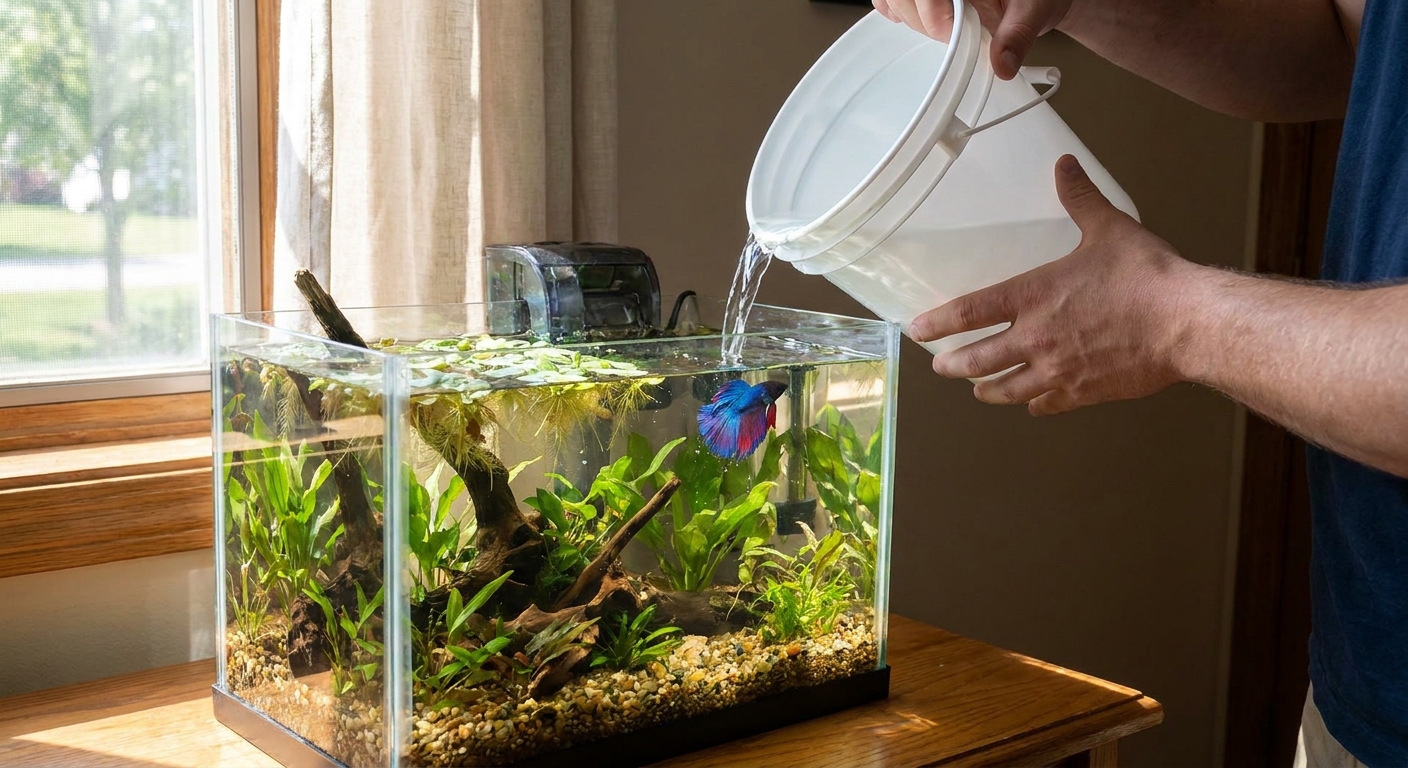
Pour gently to avoid startling your betta and to prevent disturbing substrate. Slow and steady keeps fins calm and debris settled.
How much water to change
If you are new to this, here is a simple starting point. Adjust based on your test results and how quickly nitrates climb.
- 5 gallon, filtered and cycled: often 20 to 30% weekly
- 10 gallon, filtered and cycled: often 10 to 25% weekly
- Smaller tanks or uncycled setups: typically need smaller, more frequent changes
Avoid 100% water changes in an established tank unless there is an extreme emergency. Big, sudden shifts can stress your betta and can disrupt the tank’s stability.
If you are still deciding on tank size, 5 Gallon vs 10 Gallon Tank for Bettas can help you pick a comfy long-term home.
Prep for a brand-new tank
New tank water prep is similar, but there are two extra goals: stable temperature and starting the nitrogen cycle.
Condition first, always
Add conditioner to any water that goes into the tank, including the initial fill. The safest approach is conditioning in a bucket so everything is treated before it enters the aquarium.
If you must fill the tank directly from the tap, add the conditioner to the tank first (dose for the entire tank volume), then fill slowly and avoid blasting the stream into the area where your fish is. In general, I still prefer the bucket method for peace of mind.
Get the heater steady before your betta moves in
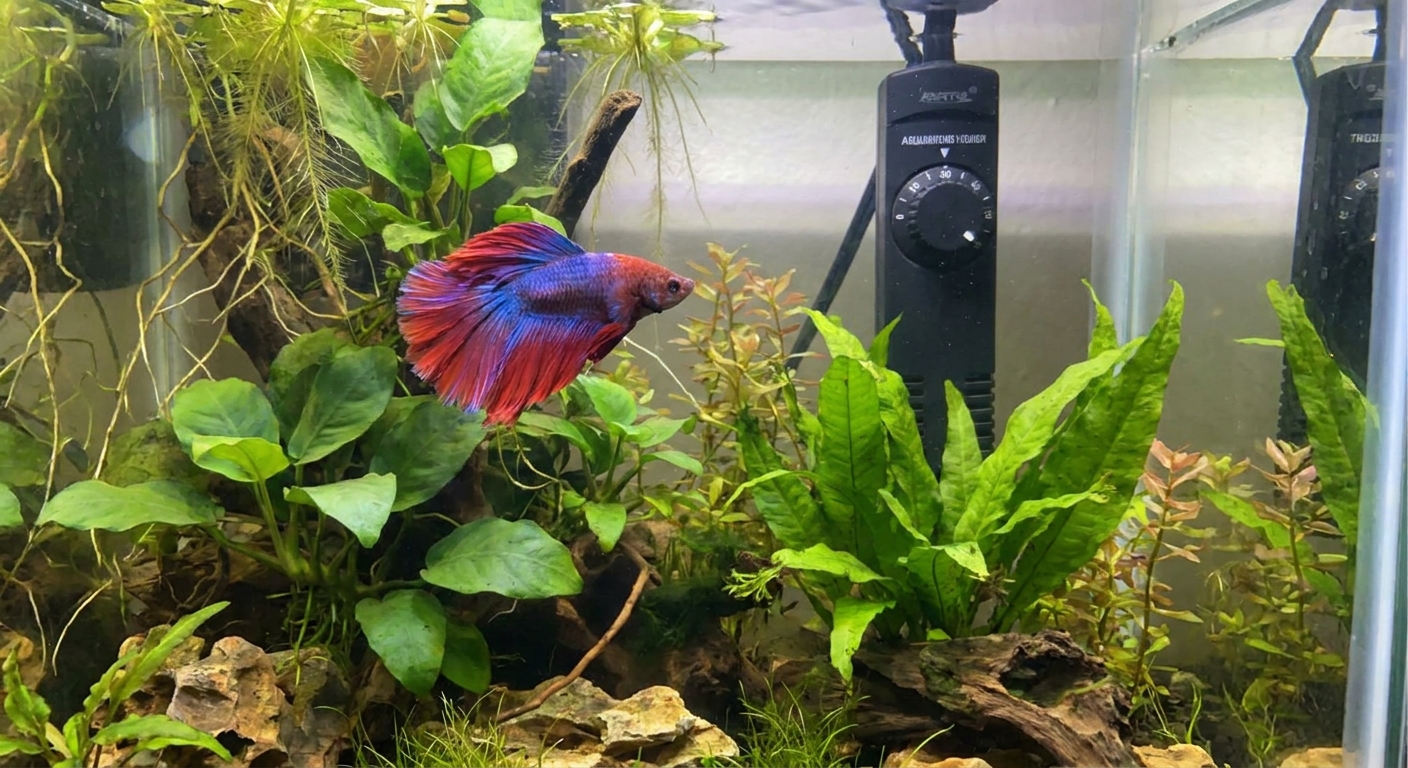
Set up heater and filter, then let the tank reach a stable temperature for several hours (or longer) before adding a fish.
Do not skip cycling
A tank can look crystal clear and still be unsafe if beneficial bacteria are not established. Cycling is what prevents invisible ammonia and nitrite spikes. This step matters even more than “perfect” pH.
Follow the full walkthrough here: How to Cycle a New Betta Fish Tank.
Testing without stress
Water testing sounds technical, but think of it like a quick wellness check. A few numbers tell you whether your betta’s home is stable.
The big three
- Ammonia (NH3/NH4+): comes from waste and uneaten food. Even small amounts can harm fish. Goal is 0 ppm.
- Nitrite (NO2-): appears during cycling and is also toxic. Goal is 0 ppm.
- Nitrate (NO3-): less toxic but still stressful in high amounts. Water changes and plants help keep it down.
pH: stable beats perfect
Bettas can adapt to a range of pH values as long as it stays stable. Chasing an exact number with chemicals can create swings that stress fish more than a slightly off reading.
When to check KH and GH
If your pH seems to swing, or if you use RO or distilled water, it helps to check KH (carbonate hardness) and GH (general hardness). KH supports pH stability, and both matter for long-term consistency and remineralization.
When to test more often
- During the first weeks of a new tank
- If you see cloudy water, a sudden algae bloom, or strange odors
- If your betta acts unusual (clamped fins, lethargy, gasping at the surface)
- After changing filter media or making big decor changes that stir up waste
Temp matching tips
Bettas notice fast temperature shifts immediately. Matching temperature is one of the kindest things you can do, especially in smaller tanks where conditions change quickly.
- Use a thermometer every time. Hands are not accurate enough.
- Warm rooms still need checking. Tap water can run much colder or hotter depending on season.
- Avoid big, sudden changes. If your tank is cooler than ideal, raise heater settings gradually over days, not in one jump.
If you are still choosing equipment, the filter matters too because steady flow and biological filtration support stable parameters. See Choosing the Right Filter for a Betta Tank.
Common mistakes
- Mistake: Letting tap water “sit out” to remove chloramine.
Do instead: Use a conditioner that treats chloramine. Letting water sit can help chlorine gas off, but it does not reliably solve chloramine. - Mistake: Using soap to clean the aquarium bucket.
Do instead: Rinse thoroughly with plain water only. For mineral buildup, rinse and wipe, then rinse again thoroughly. - Mistake: Doing huge water changes to “fix” a number.
Do instead: Make changes steady and measured unless there is an emergency. Big swings can stress a betta even if the final numbers look better. - Mistake: Replacing all filter media at once.
Do instead: Preserve beneficial bacteria by keeping established media when possible. Sudden changes can trigger mini-cycles. - Mistake: Adding unconditioned water straight into the tank.
Do instead: Condition in a bucket first, then add slowly.
Quick weekly routine
- Wash hands well, no lotions.
- Fill a dedicated bucket with the amount of tap water you need.
- Add conditioner for that volume.
- Gently mix, then wait a minute or two if it helps you feel confident (or follow the bottle).
- Match temperature to tank using a thermometer.
- If the tank is new or you suspect an issue, test ammonia, nitrite, nitrate.
- Pour new water in slowly.
That’s it. Small, consistent steps make a big, sparkling difference.
FAQ
Can I use distilled or RO water instead of tap?
It is possible, but pure distilled or RO water usually needs remineralization to restore essential minerals and stable hardness. For most betta keepers, conditioned tap water is simpler and perfectly safe when parameters are stable.
Do I need to test my tap water?
It can be helpful to test tap water if you are troubleshooting repeated issues, unusual pH swings, or if you suspect ammonia in the tap supply. Otherwise, regular tank testing and consistent conditioning cover most everyday needs.
How long should conditioned water sit before adding it?
Many conditioners work almost immediately. I still like to mix well and give it 1 to 5 minutes (or whatever your label recommends), then confirm the temperature. The goal is treated, temperature-matched water added calmly.
My conditioner says it detoxifies ammonia. Does that mean cycling does not matter?
Conditioners can temporarily bind or detoxify some compounds, but they do not replace the biological filtration of a fully cycled tank. Cycling is what creates long-term stability.
Keep it comfy
When tap water is conditioned, temperature-matched, and checked with simple tests, your betta gets the stable little lagoon they deserve. If you want more help building a cozy home from the ground up, visit Tank Setup & Environment for more Betta Bliss care notes.