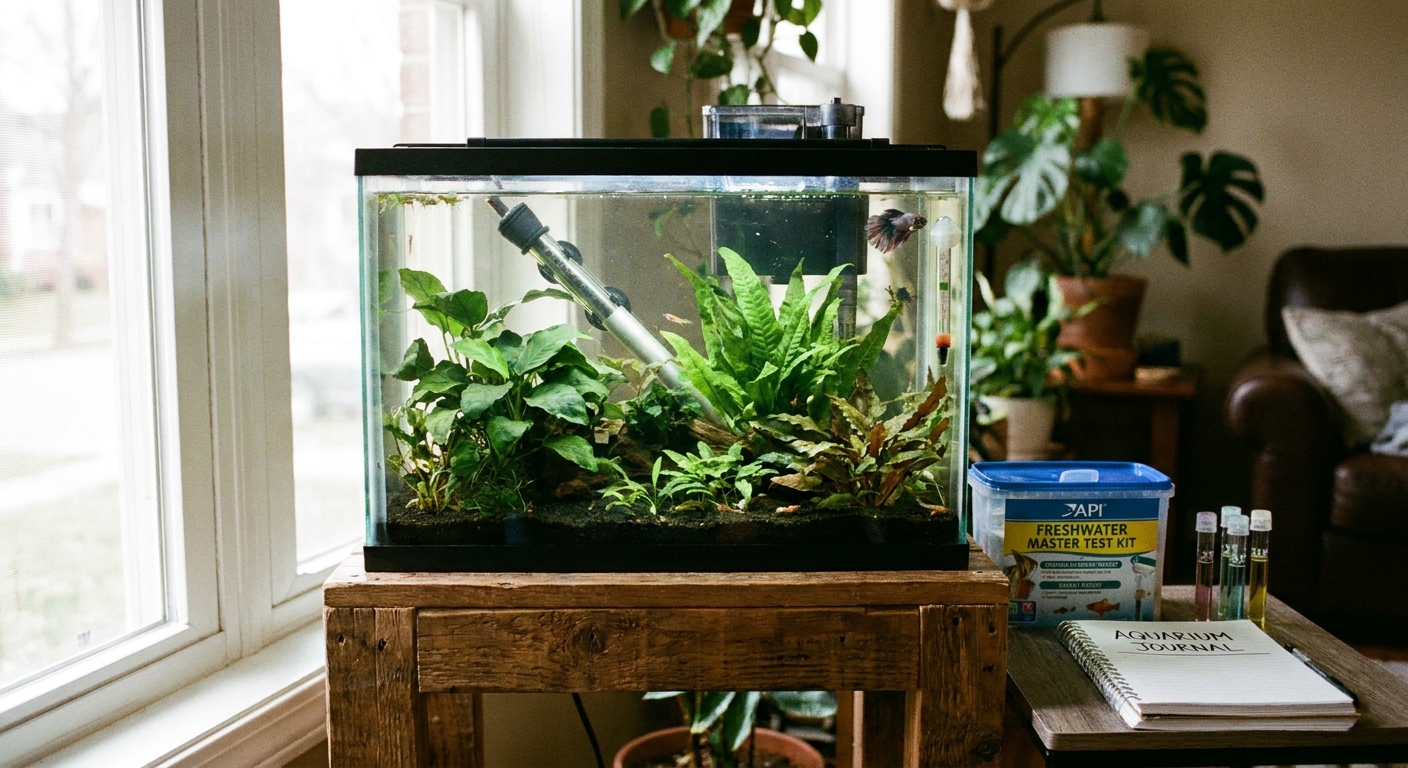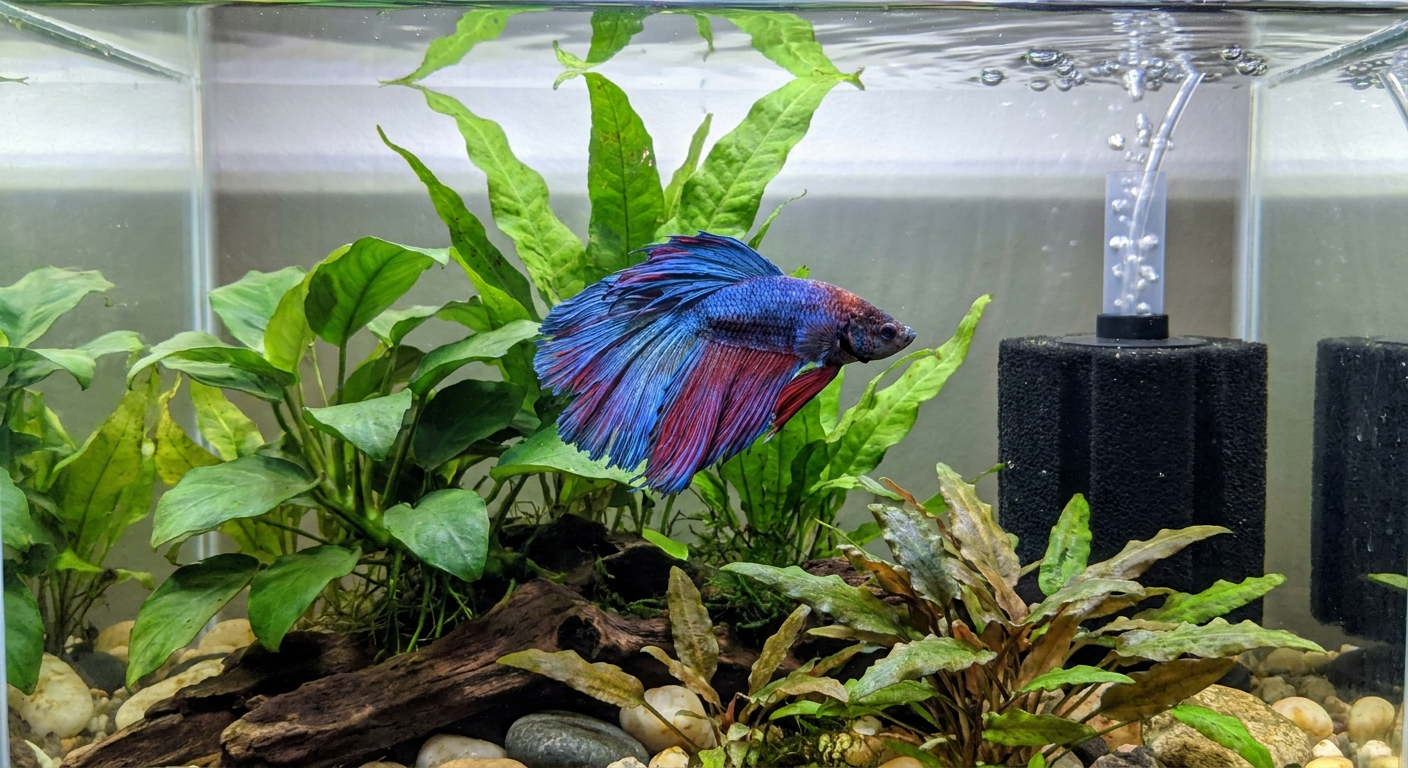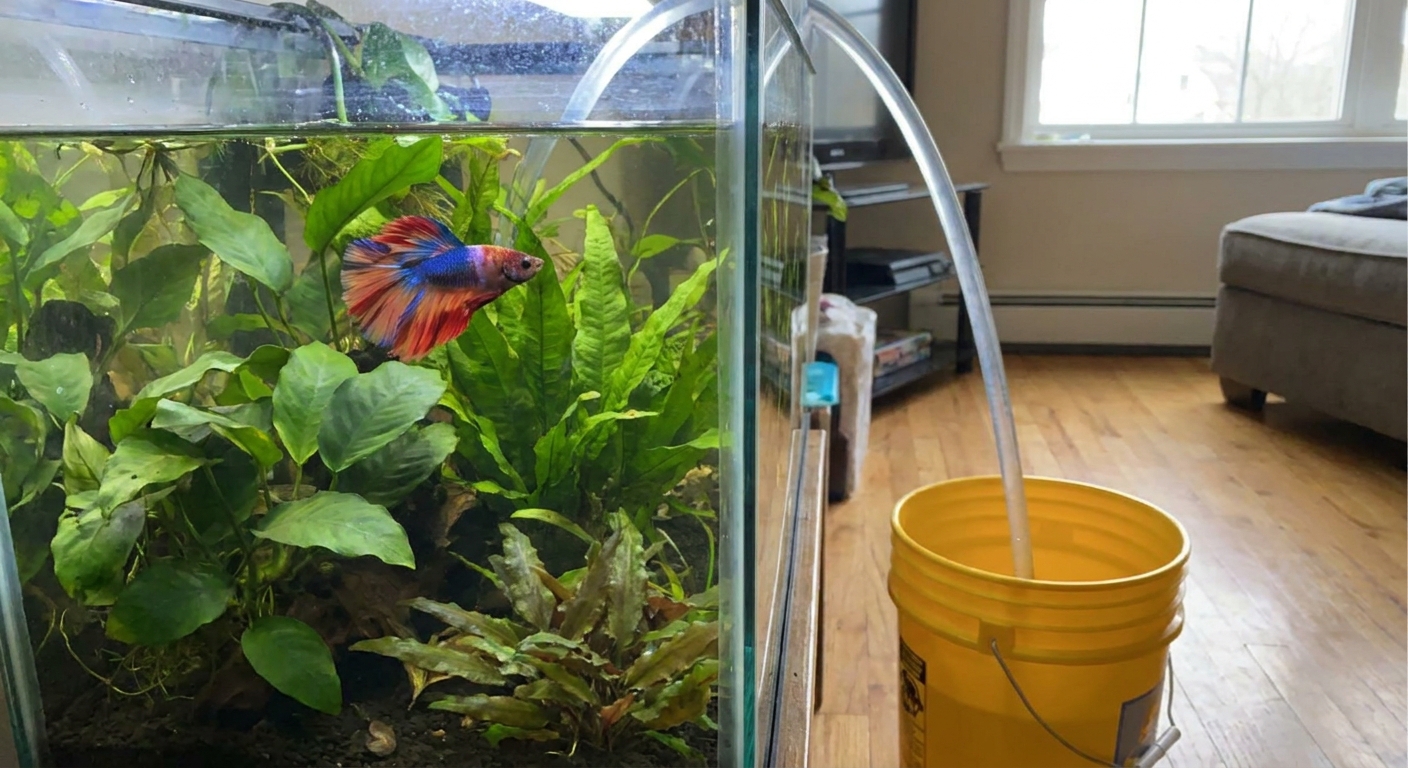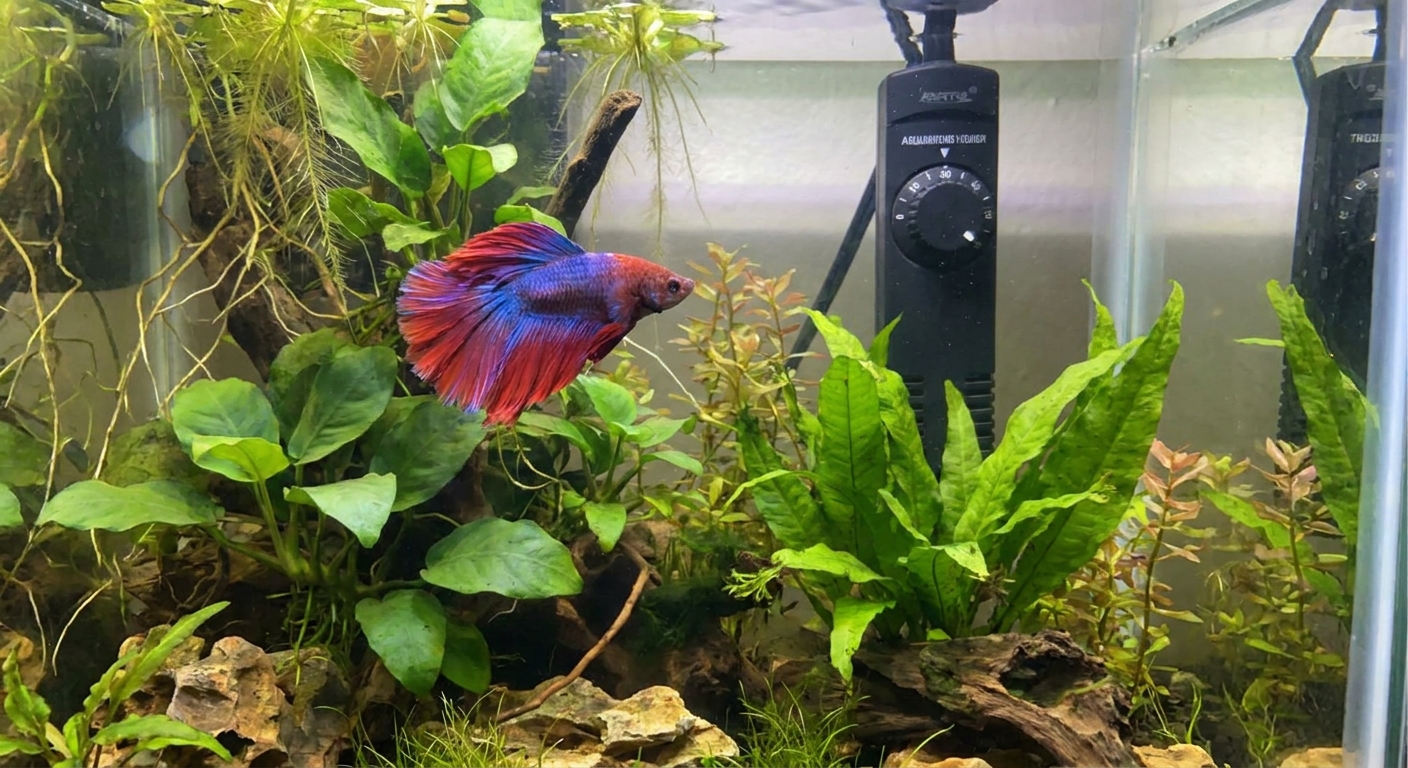

Let's make your tank the happiest little splash in the house!
Snails can be wonderful little cleanup buddies for bettas, but not every snail is a good match. Some stay small and mind their own business, while others can overwhelm a tank with babies, knock decor around, or even become a target for a curious, nippy betta.
This guide compares the safest, most popular freshwater snails for betta tanks, plus the ones that tend to cause headaches so you can skip the stress and keep the water sparkling.
Before you add any snail
Even the best snail species will struggle in a tank that is too small, too new, or too unstable. Here are the big compatibility basics to line up first.
Tank size and stability
- Aim for 5 gallons or larger for a betta plus a snail. More water volume means steadier parameters and easier maintenance.
- Make sure the tank is cycled before adding snails. Snails are sensitive to ammonia and nitrite spikes. If you are still setting things up, follow How to Cycle a New Betta Fish Tank.
- Keep flow gentle. Strong current can stress bettas, and some snails can get blown around and struggle to feed. If you need help dialing this in, see Choosing the Right Filter for a Betta Tank.
Water parameters snails care about (a lot)
- Temperature: Keep in a betta-friendly range with a stable heater. Sudden drops can stall snails. See Betta Tank Temperature and Heater Placement.
- pH, GH, and KH: Snails need minerals for shell health. Very soft water (low GH) and low buffering (low KH) can lead to shell pitting or erosion over time. As a simple takeaway, stable, mineral-rich water is the goal. Try not to chase a “perfect” pH with quick-fix chemicals.
- Zero ammonia and zero nitrite: Non-negotiable for both bettas and snails.
Feeding reality check
Snails are not magical trash cans. In a clean betta tank, many snails will need extra food, such as algae wafers, blanched veggies, or sinking pellets, depending on species. For shell support, a calcium source can help too (many keepers use mineral-rich foods, calcium blocks, or cuttlebone). Underfeeding can lead to weak shells and short lifespans.
Bettas can be… opinionated
Some bettas ignore snails, some peck at antennae, and a few will harass anything that moves. If your betta shows persistent chasing, flaring, or biting, treat it as stress behavior and adjust the environment and stocking plan. This care note can help you spot trouble early: 7 Signs of Stress in Betta Fish and How to Fix Their Environment.
The 5 best snails for betta tanks
These choices are popular because they are generally peaceful, hardy in stable tanks, and less likely to create long-term problems.
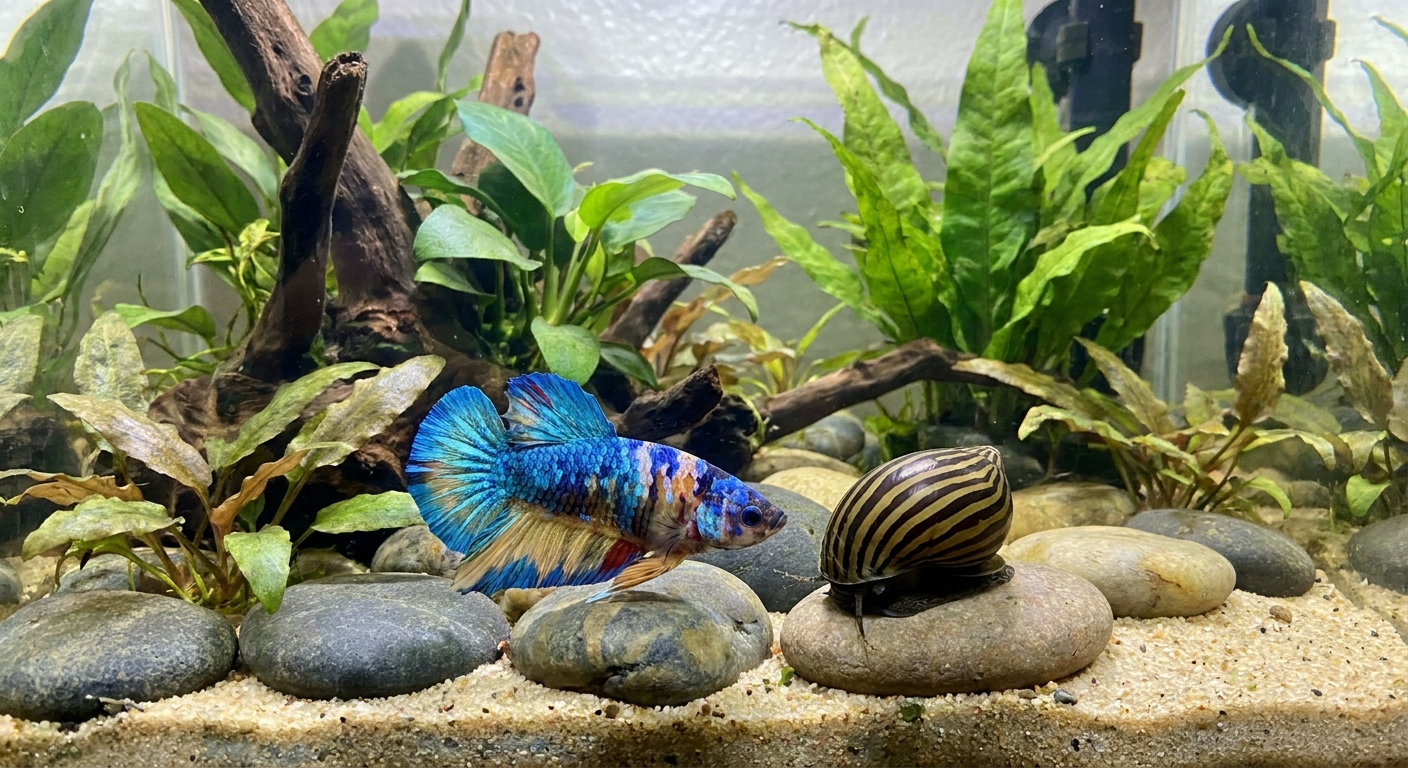
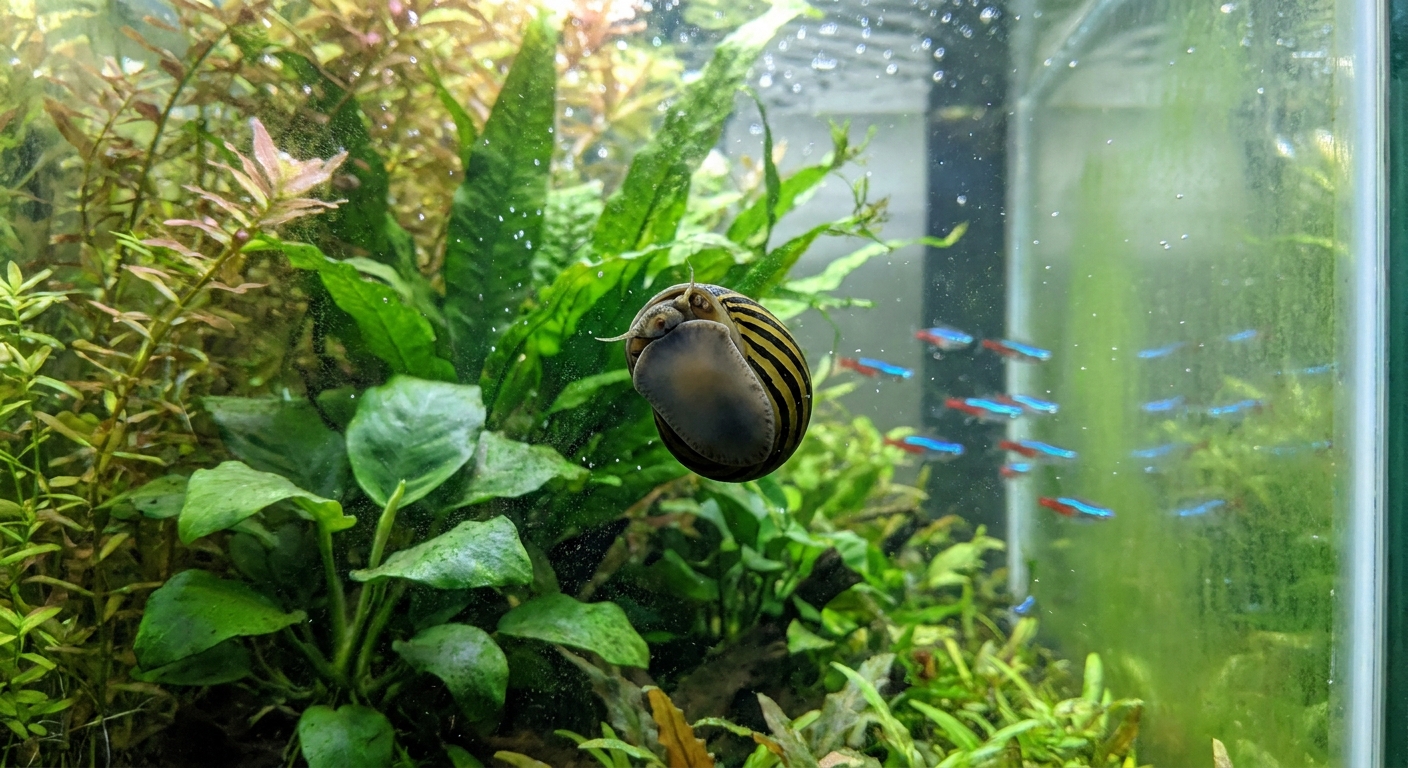
1) Nerite snails (Neritina and related species)
Why they are great with bettas: Nerites are calm, hardworking algae grazers that usually keep to themselves. Many bettas ignore them once the novelty wears off, especially in a planted tank with lots of hiding spots.
- Best for: Algae control on glass, hardscape, and plant leaves
- Adult size: Usually around 1 inch, depending on variety
- Temperament: Very peaceful
- Baby risk: Low in freshwater. They may lay tiny white eggs, but they do not typically hatch in freshwater tanks.
Watch-outs:
- Eggs: The eggs can be a cosmetic annoyance on hard surfaces.
- Escape artist potential: They can climb above the waterline, especially at night. A lid is a big help.
- Need real algae or supplemental feeding: In very clean tanks, offer algae wafers or blanched veggies.
2) Mystery snails (Pomacea diffusa)
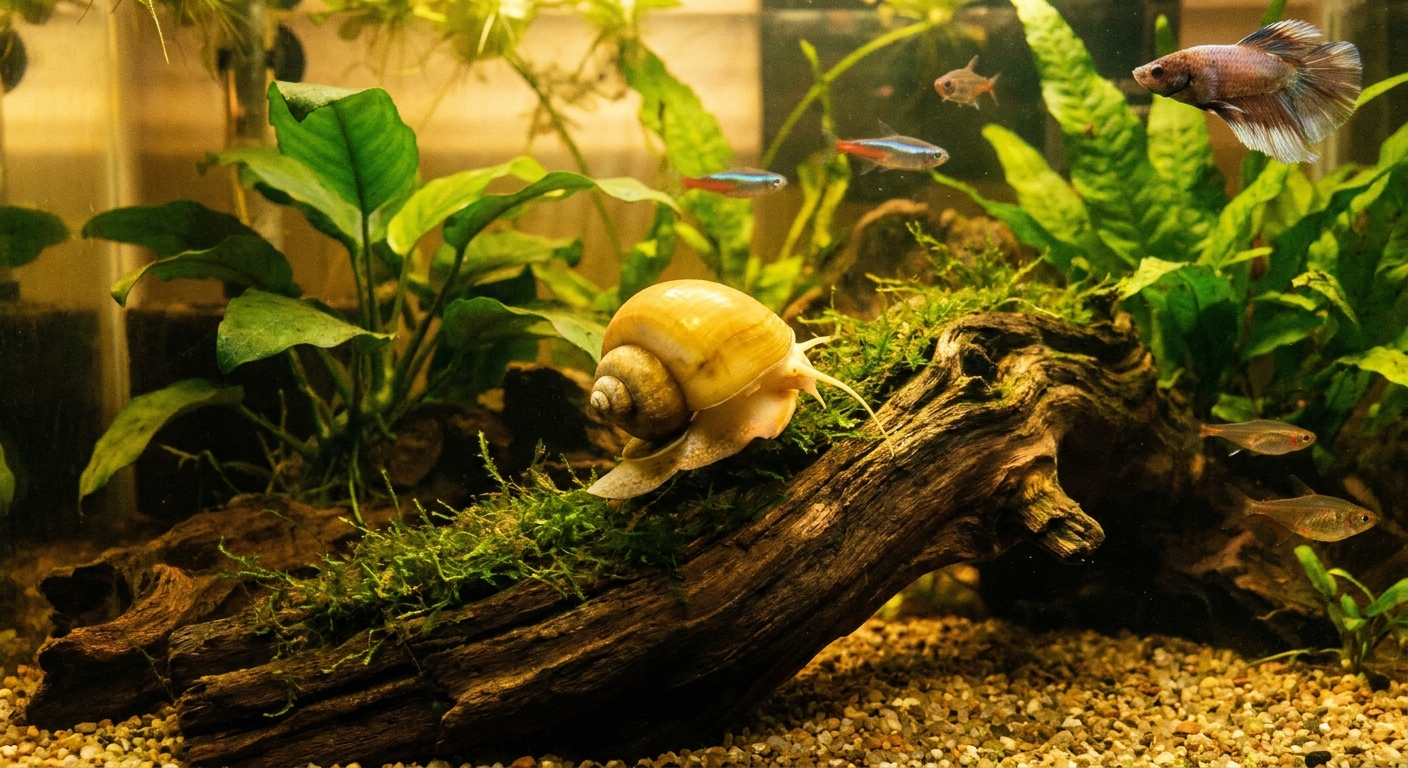
Why they are great with bettas: Mystery snails are charming, active, and generally sturdy when their needs are met. They tend to be large enough that a betta is less likely to view them as a snack, and they are not typically plant destroyers in a healthy aquarium.
Taxonomy note: In the hobby, mystery snails are often sold as Pomacea bridgesii, but many references list the common mystery snail as Pomacea diffusa.
- Best for: Scavenging leftover food, light algae, and adding movement to the tank
- Adult size: Often 2 to 3 inches
- Temperament: Peaceful, curious
- Baby risk: Low unless you have males and females. Eggs are laid above the waterline in a visible clutch.
Watch-outs:
- Tank size: Because they are bigger and messier than nerites, mystery snails fit best in 5 gallons or larger, and even better in 10 gallons. If you are deciding on tank size, see 5 Gallon vs 10 Gallon Tank for Bettas.
- Antenna nipping: Some bettas will bite their long feelers. If it becomes frequent, the pairing may not be a good match.
- Air gap and lid: They breathe air and may roam at the surface. Keep a secure lid and a safe gap above water.
3) Trapdoor snails (often sold as Japanese trapdoor)
Why they can work with bettas: Trapdoor snails are peaceful, hardy, and give you a lot of snail charm without the explosive population growth some people dread. They are livebearers, but reproduction is typically slower and more manageable than many egg-laying pest snails.
ID note: “Japanese trapdoor” snails in the trade are often sold under multiple names and may be labeled as different species (commonly in Viviparus or Cipangopaludina). The care and compatibility notes below matter more than the exact label on the bag.
- Best for: Gentle scavenging and consistent, low-drama cleanup help
- Adult size: Commonly around 1.5 to 2 inches
- Temperament: Peaceful
Watch-outs:
- Temperature compatibility: Many trapdoor snails prefer cooler water than a typical betta setup. Some keepers have success in the mid 70s Fahrenheit, but consistently warm betta temperatures can shorten lifespan for cool-preferring species. If you keep your betta on the warmer end, consider nerites instead.
- Feeding: Do not rely on detritus alone. Offer sinking foods and veggies.
Bloop’s pairing tip: If your betta tank runs on the cooler side of the betta-safe range and stays very stable, trapdoors can be a calm match.
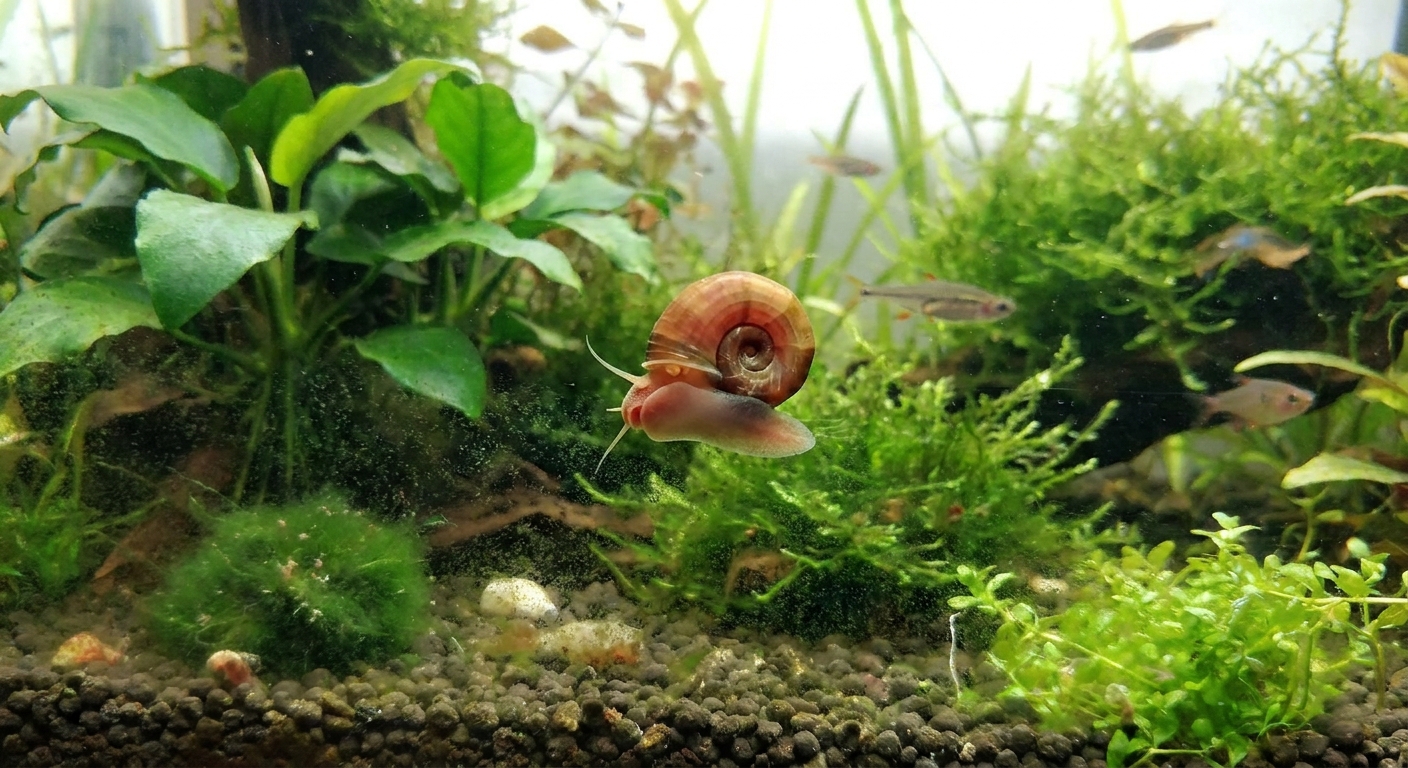
4) Ramshorn snails (Planorbella species)
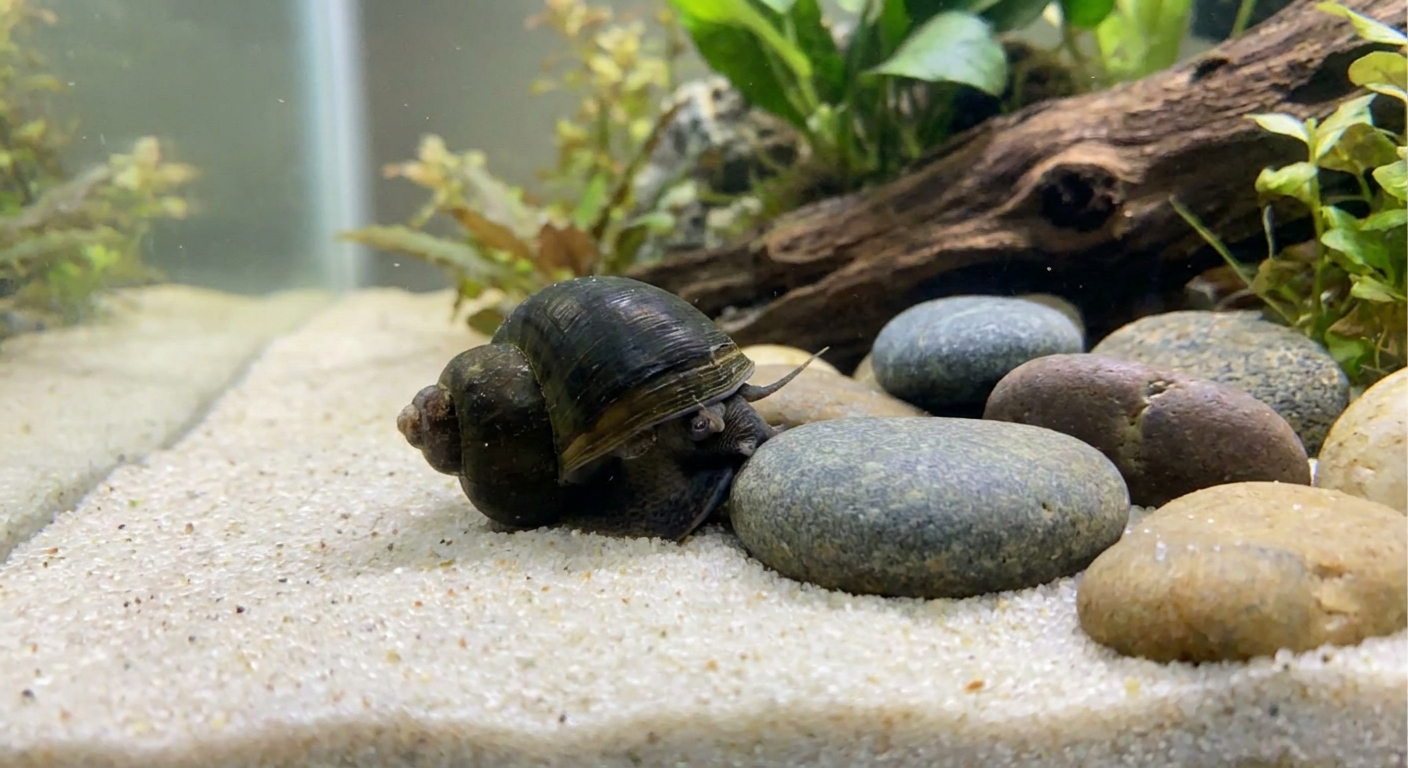
Why they can be a good choice: Ramshorns are small, peaceful, and great at cleaning up biofilm and leftover food. They also come in pretty colors. In many betta tanks they stay out of the way and get ignored.
- Best for: Biofilm and leftover food cleanup, light algae
- Adult size: Often 0.5 to 1 inch
- Temperament: Peaceful
- Baby risk: Medium to high. They can reproduce quickly if there is lots of extra food.
Watch-outs:
- Population booms are usually a feeding problem: If ramshorns explode in number, the tank is getting more food than your betta is eating, or there is too much decaying plant matter.
- Quarantine helps: Ramshorns commonly hitchhike on live plants. If you want just a few, add them intentionally rather than accidentally.
To keep feeding clean and controlled, it helps to have a consistent schedule for your betta. This guide can help: How Much and How Often to Feed a Betta Fish.
5) Malaysian trumpet snails (Melanoides tuberculata)
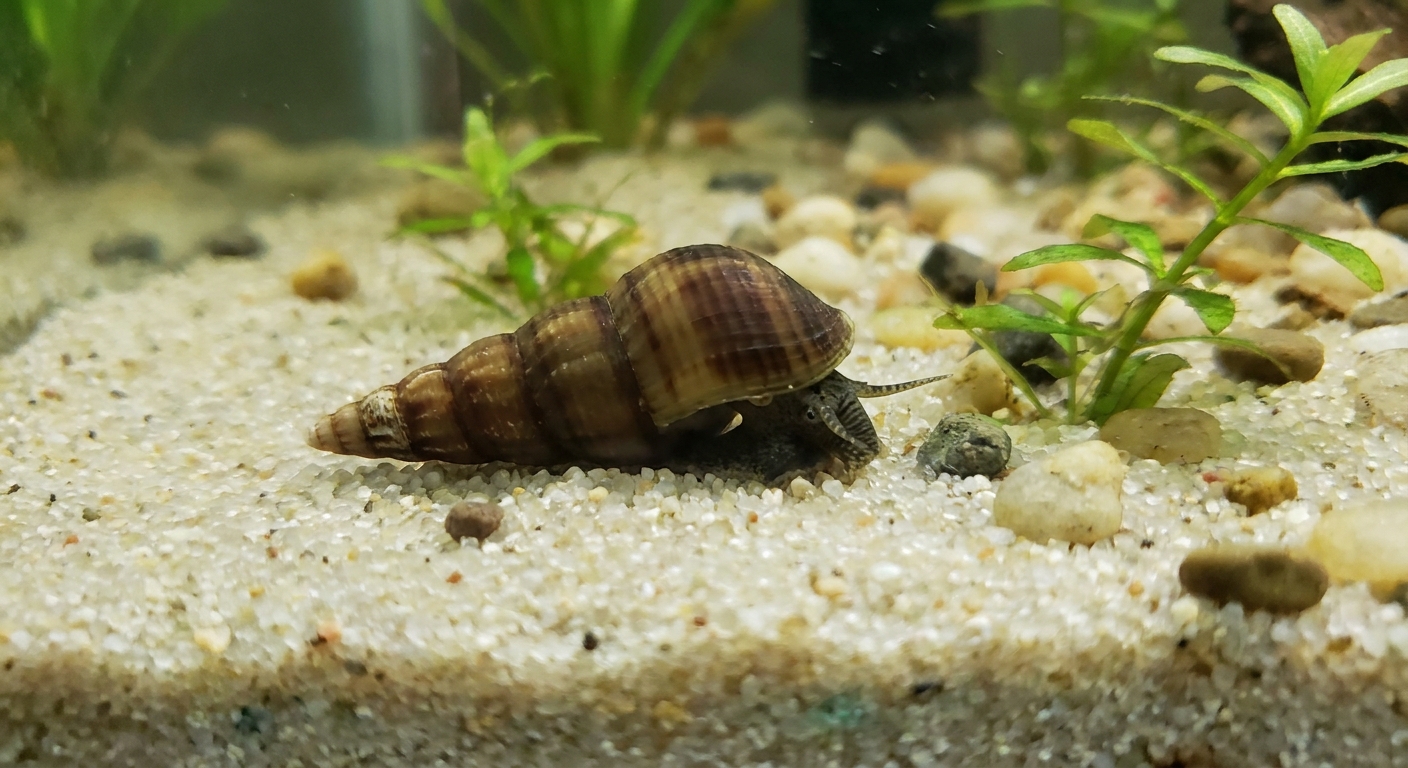
Why they can be helpful: Malaysian trumpet snails burrow into substrate, stirring it and eating leftover food and biofilm. They are mostly nocturnal, so they often avoid direct betta attention.
- Best for: Substrate cleanup and turnover, leftover food management
- Adult size: Usually around 1 inch
- Temperament: Peaceful
- Baby risk: High. They can reproduce quickly in well-fed tanks.
Watch-outs:
- Overpopulation risk: Like ramshorns, a big boom usually means there is too much food available.
- They hide: You might not notice a growing population until you see lots of snails at night or after feeding.
Bloop’s substrate note: If you use a deep, fine substrate, burrowing snails can be extra useful, but keep an eye on feeding and do not let waste build up. A steady maintenance rhythm helps a lot. See Betta Tank Cleaning Routine and Water Change Schedule.
Snails to avoid with bettas
Some snails are tempting because they are common in stores or show up as hitchhikers. These are the ones that most often cause problems in betta tanks.
Apple snails (Pomacea canaliculata and relatives)
Apple snails are often confused with mystery snails, but they can be much larger and can have very different impacts on a planted aquarium.
- Why to avoid: They can get very large, produce a lot of waste, and some types are more likely to damage live plants.
- Extra note: Apple snails are regulated or restricted in some places due to invasive risk, so availability varies.
Assassin snails (Clea helena)
Assassin snails are interesting little hunters, but they are not a peaceful “cleanup buddy” for a betta tank if you also want other snails.
- Why to avoid: They prey on other snails. If you add one, it may slowly eliminate your nerites, ramshorns, or trumpets.
- When they make sense: Only if your goal is to control a pest snail outbreak, and you are okay with losing other snails.
Pond snails and hitchhikers
Pond snails and bladder snails often arrive on plants. Many are harmless in small numbers, but they can multiply fast if food is abundant.
- Why to be cautious: Population can explode quickly, and removing them can become a constant chore.
- Better plan: Rinse and inspect plants, avoid overfeeding, and decide on a snail species intentionally.
Brackish or marine snails sold as freshwater
Sometimes stores mistakenly label brackish or marine snails as freshwater cleaners. They may survive a short time, then slowly decline.
- Why to avoid: Wrong salinity needs lead to poor health and early death.
- Safer move: Stick with clearly freshwater species like nerites, mystery snails, ramshorns, or trumpets from reliable sources.
Quick comparison table
| Snail | Best at | Reproduction risk | Key watch-out |
|---|---|---|---|
| Nerite | Algae grazing | Low in freshwater | May lay eggs, may climb out |
| Mystery | Scavenging and charm | Low to medium | Needs space, can be messy, antenna nips |
| Trapdoor | Steady cleanup | Low to medium | Temperature preference can be cooler |
| Ramshorn | Biofilm and leftovers | Medium to high | Population boom if overfed |
| Malaysian trumpet | Substrate turnover | High | Population boom if overfed |
How to add a snail to a betta tank
Step 1: Check the basics
- Ammonia 0, nitrite 0, and nitrate kept low with regular water changes
- Stable temperature and gentle flow
- Plenty of hiding and resting spots for your betta
If you want more plant-friendly cover options, this list is a fun place to start: 7 Essential Tank Decorations for Betta Hiding Spots and Enrichment.
Step 2: Acclimate slowly
Snails can react poorly to sudden changes in temperature or water chemistry. Floating a bag helps match temperature, but slow water acclimation is what really protects them from shock. A gentle drip acclimation (or adding small amounts of tank water over time) is a solid approach. Keep the lights low and the environment calm.
Quick safety note: Copper-based medications are dangerous for most snails. If you need to treat a fish, consider moving the betta to a separate hospital setup first. This guide can help: How to Set Up a Hospital Tank for a Sick Betta Fish.
Step 3: Feed on purpose
Drop snail food in after your betta has eaten, and place it near the snail so the betta is less likely to steal it. If your betta is constantly hunting for extra bites, take a look at feeding habits and appetite changes: Signs You Are Overfeeding Your Betta Fish and Why Is My Betta Fish Not Eating?.
Step 4: Watch for the bully loop
A curious peck is one thing. Repeated chasing, constant flaring at the snail, or bitten antennae is a sign the pairing is not working. If it turns stressful, separate them and rethink tank mates.
Common questions
Will a snail clean my betta tank by itself?
Snails help, but they cannot replace maintenance. You will still need water changes, gravel cleaning as needed, and filter care. For a simple routine, see Betta Tank Cleaning Routine and Water Change Schedule.
Do snails bother bettas?
Most freshwater snails are peaceful and do not bother bettas. The more common issue is the other way around, where a betta nips at antennae or harasses a slow-moving snail.
How many snails can go with one betta?
It depends on tank size and species. In a 5 to 10 gallon betta tank, many keepers do well with:
- 1 nerite or 1 mystery snail as a simple starting point
- A small, controlled group of ramshorns or trumpets only if you are comfortable managing reproduction through careful feeding
My snail is floating. Is it dead?
Not always. Some snails float temporarily due to trapped air or after climbing. If the snail smells foul, stays unresponsive for a long time, or the body looks deteriorated, it may have died and should be removed promptly to protect water quality.
Easiest pairing picks
If you want the simplest, lowest-drama snail buddy for a betta, here are the most straightforward picks:
- Best overall: Nerite snail
- Most personality: Mystery snail (in 5 gallons or larger)
- Best “tiny cleanup crew”: A few ramshorns, only if you control feeding
Whatever you choose, the secret sauce is always the same: stable, warm water, gentle flow, and a tank full of calm hiding spots. That is where bettas and snails can both relax and do their happy little jobs.
For more tank mate ideas and compatibility notes, swim over to Tank Mates & Compatibility.