Let’s make your tank the happiest little splash in the house! Now for a pairing that looks adorable on paper but can get spicy in real life: betta fish and guppies. They’re both colorful. They both prefer warm, clean water. And that is exactly why this combination can turn into fin-nipping, chasing, or nonstop stress.
It can work in some tanks with some fish, but it is never a guaranteed match. If you’re determined to try it, this guide will help you understand the risks and stack the odds toward calm, safe swimming.
Quick answer: is it a good idea?
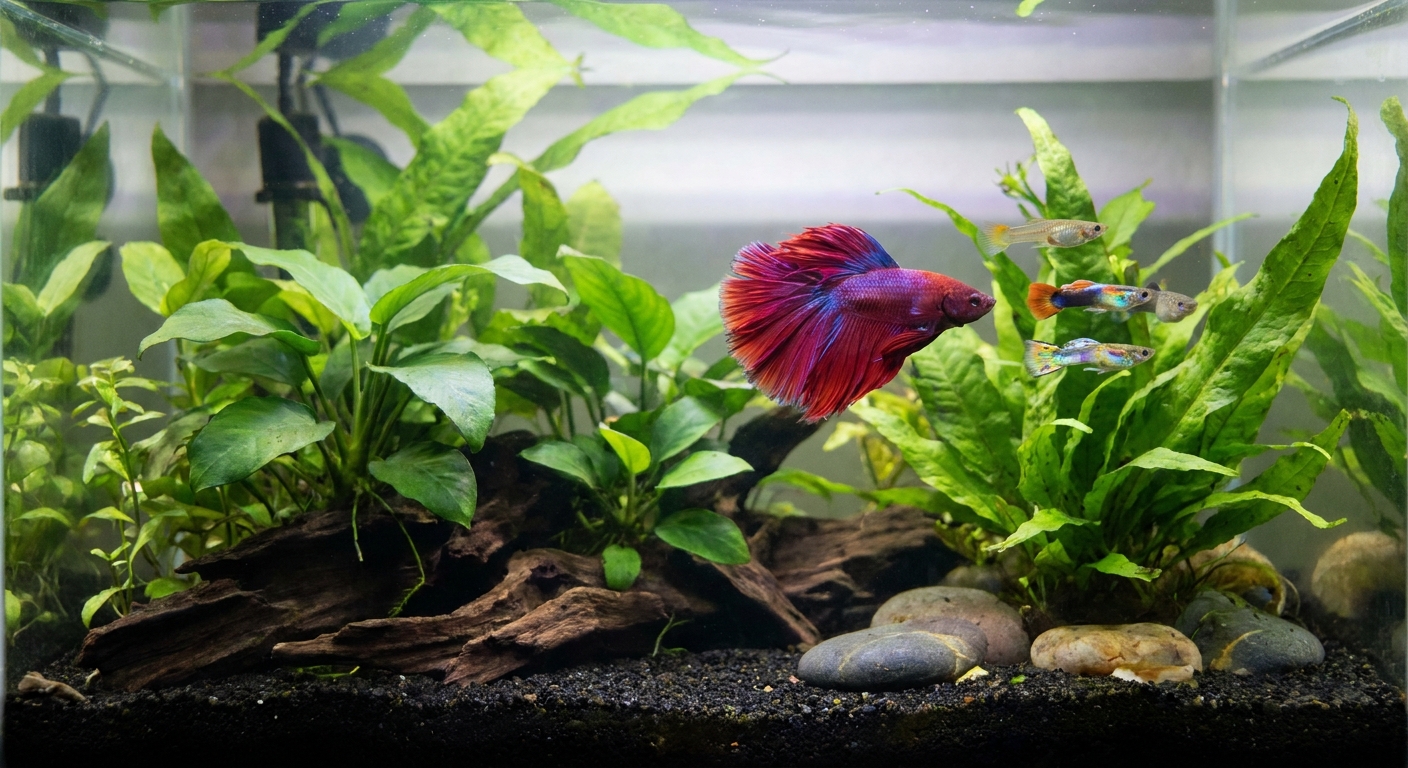
Most of the time, no, especially with male guppies that have bright colors and flowing tails. Bettas often interpret long fins and flashy movement as either a rival betta or an irresistible fin to bite.
The safest stance: If you want a relaxed betta tank, choose lower-drama tank mates and skip guppies. If you want a guppy tank, skip the betta. If you still want to attempt it, plan for a backup setup from day one.
Why bettas and guppies clash
1) Long fins look like a challenge
Many bettas are triggered by anything that resembles another male betta: flowing fins, bold colors, and confident swimming. Male guppies check all those boxes.
2) Guppies can be fin-nippers too
Guppies are not always innocent. In cramped tanks or unbalanced groups, guppies may nip fins. A betta with big fins can become a tempting target.
3) Food competition happens fast
Guppies are quick little snack-hunters. Bettas are more deliberate. At feeding time, guppies may outcompete the betta, which can lead to stress, under-eating, or the betta striking back.
4) Stress builds even without visible fighting
A betta that constantly patrols, flares, or hides is burning energy and stressing their immune system. Stress is not just a mood, it can lead to illness over time. If you want to learn the red flags, visit 7 Signs of Stress in Betta Fish (and How to Fix the Environment).
Biggest risks of this pairing
- Betta targets guppies: chasing, tail biting, torn fins, guppies pinned in corners.
- Guppies pick at the betta: shredded betta fins, repeated nips while the betta rests.
- Chronic stress: hiding, refusing food, clamped fins, color loss, glass surfing.
- Injury and infection: torn fins can develop into bacterial issues like fin rot. See Fin Rot in Betta Fish: Identify and Treat It.
- Unexpected “peace” that flips: even if it looks fine for days or weeks, a new fish, a spawning event, a decor rearrange, or a missed meal can change the dynamic fast.
The rules for attempting betta + guppies
If you’re going to try this combo, treat these as non-negotiables.
Rule 1: Skip long-finned male guppies
If you attempt this at all, the least risky option is usually female guppies (shorter fins, less betta-like silhouette). Even then, it is not guaranteed.
Avoid: fancy male guppies with big tails, bright metallic colors, and high-contrast patterns.
Rule 2: Use a bigger tank than you think
Small tanks force constant eye contact and territory disputes. For this pairing, think in community-tank terms, not solo-betta terms. More space gives everyone escape routes.
A practical starting point is a 20-gallon long (or larger), because the extra footprint matters more than height for breaking sightlines and creating “zones.” If you are still deciding on a betta-centered tank size, this comparison helps: 5 Gallon vs 10 Gallon Tank for Bettas. For guppies with a betta, lean larger than both of those when possible.
Rule 3: The tank must be heavily planted and structured
You want line-of-sight breaks everywhere. Plants and decor make it harder for a betta to lock onto a guppy and chase nonstop.
- Use tall plants to create “rooms” in the tank.
- Add at least two hiding areas where guppies can duck out quickly.
- Include broad-leaf resting spots for the betta near the surface.
Decor ideas here: 7 Essential Tank Decorations for Betta Hiding Spots and Enrichment and plant guidance here: Live vs Silk Plants for Bettas.
Rule 4: Feed the betta consistently, not heavily
Hunger can crank up hunting behavior and irritability, but overfeeding causes its own mess: constipation, bloat, and dirtier water that stresses everyone. Stick to measured portions and a steady schedule. For portions and timing, see How Much and How Often to Feed a Betta Fish, and if you suspect you have been a little too generous, check Signs You Are Overfeeding Your Betta Fish (and How to Correct It).
Rule 5: Add the betta last
Let guppies settle first so the betta enters an established space rather than claiming the whole aquarium as personal territory.
Rule 6: Quarantine new arrivals
Guppies are often sold in crowded systems, and it is easy to accidentally introduce parasites or illness to your main tank. A simple quarantine period can save you a lot of heartbreak and chasing later.
Rule 7: Have a separation plan ready before day one
You need a backup option if things go wrong fast:
- A fully cycled spare tank, or
- A divider that securely blocks access (no gaps), or
- A prepared hospital setup for emergencies
Divider tip: Many dividers still allow full visual contact, which can keep a betta flaring and stressed. If you must use a divider, choose one that reduces sightlines (opaque sections help), or pack the divider line with plants to create a visual break.
If you ever need to isolate an injured fish, this helps: How to Set Up a Hospital Tank for a Sick Betta Fish.
Best setup tips for making it work
Start with a stable, cycled aquarium
Community tanks go downhill quickly if water quality wobbles. Make sure your tank is fully cycled before adding any fish. If you’re cycling or unsure, follow How to Cycle a New Betta Fish Tank.
Keep temperature steady (aim for a compromise)
Bettas usually thrive in warmer water, while guppies often do best a touch cooler depending on strain. If you are mixing them, a stable compromise temperature (often around 78°F) is typically gentler than pushing the high end. Use a reliable heater and avoid swings. More here: Betta Tank Temperature and Heater Placement.
Check your parameters, not just your thermometer
Beyond temperature, guppies typically prefer harder, more mineral-rich water than many bettas. Before you commit to this pairing, test your GH, KH, and pH and avoid forcing extremes in either direction. The goal is stable, clean, middle-ground conditions.
Choose a gentle filter and reduce strong flow
Too much current stresses bettas and can keep them from resting comfortably. At the same time, you need enough filtration for a community load. Choose a betta-friendly filter and baffle flow if needed: Choosing the Right Filter for a Betta Tank.
Feed in two zones
Try feeding guppies on one side while offering betta food on the other, or use a feeding ring for the betta to reduce the guppy food swarm.
Use lighting that supports plants and calm behavior
Very bright, bare tanks can raise stress. A planted tank with a consistent day-night schedule tends to be calmer. Lighting tips: Betta Fish Lighting Requirements.
How to tell if it is not working
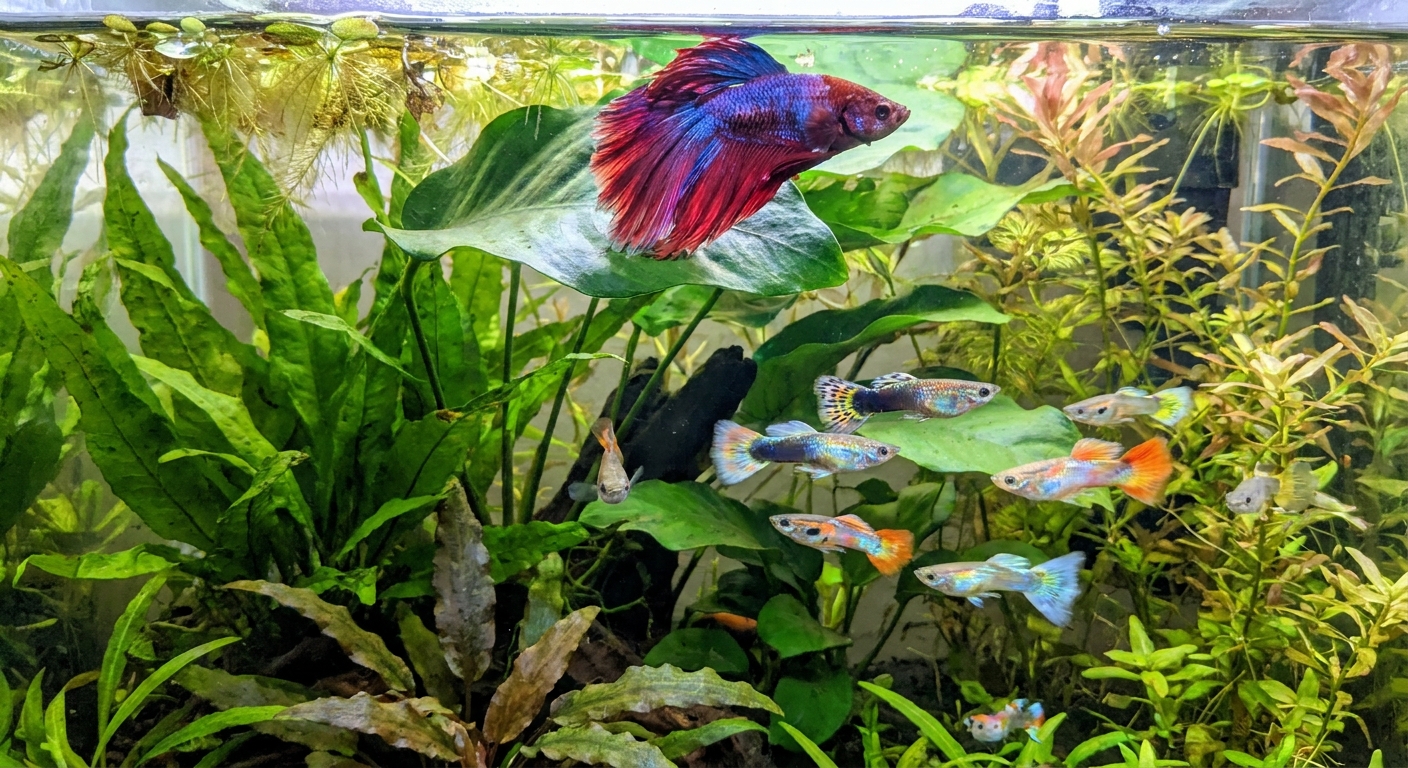
If you see any of these, it is time to split them up. Waiting rarely improves things once one fish has picked a target.
Red flags aimed at guppies
- Betta repeatedly chasing the same guppy
- Nipped or frayed guppy tails
- Guppies hiding at the top corners or hovering motionless
- A guppy being kept away from food
Red flags aimed at the betta
- Torn betta fins that worsen day to day
- Betta hiding constantly or clamping fins
- Betta refusing food or spitting it out after being harassed
- Betta “patrolling” the glass, flaring repeatedly, never settling
Behavior trouble can sometimes be eased with better cover and enrichment, but with guppies it often stays unpredictable. More betta stress support: 7 Signs of Stress in Betta Fish.
Choose guppies wisely
Lower-drama guppy profile
- Female guppies rather than flashy males
- Plainer colors and shorter fins
- A stable group so one fish is not singled out (avoid tiny groups)
Higher-drama guppy profile
- Long, flowing tails
- Bright, high-contrast patterns
- Very bold individuals that constantly invade the betta’s space
Important: Guppy breeding can also change the vibe. Pregnant females and new fry can increase chasing, crowding, and feeding chaos. Even in an all-female group, females may arrive already pregnant and can drop fry for months due to stored sperm.
FAQ
Can a female betta live with guppies?
Sometimes female bettas are less reactive than males, but they can still be territorial and prone to chasing. A female betta with guppies is still a gamble, just not an automatic “yes.” Use the same rules: larger tank, heavy planting, add betta last, and have a backup plan.
Can a betta live with guppy fry?
Most bettas will eat fry if they can catch them. If your goal is to raise guppy fry, do not rely on a community tank with a betta.
Will my betta calm down over time?
Some bettas ignore guppies after an adjustment period, but many do not. If chasing is ongoing or intense after about 48 hours, or if you see any fin damage at all, do not wait it out. Move fish to separate spaces and reset your plan.
What should I do if fins get torn?
Move the injured fish to a safe, calm space, keep water pristine, and monitor closely for infection. For bettas, fin damage can progress into fin rot. This guide helps you recognize what’s happening and respond: Fin Rot in Betta Fish.
The safest takeaway
Bettas and guppies can share similar water needs, but their visual similarity and fin styles make them one of the more unpredictable community pairings. If you want the best chance of success, avoid long-finned male guppies, start with a 20-gallon long (or larger), pack in plant cover, add the betta last, and be ready to split them up at the first sign of targeting.
Your goal is not just “no deaths.” It’s a tank where everyone swims calmly, eats well, and rests without fear. That is the Betta Bliss kind of peace.