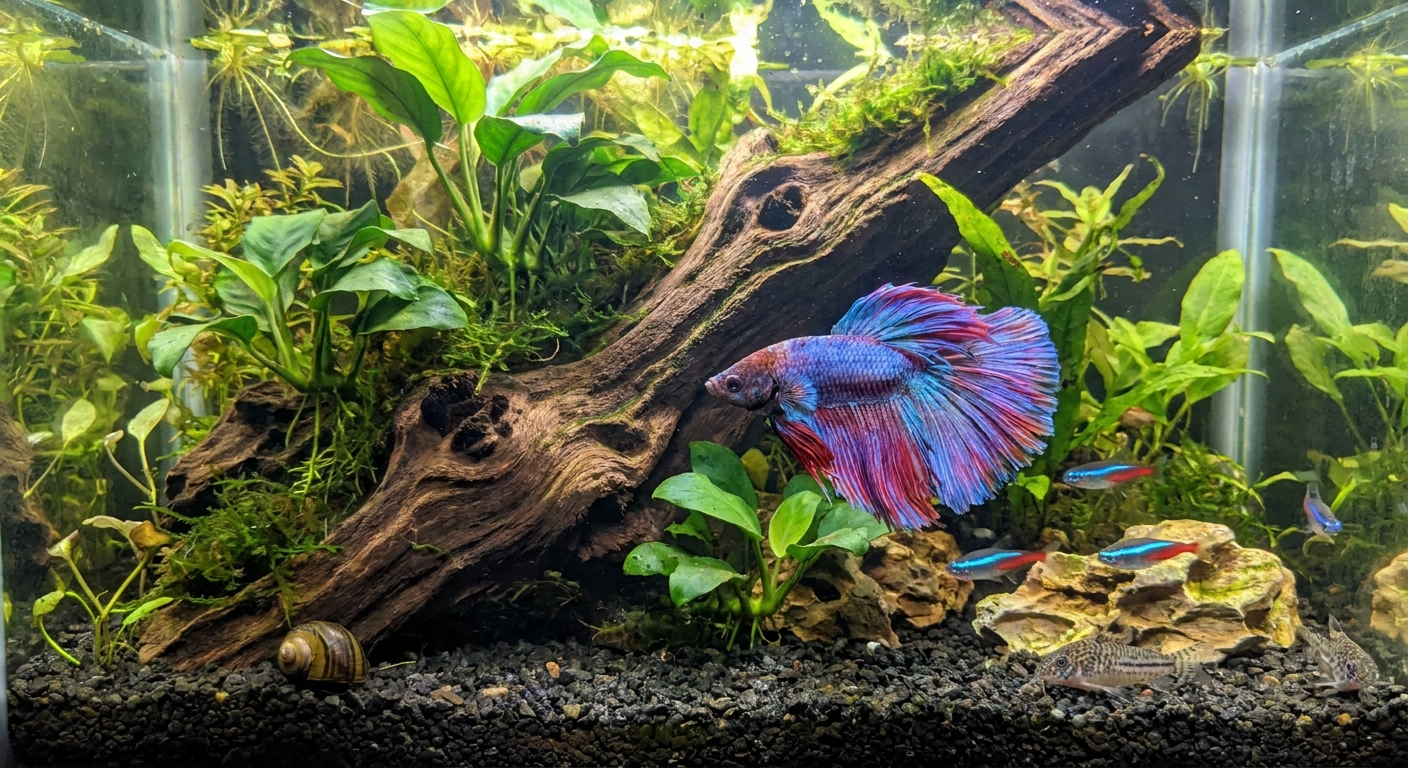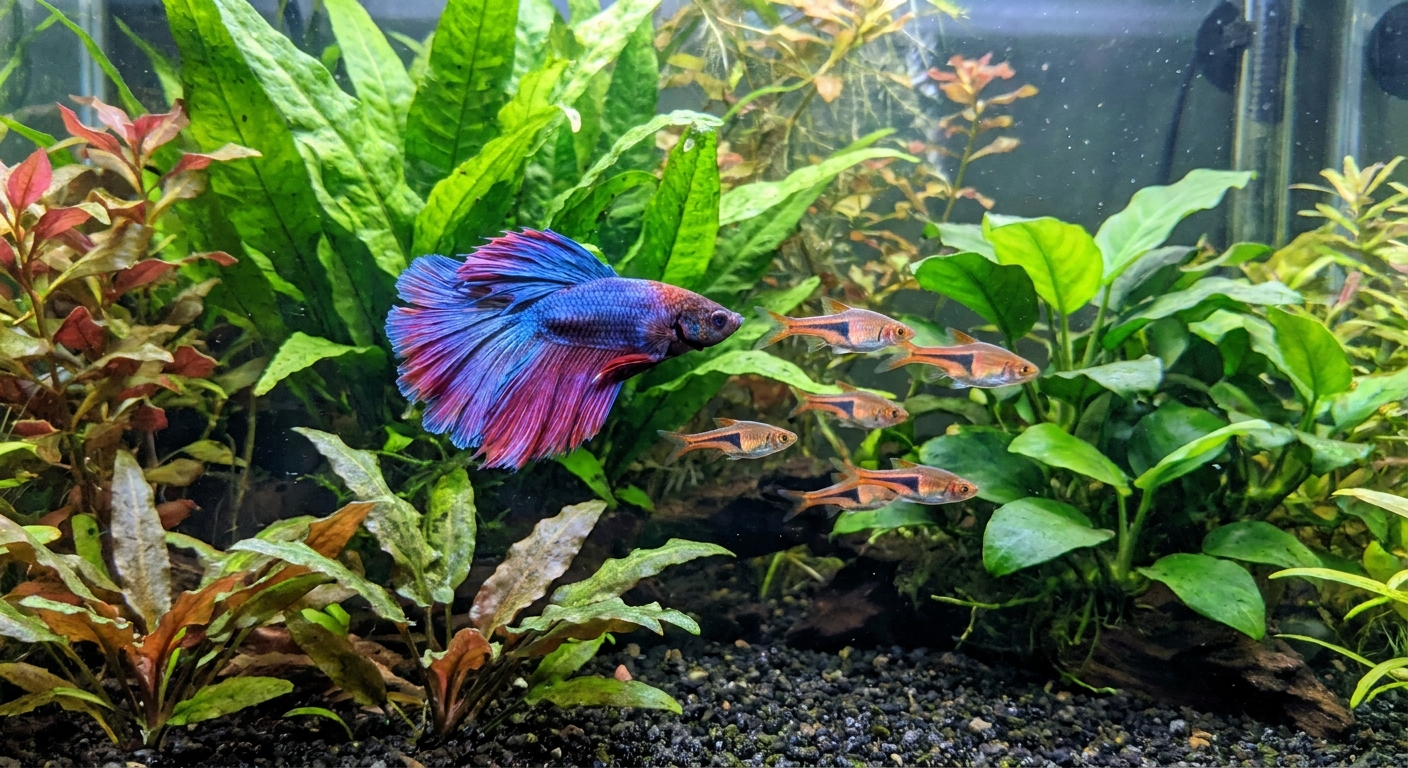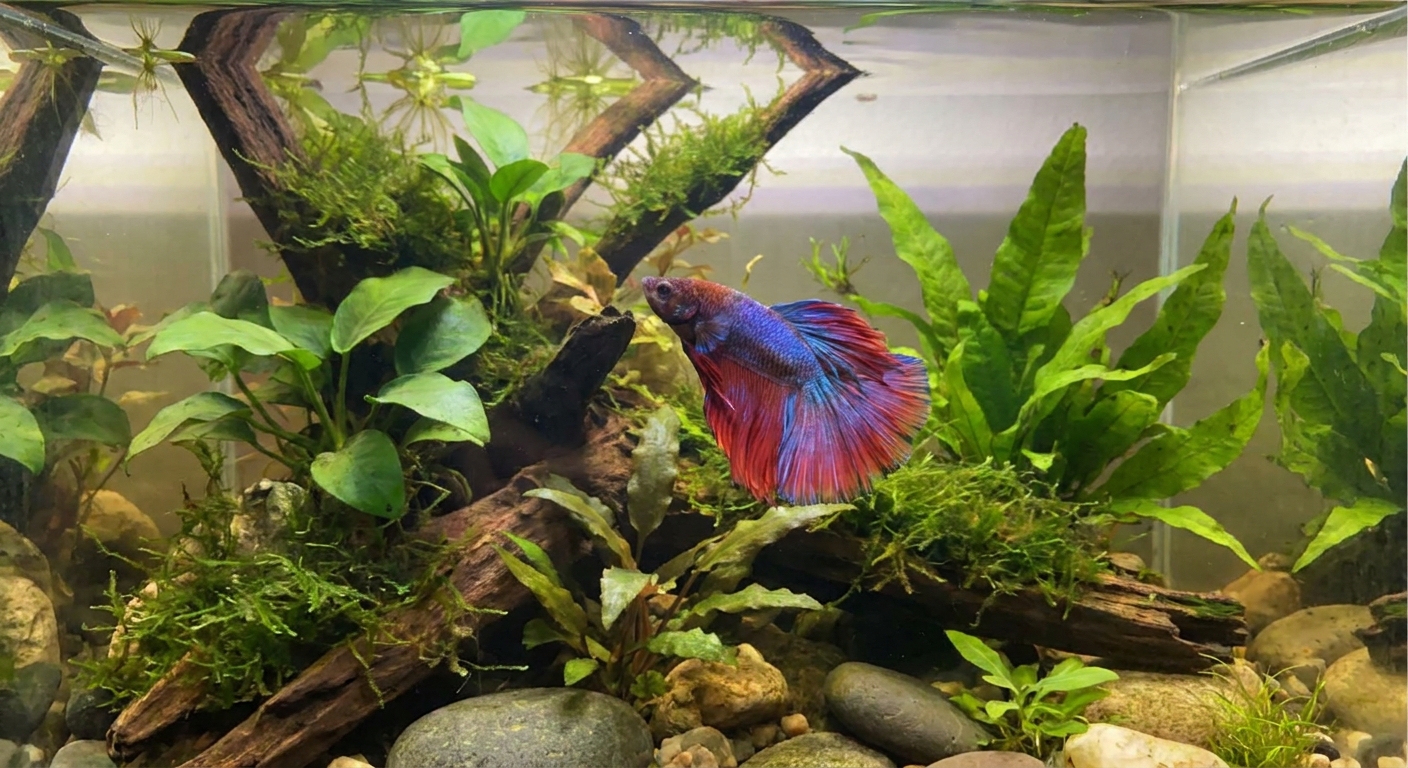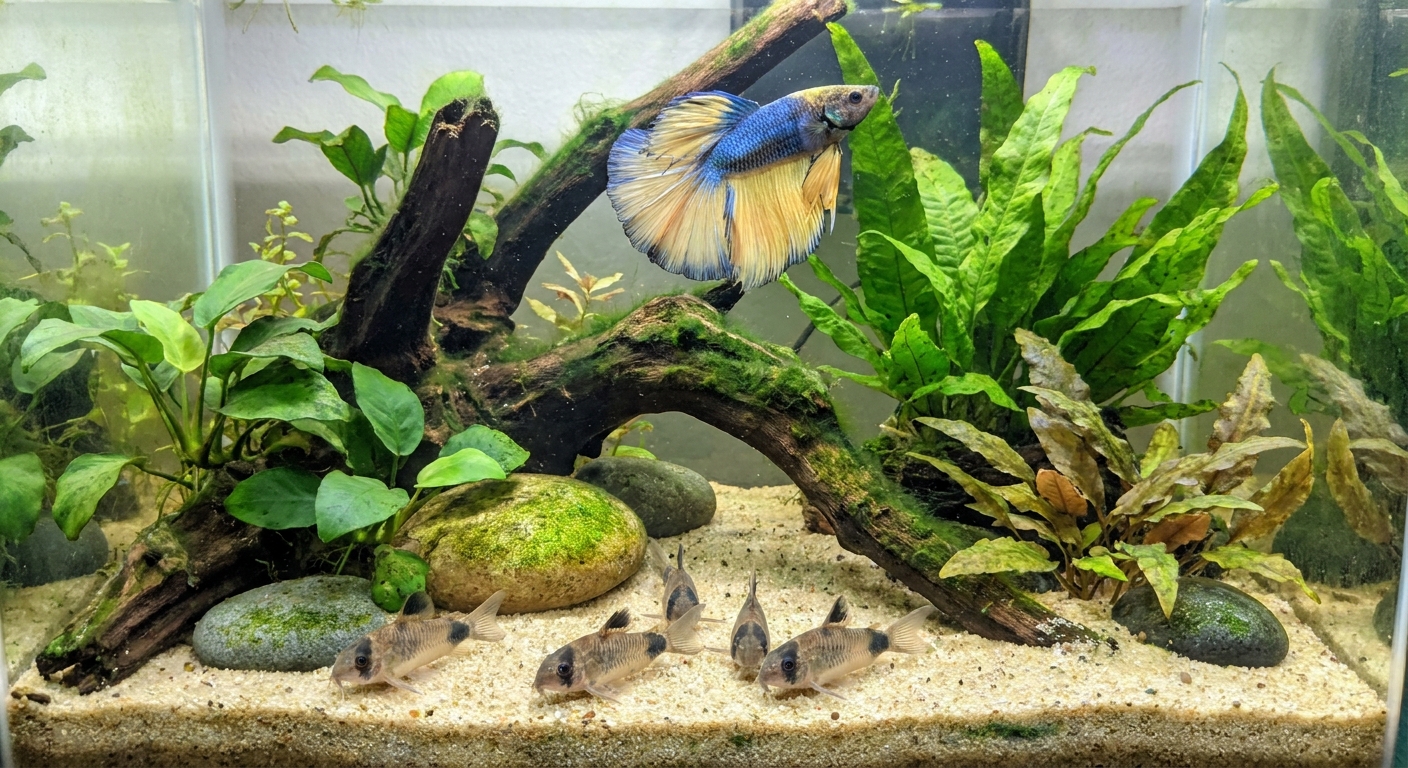
Let’s make your tank the happiest little splash in the house. African dwarf frogs (ADF) and betta fish can sometimes share a home, but only when the setup is built around two very different styles of living. Bettas are curious, territorial little bosses of the mid and top water. ADF are gentle explorers that spend a lot of time near the bottom, but they also roam midwater and surface often to breathe air, and they eat slowly. When things go wrong, it is usually because of water depth, mealtime chaos, or not enough safe hiding places.
This guide walks you through a realistic, betta-first way to create a calm co-habitation tank that gives both species room to do their natural thing.
Are ADF good tank mates for bettas?
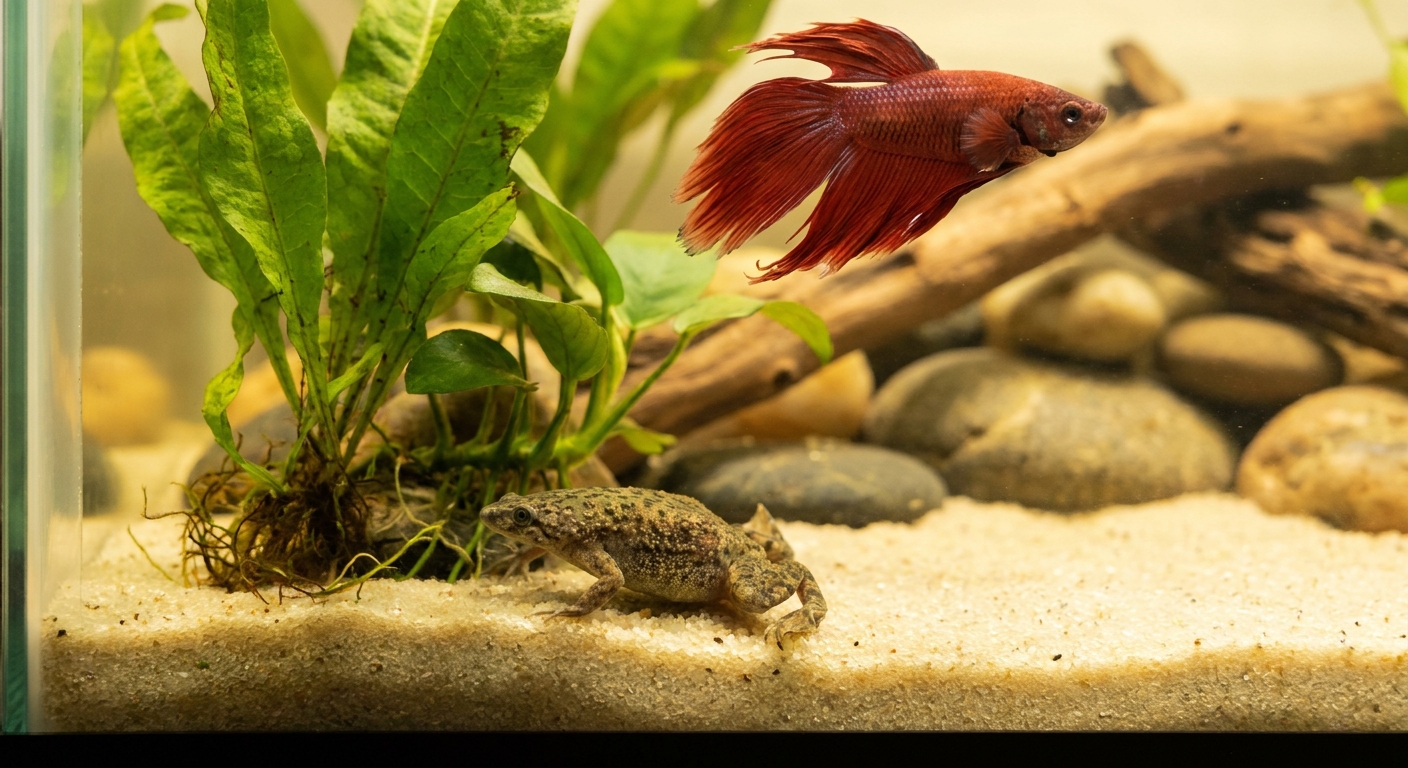
They can work, but they are not a “drop them together and hope” match. ADF are peaceful and do not nip fins, but they may accidentally bump into a betta during feeding, and a betta may interpret that as a challenge. Bettas also sometimes peck at frog toes or eyes, especially if they are bored, the tank is too sparse, or everyone feels crowded.
Best-case match
- A calmer betta temperament (not a constant flare-and-chase personality)
- A tank large enough to split the space into zones
- Lots of cover and line-of-sight breaks
- A deliberate feeding routine that prevents stealing and choking risks
When it is a “no”
- Your betta has a history of attacking tank mates
- The tank is small or tall with deep water
- You cannot commit to target feeding the frogs
- You need strong flow or high current for other fish in the same tank
If you are still building your community plan, Betta Bliss has more options in Tank Mates & Compatibility, including schooling fish ideas that tend to be less complicated than frogs in many setups.
Before you buy: ADF vs clawed frogs
This is a big one because stores sometimes mix them up. African dwarf frogs stay small and are the species people usually mean for freshwater community tanks. African clawed frogs get much larger, are stronger hunters, and are not a safe betta tank mate.
- ADF (the “right” frog for this guide): small, fully webbed front feet, softer profile.
- Clawed frogs (avoid with bettas): larger body, thicker legs, visible claws on the front feet (not webbed like ADF), more predatory behavior.
If you are unsure which frog you are looking at, pause the purchase and confirm the species first. Correct ID prevents a lot of heartbreak.
Tank size and layout
Space and structure are what turn “maybe” into “steady.” Frogs do best when they can find food without competition and surface for air without working too hard. Bettas do best when they can establish a comfortable territory without feeling boxed in.
Recommended tank size
- 10 gallons is a friendlier starting point for a betta plus ADF because it gives you room for hiding spots and separate feeding zones.
- In 5 gallons, this pairing is much more likely to go sideways from stress, food conflict, or constant accidental contact.
If you are choosing between sizes, this helps: 5 gallon vs 10 gallon tank for bettas.
Create zones
- Top and mid water “betta zone”: gentle flow, floating plants, broad leaves for resting near the surface.
- Bottom “frog zone”: open foraging lanes, shaded caves, and soft plants near the substrate.
- Neutral zone: a plant thicket or wood/rock cluster that blocks direct sight lines.
Water depth and lid security
African dwarf frogs breathe air. They regularly swim up for a gulp, then return to the tank. When the water column is too deep, many frogs tire out faster, miss meals, or become less active, especially older or less fit individuals.
Practical depth guidelines
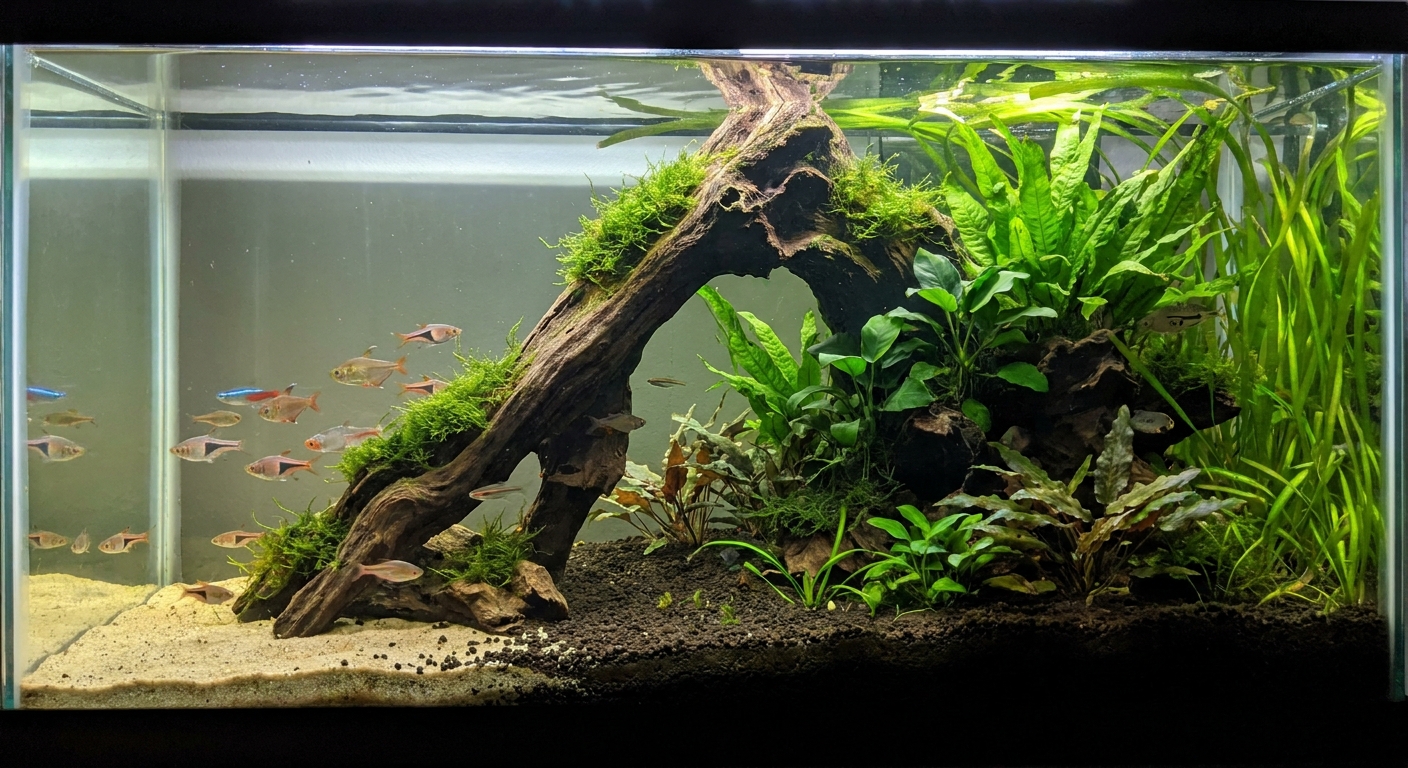
- Aim for shallow-to-moderate depth. Many keepers have the easiest time keeping ADF when water depth is around 8 to 12 inches.
- Avoid tall, high-column tanks for this pairing. Long, low tanks make everything easier.
- Add “rest stops” like broad-leaf plants, stacked décor, or gentle slopes so frogs can pause on the way up.
Seal the lid
ADF can squeeze through surprisingly small gaps. Use a tight-fitting lid and block escape routes around filter cutouts, airline tubing, and feeding doors.
Filtration and flow
Both bettas and ADF appreciate calmer water. Bettas have long fins and prefer gentle current. Frogs are clumsier swimmers than fish and can get stressed by strong flow.
- Aim for gentle filtration with good biological capacity, not a blasting jet.
- Baffle the output if needed so the surface is not a constant whirlpool.
- Keep oxygenation steady with mild surface movement.
Need help picking a betta-friendly filter style? Choosing the right filter for a betta tank.
Temperature and parameters
This pairing only works when you stay in the comfortable overlap range. Bettas are tropical and do best with stable heat. ADF also prefer warm, steady water.
- Temperature: 76 to 80°F is a commonly comfortable range for a shared betta plus ADF tank. Keep it stable with a reliable heater and thermometer.
- Ammonia and nitrite: always 0.
- Nitrate: keep it low. Many keepers aim for under 20 ppm, and lower is better when you can manage it.
If you are still setting up or upgrading, cycling and stability matter a lot for frogs. These will help: How to cycle a new betta fish tank and Betta tank temperature and heater placement.
Hiding spaces
Think of hiding spaces as stress insurance. Frogs want shaded, snug retreats near the lower areas of the tank. Bettas want breaks in line-of-sight and resting spots near the surface.
ADF-friendly hiding ideas
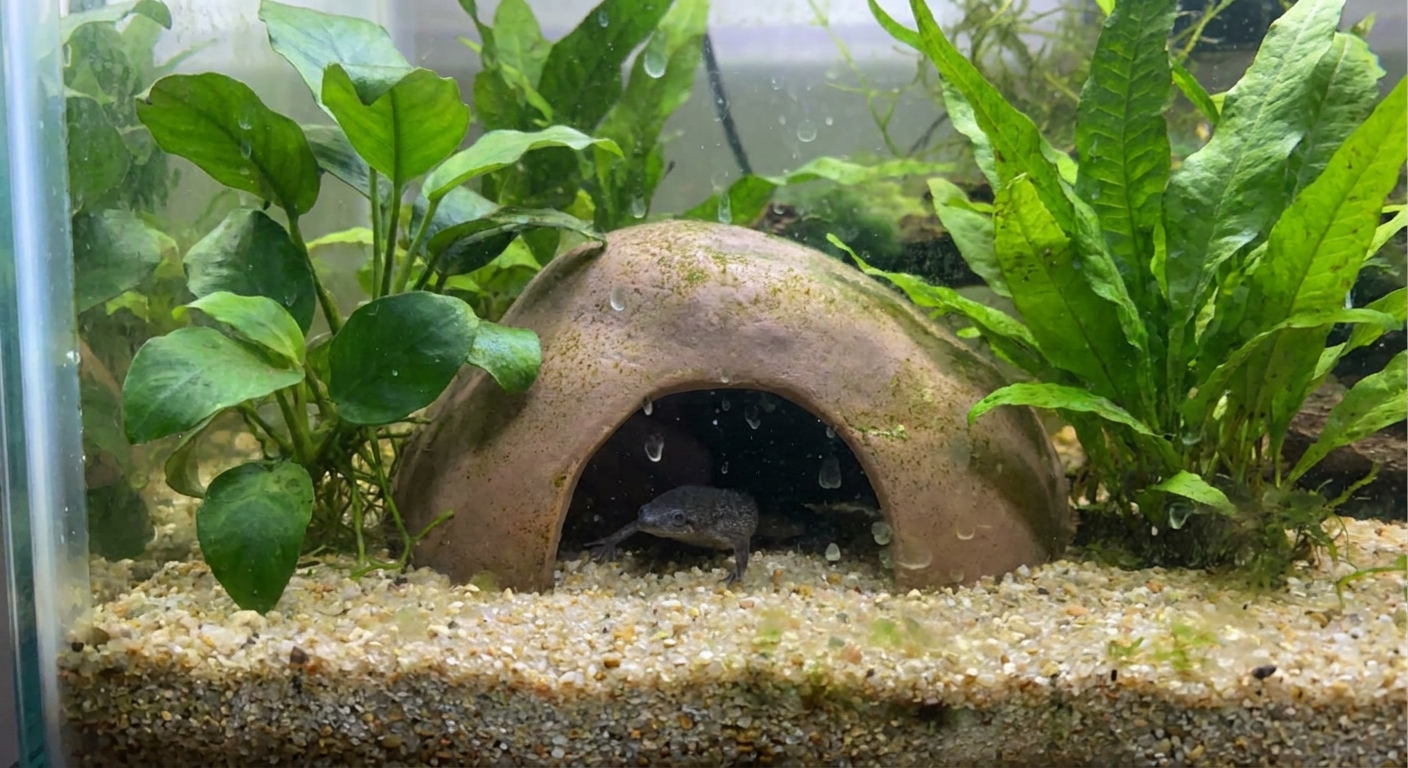
- Smooth caves with frog-sized openings
- Dense plants that reach the substrate
- Leaf-litter style cover (as long as water stays clean and you monitor buildup)
- Low arches and tunnels without sharp edges
Betta-friendly resting and cover
- Broad-leaf live plants or soft silk plants
- Floating plants to reduce harsh overhead light
- Décor that breaks up the tank into “rooms”
For decorating inspiration that stays betta-safe, visit 7 essential tank decorations for betta hiding spots and enrichment and Live vs silk plants for bettas.
Substrate and feeding stations
ADF can accidentally swallow substrate while snapping at food. That is one reason this pairing goes smoother when the bottom is set up with frog feeding in mind.
- Safer picks: fine sand, or larger smooth stones that are too big to fit in a frog’s mouth.
- Riskier picks: small gravel that can be swallowed during messy meals.
- Make it easier: feed frogs in a shallow dish or “food plate” so food stays contained and substrate stays out of the bite zone.
Substrate choices matter for bettas too. If you are deciding what goes on the bottom, see Gravel, sand, or soil for betta tanks.
Feeding without chaos
Feeding is the #1 trouble spot. Bettas are quick and opportunistic. ADF are slower, scent-driven hunters that may miss food if the betta rushes in.
Big feeding rules
- Do not rely on floating flakes as the frog’s main plan. Some frogs will take food at the surface, but it is inconsistent and easy for the betta to steal.
- Feed the frogs in a consistent spot so they learn where dinner appears.
- Target feed the frogs with tongs or a turkey baster style tool so food reaches them before the betta does.
- Keep portions controlled to prevent leftover food from fouling water.
A simple two-part routine
- Feed the betta first with a small portion on one side of the tank.
- Target feed the frogs second on the opposite side, placing sinking foods close to their hiding zone or into the feeding dish.
What foods typically work better
Many keepers use a mix of frog-safe sinking foods and meaty frozen options. For betta-friendly nutrition ideas, this guide is a great companion: 7 best frozen and live foods for betta color and vitality. Just remember that the frog needs food it can actually locate and swallow comfortably.
Choking and impaction cautions
- Avoid oversized pellets that a frog might try to swallow whole.
- Keep the bottom frog-safe so accidental snaps do not turn into swallowed gravel.
Quarantine and introduction
Slow introductions help everyone settle without panic, and quarantine protects the whole tank.
Quarantine basics
- Quarantine new frogs when you can before adding them to the main tank. It helps you spot illness early and reduces the chance of bringing problems into an established setup.
- Keep quarantine simple with stable heat, gentle filtration, and easy-to-clean décor.
Introduction steps
- Make sure the tank is fully cycled and stable before adding frogs.
- Rearrange some décor right before introduction to reduce territorial behavior.
- Add the frogs first when possible, then the betta later. If the betta is already established, add extra hiding at the same time as the frogs.
- Watch the first 48 hours closely with lights low and plenty of cover.
If your betta is territorial with tank mates, this is a helpful mindset guide: Introducing tank mates to a territorial betta.
Medication sensitivity
Frogs are amphibians, and they can be more sensitive to certain aquarium medications and chemicals than fish. If someone gets sick, it is often safer to treat in a separate hospital tank when you can, and to be cautious with dosing and ingredients.
If you need a clean, betta-safe way to set one up, see How to set up a hospital tank for a sick betta fish. The same basic idea can help you manage treatment without stressing the whole community.
Signs it is not working
Even with a great setup, some bettas simply will not tolerate frogs. Early action prevents injuries.
Red flags from the betta
- Relentless stalking, flaring, or nipping at frogs
- Targeting frog eyes or toes, or hovering at the frog’s cave to harass it
- Stress behaviors like glass surfing, clamped fins, or refusing food
Red flags from the frogs
- Constant hiding and refusing to forage
- Floating, struggling to reach the surface, or frantic swimming when the betta approaches
- Weight loss because the betta steals food
Fast fixes to try
- Add more cover immediately to break line-of-sight.
- Separate feeding zones more clearly and target feed the frogs.
- Reduce brightness with floating plants and calmer lighting.
- Be ready to separate if chasing or nipping continues.
If you need help reading stress signals, this care note is a lifesaver: 7 signs of stress in betta fish and how to fix their environment.
Cleaning routine
Frogs can be messy eaters, and leftover meaty foods can spike waste fast. A steady maintenance routine keeps everyone safer.
- Spot clean after frog meals by siphoning obvious leftovers.
- Do consistent partial water changes rather than rare, giant cleanouts.
- Rinse filter media gently in tank water (never under tap) to protect beneficial bacteria.
For a step-by-step schedule that stays betta-safe, see Betta tank cleaning routine and water change schedule.
Quick FAQ
How many ADF can live with one betta?
ADF often seem more confident and active with another ADF, but they are not schooling fish in the strict sense, and some individuals do fine solo with excellent care. Stocking still depends on tank size and filtration. More frogs also means more feeding management and more waste. If you are new to the pairing, start small and prioritize space, cover, and water quality.
Will ADF nip my betta’s fins?
ADF are not fin nippers. If fins get damaged in a shared tank, it is more often from betta stress, décor snagging, or the betta getting into scuffles. Check décor for sharp edges and monitor behavior closely.
Can I keep shrimp with bettas and frogs together?
That becomes a much trickier mix. Bettas may hunt shrimp, and frogs may snap at anything that moves during feeding. If shrimp are your goal, this is the better starting point: Can betta fish live with shrimp?.
Do frogs need an air stone if they breathe air?
They still benefit from clean, well-oxygenated water, but they must also be able to reach the surface easily. Gentle filtration and mild surface movement are usually enough in a properly stocked tank.
A calm shared tank is built
The happiest betta and ADF co-habitation tanks have three things in common: manageable water depth, structured hiding spaces, and a feeding routine that gives the frogs a fair chance. Set up those foundations, and you give both your finned friend and your little frog buddy a real shot at a peaceful, sparkling home.