Let’s make your tank the happiest little splash in the house! Now, about bettas and shrimp: they can live together, but only when you plan for one important truth. To many bettas, shrimp are not “roommates.” They are “wriggly snacks.”
This guide will help you stack the odds in the shrimp’s favor with smart setup choices, calm introductions, and realistic expectations for ghost shrimp, cherry shrimp, and Amano shrimp.
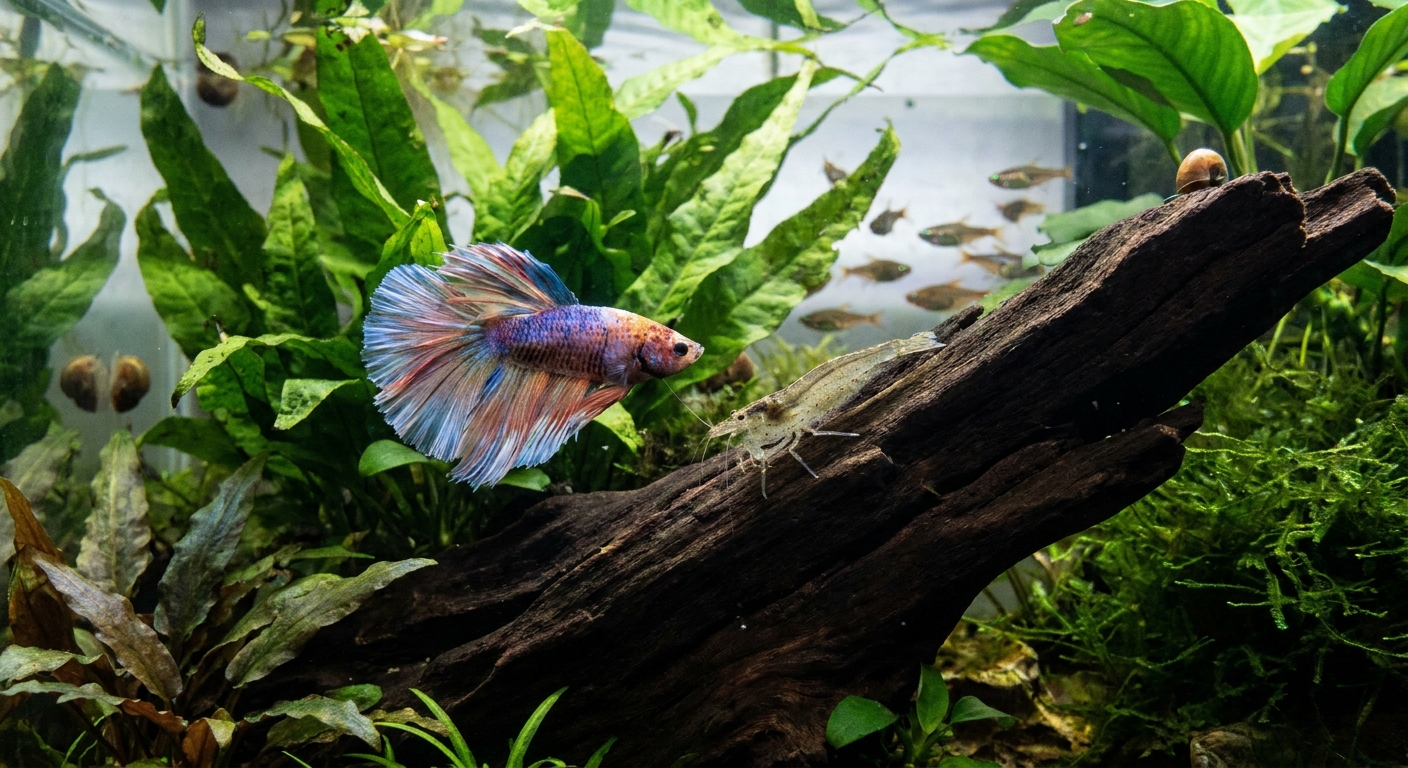
Quick answer: Is it safe?
Sometimes. Bettas vary a lot by personality. Some ignore shrimp completely. Others will stalk them the moment they spot antennae.
Also, “safe” in a betta tank usually means lower risk, not zero risk. Even a mellow betta can have a surprise hunting moment.
Shrimp success depends on four big factors:
- Betta temperament: curious and mellow usually does better than bold and territorial.
- Tank size and layout: shrimp need cover, not open water.
- Shrimp species and size: bigger shrimp are harder to swallow and better at dodging, but they are not invincible.
- How you introduce them: the first week sets the tone.
If your betta already flares at everything, chases snails, or attacks your tools during maintenance, it is wise to assume shrimp are at risk.
Which shrimp do best?
Here is the honest rundown on the three most common choices.
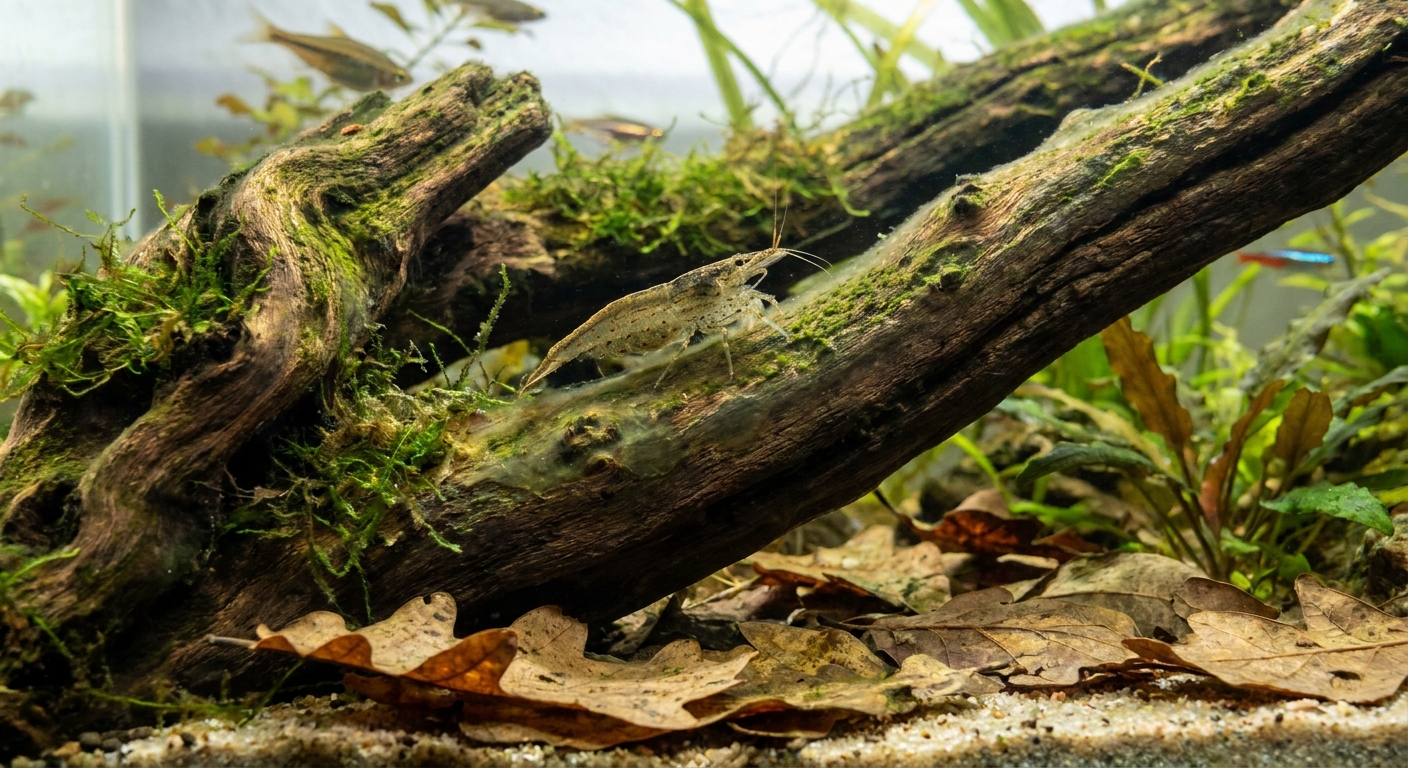
Amano shrimp (often the best odds)
Amano shrimp are usually larger than cherry shrimp and tend to be fast, busy grazers. That size and confidence can help, but it does not make them “betta-proof.” A determined betta can still injure or kill an Amano, especially during a vulnerable molt.
- Pros: larger body, confident foragers, great algae helpers.
- Cons: still can be bullied, especially during molting.
- Expectation check: Amanos do not breed in freshwater. Their larvae need brackish to marine conditions to develop.
Ghost shrimp (cheap, but a mixed bag)
Ghost shrimp are often sold cheaply, which makes them tempting “test shrimp.” Some do fine, but they can also be the first shrimp a betta decides to hunt.
Another real hobby issue: some stores occasionally mix in look-alikes (often sold as “ghost” or “glass” shrimp) that are more predatory and may nip fins. A quick tip when shopping is to avoid any “ghost shrimp” that look bulkier, act more aggressive, or have noticeably long arms or claws compared with the rest.
- Pros: inexpensive, active cleaners, easy to find.
- Cons: can be eaten, can arrive stressed or weak, occasional look-alike mix-ups.
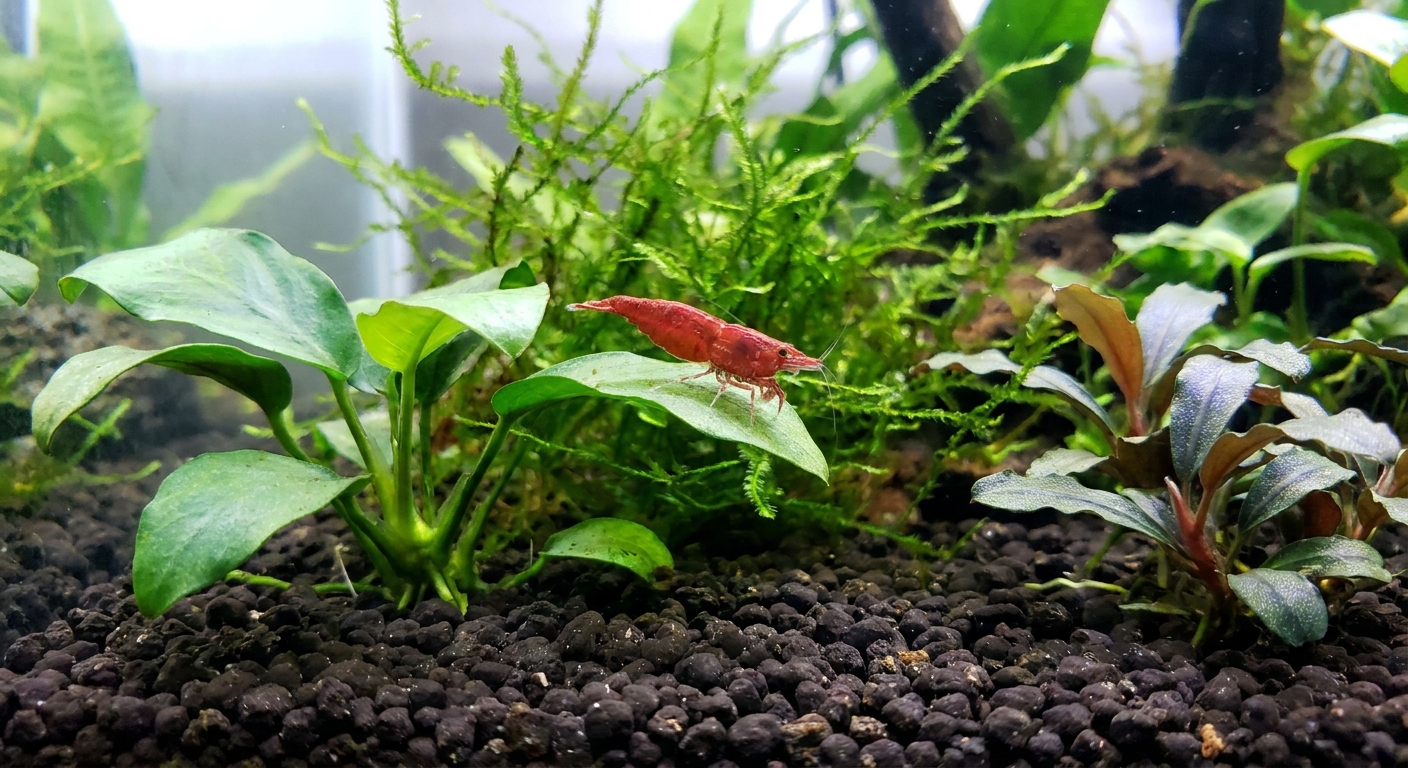
Cherry shrimp (high snack risk)
Cherry shrimp are small, brightly colored, and easy for a betta to spot. In many betta tanks, cherries gradually disappear one by one.
- Pros: beautiful colors, can breed in stable tanks.
- Cons: small size makes them high-risk with bettas, and shrimplets are usually eaten.
Bottom line: If you want the best chance, start with Amano shrimp. If you want to try cherries, plan for losses and focus heavily on plant cover and hiding spaces.
Setup for shrimp survival
If shrimp have nowhere to vanish, a betta can turn the tank into a hunting course. The goal is to create a tank with broken lines of sight and plenty of shrimp-sized escape routes.
Go bigger when possible
More space lowers tension and gives shrimp more places to forage safely. If you are choosing between small and roomy, choose roomy.
Helpful read: 5-gallon vs 10-gallon tank for bettas.
Use dense plants and shrimp shelters
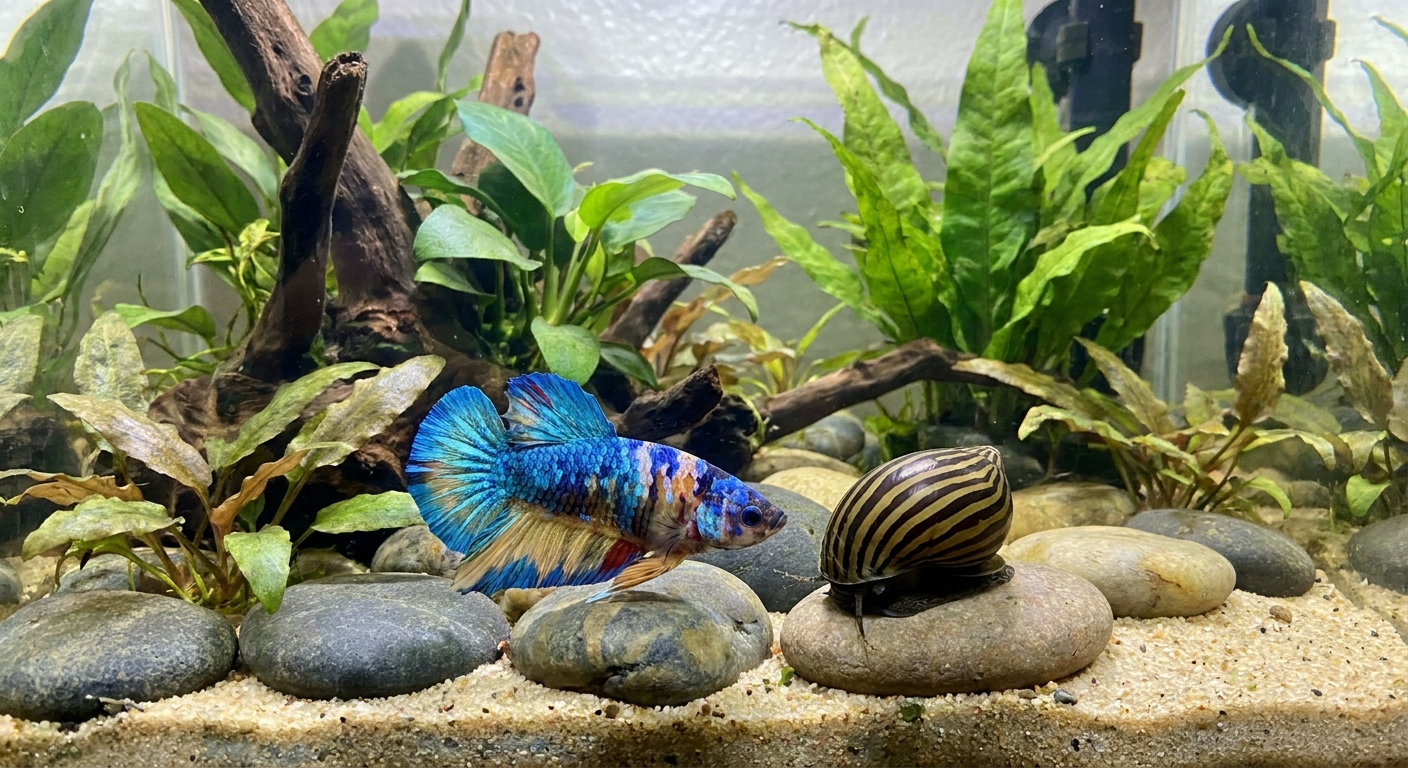
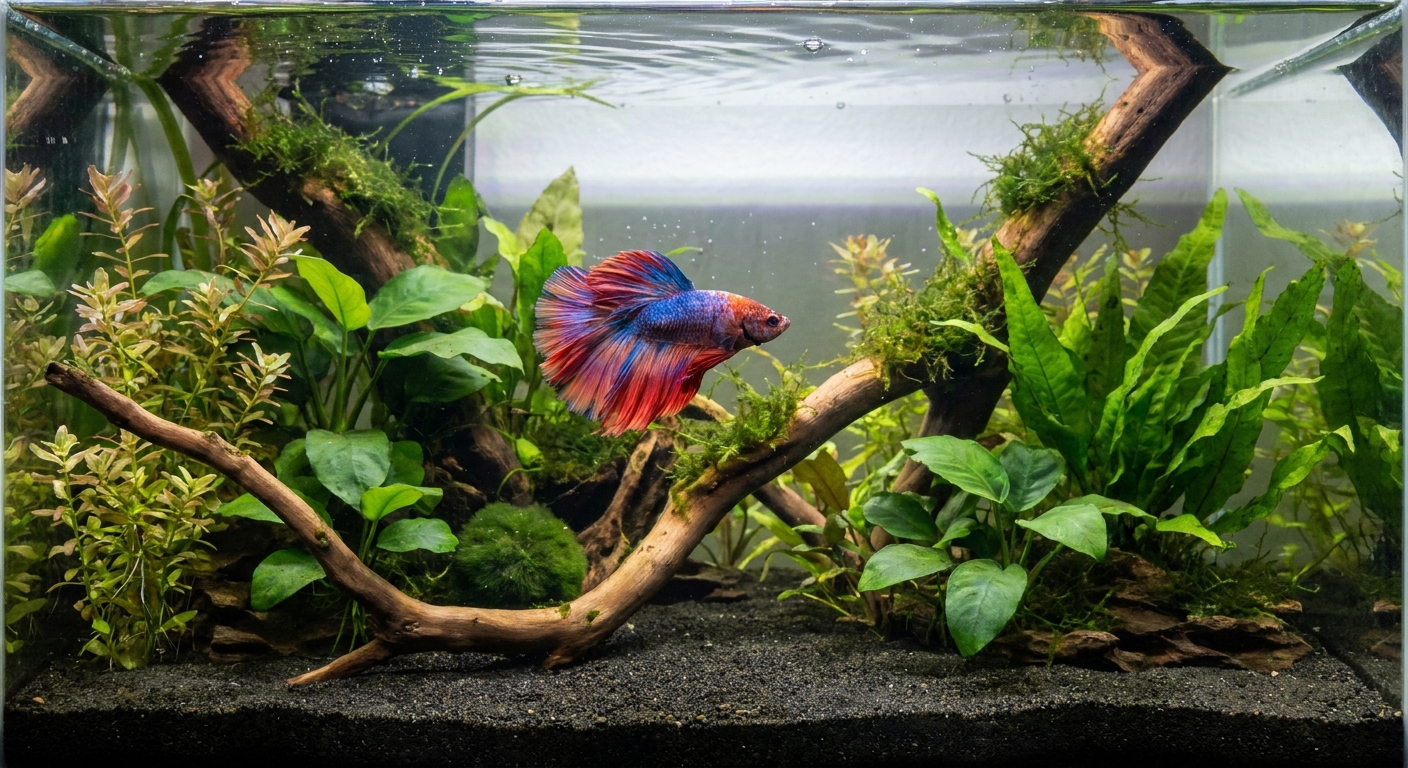
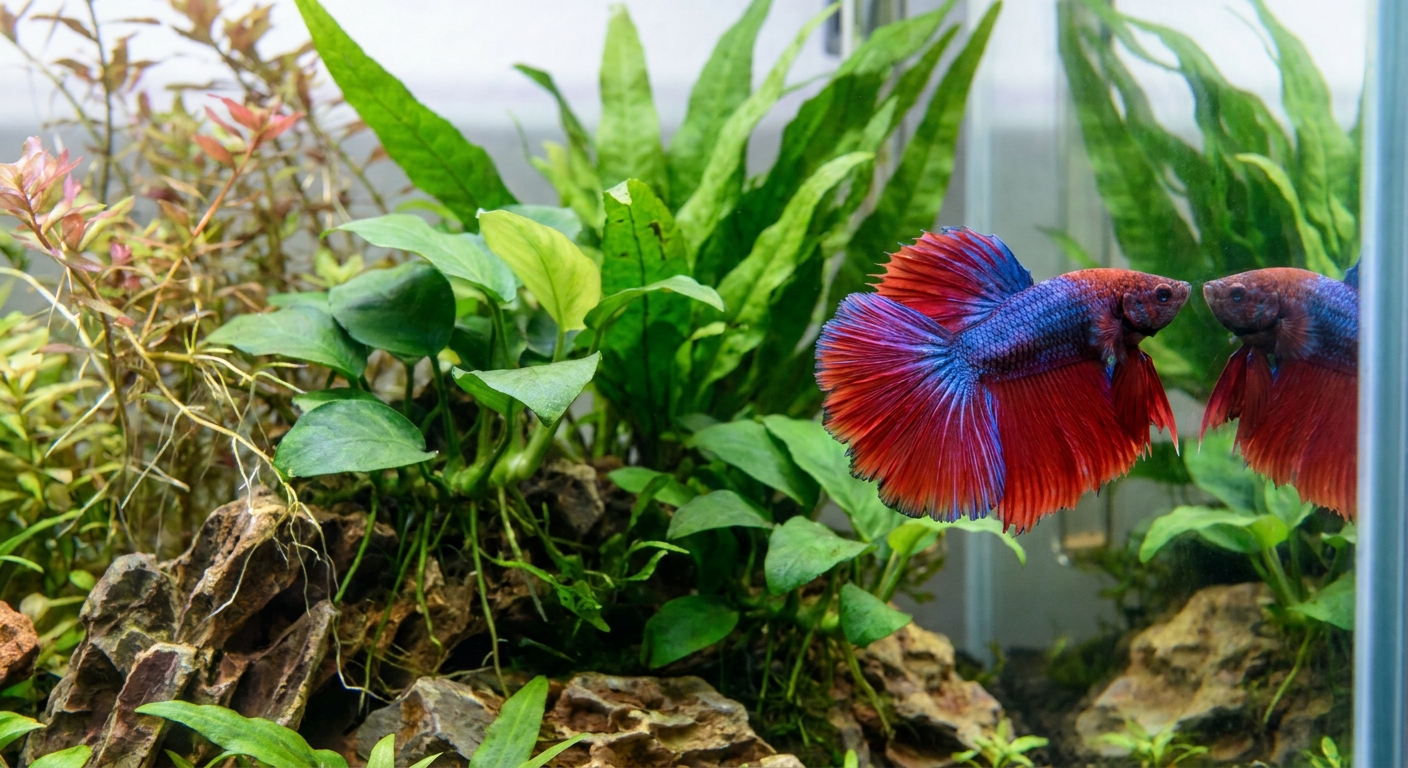
A shrimp-friendly betta tank is usually a planted betta tank. Think “jungle edges,” not “empty showroom.”
- Thick plant clusters (live or silk) so shrimp can duck out of sight.
- Hardscape crevices like shrimp-safe caves, rock gaps, and branching driftwood.
- Leaf litter (like Indian almond leaves) to create hiding pockets and grazing surfaces.
Ideas for safe cover: essential tank decorations for hiding spots and enrichment and live vs silk plants.
Keep filtration gentle and stable
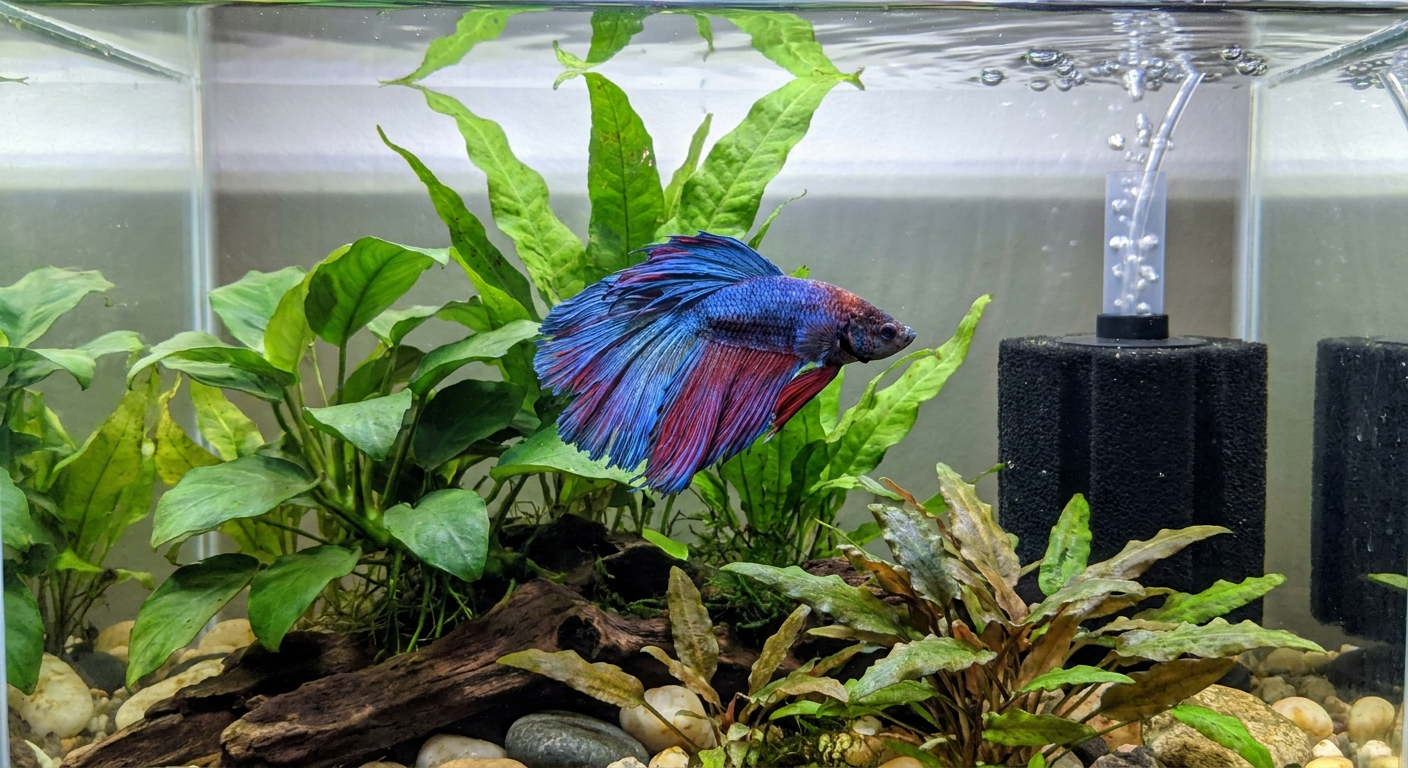
Shrimp dislike being blasted across the tank, and bettas do too. Use a gentle filter flow and keep water clean and consistent.
If you need filter help: choosing the right filter for a betta tank.
Cycle the tank first
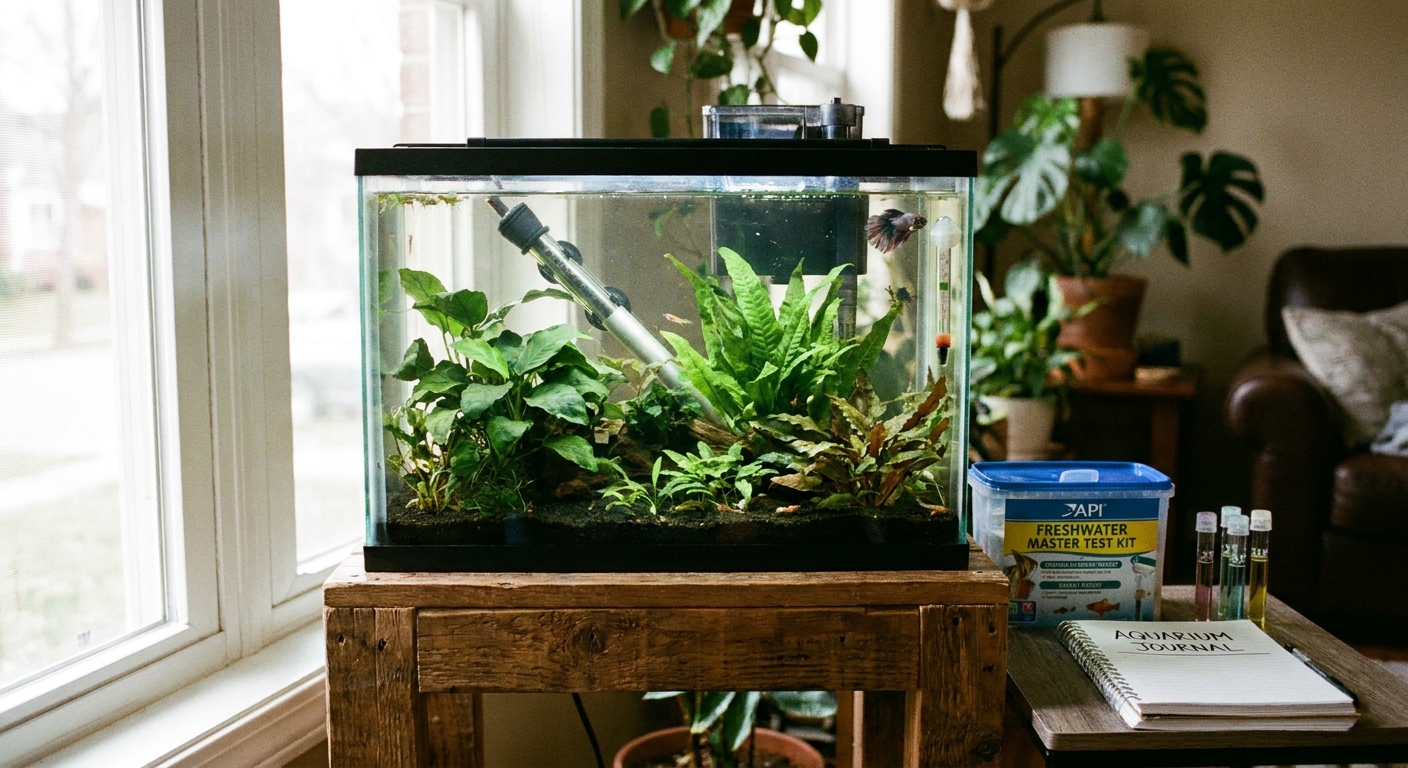
Shrimp are especially sensitive to swings in ammonia and nitrite. A fully cycled aquarium with stable parameters gives you a much better chance of success.
Guide: how to cycle a new betta fish tank.
Before you buy shrimp
- Stable, warm water matters: both bettas and shrimp do best with steady temperature and steady water quality. Shrimp are less forgiving of sudden swings.
- Minerals matter for molts: shrimp need enough minerals in the water to molt cleanly. If your water is very soft, shrimp may struggle long term even if your betta is fine.
- Watch out for copper: many fish medications contain copper, which can kill shrimp and other invertebrates. Always read labels before treating a betta in a shrimp tank.
- Expect molting vulnerability: right after a molt, shrimp are softer and hide more. Bettas may take advantage of that moment.
- Expect baby shrimp losses: if you add cherries and they breed, many bettas will eat the tiny shrimplets.
- Expect some risk no matter what: even a peaceful betta can have a “today I hunt” mood.
If losing shrimp would be upsetting, it may be better to keep shrimp in their own tank instead of treating them as tank mates.
How to introduce shrimp
Step 1: Rearrange the tank first
Right before introduction, do a small re-scape. Shift a piece of wood, move a cave, thicken a plant cluster. This reduces territorial “this is my spot” behavior and gives shrimp immediate shelter options.
Step 2: Feed your betta first
A hungry betta is a bold betta. Offer a normal meal, then introduce shrimp after your betta has eaten. Keep portions reasonable so water quality stays strong.
Feeding basics: how much and how often to feed a betta fish.
Step 3: Acclimate slowly
Temperature match first, then do a slow acclimation so shrimp are not shocked by differences in water parameters. If you can, use drip acclimation for extra gentleness, since shrimp are sensitive to sudden changes.
Step 4: Release shrimp into cover
Do not drop shrimp into open water. Use a net or cup to gently place them into dense plants, under wood, or near leaf litter so their first move is “hide,” not “swim across the stage.”
Step 5: Watch the first hour and week
Curiosity is normal. Chasing is a warning. Biting and repeated hunting passes means the pairing may not be compatible.
Normal vs trouble
Normal curiosity
- Betta follows a shrimp briefly, then loses interest
- Short flare, then calm swimming
- Shrimp keep grazing and return to cover casually
Trouble signs
- Relentless stalking and repeated attack attempts
- Shrimp pinned in corners or trapped at the surface
- Betta patrolling the same plant clump, waiting to strike
- Shrimp vanish rapidly, especially within 24 to 72 hours
If your betta seems on edge, it helps to review environmental stressors that can increase aggression: 7 signs of stress in betta fish and how to fix their environment.
How many shrimp?
There is no magic number, but a few conservative starting points can help. More shrimp can sometimes help a few establish (especially in heavy cover), but it also increases encounters, and it adds to your bioload. Think “reasonable group,” not “shrimp flood.”
- 5-gallon tank: shrimp with a betta is a tougher setup. If you try it, keep numbers small and cover heavy.
- 10-gallon or larger, planted: this is where shrimp have much better odds.
- Amano shrimp: often 2 to 5 in a planted 10-gallon or larger is a practical range.
- Ghost shrimp: consider 3 to 6 in 10 gallons if your betta is calm, and monitor closely for hunting and any fin-nipping look-alikes.
- Cherry shrimp: if you attempt them, starting with 6 to 12 in a heavily planted 10-gallon or larger can give a few a chance to settle, but expect losses.
Whatever you choose, make sure the tank is stable and maintenance is consistent. Stable water is “invisible safety.”
Maintenance help: betta tank cleaning routine and water change schedule.
Shrimp feeding tips
In a betta tank, shrimp often do not get enough to eat if they are too shy to come out. A well-fed shrimp is less likely to wander into danger searching for food.
- Feed after lights dim so shrimp can forage when the betta is calmer.
- Use tiny portions to avoid fouling water.
- Provide grazing surfaces like plant leaves, wood, and leaf litter.
If you notice your betta getting pushy at mealtime or gulping extra food, take a moment to check feeding habits: signs you are overfeeding your betta fish.
If your betta attacks shrimp
If attacks are persistent, it is kinder to separate than to hope it “settles down.”
- Add more cover immediately (extra plant clumps, additional caves) to reduce line of sight.
- Dim the lights for the day and keep the environment calm.
- Prepare a backup plan for shrimp housing if hunting continues.
- Be careful with aquarium salt: dosing a display tank with salt can be hard on shrimp and other invertebrates. Short-term dips and targeted treatments are a different situation, but do not treat salt like a general calming tool.
- Medication warning: avoid copper-containing meds in any tank that holds shrimp.
If you are ever unsure about salt use with bettas in general, this guide can help clarify the difference between common options: aquarium salt vs Epsom salt for bettas.
FAQ
Will a betta eat cherry shrimp?
Many bettas will, especially young shrimp and shrimplets. Dense cover can help some cherries survive, but it is never guaranteed.
Are Amano shrimp safe with bettas?
They are often the most successful shrimp choice with bettas because they are larger and quick, but a determined betta can still harass or injure them.
Can I add shrimp first, then the betta?
Yes, that can help. When shrimp establish hiding routines and grazing routes first, they are less likely to panic and race across open water when the betta arrives.
Do I need a breeding colony for shrimp to survive?
Not necessarily, but numbers and cover matter. In many betta tanks, shrimp do not reproduce successfully because shrimplets are eaten. Plan your setup for adult shrimp survival first.
The happiest outcome
The best betta and shrimp tanks are the ones that feel like a tiny underwater garden: stable water, gentle flow, and so many hiding nooks that shrimp can live their best little scavenger lives without feeling hunted every second.
If you build the “shrimp city” first, you give your betta the chance to be a calm neighbor instead of a skilled snack-seeker. And if your betta still decides shrimp are on the menu, that is not a failure. It is just a reminder that every finned friend has their own personality.