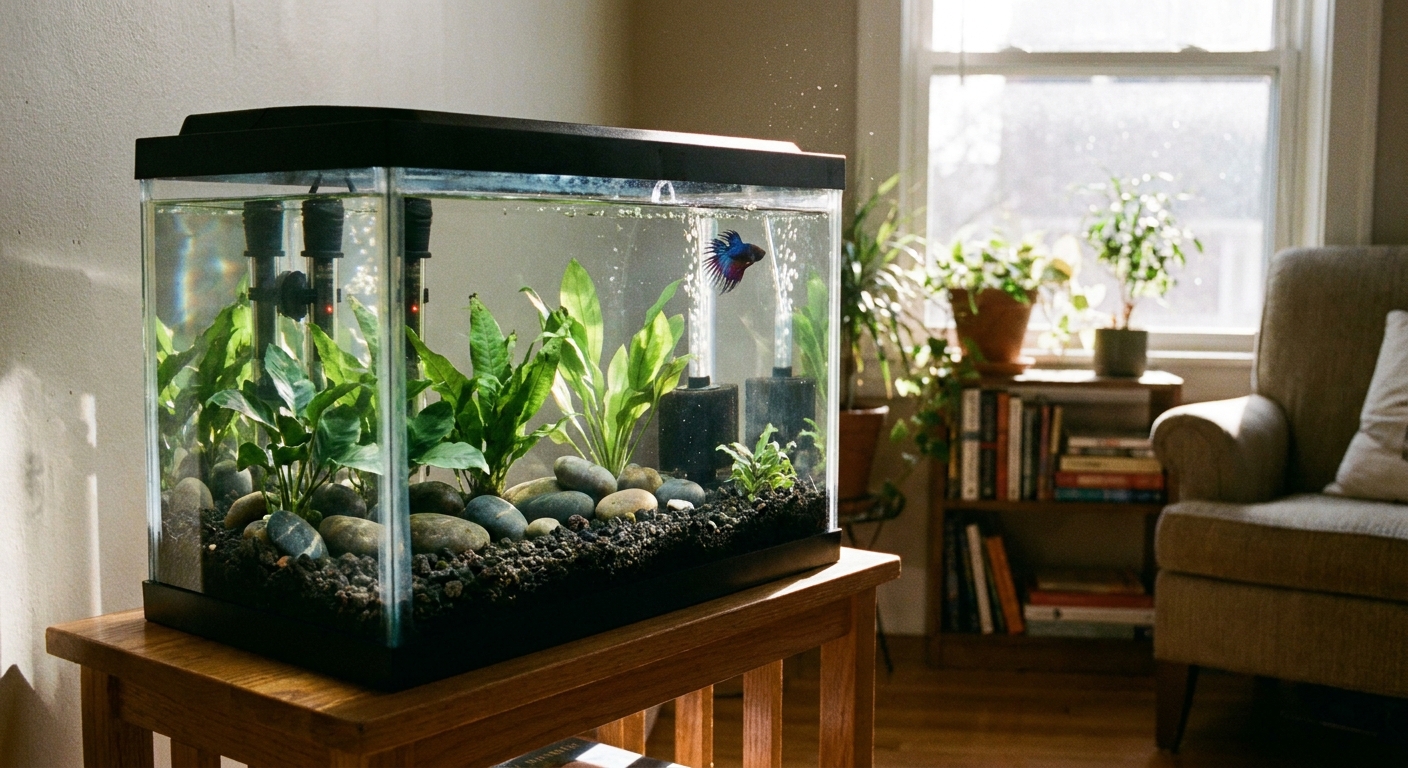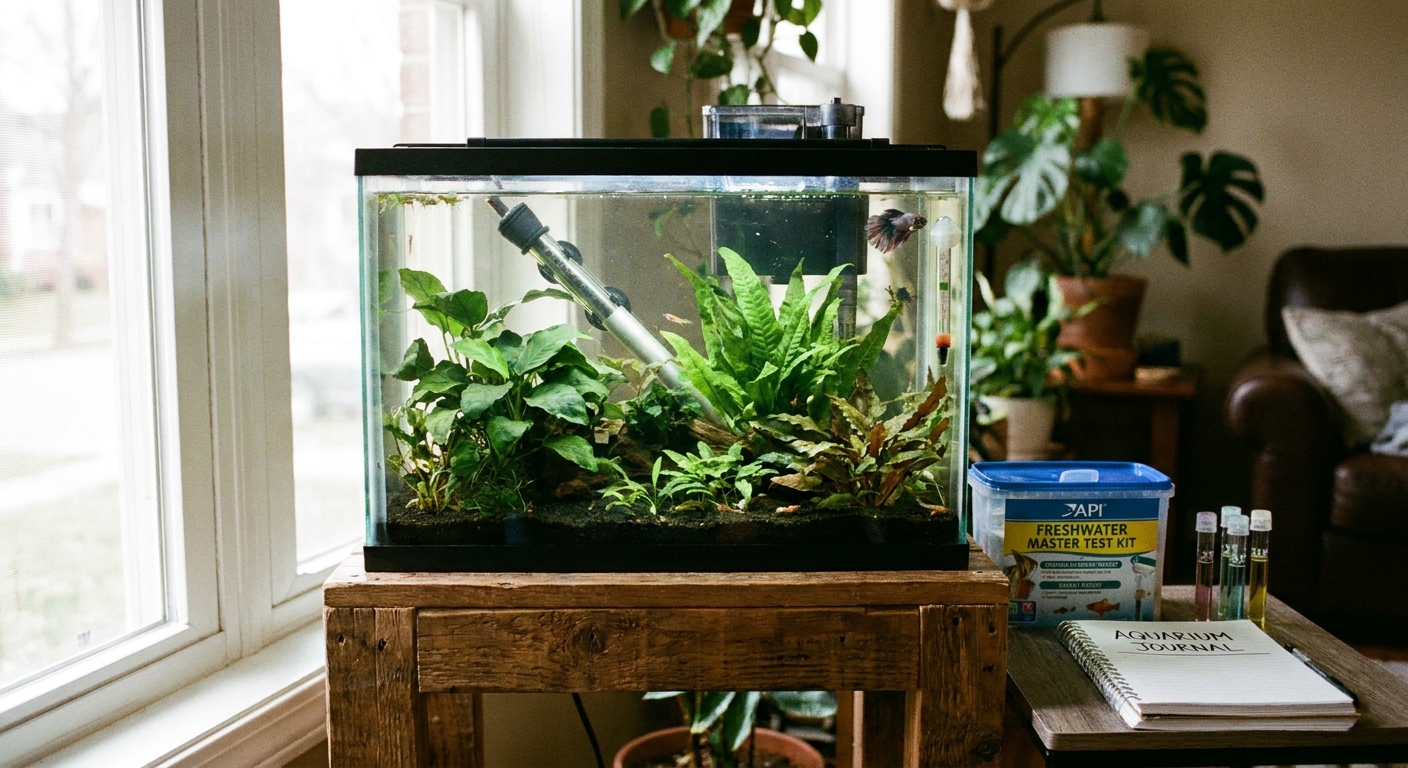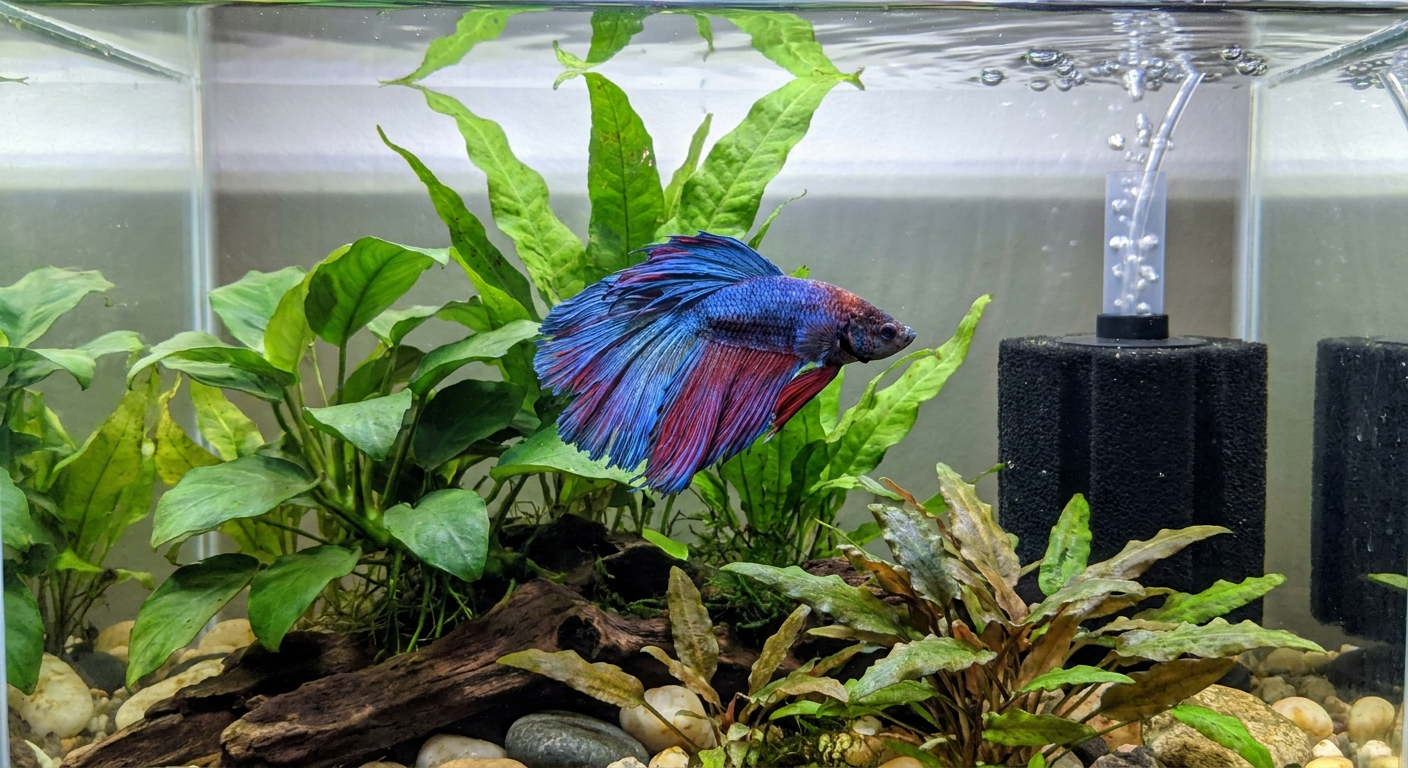

Let’s make your tank the happiest little splash in the house! Substrate seems like a simple style choice, but for bettas it affects fin safety, water quality, plant health, and how easy your weekly cleaning feels. The safest pick is the one that stays clean, stays stable, and never turns into a scratchy, trap-the-gunk mess.
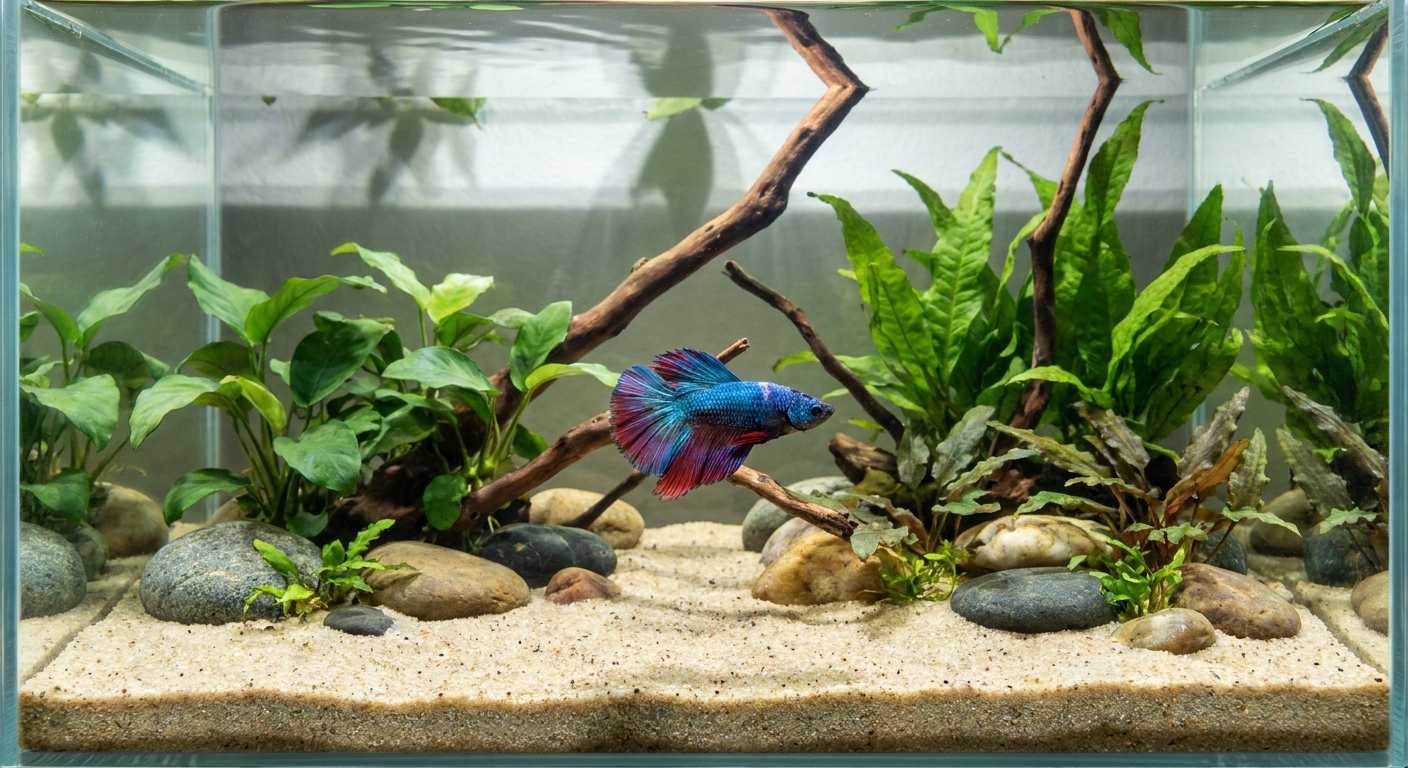
Quick answer: what is safest for most bettas?
If the goal is maximum fin safety and easy maintenance, most betta keepers do best with one of these:
- Fine, smooth sand (gentle on fins, great for bottom lounging, easy to spot clean when kept shallow and maintained)
- Smooth, rounded small gravel (easier to vacuum than sand, good all-around choice when you want simple upkeep)
Planted aquarium soil can be wonderful for a lush, jungle-style home, but it needs more planning so it does not cloud water or kick up debris during cleaning. For many betta tanks, soil works best when it is capped with sand.
For more cozy habitat ideas, swim over to Tank Setup & Environment.
What “safe substrate” means for a betta
Bettas are curious explorers with flowing fins and delicate scales, so “safe” is less about what looks pretty and more about what protects their bodies and keeps your water conditions steady.
- Fin-friendly texture: Avoid sharp, jagged, or glass-like pieces that can snag fins.
- Cleanability: The safest substrate is one you can keep clean without constant disruption.
- Doesn’t trap waste: If food and poop disappear deep into the bed, it can fuel detritus buildup and water-quality issues over time, especially if parts of the bed get compacted or neglected.
- Stable chemistry: Most betta tanks do best with stable pH and hardness rather than big swings.
- Plant compatibility: Healthy plants help buffer a tank, but plant-focused substrates can complicate maintenance if you are not ready for them.
Gravel for betta tanks
Gravel is a classic choice because it is simple to vacuum and forgiving of beginner mistakes. The key is picking the right kind of gravel.
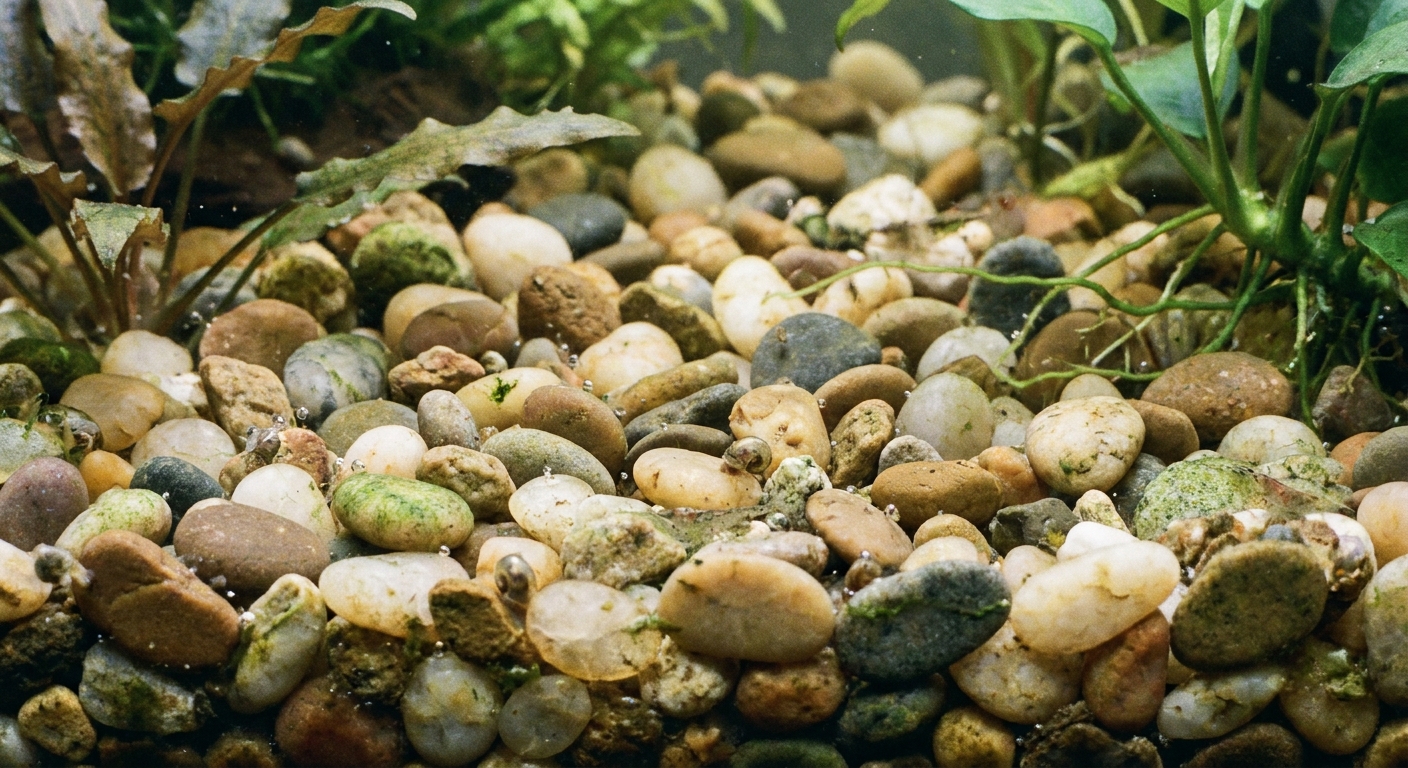
Best gravel traits
- Rounded and smooth pieces, not crushed rock with sharp edges
- Small to medium size so debris does not vanish too far down
- Inert (does not alter pH) unless you specifically want a buffering substrate
Pros
- Easiest to clean with a siphon because waste lifts out from between stones
- Stable and less prone to compaction than sand
- Great for many plants when paired with root tabs and regular fertilization (if desired)
Cons
- Food can slip between stones and rot if feeding is heavy or cleanup is inconsistent
- Some gravels are sharp, especially cheap crushed varieties. Always inspect by hand before adding.
How deep to use
For most betta tanks, 1 to 2 inches of gravel is plenty. Deeper beds can hold more detritus unless your cleaning routine is very consistent.
Sand for betta tanks
Sand is often the most fin-gentle option. Bettas do not burrow like some fish, but they love to rest near the bottom and weave through low plants. Soft sand keeps that lounging zone comfy.
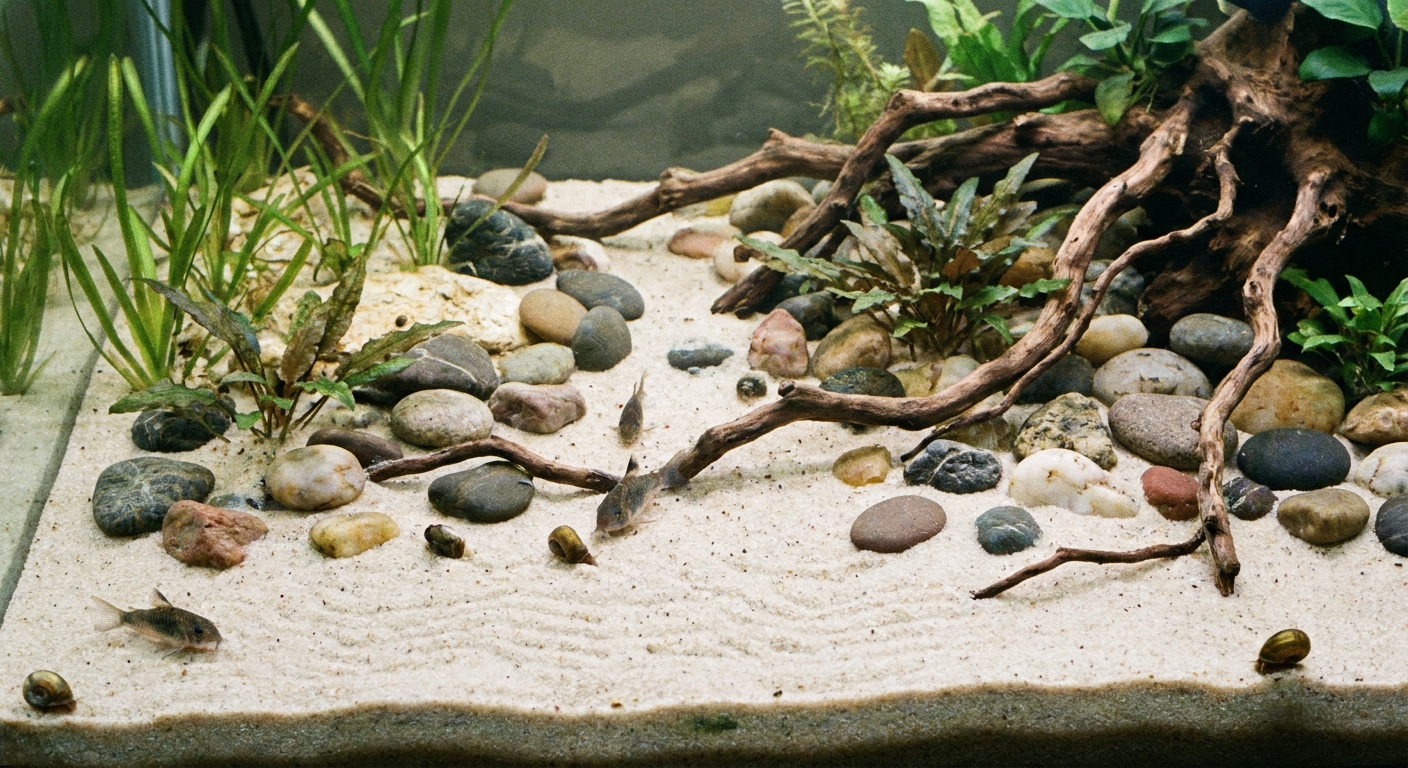
Pros
- Very gentle on fins and bellies
- Waste stays on top so you can spot clean easily
- Great look for natural setups and plant-forward aquascapes
Cons
- Can compact if it is too deep, limiting oxygen flow in the bed
- Deep, neglected areas can develop low-oxygen zones that smell unpleasant when disturbed. Most shallow sand beds do not have this problem.
- Vacuuming technique matters because it is easy to suck sand up the siphon
Sand safety tips that matter
- Keep it shallow: Aim for 0.5 to 1.5 inches. Deeper is possible, but it demands more maintenance planning.
- Aim for fine, not powdery: Super-silty sand clouds easily and can be frustrating in a betta tank that you want crystal clear.
- Rinse thoroughly until rinse water is mostly clear to reduce cloudiness.
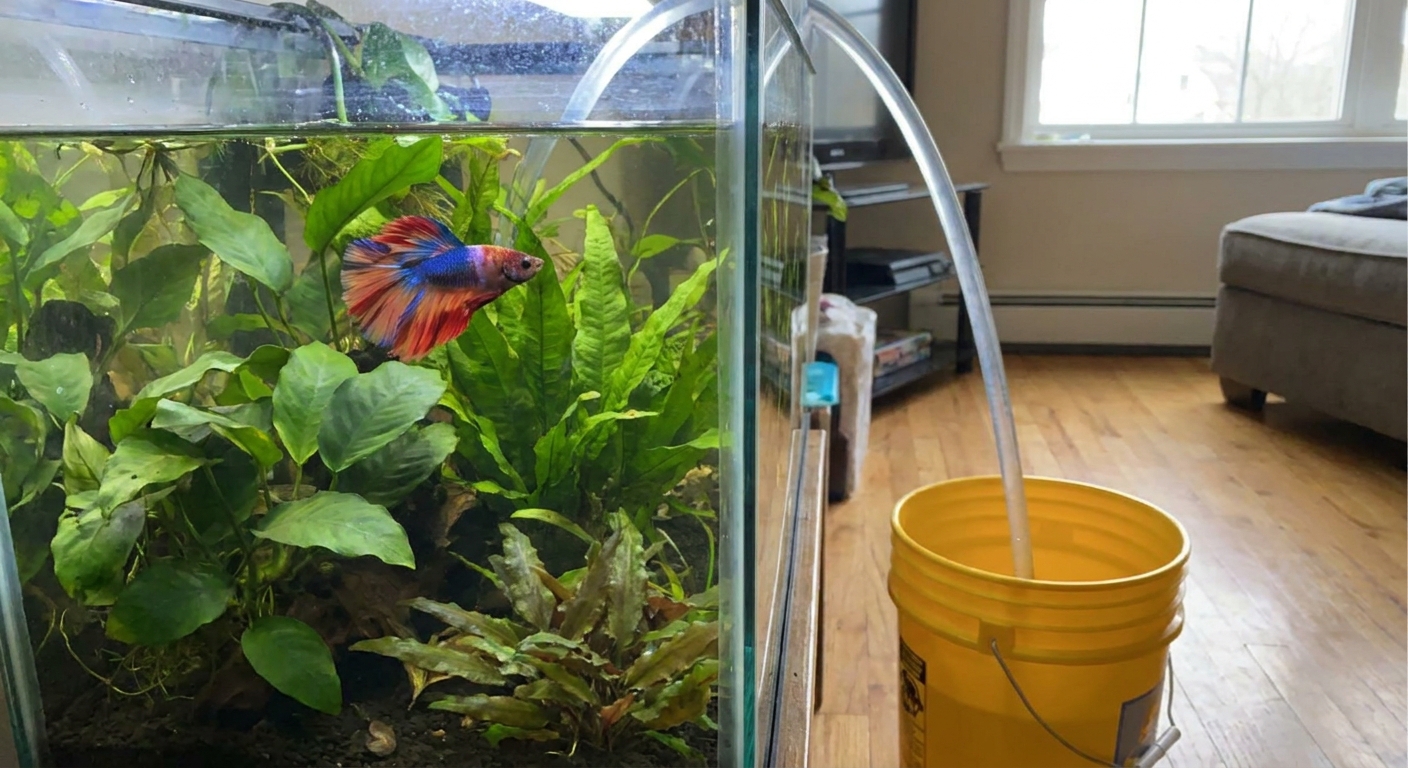
- Use gentle siphoning: Hover the siphon slightly above the surface to lift debris without pulling sand.
- Stir only where appropriate: In open areas without plant roots, lightly swirl the surface during water changes to prevent compacted zones. Leave planted sections alone so roots stay happy.
Soil for betta tanks
“Soil” in aquariums usually means planted aquarium soil (often a baked, porous granule), not backyard dirt. It is designed to support lush plant growth by providing nutrients and a root-friendly structure.
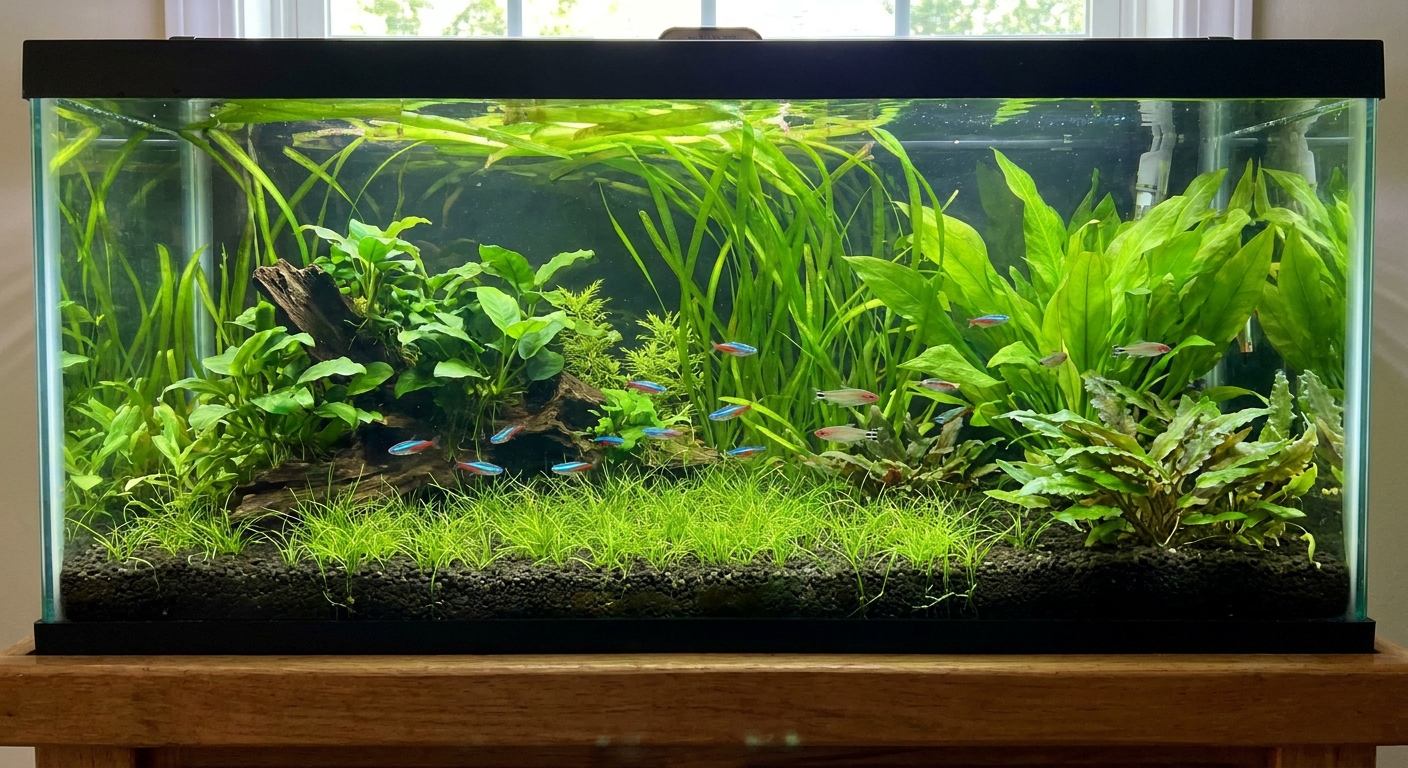
Pros
- Excellent for live plants, especially root feeders
- Supports a natural ecosystem feel with strong plant growth and lots of micro-hiding spots among roots
- Helpful for lower-tech planted tanks where you want nutrients in the base layer
Cons
- Can cloud the water if disturbed during planting or cleaning
- May release nutrients that contribute to algae if lighting and maintenance are not balanced
- Some soils alter pH and hardness, which can be fine, but sudden changes are not friendly to a stressed betta
- Messy if frequently rearranged. Bettas do not mind rescapes, but soil definitely does.
The safest way to use soil with a betta
- Cap it: A thin layer of sand over soil helps keep particles contained and makes cleaning gentler.
- Plant once, then leave it: Plan your layout so you are not uprooting plants every week.
- Go gentle with maintenance: Focus on removing debris from the surface and avoid deep substrate vacuuming that churns soil into the water column.
Substrates to avoid
Some substrates look exciting in the bag but can create avoidable risks for bettas.
- Sharp, angular gravel: If it feels rough in your hand, it can snag fins.
- Dyed gravel that chips: Many dyed gravels are fine, but if you see flaking or sharp paint edges, skip it.
- Large river stones as a full bed: Big gaps collect waste where your siphon cannot reach easily.
- Unknown “dirt” or garden soil: This can contain fertilizers, pesticides, or organics that foul the water. Use aquarium-intended planted substrates instead.
- Crushed coral, aragonite, or limestone gravel: These can raise KH, GH, and pH. They are only a good idea if you are intentionally trying to increase hardness and you are monitoring your parameters.
Choosing based on your goals
If you want the easiest cleaning
Pick smooth gravel. Pair it with a consistent siphon routine and avoid overfeeding. A clean bottom is happy water.
If you want the gentlest feel and a natural look
Pick fine sand and keep it shallow. This is especially cozy for bettas that like to rest near the bottom.
If you want a planted “betta jungle”
Consider planted aquarium soil capped with sand. This gives plants what they need while keeping the tank easier to maintain for a betta-focused home.
If you are setting up a smaller tank
Substrate mistakes show up faster in small volumes because water chemistry shifts more quickly. If you are debating tank size, 5-gallon vs 10-gallon for bettas can help you choose a setup that stays stable and stress-free.
Bare-bottom tanks
You can absolutely keep a betta in a bare-bottom tank, especially if you want super-fast cleanup. To keep it comfy (and reduce glassy reflections), a few little tweaks help a lot:
- Use a dark base under the tank to cut down on reflections and make your betta feel less exposed.
- Add extra “soft” resting spots like broad-leaf plants, mossy clumps, and smooth decor so the tank still feels cozy.
- Stay on top of debris since there is nowhere for it to settle except where you can see it, which is convenient and a little unforgiving.
How to add substrate safely
- Rinse (unless the manufacturer says not to): Gravel and sand usually need thorough rinsing. Some planted soils are meant to be used un-rinsed. Follow the product directions carefully.
- Add slowly: Pour substrate into an empty tank or onto a plate or bowl to reduce dust and impact.
- Fill gently: Pour water onto a plate, plastic bag, or hardscape piece so you do not blast a crater into your base layer.
- Cycle the tank: A safe substrate cannot compensate for an uncycled aquarium. Stability matters most.
Cleaning tips by type
Gravel
- Push the siphon into the gravel and lift slightly to let debris tumble up.
- Clean a different section each week rather than tearing up the whole bed every time.
Sand
- Hover the siphon just above the surface and “skim” debris off the top.
- In open, unplanted areas, gently swirl just the surface to keep it from compacting.
Soil (and soil with a cap)
- Do not deep-vacuum. Focus on surface debris removal.
- Trim plants and remove dead leaves promptly so organics do not rot in the bed.
FAQ
Can gravel hurt a betta’s fins?
It can if it is sharp or jagged. Smooth, rounded gravel is usually fine. If a piece feels rough in your fingers, it is not a great fin neighbor.
Is sand too messy for beginners?
Sand is beginner-friendly if you keep it shallow and adjust your siphon technique. The biggest “oops” is vacuuming too aggressively and removing half the sand during a water change.
Do bettas need substrate at all?
A tank can run bare-bottom, but substrate helps anchor plants, reduces glare and stress, and adds additional surface area for beneficial bacteria. Most bettas settle in better with a thoughtfully chosen base layer.
Does substrate change pH?
Some do. Many gravels and sands are inert, but certain planted soils and mineral-based substrates can lower pH or affect hardness. Some coral or limestone-based substrates can raise hardness and pH. Stability is the goal, so make changes slowly and monitor parameters any time you switch substrate types.
A calm, comfy bottom line
For a safe, sparkling betta home, choose a substrate that stays smooth, stays clean, and matches your maintenance style. Smooth gravel is the easiest all-around option, fine sand is the gentlest, and aquarium soil shines when plants are the priority, especially with a sand cap. Pick your path, keep it tidy, and your betta will have plenty of cozy places to glide, perch, and show off those gorgeous fins.
Want more habitat-building help? Drift over to Tank Setup & Environment for more Betta Bliss care notes.