
Let’s make your tank the happiest little splash in the house. And yes, that includes those frothy little bubble nests that pop up under a leaf or in a calm corner like a tiny floating cloud.
Bubble nests are one of the most misunderstood betta behaviors. They can be a sweet sign of sexual maturity and comfort, but they are not a gold star guarantee that everything is perfect. And if you never see a nest, that can be totally normal too.
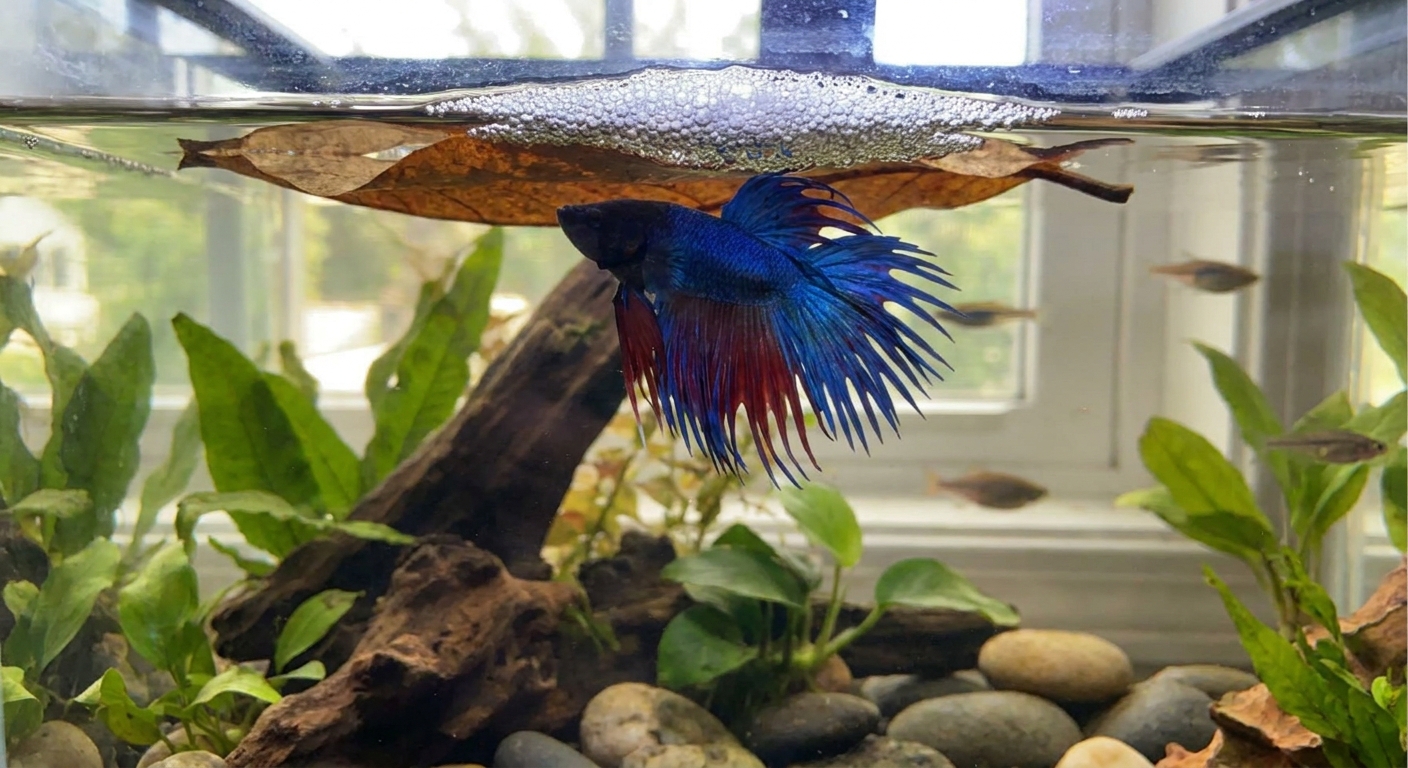
What is a bubble nest?
A bubble nest is a cluster of air bubbles a male betta builds at the water’s surface. He makes each bubble by taking a gulp of air, then releasing it at the surface, coated in mucus-rich secretions. That coating matters.
Quick note before we go deeper: bubble nests can be confused with random aeration bubbles or surface film. A true nest usually looks like a tight cluster in a chosen spot, often anchored under a leaf or in a calm corner, not a trail of identical bubbles coming from a filter output.
On the science side, that mucus film helps:
- Stabilize the bubbles so they stick together instead of popping instantly.
- Help the nest last longer in still water by slowing how quickly the bubbles break apart.
- Create a nursery structure that can hold fertilized eggs and, later, tiny wrigglers until they become free-swimming fry.
This behavior is part of why bettas are called bubble nest builders. In the wild, their shallow habitats can be warm, plant-choked, and low in dissolved oxygen. Bettas also have a labyrinth organ that lets them breathe atmospheric air, so using the surface as a nursery “platform” is a smart evolutionary strategy.
What a bubble nest can mean (and what it can’t)
What it often indicates
- Sexual maturity: Most bubble nesting is driven by reproductive hormones. A male that has reached maturity is more likely to build.
- Comfort with the space: Many bettas build more in calm tanks with stable temperature, gentle flow, and a consistent photoperiod.
- Territory confidence: Nest building can be part of “this is my spot” behavior, especially under a favorite leaf or hide.
What it does not guarantee
- It does not prove your water is perfect. A betta can still build nests even if water parameters are drifting in the wrong direction, including elevated ammonia or nitrite. Behavior is a clue, not a water test.
- It does not mean your betta is happy 24/7. Bettas can nest and still be stressed by too much current, harsh lighting, or lack of cover.
- It does not mean your betta wants tank mates. Nests are about reproduction, not social friendliness.
Also, nesting can show up alongside problems. If your fish is building a nest but also has clamped fins, dull color, hiding, heavy breathing, or a reduced appetite, trust the whole picture, not the bubbles.
If you want the most reliable “science tools” for tank quality, lean on cycling, testing, and a steady routine. If your tank is new or recently changed, visit How to Cycle a New Betta Fish Tank and keep your maintenance consistent with a sensible water change schedule.
Why male bettas build bubble nests
In breeding, the bubble nest is a nursery. After spawning, the male typically gathers eggs and places them into the nest. He guards the nest, repairs bubbles, and retrieves fallen eggs or fry.
In a pet tank with no female present, that instinct can still switch on. Common triggers include:
- Warm, stable water (within a proper betta range)
- Low surface agitation
- Floating cover like plants or broad leaves
- A perceived “secure territory” with hiding spots
- A view of a female betta (even briefly) which can strongly increase nesting behavior
Temperature is a big one because it influences metabolism and hormone signaling. If you are troubleshooting a tank that never seems to settle into a stable rhythm, this guide helps: Betta Tank Temperature and Heater Placement.
Why no bubble nest is not always bad
No nest does not automatically mean “unhappy” or “sick.” Here are very normal reasons you might not see bubbles:
- Your betta is female. Females can make small nests sometimes, but it is far less common and usually much smaller.
- Your betta is young and not yet hormonally driven to nest.
- Your surface is too turbulent. Even a gentle filter can break bubbles apart before you ever notice them.
- There is nothing to anchor a nest. In a very open setup with no floating cover or calm corners, nests have a harder time “sticking” and surviving long enough to spot.
- Your betta simply has a different personality. Some males nest constantly, some rarely do.
- Your betta is stressed or unwell. This is one possibility, but it should be judged alongside other signs, not nests alone.
If you are trying to decide whether you are seeing normal calm behavior or subtle stress, swim over to 7 Signs of Stress in Betta Fish and How to Fix Their Environment.
How to encourage bubble nests safely
Encouraging bubble nests is really about encouraging a calm, stable, enriching environment. These are gentle changes that help many bettas feel secure enough to “decorate” the surface.
1) Calm the surface without removing filtration
Bettas often prefer slower flow, but they still need filtration and clean water.
- Aim the filter output toward the tank wall to soften the current.
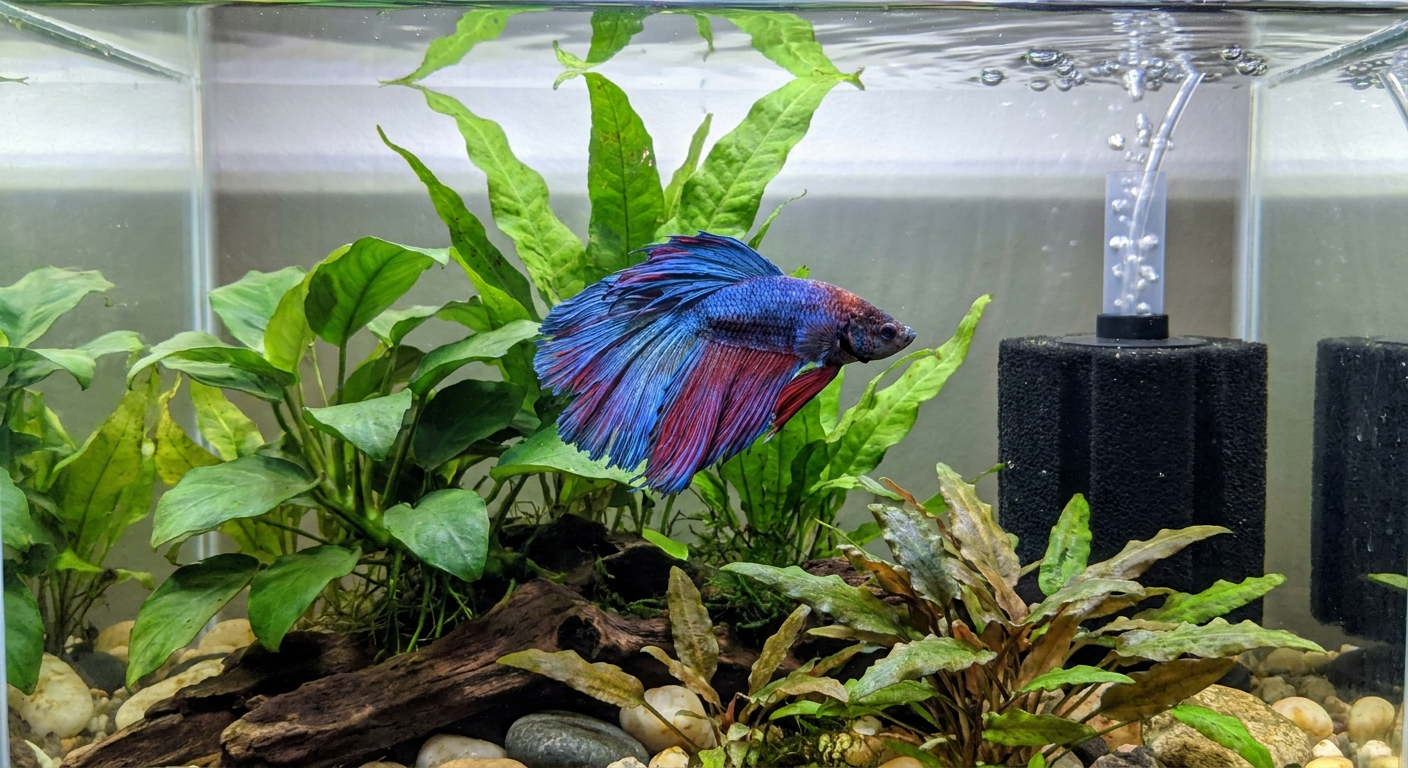
- Use a prefilter sponge (or a sponge filter setup) to reduce turbulence.
- Keep the waterline high so the outflow does not splash down.
If you are choosing or adjusting a filter, this helps you match the flow to a betta’s style: Choosing the Right Filter for a Betta Tank.
2) Add floating cover and “surface anchors”
Bubble nests last longer when they can cling to something. Great options include:
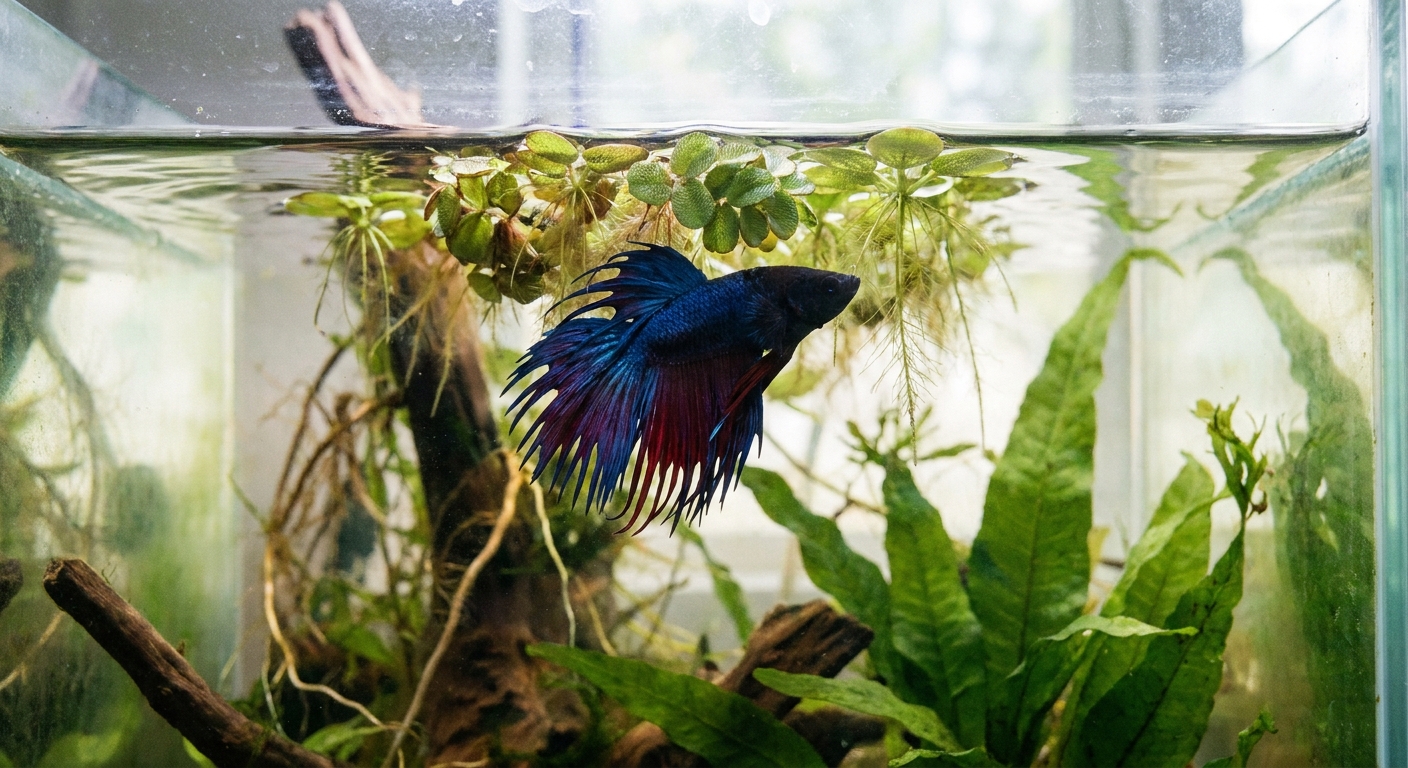
- Floating plants (like water sprite, frogbit, or salvinia)
- Broad-leaf plants that reach the surface
- Botanical leaves that float or sit near the top
For safe, cozy hiding and lounging ideas, see 7 Essential Tank Decorations for Betta Hiding Spots and Enrichment.
Bubble nest myths to ignore
Myth: “A bubble nest means my betta is definitely happy.”
It can mean comfort and maturity, but it is not a full wellness check. Always pair behavior with water testing, appetite, posture, breathing rate, and fin condition.
Myth: “If my betta never makes a nest, something is wrong.”
Sometimes nothing is wrong. Focus on the basics: stable heat, clean water, gentle flow, cover, and a good diet.
Myth: “I should keep the nest forever and never disturb it.”
In a non-breeding tank, the nest is not sacred. During maintenance it may break. Many males rebuild quickly if the environment suits them.
Should you remove a bubble nest?
Usually, no. A bubble nest is harmless and can be fun enrichment for your betta.
Remove it only if:
- You need to do tank maintenance and it is in the way (totally fine).
- It is trapping debris in a dirty surface film (a sign the tank needs a better routine, not that nests are bad).
- You are medicating and need surface access or increased agitation for oxygenation depending on the treatment instructions.
If you feel like you are constantly battling film, waste, or cloudy water, tightening your routine can help more than chasing bubbles. This guide is a steady compass: Betta Tank Cleaning Routine and Water Change Schedule.
Quick checklist
- Warm, stable temp and a reliable heater setup
- Gentle surface movement, not splashing or churning
- Floating cover or a broad leaf near the top
- Plenty of hides so your betta feels secure
- Good nutrition and a consistent day-night cycle
If you want to fine-tune the tank’s comfort cues, dialing in lighting can make a surprisingly big difference: Betta Fish Lighting Requirements.
FAQ
Do female bettas make bubble nests?
Sometimes, but it is uncommon and usually smaller. Female bubble nests can happen, but they are not as consistent or as strongly tied to breeding behavior as they are in males.
My betta made a bubble nest and then stopped. Should I worry?
Not automatically. Changes in flow, temperature shifts, lighting changes, or a rearranged tank can interrupt nesting. If you also notice clamped fins, hiding, loss of appetite, rapid breathing, or color dulling, use the stress signs guide to troubleshoot.
Can I encourage bubble nests by showing my betta a female?
It can work, but it can also increase stress. If you try it at all, keep it very brief and watch for flaring, frantic pacing, or exhaustion. Most tanks do best when bubble nests happen naturally from comfort, not constant stimulation.
Are bubble nests related to water bubbles from a filter or air stone?
No. Filter foam and air stone bubbles are just air and water mixing. A bubble nest is built intentionally by your betta and held together with mucus at the surface, often in a specific chosen spot.