
Let’s make your tank the happiest little splash in the house! When it comes to everyday betta meals, the big question pops up fast: pellets or flakes? Both can work, but they behave differently in water, they’re made differently, and some are simply more betta-friendly than others.
This guide will help you choose a nutritious staple, feed the right amount, and avoid the sneaky pitfalls that turn mealtime into a messy, bloated, cloudy-water situation.
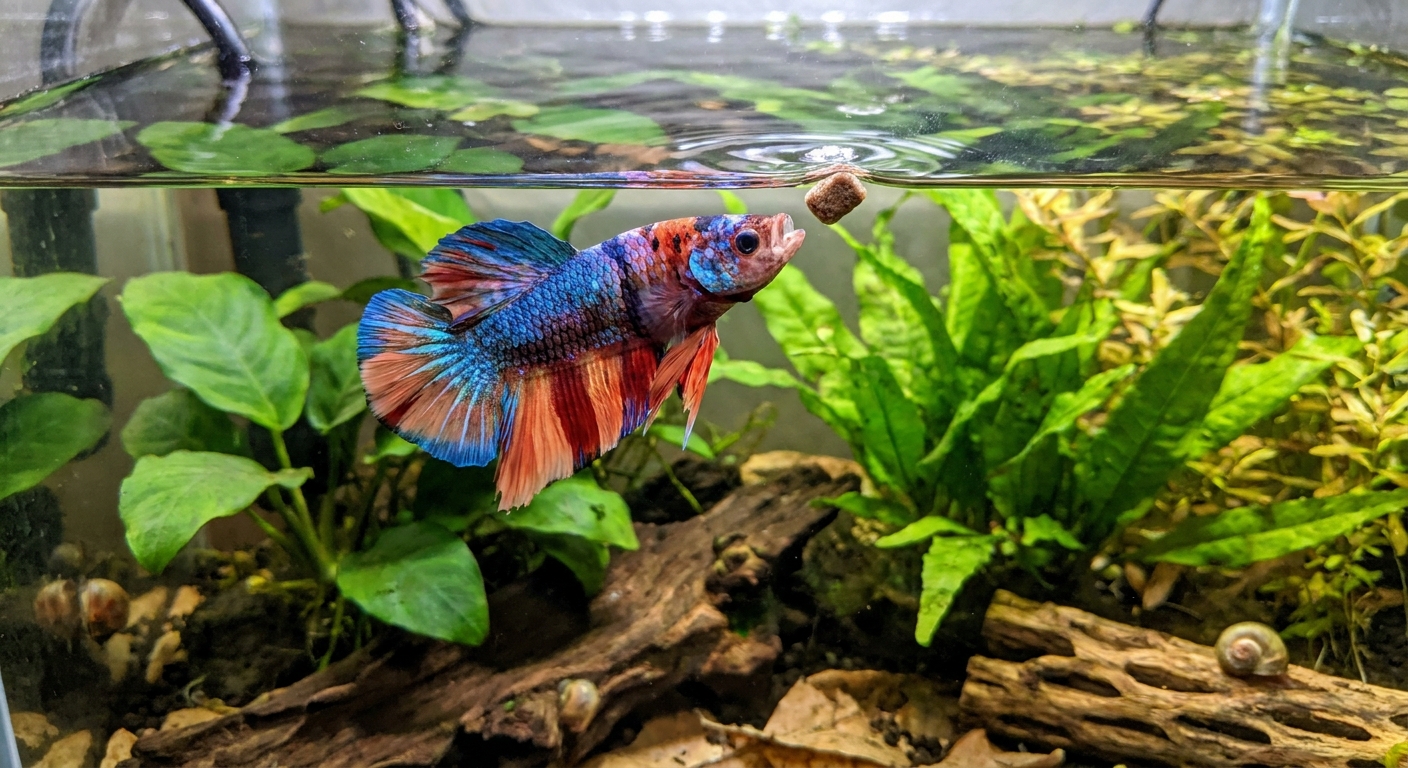
What a betta needs in a staple food
Bettas are primarily insectivores and carnivores in the wild, picking off insect larvae and other tiny critters like small crustaceans and zooplankton. In a home aquarium, a good staple should focus on:
- High protein from aquatic animal sources
- Moderate fat for energy and body condition
- Low fillers that add bulk without much nutrition
- Good digestibility to reduce constipation and bloating risk
Most healthy adult bettas do best with a staple food plus occasional variety foods. If you want a broader overview of feeding routines and variety, you can explore the Diet & Nutrition section.
Pellets: often the best daily staple
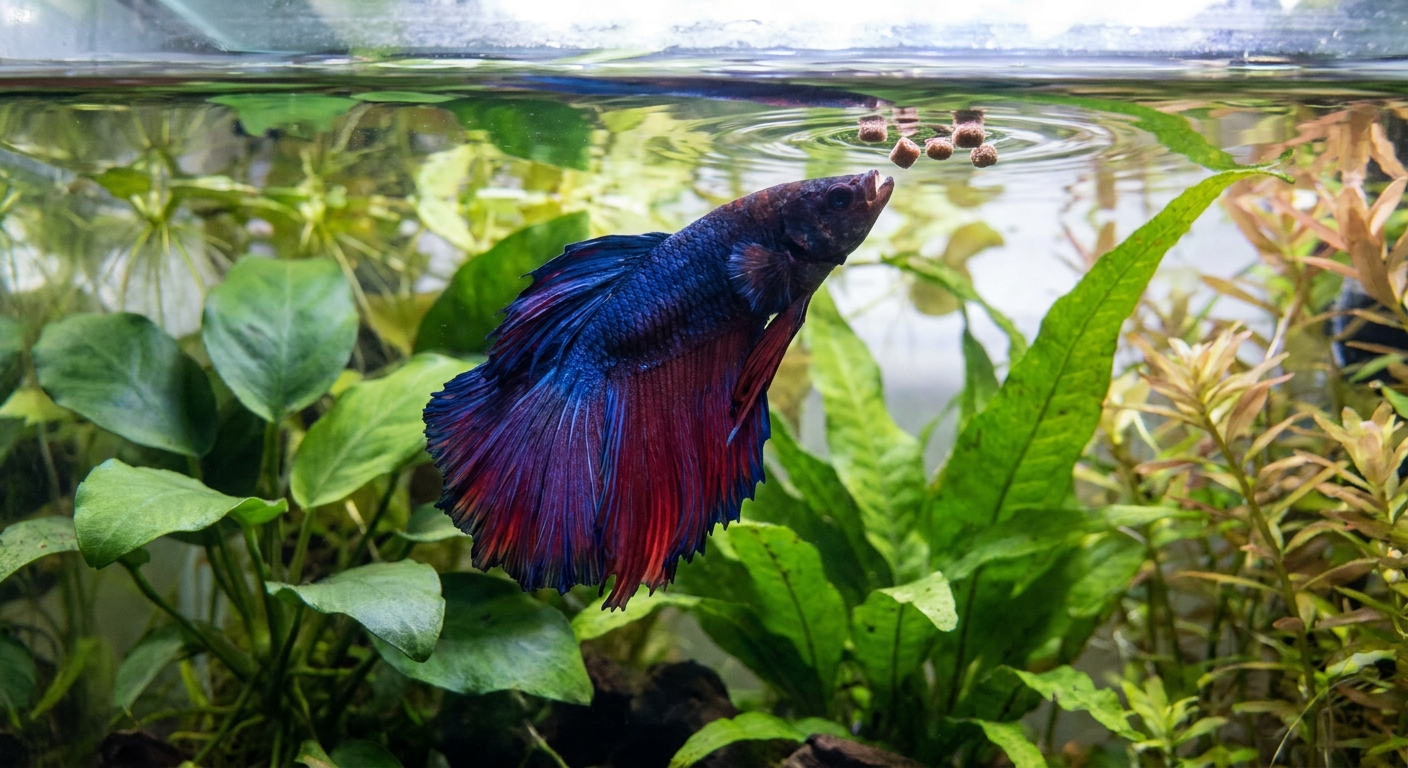
In many tanks, a quality betta pellet is the easiest way to deliver consistent nutrition with less mess. Pellets are typically formulated to be dense, protein-forward, and easy to portion.
Why pellets often win
- Portion control is simpler: each pellet is a measurable bite.
- More consistent nutrition: less crumbling and separation than many flakes.
- Often more betta-specific formulas: many pellet lines are designed for bettas and other labyrinth fish that feed at the surface.
- Less tank snow: fewer tiny fragments drifting into the filter and gravel.
- Works well with auto-feeders: pellets are usually more compatible than flakes for vacations or busy weeks.
Pellet drawbacks to watch for
- Overfeeding is still easy: pellets look small, so it’s tempting to add extra.
- Some pellets swell: this is not automatically “bad,” but when portions are too large, pellets are very dry or oversized, or a betta is gulping quickly, swelling can add to a bloated look.
- Not all pellets are equal: some are packed with wheat and other binders.
How to feed pellets cleanly
- Feed one bite at a time, watching your betta take each piece.
- Remove uneaten pellets within a few minutes (about 1 to 3 minutes) to protect water quality.
- If your betta gulps and looks puffy afterward, pre-soak pellets briefly in a little tank water before feeding. Keep it short so they do not turn to mush.
Flakes: convenient, but easier to overdo
Flake food can absolutely be used, but it’s more variable. Flakes are often made for community tanks, so the formula may not be as betta-centered as you want. Flakes also break apart easily, which can lead to extra waste.
Why flakes can work
- Easy for small mouths, especially for juvenile bettas or bettas that struggle with larger pellets.
- Quick feeding for caretakers who prefer pinches over counting pieces.
- Some betta-specific flakes are decent when ingredients are strong.
- Can tempt picky eaters: the softer texture and tiny pieces can help a reluctant betta get started.
Flake drawbacks to watch for
- Crumbs spread everywhere, making it harder to remove leftovers.
- Air exposure can degrade quality: flakes often go stale faster after frequent opening.
- More filler-heavy options exist: many flakes lean on plant flours and binders.
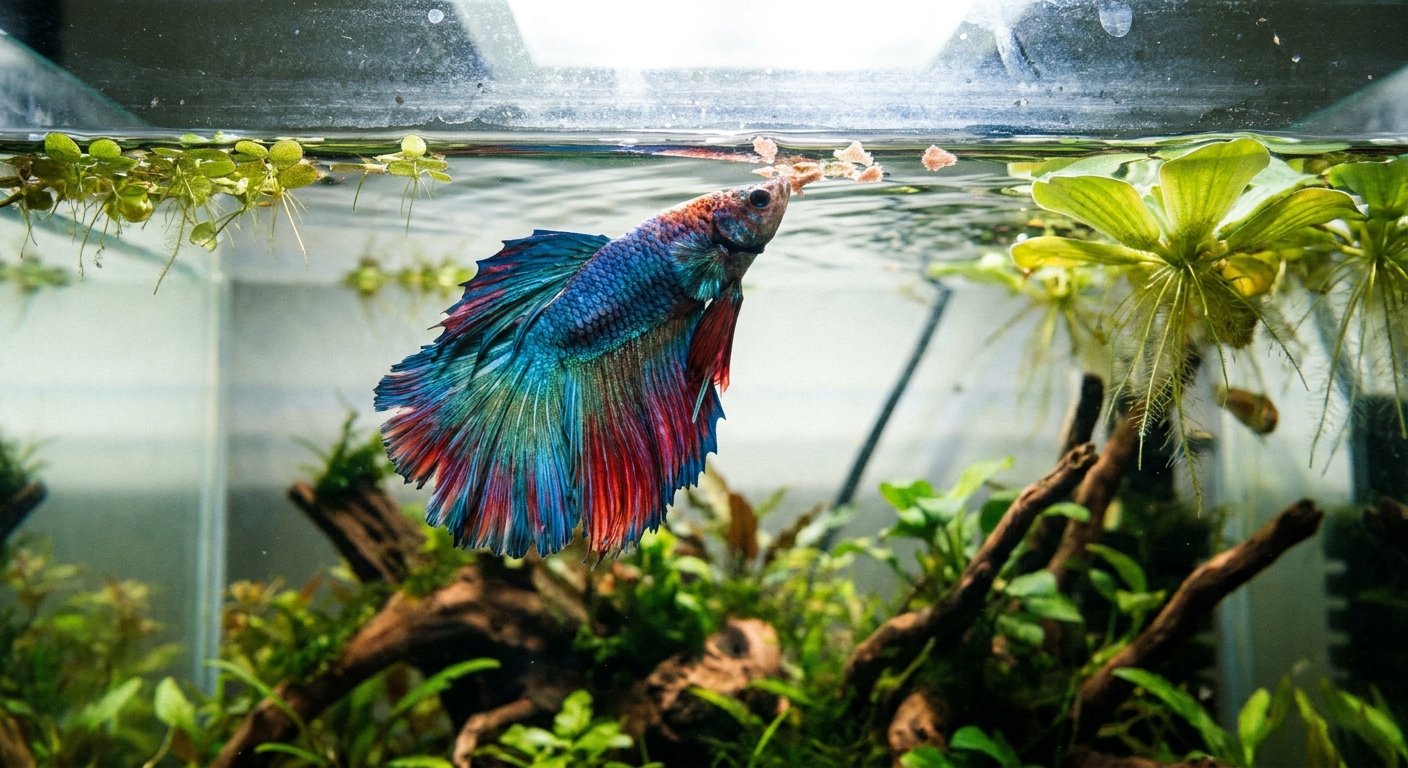
The real decision: ingredients win, not shape
Pellets are often better, but the best staple is the one with a strong formula. A premium flake can beat a low-quality pellet every day of the week.
What to look for on the ingredient list
Ingredients are listed by weight. For bettas, it’s a good sign when the first ingredients are animal-based and specific.
- Better signs: salmon, whole fish, fish meal, shrimp, krill, insect meal (like black soldier fly larvae)
- Be cautious with: wheat, corn, soy, rice, potato, and vague terms like “fish derivatives” listed early
What to look for on the analysis panel
Exact targets vary by brand and life stage, but for many adult bettas, betta-focused foods often land around:
- Protein: commonly around 40 percent or higher in betta-specific staples
- Fat: moderate levels support energy and body condition
- Fiber: not too high, since excess fiber can mean more indigestible material
One quick nuance: nutrition labels are not always apples-to-apples across foods with different moisture levels and processing. Use the label as a clue, but let ingredient quality and your betta’s condition be the final judge.
Color enhancers and additives
Some foods include ingredients like krill, spirulina, or astaxanthin sources that may support coloration. That can be fine, but it should not replace a strong protein base. The best color support is a betta who is warm, unstressed, and well-fed with clean water.
Pellets vs. flakes: quick comparison
| Category | Pellets | Flakes |
|---|---|---|
| Best use | Daily staple for most bettas | Staple if formula is strong, or as a secondary option |
| Mess factor | Usually lower | Often higher due to crumbling |
| Portion control | Easier to count pieces | Harder to measure pinches consistently |
| Best for picky eaters | Good if they already recognize pellets | Often easier to tempt and nibble |
| Best for auto-feeders | Usually better | Often inconsistent |
| Water impact if overfed | Cloudiness and ammonia spikes possible | Cloudiness and debris can happen faster |
| Common pitfall | Feeding too many because they look tiny | Overfeeding plus invisible micro-crumbs |
How much to feed (without overfeeding)
Instead of chasing a perfect number that fits every betta, use a simple routine and adjust based on your fish’s body condition and appetite.
A simple daily approach
- Feed small meals once or twice per day.
- Offer a few bites, then stop while your betta is still interested.
- Remove leftovers promptly.
Juveniles vs. adults
- Juveniles: often do better with smaller meals a bit more frequently, since they are growing and may have tiny mouths.
- Adults: usually thrive on one to two small meals daily, with portions adjusted to keep them active and in good body condition.
Portion tips that help in real tanks
- If using pellets, start with a small countable amount and only increase if your betta stays lean and active.
- If using flakes, crush a little between fingers so you can offer tiny pieces your betta can finish quickly.
- Watch the belly. A slightly rounded belly right after eating is normal. A consistently swollen belly is a signal to reduce portions and review the food choice.
Overfeeding does not just affect digestion. It can also affect water quality, which affects everything. If your tank is new, recently changed, or you suspect the biofilter is not fully established, check out How to Cycle a New Betta Fish Tank.
Adding variety (without turning treats into meals)
A staple food does the heavy lifting, but a little variety can help nutrition and keep your betta interested. A few times per week, you can rotate in small portions of:
- Frozen or live foods like brine shrimp, daphnia, or bloodworms (think “treat,” not “buffet”)
- Freeze-dried treats (best offered sparingly and ideally pre-soaked so they do not act like little sponges)
The goal is simple: treats should supplement a strong staple, not replace it.
When flakes might be the better choice
Pellets are a common go-to, but flakes can be a smart staple or alternate in a few situations:
- Very small or young bettas who struggle with pellet size
- Rescue or stressed bettas that are hesitant to take harder foods at first
- Bettas with repeated gulping issues where carefully portioned flakes are easier to manage
If flakes are used daily, choose a high-quality formula and feed slowly to prevent a blizzard of crumbs.
When pellets might be the better choice
- Most adult bettas who eat confidently at the surface
- Anyone struggling with cloudy water from food dust and leftovers
- Caretakers who want consistent portions without guesswork
Pellets also pair nicely with a calm filter flow so food does not get whipped around the tank. If your filter feels a bit too energetic, this guide can help you match filtration to betta comfort: Choosing the Right Filter for a Betta Tank.
Storage and freshness
Even great food turns into “meh” food if it gets humid, warm, or stale.
- Keep the lid tightly closed and store in a cool, dry spot (not next to steamy tanks or sunny windows).
- Avoid wet fingers in the container. Moisture is the fast lane to clumps and spoilage.
- Replace if it smells off, looks dusty, or starts clumping. If your betta suddenly refuses a food they used to love, freshness is worth questioning.
Staple food checklist
- Betta-specific or carnivore-leaning formula
- Animal protein listed first
- Pellet size appropriate for your betta’s mouth
- Smells fresh and is not powdery or stale
- You can feed it cleanly without lots of leftovers sinking and rotting
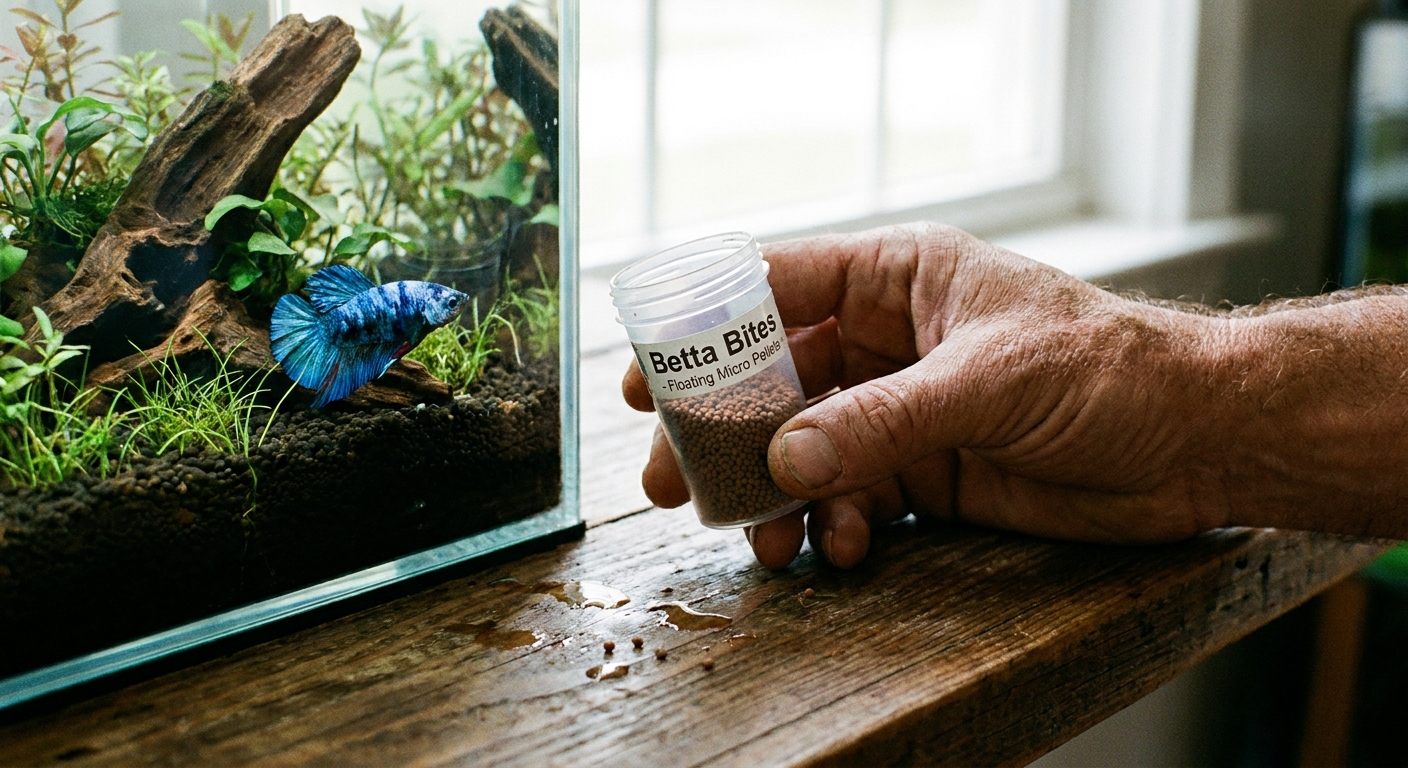
Common feeding problems and quick fixes
My betta spits pellets out
- Try a smaller pellet size.
- Try pre-soaking briefly to soften texture.
- Check for stressors like strong current or low temperature. Bettas digest best when warm. For heater guidance, see Betta Tank Temperature and Heater Placement.
Food sinks before my betta notices
- Feed one piece at a time near your betta.
- Consider a slow-flow area of the tank for feeding.
- Switch to a food that floats longer, or use flakes in tiny pinches.
Bloating or constipation keeps happening
- Reduce portions for several days.
- Consider a short fast of 24 to 48 hours (healthy adult bettas can usually handle this well).
- Add gentle variety like daphnia in small amounts a couple times per week if it agrees with your fish.
- Check ingredients for heavy fillers.
- Make sure temperature is steady and appropriate for bettas, since chill slows digestion.
So, which should you choose?
If choosing one everyday staple for most bettas, a high-quality betta pellet is usually the best starting point. It is easier to portion, often cleaner in the tank, and commonly formulated with betta needs in mind.
But flakes are not automatically “bad.” A high-protein, low-filler flake can be a perfectly good staple, especially for bettas who do better with softer, smaller bites. The winning move is always the same: read the ingredients, feed small portions, and keep the water sparkling.
Want more food and routine tips? Swim over to Diet & Nutrition for more betta meal planning ideas.
FAQ
Can I feed both pellets and flakes?
Yes. Mixing can help prevent picky eating and gives you flexibility. Just keep the total portion small and consistent.
Are floating pellets better than sinking pellets for bettas?
Many bettas prefer surface feeding, so floating pellets are often easier. Sinking foods can work if your betta reliably eats them right away, but leftovers that sink are harder to spot and remove.
Do I need to soak pellets first?
Not always. If your betta eats confidently and does not bloat, dry pellets are usually fine. If your betta tends to gulp, spit, or puff up, a brief soak in tank water can help.
How do I know if I am overfeeding?
Common clues include a consistently swollen belly, leftover food on the bottom, or cloudy water. You may also see ammonia and nitrite rise, but keep in mind that can also happen with an uncycled tank, a disrupted biofilter, or an over-cleaned filter, not just overfeeding.