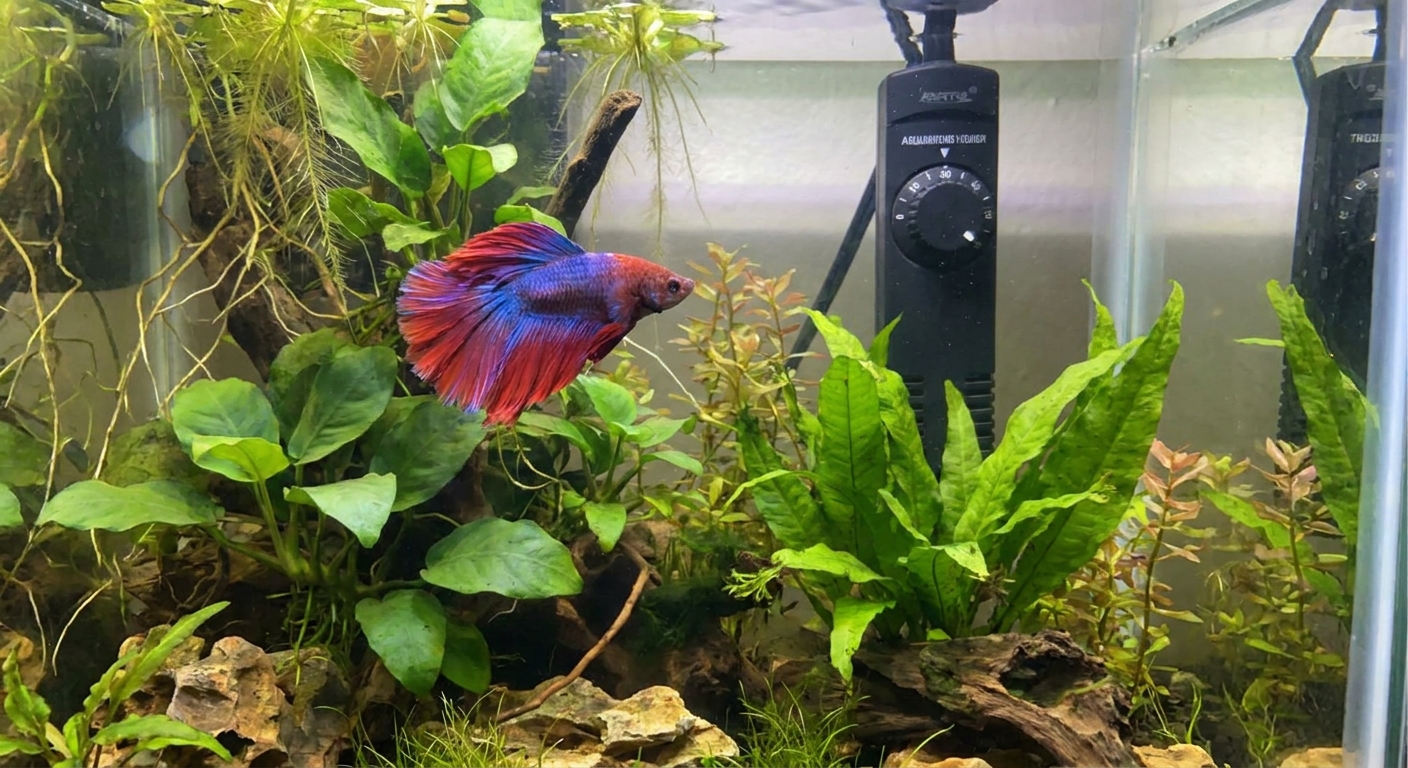

Let’s make your tank the happiest little splash in the house! If your betta is jumping or trying to, it is not “random” behavior. Bettas are built for quick dashes, surface gulps, and exploring shallow waters. In a home aquarium, those same instincts can turn into an accidental escape if the lid and environment are not working with your fish.
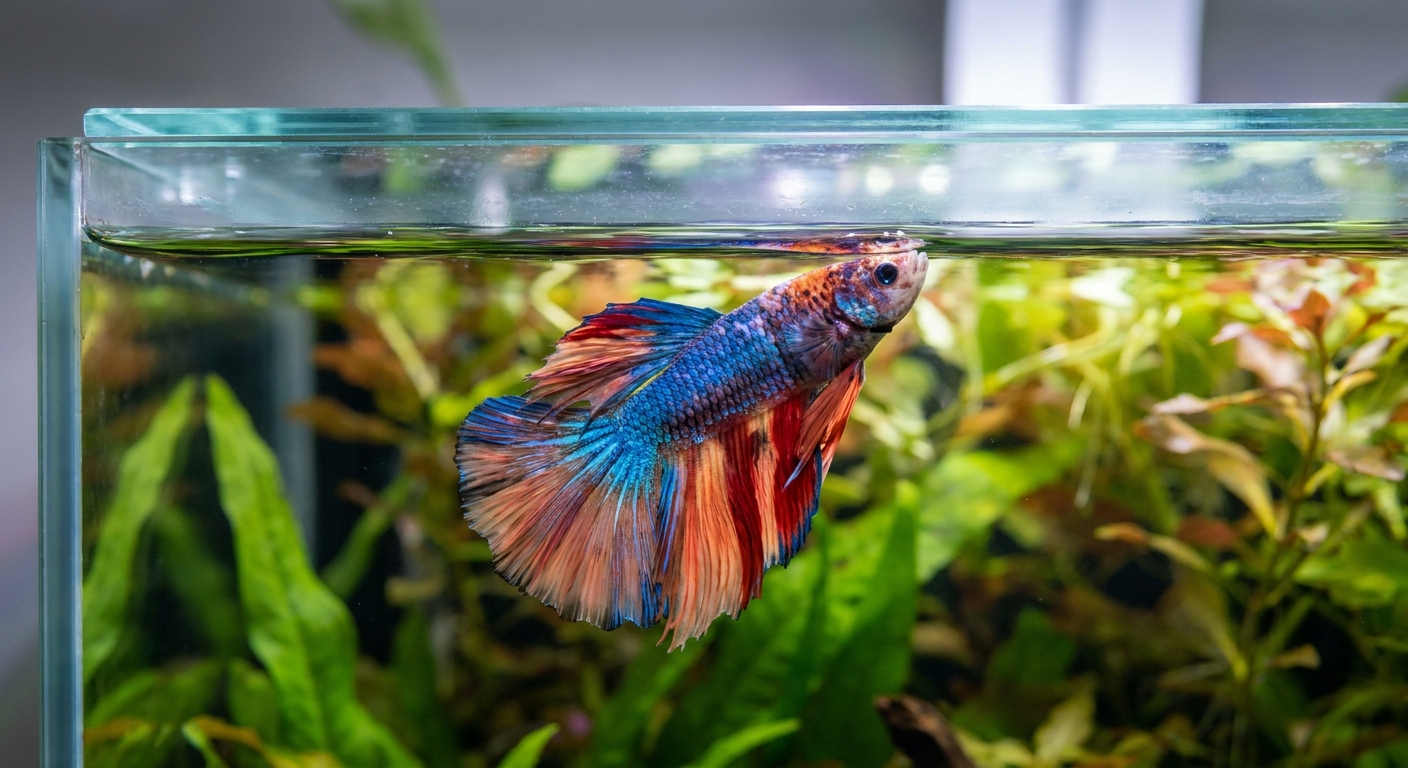
Do betta fish jump naturally?
Yes. Jumping is normal betta hardware.
Wild bettas often live in shallow, warm waters like rice paddies, ditches, and slow streams. Those habitats change fast with rain and drought. A fish that can launch itself over a low barrier, slip into a new puddle, or escape a predator gets a survival advantage. Bettas are also labyrinth fish, which means they breathe air at the surface. They are comfortable near the top of the water, which makes surface launches more likely.
In other words, your betta is not being “bad”. They are being a betta.
Common reasons a betta jumps
Most jumping falls into two categories: exploration plus opportunity, or discomfort plus urgency. Here are the most common triggers.
1) The tank is open, and the surface is easy to launch from
An uncovered tank is the biggest risk factor. Even a calm betta may jump once in months, and that is all it takes.
2) Water quality is irritating or unsafe
If the water is irritating your betta’s gills or skin, they may look for relief. Ammonia and nitrite are the classic culprits, but high nitrate, low oxygen, or a sudden parameter swing can also contribute to stress and frantic surface behavior.
If your betta is jumping plus doing any of these, treat it like an environment problem first:
- Gasping at the surface more than usual
- Clamped fins
- Rapid gill movement
- Glass surfing (pacing along the sides)
- Lethargy or sudden hiding
If your tank is new or recently changed, check your cycling basics here: How to Cycle a New Betta Fish Tank.
3) Temperature stress
Bettas are tropical fish, and temperature swings can make them restless and stressed.
- Target range: about 78 to 80°F (25.5 to 26.5°C).
- Acceptable range for many setups: roughly 76 to 82°F (24.5 to 28°C), as long as it is stable.
Water that is too cool slows them down and compromises immunity. Water that is too warm reduces dissolved oxygen and raises metabolic demand, which can make a fish edgy.
To dial this in, see: Betta Tank Temperature and Heater Placement.
4) Strong current or surface agitation
A betta that is constantly fighting the flow may seek calmer water. If the filter output churns the surface hard, a fish may keep popping up, riding the turbulence, and eventually launch out.
Need a betta-friendly flow plan? Start here: Choosing the Right Filter for a Betta Tank.
5) Stress, boredom, or territorial arousal
Bettas are curious, smart little swimmers. A bare tank with nowhere to rest near the surface can make them pace and roam. On the flip side, constant stimulation can also rile them up:
- A mirror left too long
- Seeing another betta or a brightly colored fish across the room
- A tank mate that nips or crowds the surface
If you suspect stress, this guide helps you read the clues: 7 Signs of Stress in Betta Fish and How to Fix Their Environment.
6) Chasing food at the surface
Some bettas leap when food hits the top, especially if feeding is splashy or the fish is overexcited. This is more likely if the waterline is high and the tank is uncovered.
For calmer feeding habits, see: How Much and How Often to Feed a Betta Fish.
How to stop a betta from jumping
Jump prevention is a combination of physical security and making the tank feel safe and stable. Here is the checklist that works in real homes.
1) Use a tight-fitting lid, every day
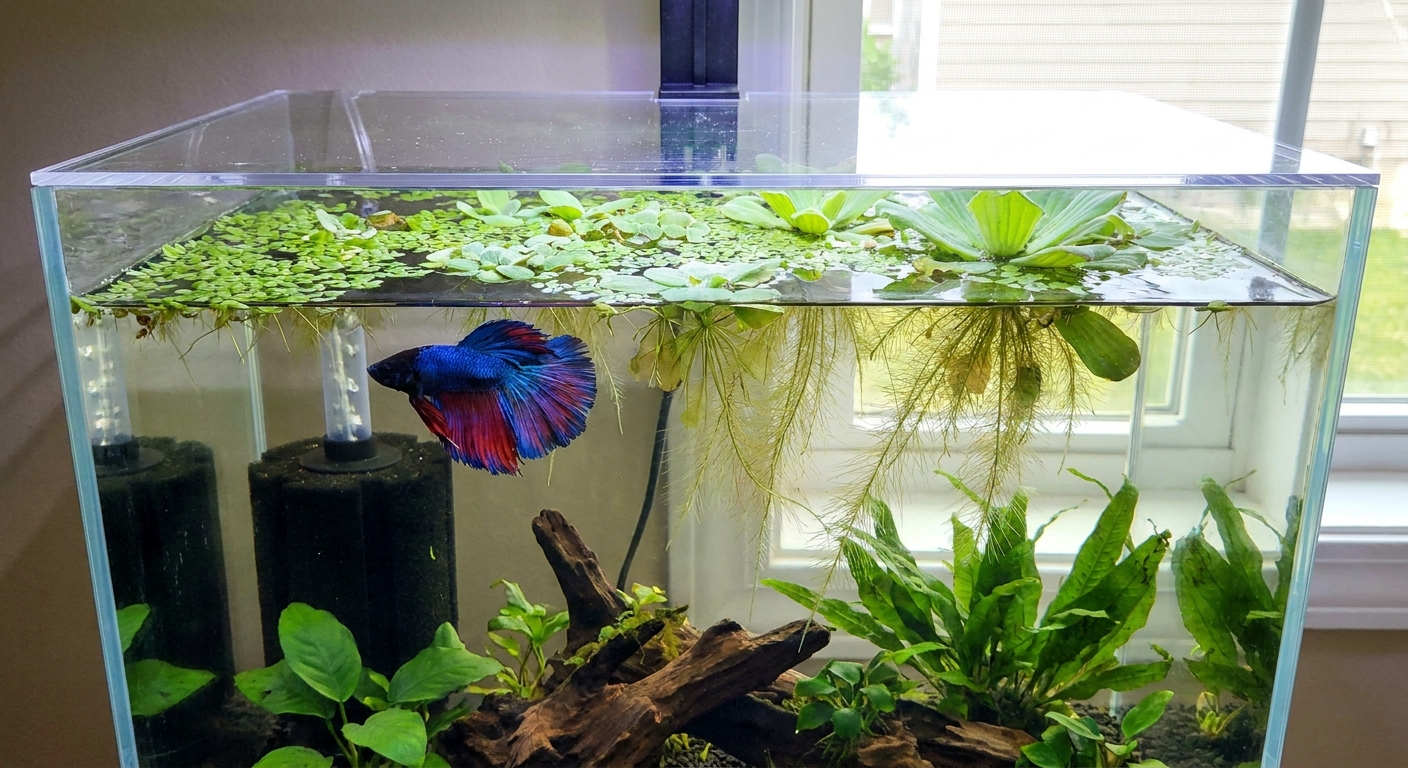
A lid is not optional for bettas. Best practice is simple: aim for no gaps at all. Even small openings at the back corners or around cords can be enough for a determined leap and a quick slide out.
Look for these features:
- Covered cutouts around filter and heater cords (use the included flap if your lid has one)
- No warping that lifts a corner
- Flush fit all the way around the rim
If you use a mesh lid, make sure the holes are truly small and the frame sits flush. Bettas are excellent at finding the one spot that is not quite secure.
2) Leave a little air space at the top
Keep the waterline slightly below the rim so your betta has less launch runway and you have more margin for splashes. It can also help prevent chilling or drying of the air they breathe at the surface.
Just do not lower the water level so far that your heater runs exposed or your filter cannot operate properly. If you use floating plants, keep some open surface area so your betta can breathe comfortably.
3) Calm the current
If your filter makes your betta struggle at the surface, reduce flow. Options include:
- A sponge pre-filter on the intake
- A baffle on the outflow
- A filter designed for gentler betta flow
A calm surface does not mean stagnant water. It means your betta can swim and rest without getting shoved around.
4) Fix water quality, then keep it stable
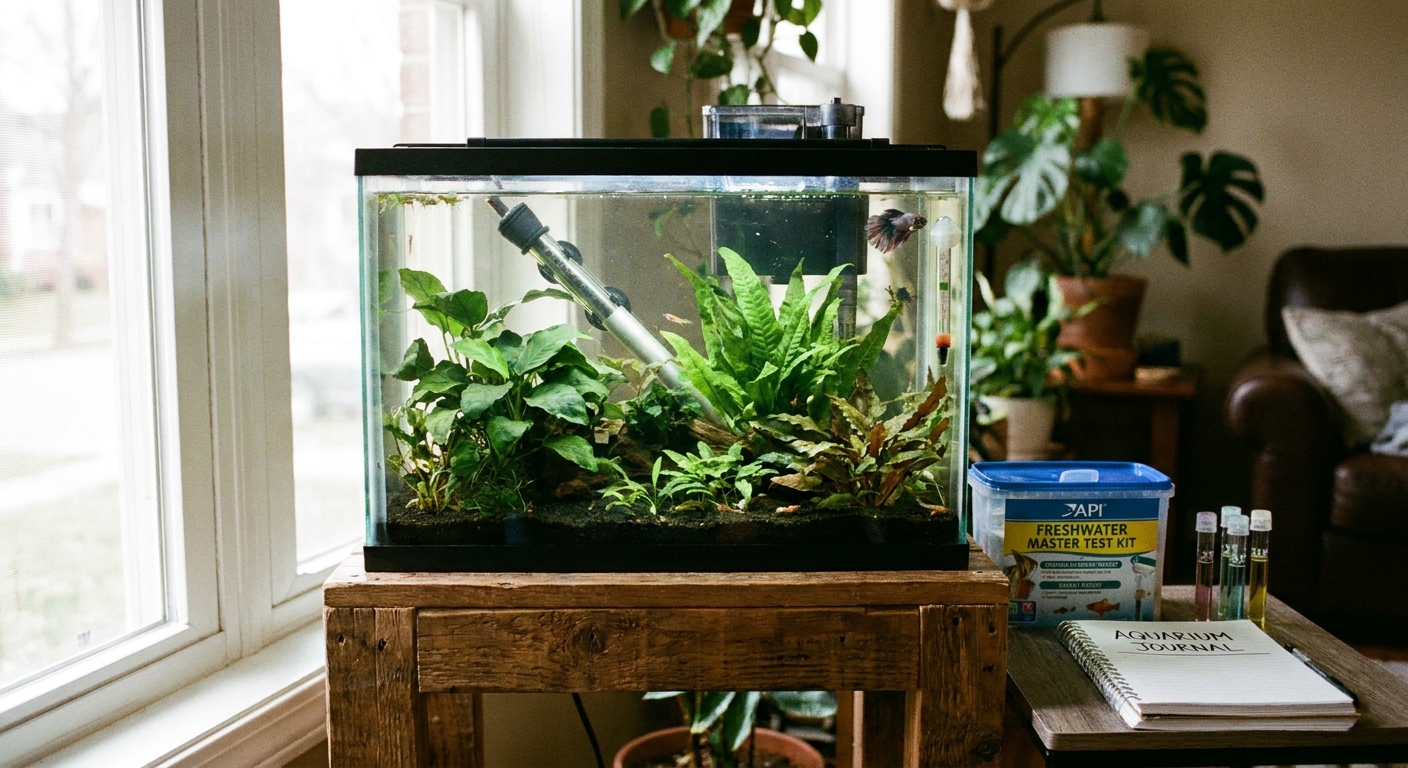
If you do not already, use a liquid test kit and track:
- Ammonia: 0
- Nitrite: 0
- Nitrate: kept low with routine water changes
Consistency matters as much as “perfect numbers”. Sudden changes in temperature, pH, or hardness can stress a betta even when the values are not extreme.
For a simple schedule that prevents surprise spikes, follow: Betta Tank Cleaning Routine and Water Change Schedule.
5) Add surface-friendly resting spots and cover
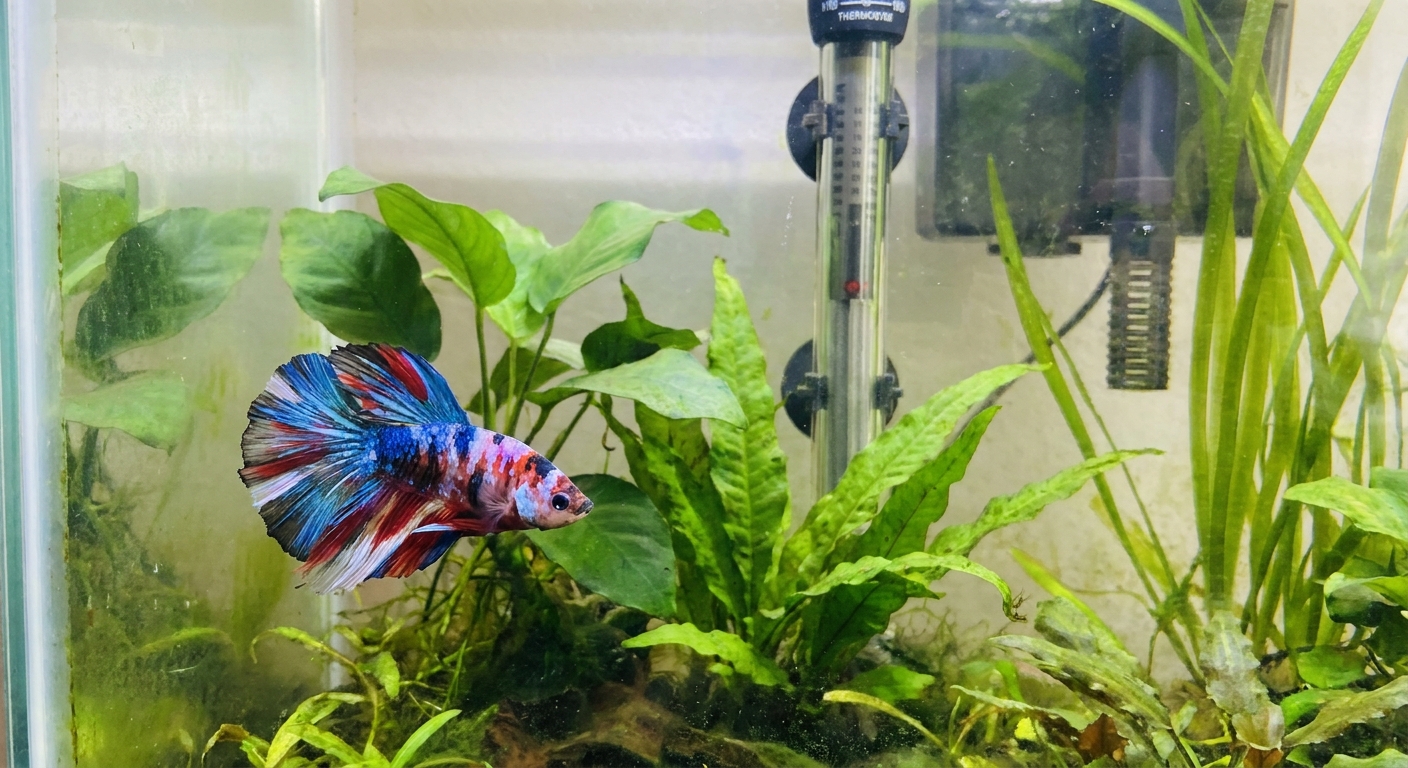
A betta that feels exposed tends to patrol and pace. Give your fish places to lounge near the surface and along the mid-levels:
- Broad-leaf live plants or soft silk plants
- Floating plants (with open space for breathing)
- Decor that creates shaded areas
Need ideas that bettas actually use? Swim through: 7 Essential Tank Decorations for Betta Hiding Spots and Enrichment and Live vs Silk Plants for Bettas.
6) Reduce visual stressors outside the tank
Sometimes the “problem” is not inside the aquarium at all. Try:
- Moving the tank away from heavy foot traffic
- Blocking line-of-sight to another betta tank
- Turning off tank lights at night and keeping a predictable day and night cycle
Lighting can make a big difference in pacing and arousal. Here is a gentle setup: Betta Fish Lighting Requirements.
If your betta already jumped: what to do right away
It is scary, but quick, calm action helps.
- Pick your betta up gently with clean, wet hands if possible. Avoid squeezing. Do not rub them with a towel or tissue, since that can damage the slime coat.
- Return them to the water promptly. Keep the tank lights dim or off.
- Check for injuries like missing scales, torn fins, or a scraped mouth.
- Test the water for ammonia and nitrite immediately.
- Secure the lid before walking away again.
Over the next few days, watch closely for secondary issues like fin damage that worsens, fuzzy patches, redness, or unusual lethargy. A jump is stressful, and small scrapes can sometimes turn into infections if the water is not clean and stable.
If your fish is acting weak or sinking after the jump, consider setting up a quiet recovery space with gentle filtration. This guide walks through a safe approach: How to Set Up a Hospital Tank for a Sick Betta Fish.
Quick troubleshooting
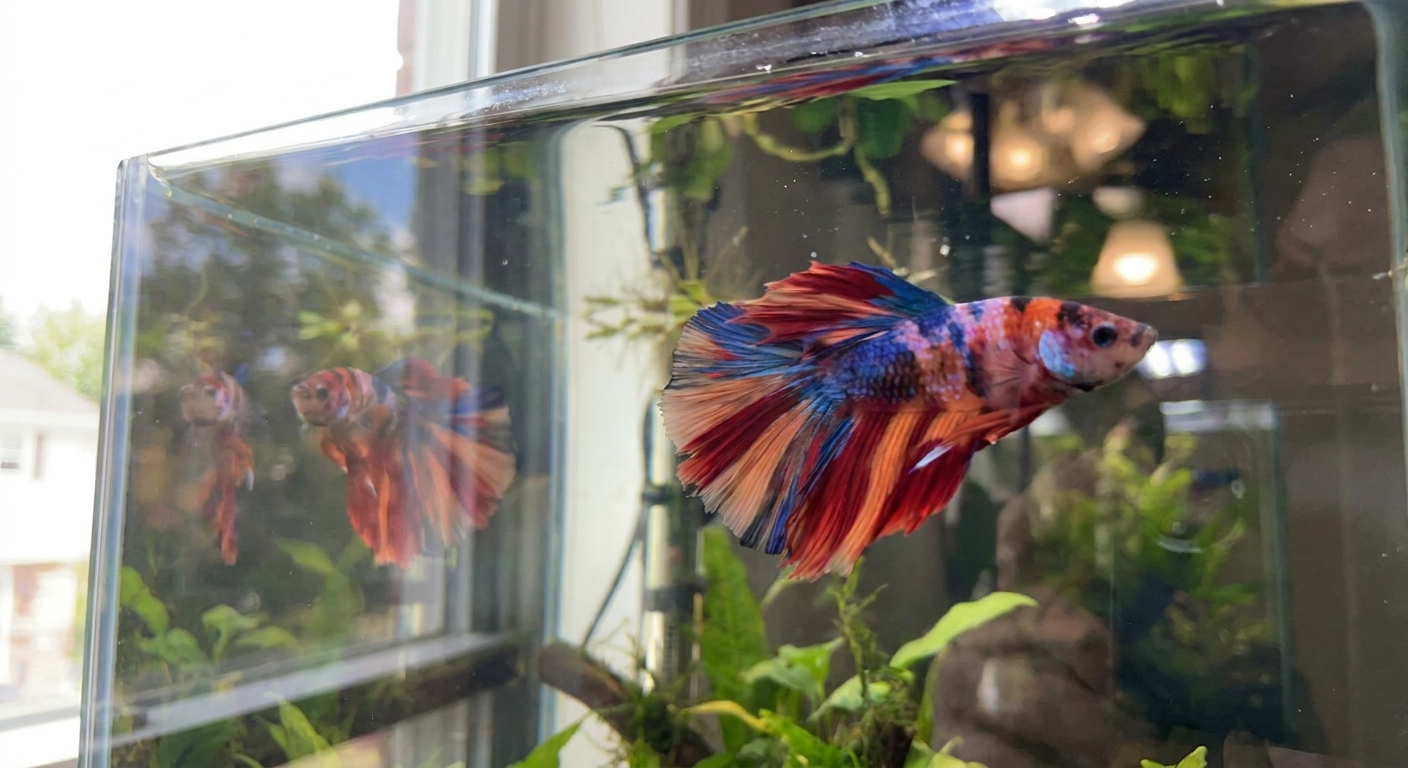
Jumping repeatedly at the corners
- Often: reflection stress, pacing, trying to get away from a stressful area
- Check: lighting, outside reflections, tank mates, water quality
Leaping during feeding
- Often: excitement, splashy feeding, high waterline, no lid
- Fix: feed smaller portions, use slow-sinking pellets, keep the lid on, lower waterline slightly
Sudden jumping after a water change
- Often: temperature mismatch or parameter swing
- Fix: match temperature more closely, use a conditioner properly, avoid huge sudden changes
If you are unsure about conditioner and tap prep, this helps: How to Prepare Tap Water for a Betta Tank.
FAQ
Can bettas jump out of a tank with a small gap?
Yes. Bettas can jump and slip through surprisingly small openings, especially around cable cutouts and back corners. If there is a gap, assume your betta will eventually find it.
Will a bigger tank stop jumping?
A bigger tank can reduce stress by improving stability and swimming space, but it does not remove the jumping instinct. Even in a larger aquarium, a lid is still needed. If you are weighing sizes, see: 5 Gallon vs 10 Gallon Tank for Bettas.
Is jumping a sign my betta is unhappy?
Sometimes. One leap can be pure instinct and opportunity. Repeated attempts usually mean something is pushing your betta to roam, escape, or react. Treat it as a signal to check lid security, water quality, flow, temperature, and stressors.
Do tank mates make bettas jump?
They can. Crowding, fin nipping, or constant surface competition can raise stress. If you are building a community tank, choose carefully and introduce thoughtfully. Helpful reads: Introducing Tank Mates to a Territorial Betta and Best Betta Tank Mates for a 10 Gallon Aquarium.
The safe, splashy takeaway
Bettas jump because they are excellent survivors with strong surface instincts. The best prevention is simple and powerful: a secure lid, a slightly lowered waterline (without breaking heater or filter function), calm flow, stable warm water, and a tank layout that makes your betta feel covered and confident.
With those pieces in place, your betta can keep their adventures where they belong, inside the aquarium, sparkling and safe.