Let's make your tank the happiest little splash in the house!
Bettas are curious, observant little swimmers. In the wild, they spend their days exploring plant roots, hunting tiny snacks, and weaving through shaded hideouts. In a home aquarium, boredom can sneak in when everything stays the same day after day. The good news is that enrichment does not need to be complicated. A few safe “toys” and mini activities can encourage gentle exercise, exploration, and brain-boosting curiosity.
Before we play, a quick promise from Bloop (that's me): every idea below is designed to be hands-off for your betta (no handling), easy to remove, and safe for fins when used correctly.
Safety rules for any betta “toy”
- No sharp edges, no rough seams. If it can snag delicate fins, it is a no.
- Nothing small enough to swallow. Bettas are brave nibblers.
- Aquarium-safe materials only. If it is not sold for aquariums, treat it like a “supervised, short-session only” experiment, or skip it.
- Rinse new items with warm water only. No soap, no cleaners, no chemicals.
- Short sessions are best. Think 5 to 15 minutes, then remove or rotate the activity.
- Watch for stress. If your betta flares nonstop, darts frantically, clamps fins, glass-surfs for a long time, or hides, stop the activity and return the tank to calm.
If you want a deeper stress checklist, swim over to 7 Signs of Stress in Betta Fish and How to Fix Their Environment.
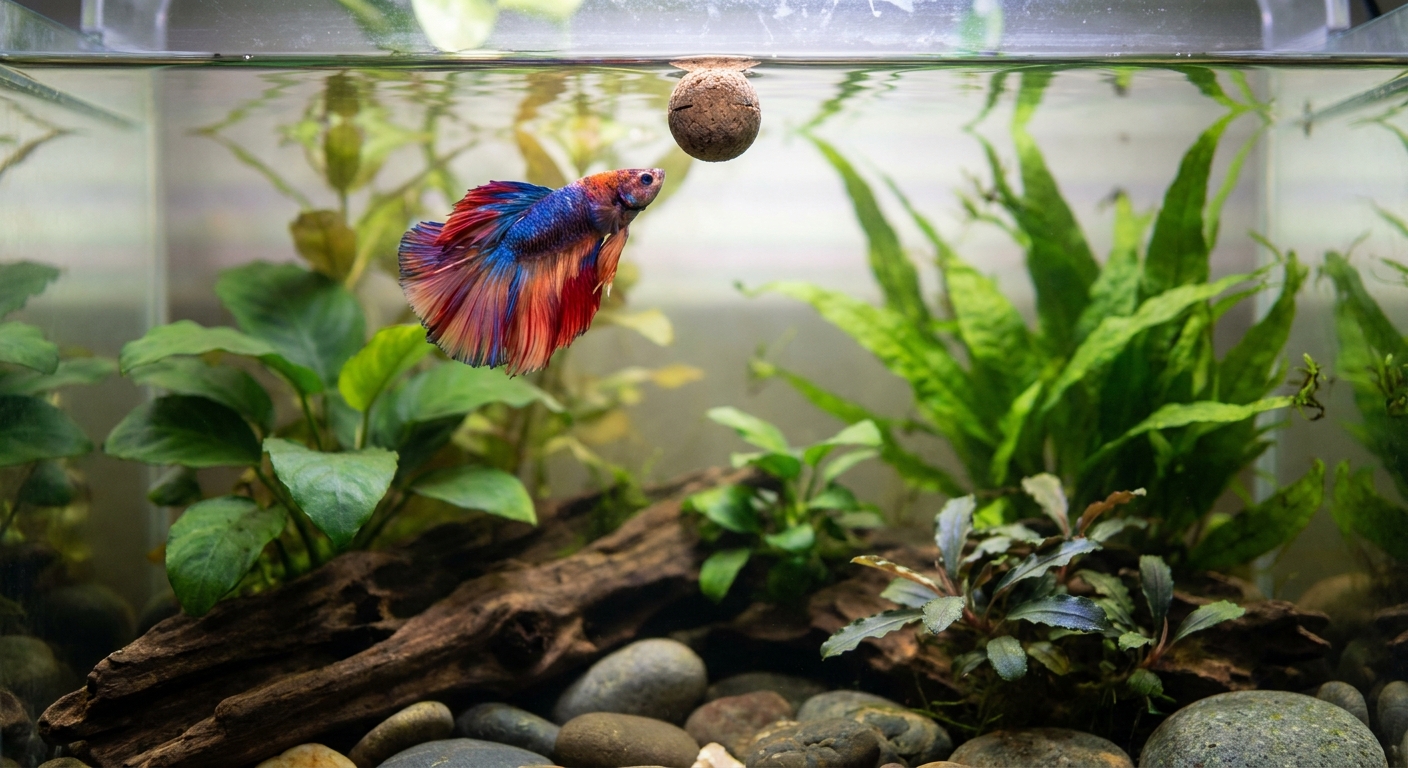
1) Floating ping pong ball (the classic surface “push toy”)
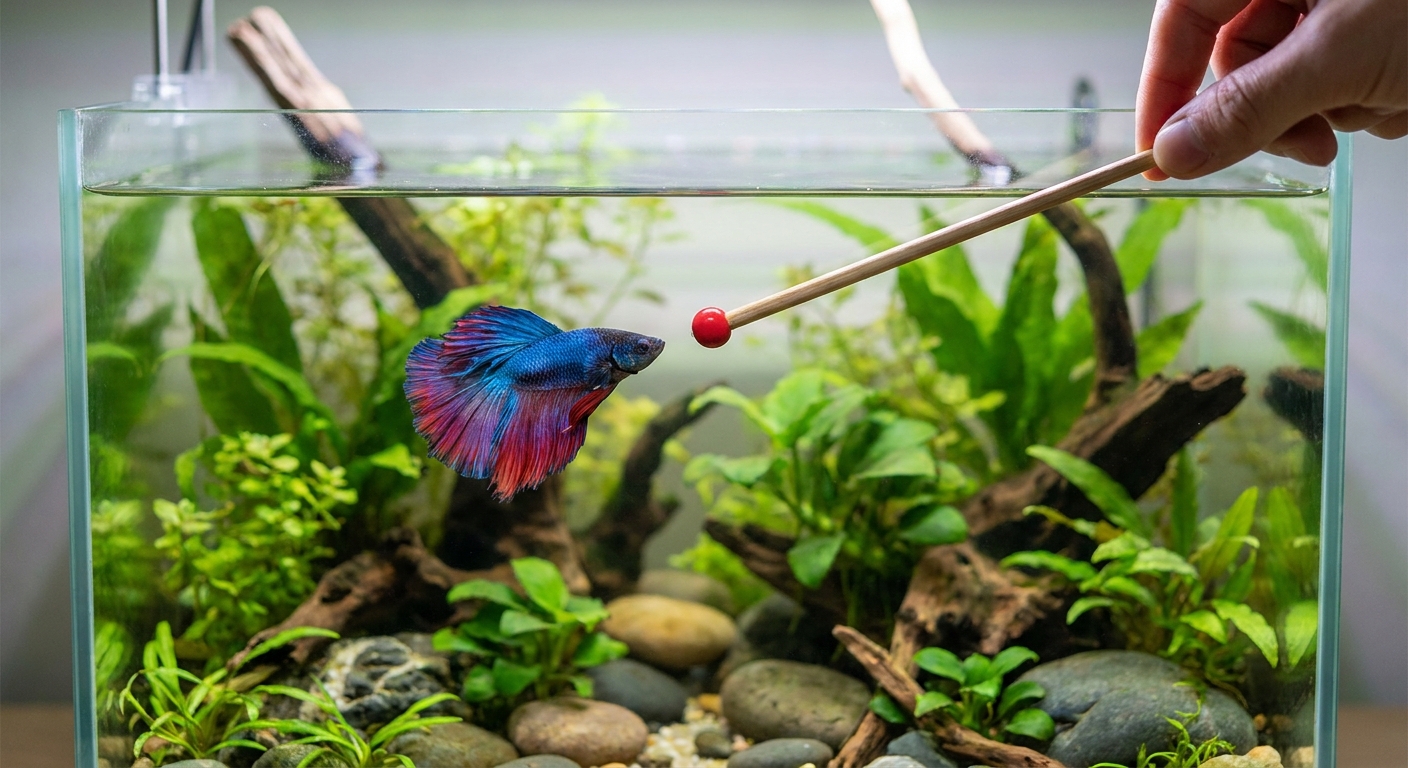
A plain, new ping pong ball can become a gentle “soccer ball” for curious bettas. Many bettas enjoy investigating surface objects, especially if the current is low and the ball moves slowly.
A quick safety note: ping pong balls are not made for aquariums, so treat this like a supervised enrichment session, not a permanent tank item. If you want a safer default that can stay in the tank, aquarium-made options like floating betta logs and hammocks (below) are the better long-term choice.
How to use it safely
- Choose a brand-new, unpainted ball. No logos, inks, glitter, or coatings.
- Rinse thoroughly with warm tap water and let it cool to room temp before it goes near the tank. No soap.
- Inspect it every time. If it gets scratched, cracked, or develops a rough spot, toss it.
- Turn down strong flow if the ball whips around too fast. Bettas prefer calm water.
- Supervise the first session for 5 to 10 minutes to make sure your betta is curious, not panicked, and remove the ball afterward.
Best for
Bettas who like the surface, make bubble nests, or enjoy slow-paced investigating. If your betta is a dedicated flarer, limit sessions so it does not become an “enemy” instead of a toy. For more on flaring behavior, see Betta Fish Flaring Explained.
2) Dry-erase marker “follow the dot” game (outside the glass)
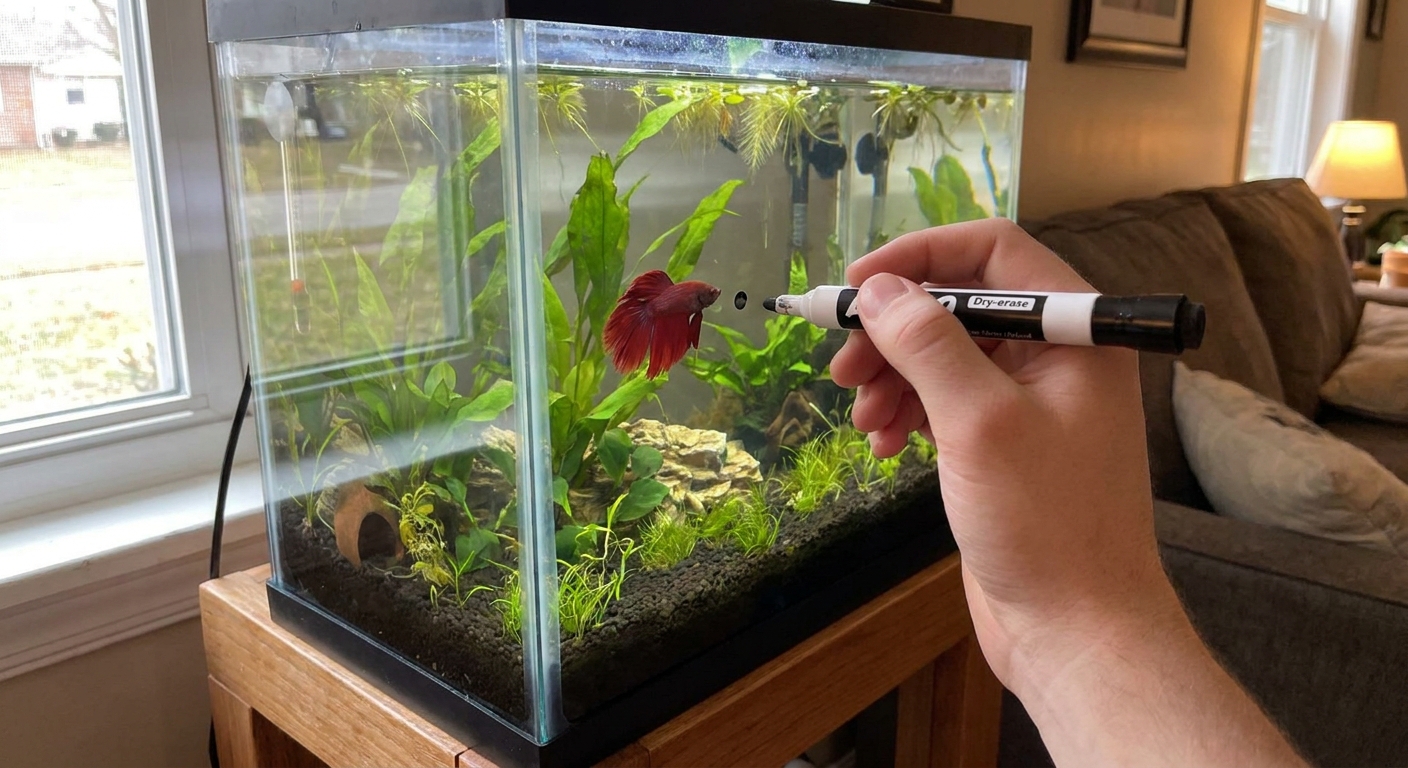
This is enrichment with zero water contact. Use a dry-erase marker to draw a small dot or short line on the outside of the aquarium glass, then slowly move it. Many bettas will track it with their eyes and follow along.
How to do it safely
- Marker stays outside only. Never let ink touch the water.
- Use simple shapes. One dot, a short line, or a small circle is plenty.
- Go slow. Smooth, gentle movement encourages calm tracking instead of frantic chasing.
- Clean the glass afterward with a damp cloth so the “game” ends clearly.
Best for
Bettas that are curious and interactive, especially in tanks with good front viewing space. This is also a nice option if you do not want any extra objects floating in the water.
3) Mirror time (tiny doses only)
A small mirror can be an enrichment tool because it triggers a natural display response. Used carefully, it can provide a quick “workout” and mental stimulation. Used too long, it can become stressful.
Mirror rules (super important)
- Keep sessions short: about 30 seconds to 2 minutes.
- Limit frequency: a few times per week, not daily and not for long stretches.
- Stop immediately if your betta gets frantic, shows clamped fins, keeps glass-surfing after you remove the mirror, or seems “stuck” in fight mode.
- Hold the mirror outside or place it briefly against the outside of the tank. Avoid dropping anything in the water.
Best for
Bettas who flare moderately and recover quickly. If your betta is already showing stress behaviors, skip mirror play and focus on calmer enrichment like plants, hides, and foraging.
4) Floating betta log or leaf hammock (a resting spot that changes the map)
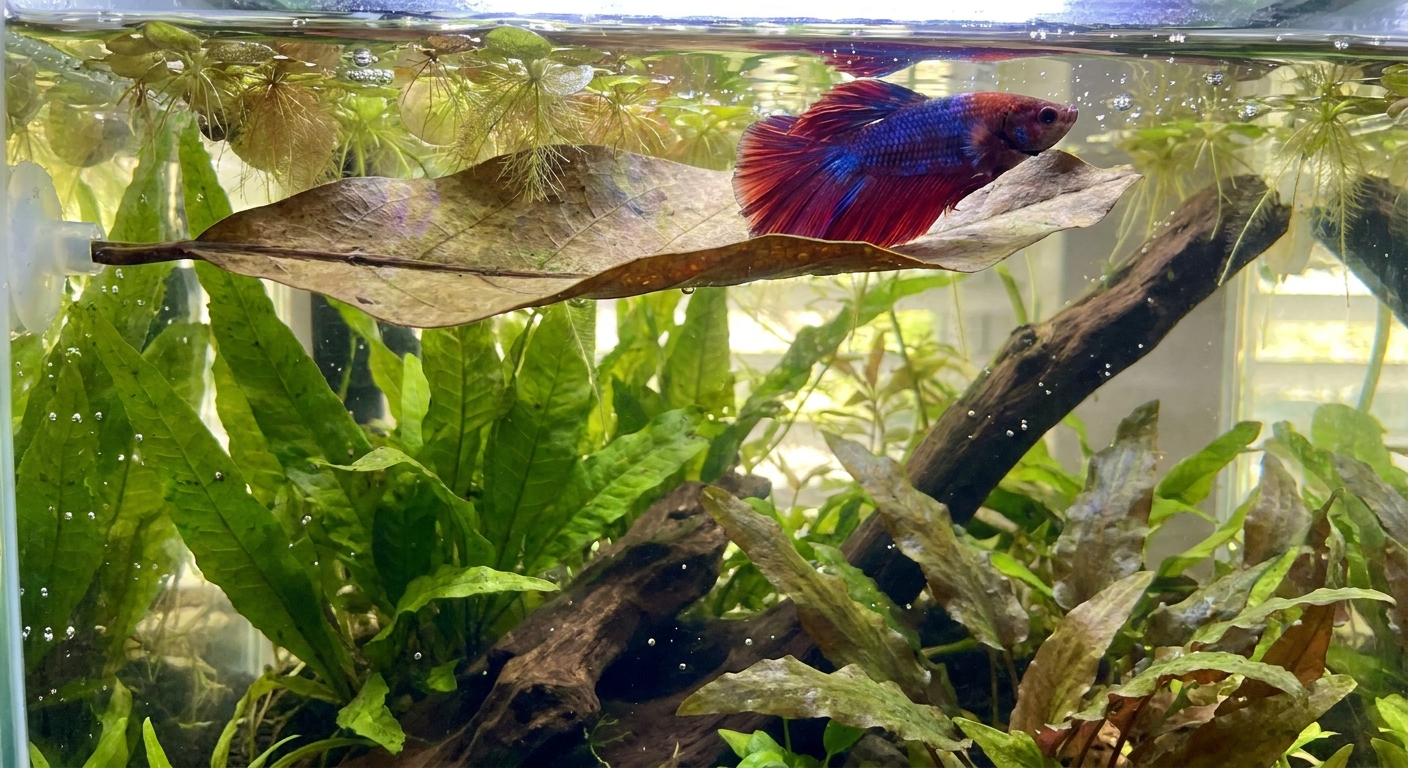
Not all enrichment has to be active. A floating betta log or a broad leaf hammock gives your betta a new surface zone to explore, lounge on, and patrol. Resting spots near the surface are especially appreciated because they make surfacing for air easier, and bettas like having a “lookout” place.
How to choose and place
- Pick smooth, aquarium-safe products designed for bettas.
- Rinse with warm water before adding it to the tank.
- Position near cover. A resting spot feels safer near plants or a hide, not in a wide open area.
- Rotate occasionally. Moving it a few inches every week or two can make the tank feel “new” without stressing your fish.
Best for
Bettas that like to perch, nap, and watch the room. If you want more ideas that double as enrichment and comfort, visit 7 Essential Tank Decorations for Betta Hiding Spots and Enrichment.
5) “Foraging cup” with a treat (slow, sniffy fun)
This is a simple way to turn feeding into a mini hunt. Use a small, smooth, aquarium-safe cup or feeding dish designed for fish, and place a tiny portion of food inside so your betta has to investigate and pick pieces out.
How to do it safely
- Use the right food type. Pellets that hold together, or a few thawed frozen bites, tend to work better than foods that instantly crumble into a messy cloud.
- Use the right food size. Choose food your betta can eat comfortably, not jumbo chunks.
- Feed small amounts. The point is enrichment, not extra calories.
- Remove leftovers and the cup. Take the dish out after the session so food does not foul the water.
- Do this on a normal feeding day, not as constant snacking.
Good treat picks
If you want food ideas that encourage natural hunting behavior, take a peek at 7 Best Frozen and Live Foods for Betta Color and Vitality. Just remember that even exciting foods should fit into a steady routine. Most bettas perk up fastest when the tank stays clean and predictable, with small, rotating challenges.
Need help dialing in feeding amounts? Visit How Much and How Often to Feed a Betta Fish.
What enrichment is not
A few “activities” are common, but they tend to stress bettas more than they help. I skip these:
- Tapping on the glass or chasing your betta around the tank.
- Leaving a mirror up for long periods.
- Constant rescapes or major decor overhauls every day.
- Laser pointers (too frantic, too much stimulation).
Think of enrichment as gentle curiosity, not chaos.
Easy boredom fixes that are not “toys” (but work beautifully)
Sometimes the best enrichment is not a gadget. It is a better habitat.
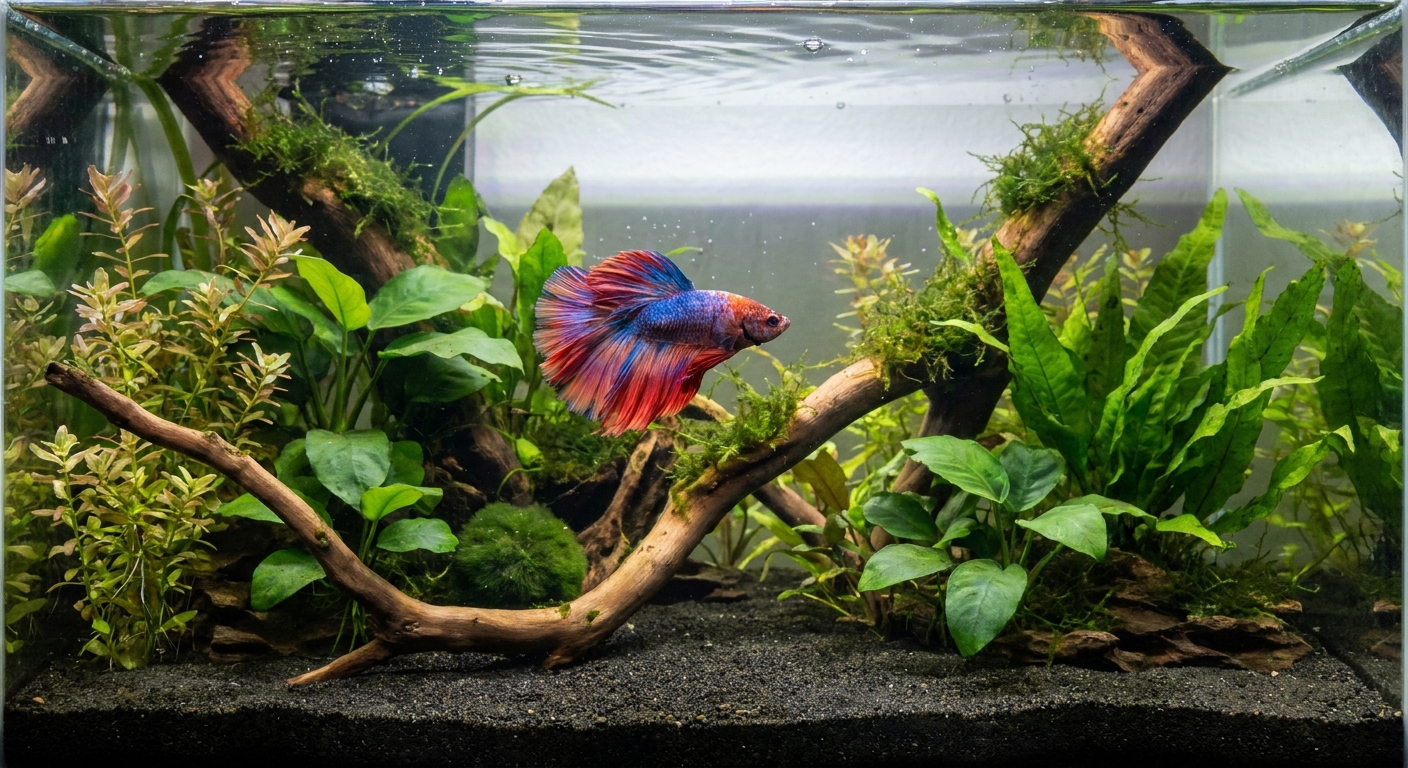
- Plant jungle effect: Add more silk or live plants so your betta can weave, hide, and explore. Learn more at Live vs Silk Plants for Bettas.
- Gentle flow: A calmer filter current makes play less stressful and swimming more natural. See Choosing the Right Filter for a Betta Tank.
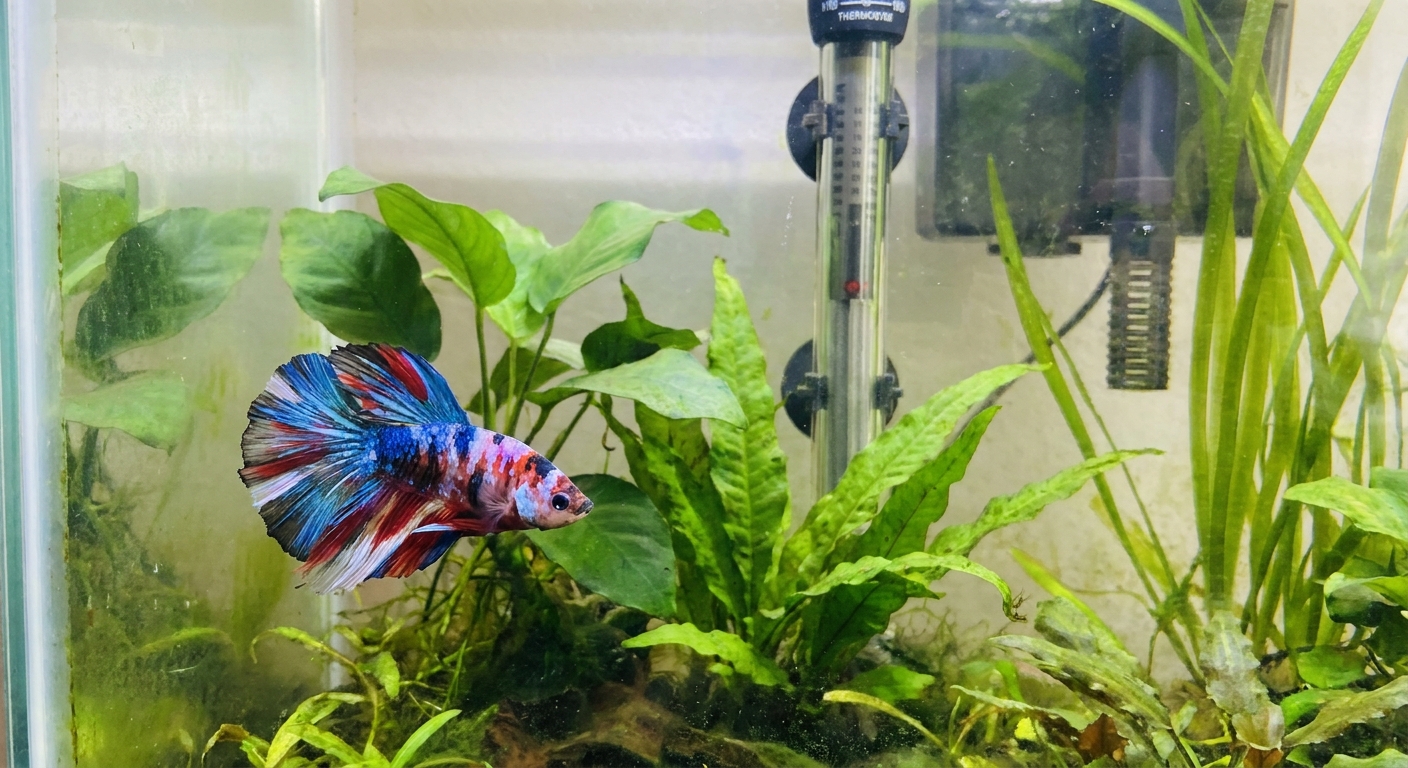
- Stable warmth: Comfortable temperature supports normal energy and appetite. Visit Betta Tank Temperature and Heater Placement.
- Rotate decor: Move one safe item at a time, then wait a few days. Tiny changes can feel like a whole new world.
Also, a quick temperament reminder: some bettas ignore toys completely. That is normal. If your fish is eating well, swimming normally, and resting comfortably, “not playful” can simply be their personality.
When “boredom” is actually stress or illness
If your betta seems listless, stops exploring, or ignores enrichment, check the basics first. Many “bored” behaviors are actually discomfort signals.
- Water quality problems: ammonia or nitrite, high nitrate, or infrequent maintenance can shut down appetite and curiosity.
- Temperature too low: cold water often looks like laziness.
- Too much stimulation: bright lights all day, lots of tapping, or nonstop reflection can cause hiding and glass surfing.
If you suspect the tank needs a refresh, this guide can help: Betta Tank Cleaning Routine and Water Change Schedule.
Quick toy rotation plan (simple and doable)
- Day 1: Ping pong ball for 10 minutes, supervised, then remove.
- Day 3: Dry-erase dot tracking for 2 to 5 minutes.
- Day 5: Foraging cup feeding, then remove the cup.
- Weekend: Mirror for 30 to 60 seconds if your betta handles it well.
Rotation keeps things interesting without turning the tank into a constant carnival. Calm, safe, and predictable is the goal, with tiny bursts of fun.
Cheering for you and your finned friend, always. A curious betta in a cozy, well-planted home is one of my favorite sights.