
Let’s make your tank the happiest little splash in the house!
Seeing your betta pop up for air can be totally normal. Bettas are built for it. But there is a big difference between a calm “air sip” and frantic surface gasping that means the water is not supporting healthy breathing. This guide will help you spot the difference and fix the most common causes fast.
Why bettas breathe at the surface
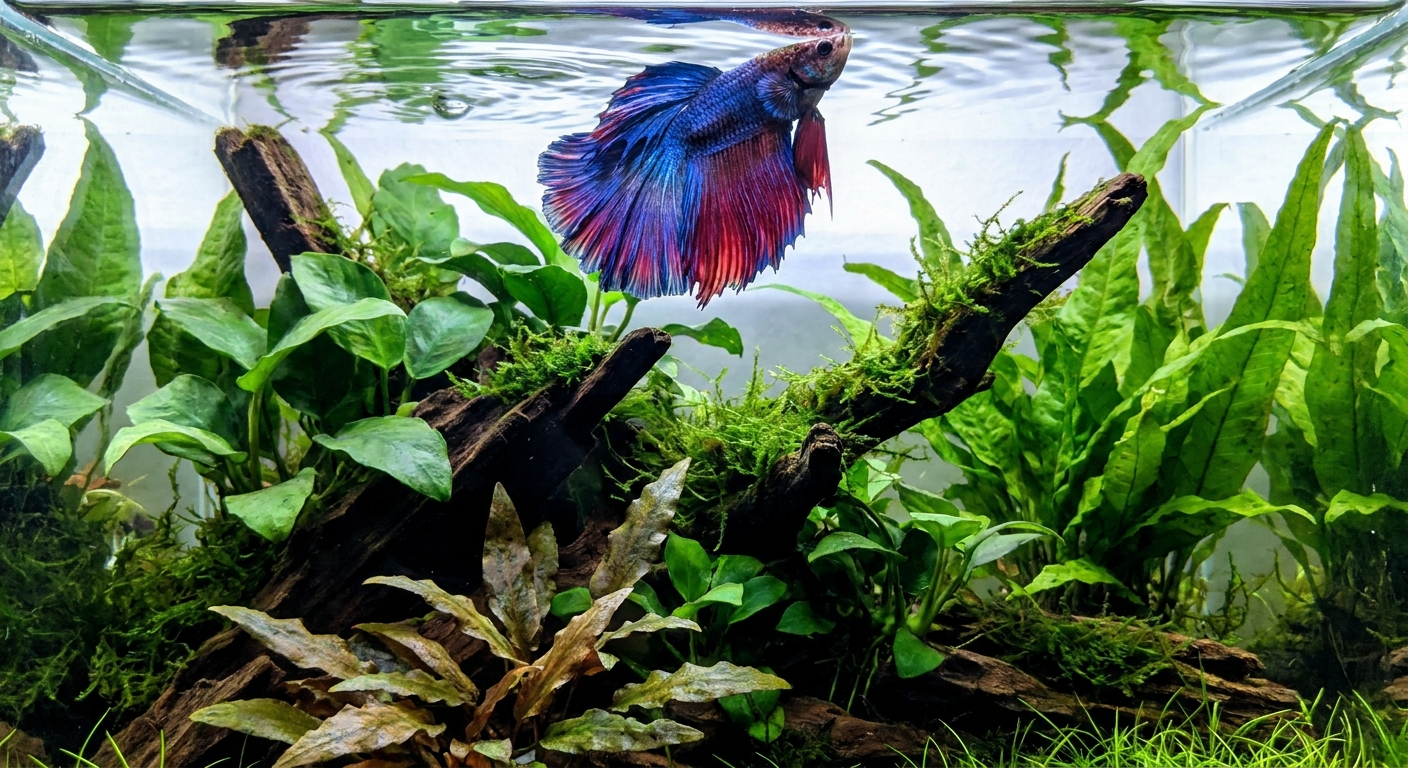
Bettas (Betta splendens) have two ways to get oxygen:
- Gills pull oxygen from the water.
- The labyrinth organ lets them gulp atmospheric air from the surface and absorb oxygen directly.
This is an adaptation for living in warm, slow-moving waters where oxygen levels can swing. So yes, surface breathing is often just your betta using their built-in backup system.
That said, a betta should not have to rely on air gulping constantly. A healthy tank still needs good oxygen exchange and clean, non-irritating water.
Normal surface gulps
Normal labyrinth-organ breathing usually looks relaxed and casual, not urgent.
Signs it is likely normal
- Your betta swims up, takes one quick gulp, and returns to exploring.
- They do this occasionally, especially after activity, flaring, or zooming.
- Their gill movement is steady, not rapid.
- They are eating normally and behaving normally.
- They rest comfortably (often near the top, which can be normal too).
How often is normal?
There is no perfect number because it depends on temperature, activity level, tank surface movement, and the individual fish. Some healthy bettas will gulp a few times an hour (or less), with plenty of time spent mid-water or near the bottom.
The most useful clue is your betta’s baseline. A sudden change in frequency, urgency, or effort matters more than the exact count.
If you want more “is this normal behavior?” context, the stress checklist here can help you read the whole picture: 7 signs of stress in betta fish and how to fix their environment.
Surface gasping
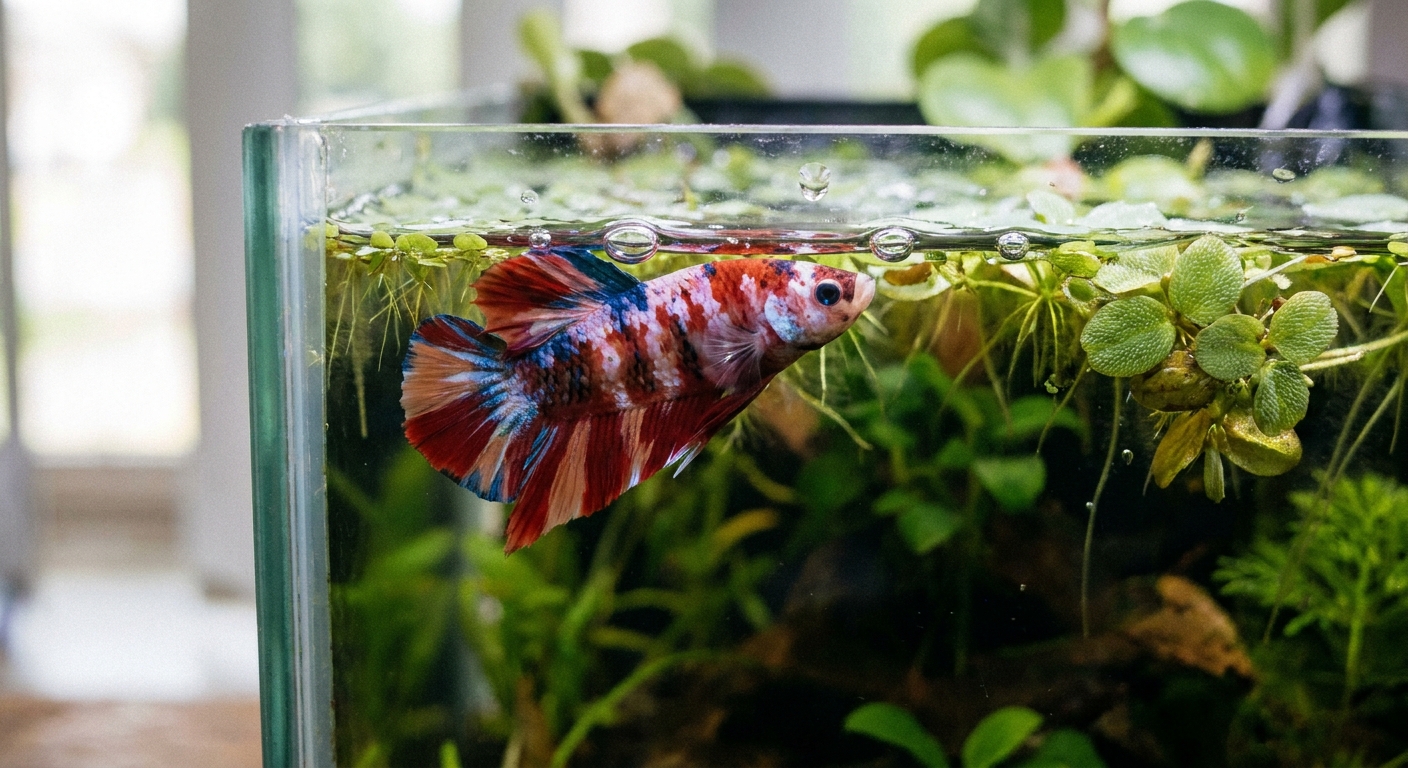
Gasping has an emergency feel. It often means your betta is not getting enough usable oxygen from the water, or their gills are irritated or damaged.
Red flags that point to trouble
- Frequent, repeated surface trips with little time between them.
- Hanging at the top and not wanting to leave it.
- Rapid gill movement (breathing looks fast and “working hard”).
- Mouth opening and closing at the surface repeatedly, like they are “panting.”
- Lethargy, loss of appetite, clamped fins, or unusual hiding.
- Other fish (if present) also hovering near the surface.
One important note: if your betta is at the surface because they cannot stay down, that can also point to buoyancy or swim bladder issues, not only breathing trouble. Either way, check water quality first since poor water can trigger both problems.
If surface gasping starts suddenly, treat it as time-sensitive. You do not need to guess the exact cause before you take the first helpful steps.
Common causes of gasping
1) Poor water quality (ammonia or nitrite)
This is the big one. Ammonia and nitrite burn and inflame gills, making it harder to breathe even if oxygen is present. Ammonia is also more toxic at higher pH and higher temperature, so a warm tank can make a bad situation feel worse fast.
- Ammonia (NH3/NH4+) should be 0 ppm
- Nitrite (NO2-) should be 0 ppm
- Nitrate (NO3-) should be kept low (many keep it under about 20 ppm for comfort, though tanks can vary). What matters most is avoiding chronically high nitrate and keeping things stable.
If your tank is not cycled, recently disturbed, or newly set up, check this immediately. If you need a step-by-step overview of cycling, head here: How to cycle a new betta fish tank.
2) Low dissolved oxygen
Bettas can breathe air, but they still benefit from oxygenated water. Low oxygen becomes more likely when:
- The tank is too warm (warm water holds less oxygen).
- The surface is too still (little gas exchange).
- There is decaying waste (rotting food, dirty substrate, dead plant matter) consuming oxygen.
- The tank is overstocked or has a heavy bioload.
A gentle ripple at the surface can help. Bettas dislike being blasted by current, so the goal is soft movement, not a whirlpool.
3) Temperature problems
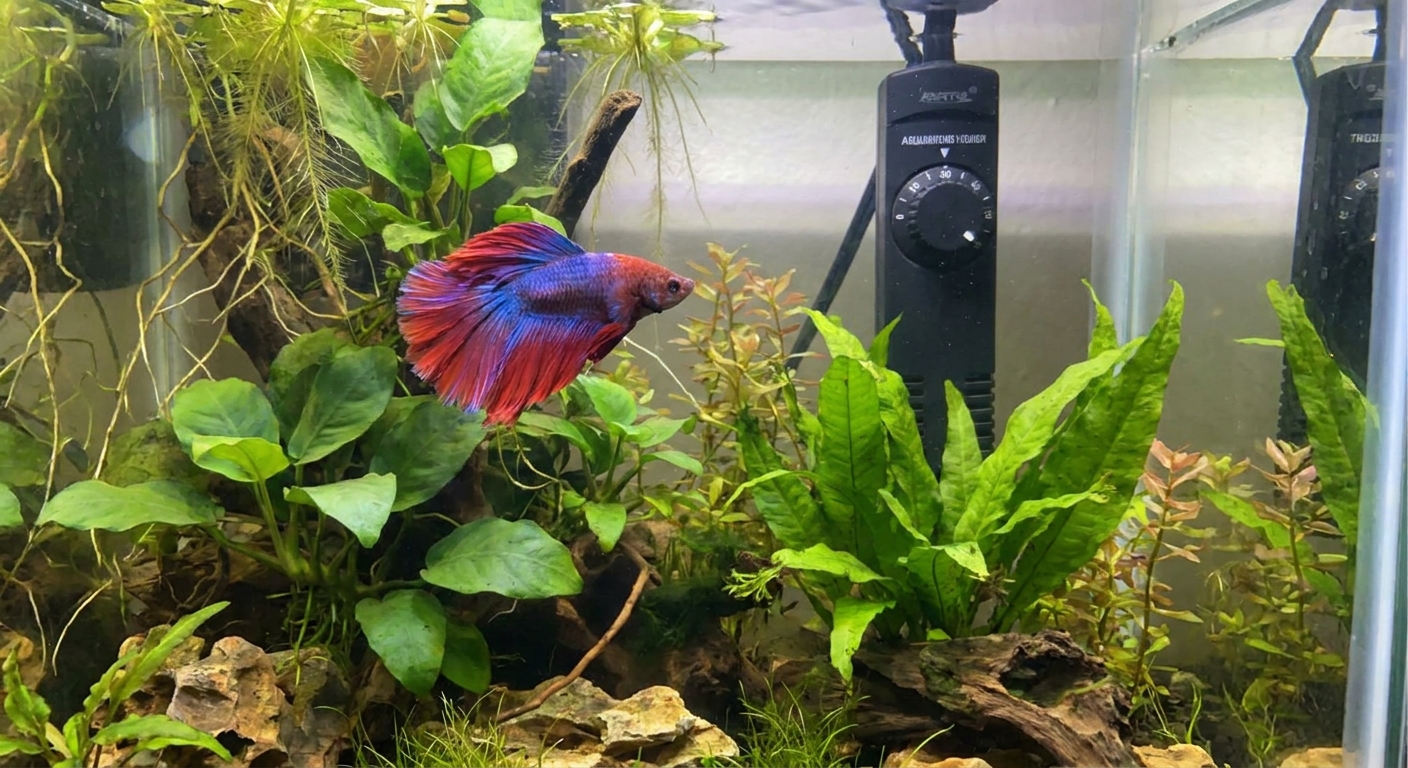
Cold stress slows metabolism and immunity, while overheating reduces oxygen availability and increases stress. Bettas generally do best in stable, warm water.
For a clear target range and heater placement tips, see: Betta tank temperature and heater placement.
4) Illness affecting gills or breathing
Parasites, bacterial infections, and certain diseases can damage gill tissue or make breathing difficult. Surface gasping may appear alongside:
- Flashing or rubbing
- Clamped fins
- Color changes
- White spots (ich) or dusty gold sheen (velvet)
- Heavy lethargy
If you suspect parasites, these guides can help you match symptoms and take safe action:
5) Dirty filter or weak flow
If filter media is clogged, water movement and oxygen exchange can drop. Sometimes the filter is still “on,” but not really moving water well.
Make sure your filter is appropriate for bettas, with gentle flow and consistent biological filtration. This overview can help you choose or troubleshoot: Choosing the right filter for a betta tank.
6) A surface film blocking gas exchange
An oily or protein film on the surface can reduce oxygen exchange. You may notice a slick look, or light reflecting in a sheet. Gentle surface movement usually clears it. Also remove oily foods or residue and keep up with routine maintenance.
7) A recent change that threw the tank off
Gasping often shows up after something shifts quickly, like:
- A power outage or filter that stopped overnight
- Deep substrate cleaning that stirred up waste
- Replacing too much filter media at once
- Adding new fish or a surprise snail hitchhiker
- New medication or a big temperature adjustment
- New decor that was not rinsed well
If the timing matches, treat it like a clue, not a mystery. Check water parameters and stabilize the basics first.
Quick triage
If your betta is gasping at the surface, this is a do-this-now moment. Stay calm and move step-by-step.
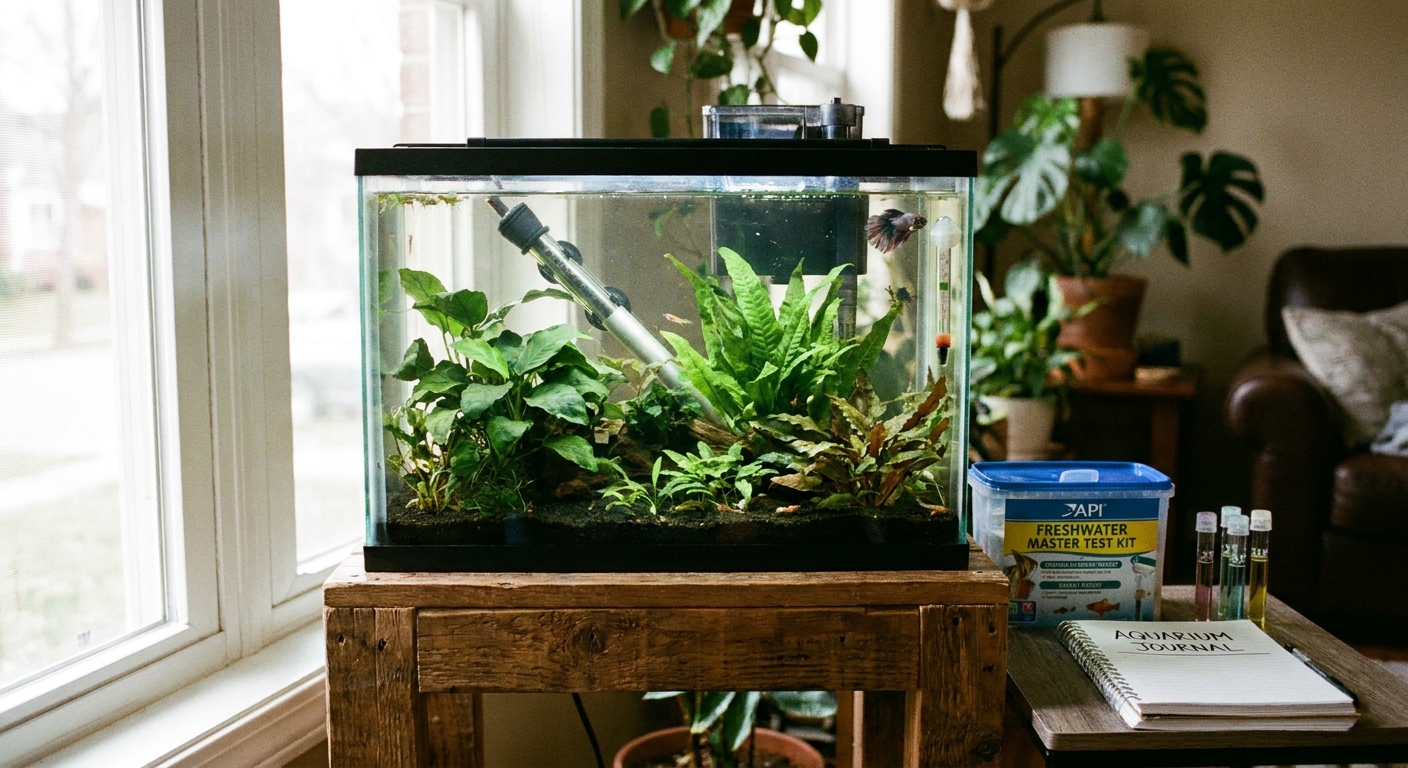
Step 1: Test the water
- Test for ammonia, nitrite, nitrate.
- Check temperature.
- If you can, check pH too. It helps you understand ammonia risk.
If you do not have tests yet, assume water quality could be involved and continue with the next steps anyway.
Also ask yourself one simple question: did I definitely use water conditioner? If you forgot, chlorine or chloramine can irritate gills quickly. If you need a refresher, see How to prepare tap water for a betta tank.
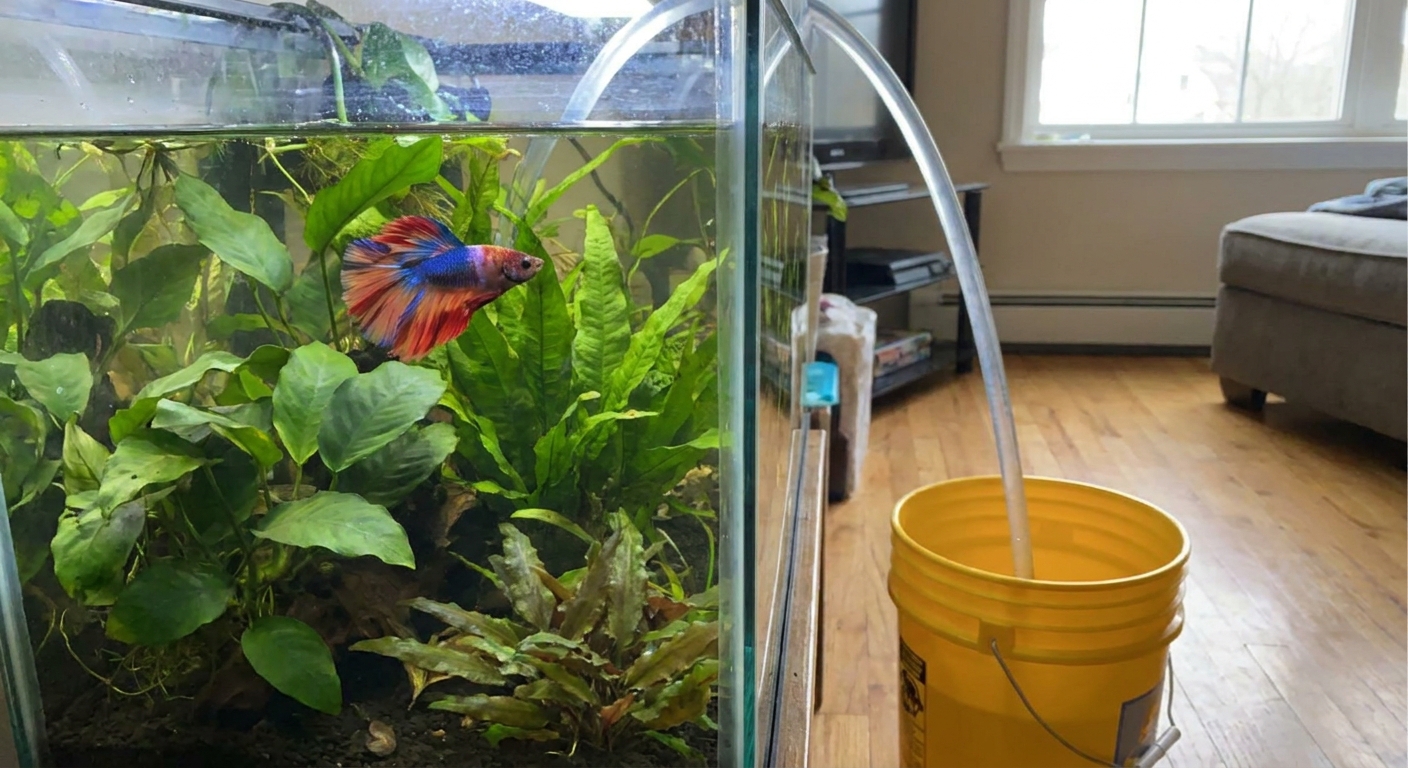
Step 2: Do a partial water change
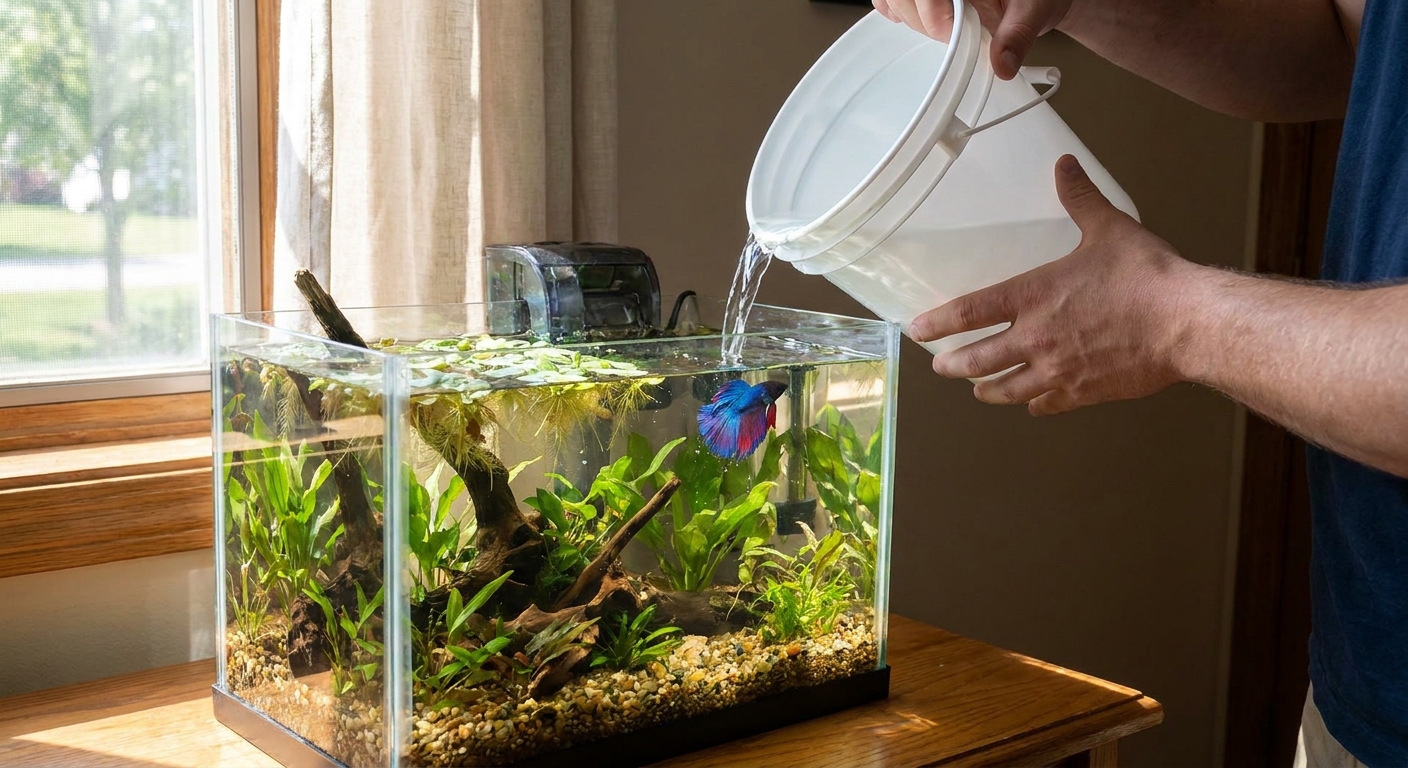
Use dechlorinated, temperature-matched water. A partial change helps dilute toxins and refresh oxygen without shocking your betta.
- As first aid, start with about 25 to 50 percent.
- If ammonia or nitrite is still above 0, repeat smaller changes as needed rather than doing one huge swap.
Try to avoid 100 percent water changes unless there is an extreme emergency and you truly have no safer option. Big changes can swing temperature and can destabilize a struggling cycle.
If you need a steady routine (and the why behind it), see: Betta tank cleaning routine and water change schedule.
Step 3: Boost oxygen exchange gently
- Aim the filter output so it creates a soft ripple.
- If you add an air stone, keep it gentle (bubbles should not toss your betta around).
- Remove any uneaten food and obvious decay.
- If you see surface film, break it up with mild surface movement.
Step 4: Stabilize temperature
Fix big swings first. Avoid rapid changes. Stability matters as much as the exact number.
Step 5: Consider a hospital tank if illness signs are strong
If gasping comes with clear signs of illness, isolating your betta can make treatment safer and reduce stress. Here is a setup guide: How to set up a hospital tank for a sick betta fish.
When it is urgent
If ammonia or nitrite is above 0, if your betta cannot leave the surface, or if they are rolling, collapsing, or unresponsive, treat this as urgent. Immediate clean, conditioned water and better oxygen exchange are your best first moves while you troubleshoot the cause.
Prevention tips
Keep the cycle stable
- Do not overclean filter media in untreated tap water.
- Do not replace all media at once.
- Avoid overfeeding, which quickly becomes ammonia.
Feeding guidance is here if you want a simple baseline: How much and how often to feed a betta fish.
Maintain gentle surface movement
Think “soft shimmer,” not “river rapids.” Bettas love calm water, but still benefit from gas exchange.
Use a properly sized tank and filter
More water volume is more stable, which often means fewer oxygen and toxin swings. If you are choosing between common sizes, this breakdown may help: 5 gallon vs 10 gallon tank for bettas.
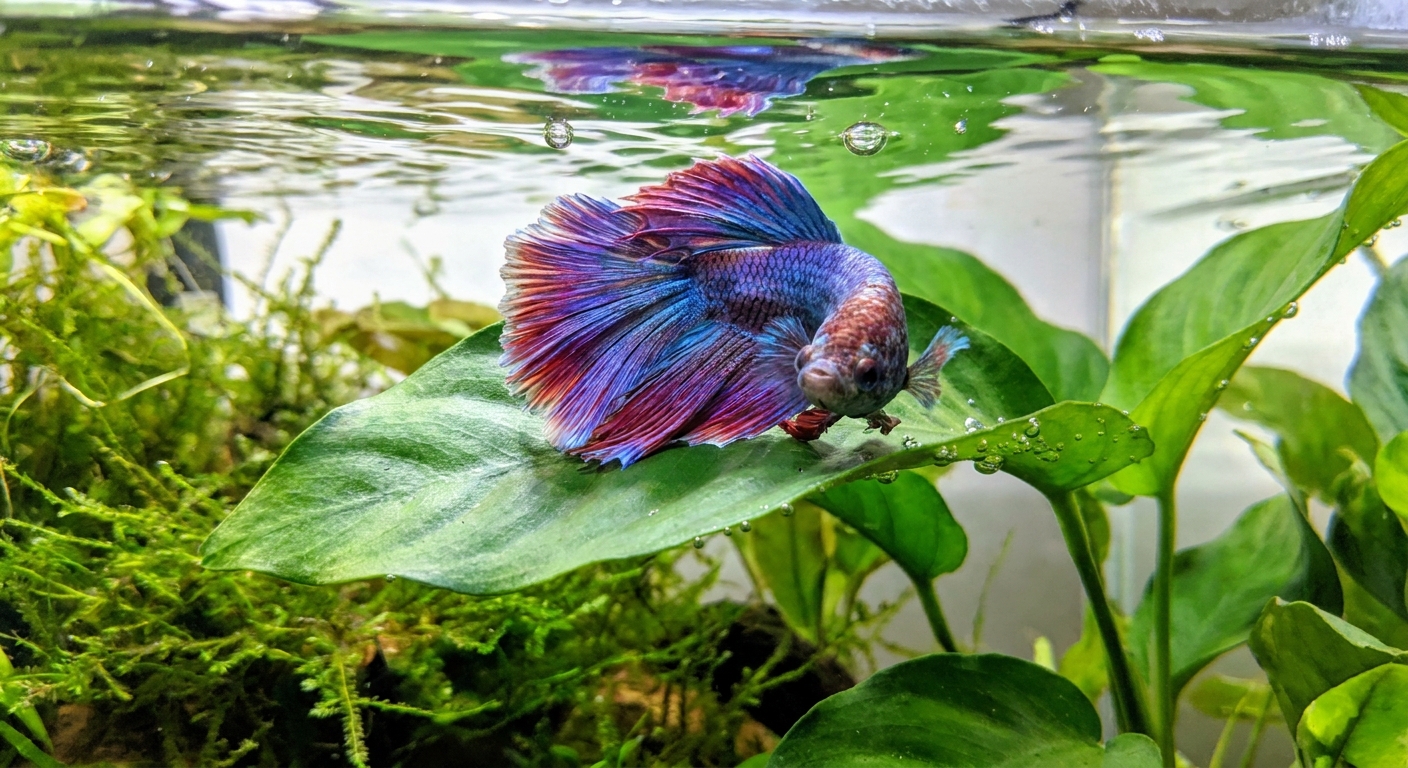
Give your betta a surface resting spot
Even healthy bettas like easy access to air. Provide broad-leaf plants or a resting spot near the top. Enrichment also reduces stress, which can improve overall health and breathing comfort.
Decor ideas that support secure resting and hiding: 7 essential tank decorations for betta hiding spots and enrichment.
FAQ
Is it normal for a betta to hang out near the top?
Sometimes, yes. Bettas often patrol the surface and may nap in plants near the top. It is more concerning if they are stuck there, gulping repeatedly, breathing fast, or showing other stress signs.
My betta gulps air after flaring. Is that bad?
Not usually. Flaring is exercise, and an extra air sip after activity can be normal. If flaring is constant and paired with glass surfing or frantic behavior, check for stress triggers. This guide can help decode flaring: Betta fish flaring explained.
Can warm water make surface breathing more frequent?
Yes. Warm water holds less dissolved oxygen, and it also increases metabolism. That combination can make your betta visit the surface more often. Keep temperature stable and make sure there is gentle surface movement.
Do I need an air pump for a betta?
Not always. Many betta tanks do fine with a gentle filter that moves the surface slightly. An air stone can help in hot weather, during treatment, or anytime breathing looks labored. Some medications can reduce dissolved oxygen or increase respiratory demand, so extra aeration is often recommended. The key is keeping the flow gentle.
Can a dirty tank cause surface gasping even if the water looks clear?
Yes. Water can look crystal clear and still contain ammonia or nitrite, especially in an uncycled or recently disrupted tank. Testing is your best truth-teller.
A simple rule
Calm, occasional air sips are normal. Frequent, urgent surface trips are a warning.
When in doubt, check water quality first, then temperature, then oxygen exchange. Those three fixes solve a huge chunk of surface-breathing emergencies and help your betta feel safe and comfy again.
If you ever want to zoom out and evaluate your whole setup, start here: Setting up a betta tank for the first time.