Let’s make your tank the happiest little splash in the house, and that starts with moving fast when something scary shows up. “Cotton wool disease” is one of those names that sounds fluffy and harmless, but in bettas it can point to a fast-moving, high-risk problem, including a serious bacterial infection called Columnaris.
One important truth up front: “cottony” growth is a look-alike category, not a guaranteed diagnosis. It can be Columnaris, true water mold (often called “fungus”), or even a mixed/secondary infection on damaged tissue. This guide is about smart triage: spotting the red flags, reducing risk quickly, and choosing treatment that fits what you are seeing.
The biggest trap is that Columnaris often looks like fungus at first glance. The best gift you can give your betta is quick identification, immediate isolation, and the right medication plan.
What Columnaris is
Columnaris is caused by Flavobacterium columnare, a bacterium that can take advantage when aquarium conditions tip in its favor. It tends to hit hardest when fish are stressed, water quality is slipping, or the tank is warm with lots of organic waste in the water.
Unlike true fungus, Columnaris can spread across gills, mouth, and skin quickly. When it reaches the gills, it can cause respiratory distress, which is why this illness can escalate in hours to a couple of days.
Common triggers
- Stress from poor water parameters, bullying, shipping, or sudden changes
- Warm water plus low oxygen or dirty water
- High organics (decaying food, mulm buildup, overcrowding)
- Uncycled or unstable tanks
- Small injuries that become an entry point for infection
If you suspect stress is part of the story, hop over to 7 Signs of Stress in Betta Fish and How to Fix Their Environment and address those basics while you treat.
Columnaris vs fungus
This is the moment where a lot of well-meaning keepers lose precious time. True fungus and Columnaris can both show up as white fuzz. The difference is usually in texture, location, speed, and behavior signs.
Quick visual clues
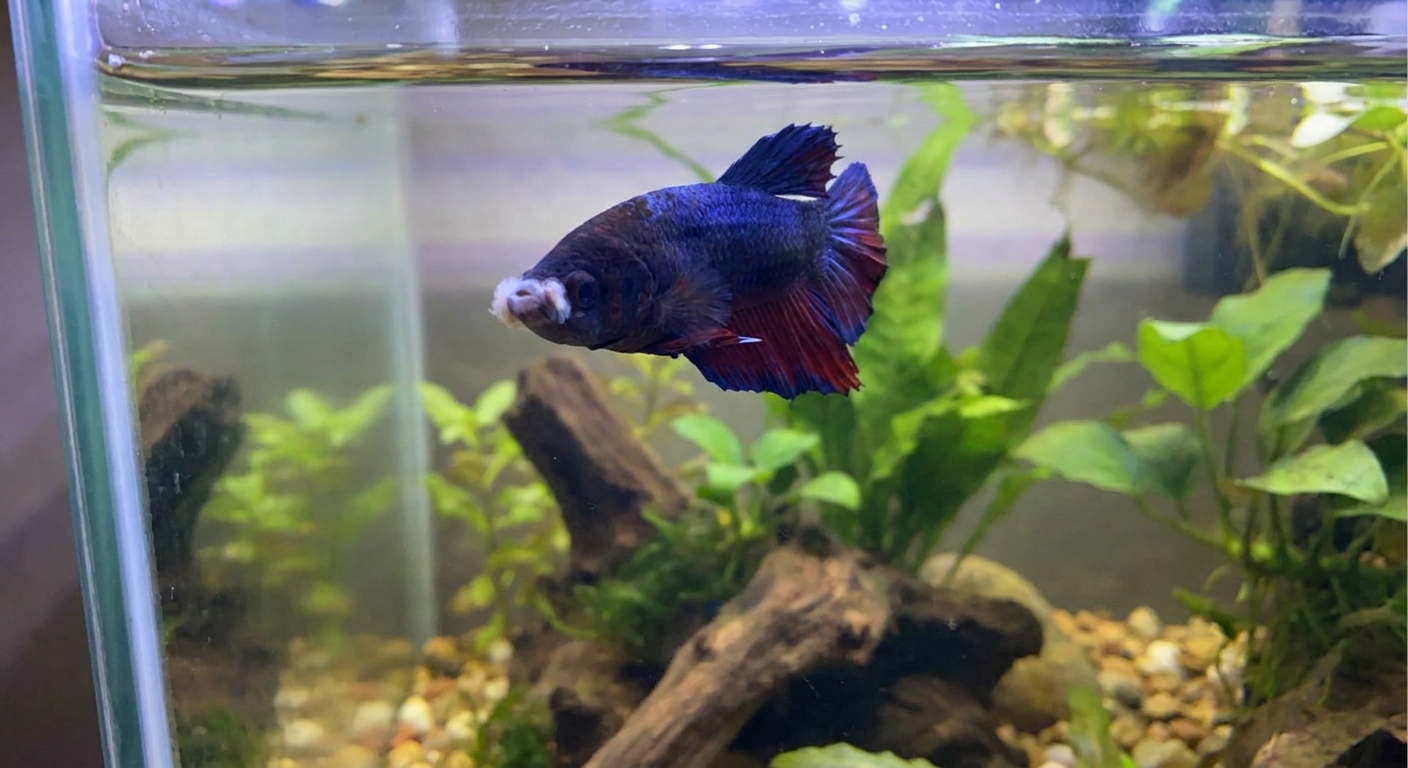
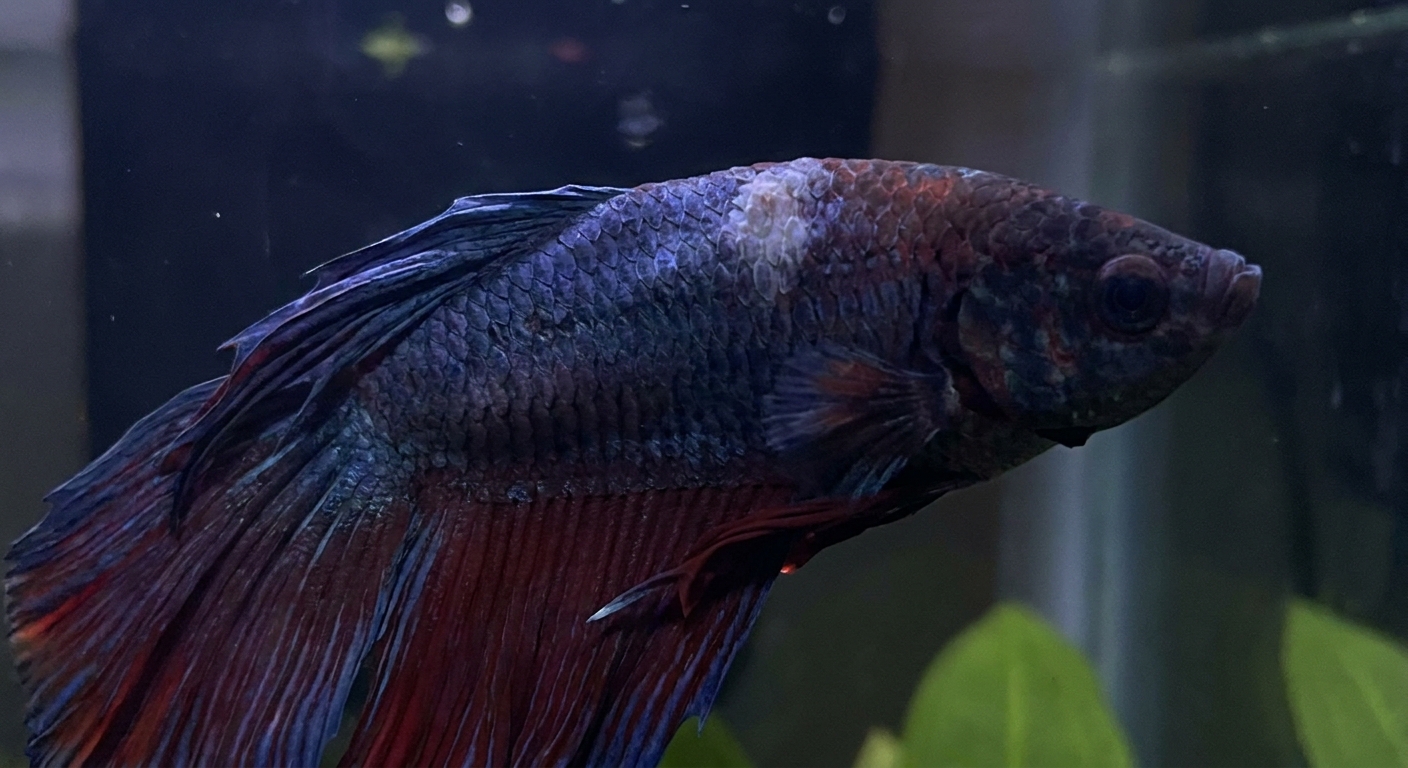
- Columnaris often looks like a flat, pale, gray-white patch or “cottony” film that can appear matted rather than fluffy.
- Fungus often looks like distinct fluffy tufts, like tiny cotton balls growing outward.
Common locations
- Columnaris: around the mouth (“cotton mouth”), along the back near the dorsal area (“saddleback”), at fin bases, and on gills.
- Fungus: frequently grows on an existing wound or damaged tissue, like a scrape or fin tear.
Speed is a huge clue
- Columnaris: can worsen noticeably within 24 to 48 hours.
- Fungus: usually progresses more slowly unless the fish is already very compromised.
Behavior signs that raise urgency
- Rapid breathing, hanging near the surface, or gasping
- Clamped fins, lethargy, refusing food
- Sudden worsening after seeming “fine yesterday”
If you are torn between the two, use the risk-based rule: when it is spreading fast, centered on the mouth, or involves breathing, prioritize antibacterial coverage and oxygen support. If it is slow-growing and clearly tufted on a wound, antifungal-focused treatment may make more sense. When in doubt, professional guidance from an aquatic veterinarian is ideal.
Other look-alikes
Not everything white and fuzzy is Columnaris or fungus. A few other common possibilities:
- Injury + biofilm: a scrape can get a pale coating that looks “cottony” from a distance.
- Secondary infection: fungus and bacteria can pile onto the same damaged area.
- Other bacterial issues: “mouth rot” style lesions can come from multiple pathogens, not just Columnaris.
This is why clean water, isolation, and watching the speed of change matter so much.
Symptoms checklist
- White or gray patches on skin that may look like film or fuzz
- “Cotton mouth” around lips and face
- Saddleback lesion across the back behind the head
- Fraying fins or red, inflamed fin bases
- Ulcers that look like sores under a pale patch
- Gill involvement: fast breathing, hanging at surface
- Lethargy, hiding, reduced appetite
Note: fin damage can overlap with other illnesses. If fins are melting or shredding, also read Fin Rot in Betta Fish: Identify and Treat It since environmental fixes and supportive care matter in both situations.
Immediate action plan
1) Isolate your betta
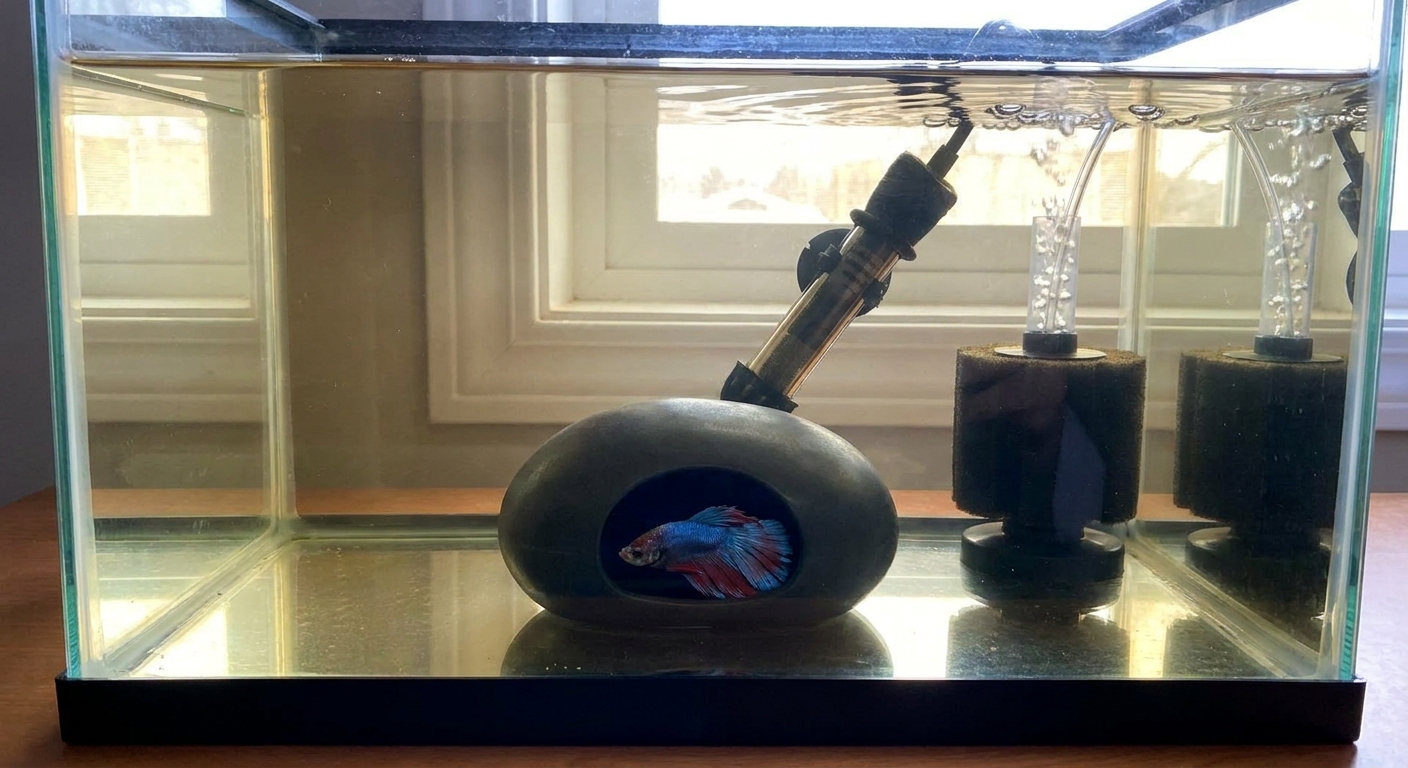
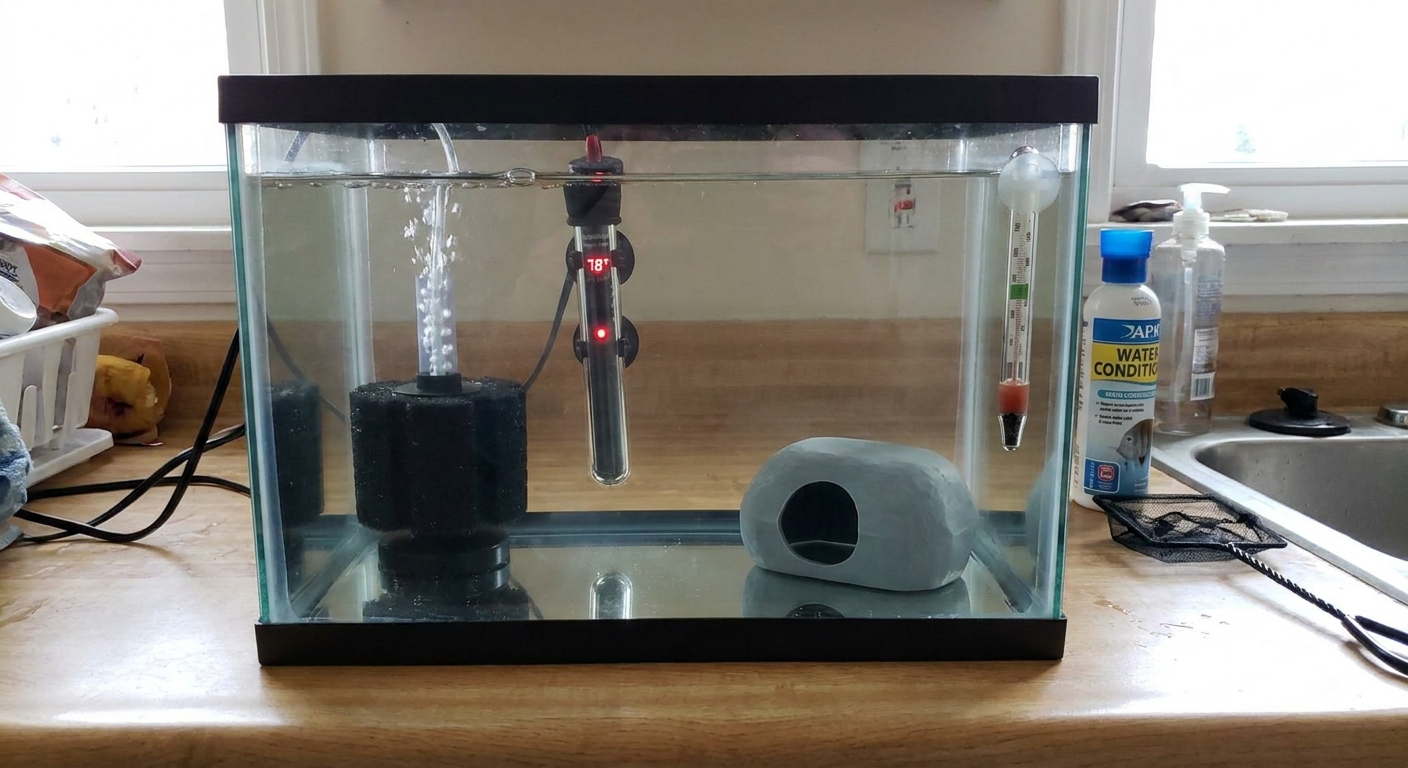
Move your betta to a simple, warmed, filtered hospital tank if possible. This protects tank mates, keeps treatment targeted, and makes it easier to keep water pristine.
Try to minimize handling stress during the move. Dim the lights, move slowly, and use a cup or a soft net whenever you can.
Here’s a step-by-step setup: How to Set Up a Hospital Tank for a Sick Betta Fish.
2) Test water and correct it gently
- Ammonia and nitrite should be 0
- Nitrate should be kept low
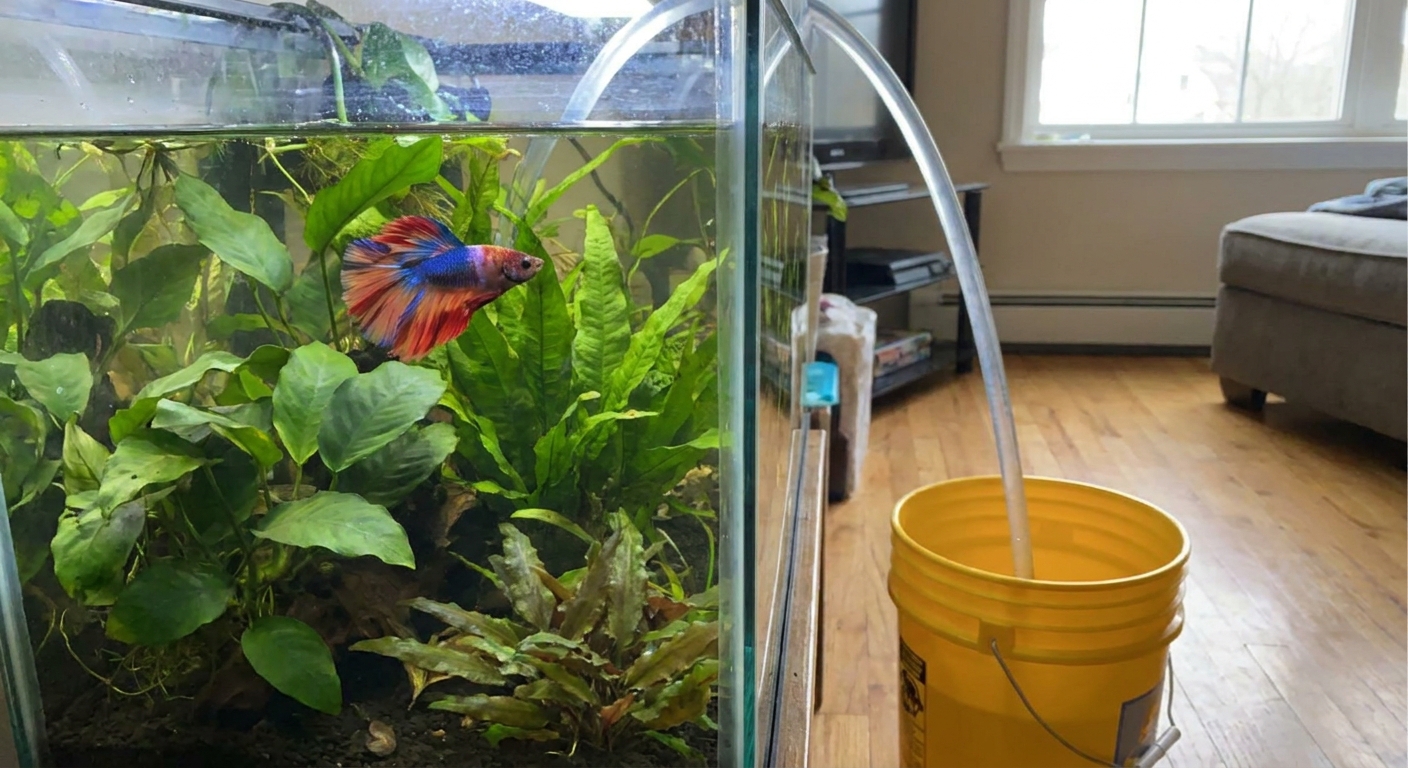
- Do a partial water change with properly conditioned, temperature-matched water
If you need a clean routine that keeps healing on track, follow Betta Tank Cleaning Routine and Water Change Schedule.
3) Increase oxygenation
Columnaris can involve the gills, so oxygen support is a big deal. Increase surface agitation with your filter outflow or add an air stone in the hospital tank.
4) Remove chemical filtration before medicating
Take out activated carbon or chemical media that can absorb medication. If you run UV, turn it off during treatment since it can interfere with some meds. Keep biological filtration running if it will not be harmed by your chosen meds.
Also keep in mind: antibiotics can stress or crash a biofilter. That is another reason a hospital tank is the safer place to medicate.
Treatment options
Because Columnaris is bacterial, the “best fungus medicine” is often the wrong tool. Antifungal-only products can waste valuable time when the infection is fast.
Antibiotics used for Columnaris
In the hobby, Columnaris is often treated with antibiotics that cover gram-negative bacteria. Some combinations are commonly paired to broaden coverage, but response can vary by strain, water conditions, and how early you start.
Option A: Kanamycin + Nitrofurazone
- Kanamycin (often sold as kanamycin sulfate aquarium antibiotics) penetrates tissue well.
- Nitrofurazone (a nitrofuran antibiotic) is frequently used for external bacterial infections.
This pairing is commonly chosen for fast-moving external infections and “cotton mouth” presentations.
Option B: Nitrofurazone + Furazolidone
Some aquarium medications bundle nitrofurans together. These are typically aimed at external bacterial issues. Follow label directions carefully and avoid stacking multiple products that contain the same active ingredients.
Option C: Oxytetracycline
Oxytetracycline is another antibiotic sometimes used for Columnaris. Effectiveness can vary based on the strain and water conditions, and it can impact your biofilter.
Dosing caution
Always follow the directions on the specific product you have, because concentrations vary by brand and form. Do not guess. If the label allows water changes between doses, keep them gentle but consistent, and redose according to instructions.
What about aquarium salt?
Aquarium salt can reduce osmotic stress and help with some external issues, but it is not a reliable stand-alone cure for Columnaris. In fast cases, it can be supportive while antibiotics do the main job. If your betta is already struggling to breathe, prioritize oxygenation and appropriate medication choices rather than pushing aggressive salt dosing.
Supportive care
Keep the hospital tank simple
- Heater and thermometer
- Gentle filter or sponge filter
- Easy-to-clean bare bottom
- One smooth hide
A calm betta heals better. If you need ideas for safe enrichment that will not snag fins, see 7 Essential Tank Decorations for Betta Hiding Spots and Enrichment.
Feed lightly, remove leftovers
Offer small, high-quality meals only if your betta is interested. Extra waste fuels bacteria. If appetite is off, that is common with infections. Do not force food.
For feeding fundamentals, use How Much and How Often to Feed a Betta Fish.
Temperature: keep it stable
Bettas need warm, stable water, but Columnaris often does not respond well to the classic “heat bump” people use for ich. Do not crank the heater. Instead, keep temperature steady in the normal betta comfort zone, usually around 78 to 80°F, unless a veterinarian advises otherwise.
For heater placement and keeping temperature steady, see Betta Tank Temperature and Heater Placement.
Cleaning and prevention
Hospital tank hygiene
- Do water changes as directed by your medication plan
- Siphon uneaten food and visible waste promptly
- Rinse equipment in dechlorinated water, not soap
Main tank steps
If other fish are present, watch closely for symptoms. Consider separating vulnerable tank mates. Improve water quality and reduce stressors right away.
If you are unsure whether the tank is cycled or stable, it is worth reviewing How to Cycle a New Betta Fish Tank and making sure the biological foundation is solid.
Extra prevention habits
- Quarantine new fish when possible, even if they look fine.
- Rinse and isolate new plants or decor if they are coming from a shared system.
- Avoid cross-contamination by not sharing nets, siphons, or cups between tanks without cleaning them first.
When it is an emergency
Columnaris can cross into true emergency territory quickly. Treat urgently if you see:
- Rapid breathing, gasping, or staying right at the surface
- Sudden, spreading patches that enlarge in hours
- Severe lethargy or loss of balance
- Gill discoloration or swelling
If you have access to an aquatic veterinarian, professional guidance is ideal for fast, severe infections or anytime you are not sure what you are dealing with.
FAQ
Can cottony patches be something other than Columnaris?
Yes. Cottony growths can be Columnaris, true water mold (“fungus”), or a mix of secondary infections on an injury. Watching the speed of progression and where it shows up (especially mouth and gills) can help you choose the safest first steps.
Is Columnaris contagious?
It can spread in a shared system, especially when water quality is poor or fish are stressed. Isolation and improved husbandry are key.
Can I treat it with antifungal medication?
Antifungal-only products usually do not address bacterial causes. If the patch is spreading fast, especially around the mouth or with breathing trouble, prioritize antibacterial coverage and oxygenation.
Will a cleaner tank prevent it?
Clean, stable water does not guarantee immunity, but it dramatically lowers risk. A steady routine like the one in our cleaning and water change schedule is one of the best long-term protections.
Gentle reminder from Bloop
If you spot cottony patches and your betta seems worse by the hour, trust your instincts and act quickly. Isolate, clean up the water, boost oxygen, and choose treatment that matches the most urgent red flags you are seeing. With fast response and a calm, stable hospital setup, you are giving your finned friend the best chance to glide back to bright colors and happy flares.