
Let’s make this as peaceful, kind, and as little-scary as possible. Saying goodbye to a betta is one of the hardest parts of fishkeeping. If your little finned friend is truly suffering with no realistic path to comfort, humane euthanasia can be the last loving gift you give.
This guide explains how to do it with clove oil in a way that aims to be as low-stress and humane as possible. It also covers how to know when it is time, what to prepare, and what to do afterward.

First, decide if this is the kindest choice
When a betta is sick, the goal is always comfort and recovery when possible. Euthanasia is considered when suffering is ongoing and treatment is no longer humane or effective.
Signs your betta may be suffering beyond recovery
- Severe dropsy with heavy pineconing and rapid decline, especially if your betta is no longer responsive or able to rest comfortably. If this sounds familiar, see Dropsy in betta fish: warning signs and comfort care.
- Unable to swim or remain upright, constantly rolling, or repeatedly sinking and struggling to reach air
- Not eating for an extended period with worsening weakness and no improvement after correcting environment and offering appropriate foods. Help troubleshooting: Why is my betta fish not eating?
- Severe injury or advanced infection where your betta cannot rest, breathe, or move without distress
- Persistent labored breathing at the surface even after water quality and temperature are corrected
- Progressive wasting, extreme lethargy, or loss of responsiveness, especially with other serious symptoms
Before you decide, check the basics
Pain and distress can spike when the environment is off. If you have time and your betta is still responsive, quickly review these care points:
- Temperature is stable and appropriate: Betta tank temperature and heater placement
- Water is conditioned and safe: How to prepare tap water for a betta tank
- Tank is cycled and ammonia and nitrite are not present: How to cycle a new betta fish tank
- Stressors are reduced: 7 signs of stress in betta fish and how to fix their environment
If your betta’s condition is clearly advanced and worsening, or your fish is in obvious distress, it is okay to choose a gentle end rather than prolonged suffering.
When to choose a vet
If you have access to an aquatic veterinarian, professional euthanasia is the most controlled option. It can also be the right choice if you feel too overwhelmed to do this at home, or if you are unsure whether your fish is beyond recovery.
If a vet is not reachable and your betta is suffering, a careful clove-oil protocol at home is a commonly used approach.
What not to do
When emotions are high, a lot of bad advice floats around. These methods are widely considered inhumane because they can cause pain, panic, or a slow death:
- Flushing
- Freezing or placing in ice water
- Boiling or hot water
- Alcohol, vodka, or other spirits
- Carbonated water
- Removing from water to “let it pass”
- Blunt trauma without proper knowledge or certainty
If you are going to euthanize at home, clove oil is commonly used because it can sedate first and then, at a higher dose, act as an anesthetic overdose.
Supplies to gather
Having everything ready helps you stay calm and keeps the process smooth.
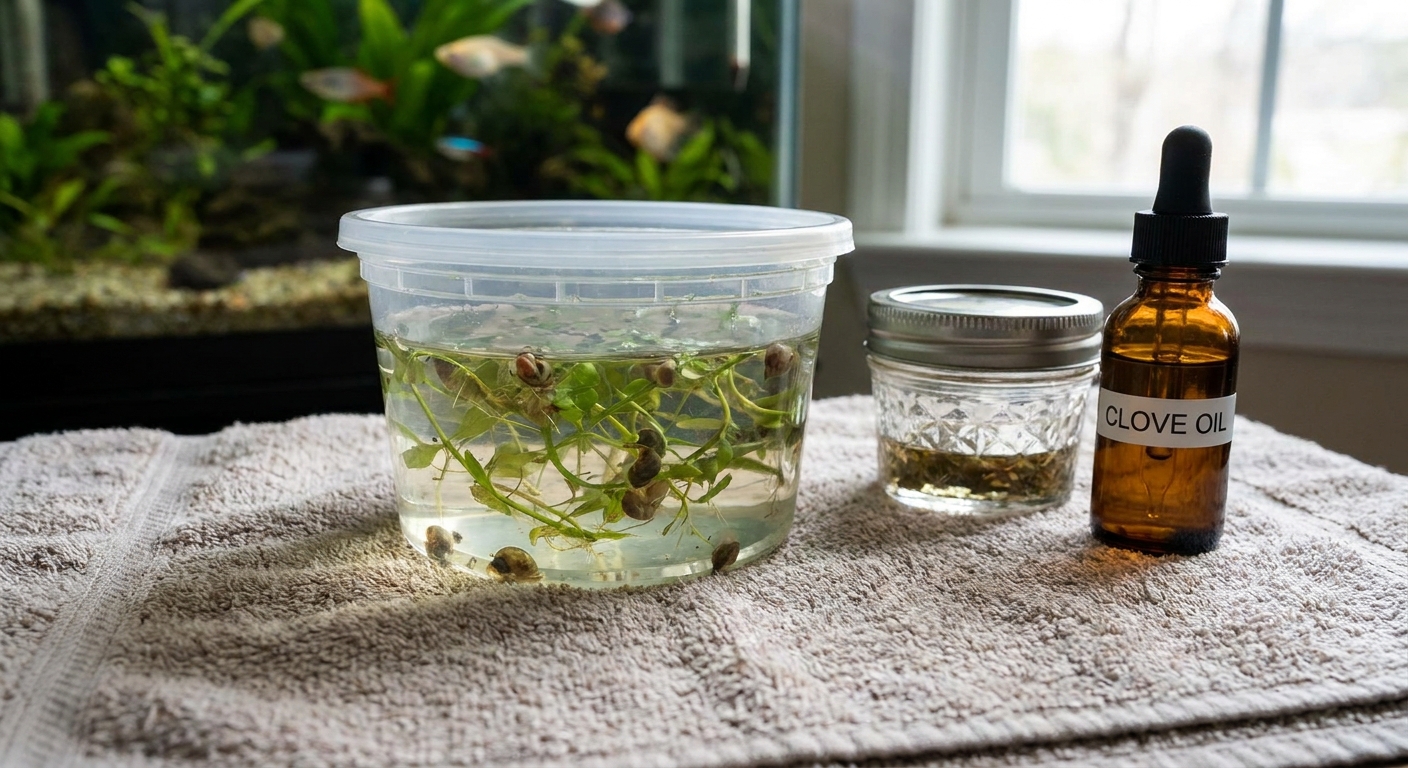
- 100% clove oil (often sold as “clove bud oil”). Avoid scented products, “clove fragrance,” or blends with unclear ingredients.
- Two clean containers (a food-safe plastic tub or small bucket works well). One is for your betta, one is for mixing.
- Tank water (use water from your betta’s tank to avoid extra stress)
- Measuring tools: a small syringe or oral medicine dropper with mL markings is best for accurate dosing. Measuring spoons can work in a pinch, but mL is easier.
- A small jar with a lid (for emulsifying clove oil with water)
- A towel and a dark, quiet space
Safety note: keep clove oil away from children and pets. It is potent and can irritate skin and eyes.
How clove oil works
Clove oil contains eugenol, which can act as a sedative and anesthetic for fish. The humane approach is a two-stage process:
- Sedate your betta gently first, so they become unconscious with minimal panic.
- Increase the dose to a euthanasia level while they are unconscious.
This matters because adding a strong dose all at once can irritate gills and cause distress before the fish is fully asleep.
Step-by-step: clove oil euthanasia
Step 1: Prepare the container
Fill your main container with enough tank water to comfortably cover your betta, usually about 500 mL to 1 liter. More water is fine, just keep track of how much you use so dosing stays consistent.
Place the container somewhere quiet and dim. Bright light and vibrations add stress.
Step 2: Move your betta gently
Transfer your betta into the container with as little chasing as possible. If you can, use a cup to scoop them in water instead of a net. Let them settle for a moment.
Step 3: Measure your dose (use mL if you can)
Drop counts vary a lot by dropper and oil thickness, so mL measurements are safer. If you must use drops, treat them as a rough backup and go slowly.
These are commonly used target concentrations:
- Sedation stage: 0.5 mL clove oil per liter of water
- Final stage (total): 2.0 mL clove oil per liter of water
Quick example (mL only): If your container has 0.75 L of water, a sedation dose is 0.75 × 0.5 = 0.375 mL. The total final dose is 0.75 × 2.0 = 1.5 mL. Since you already added 0.375 mL, you would add 1.125 mL more for the final stage.
Step 4: Mix a sedating dose (never add oil directly)
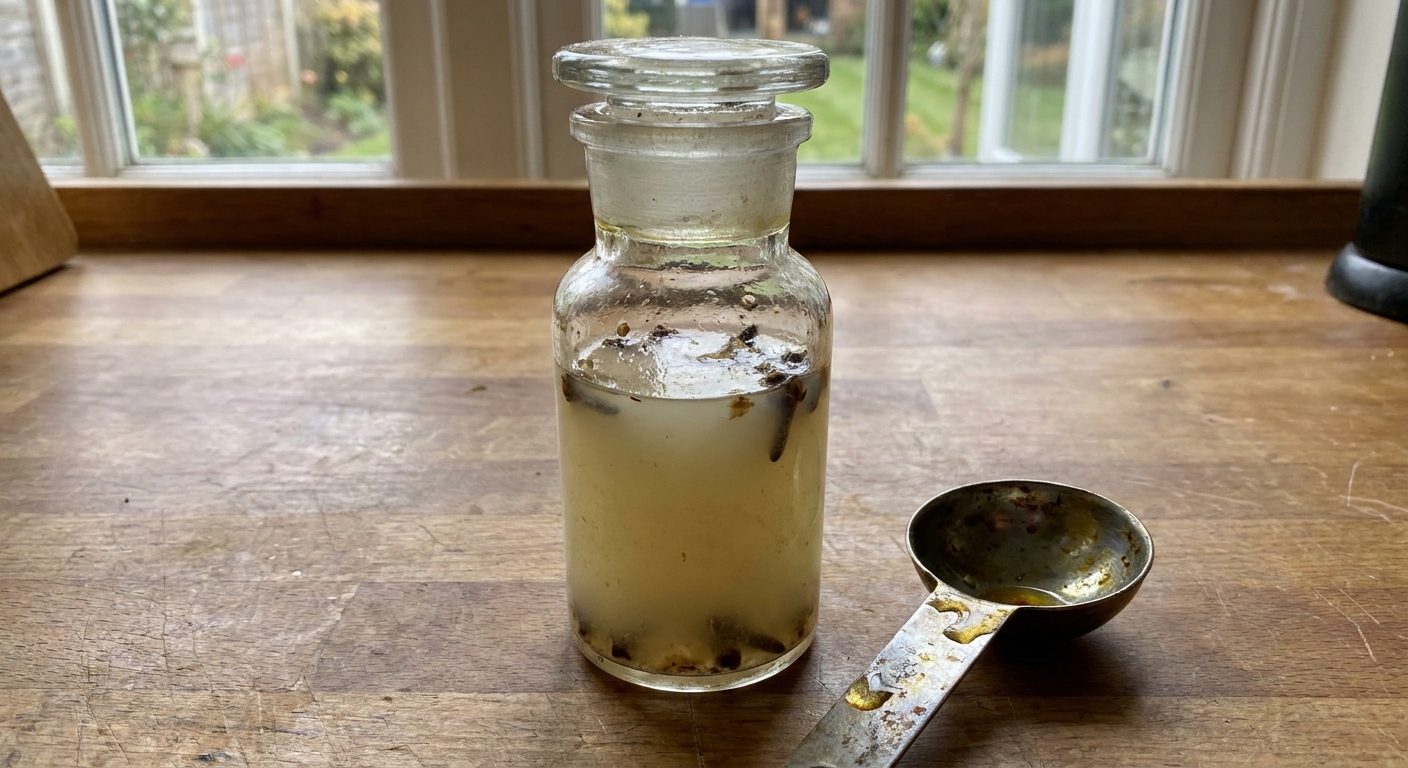
Clove oil does not mix with water on its own. Always emulsify it first:
- In a small jar with a lid, add a small amount of tank water (room temperature is fine), about 2 to 4 tablespoons.
- Add your sedating dose of clove oil (0.5 mL per liter of water in the container).
- Close the lid and shake hard until the mixture looks cloudy and milky.
Step 5: Add the sedating mix slowly
Pour the milky clove oil mixture into the container slowly, ideally along the side of the container rather than right onto your betta.
Within a few minutes, many bettas become drowsy and stop reacting to movement. They may rest on the bottom or float quietly. Gill movement can continue for a while.
Because bettas are labyrinth fish, you might see a brief surface trip or an odd wobble early on. As sedation deepens, this should fade.
Step 6: Confirm deep sedation
Wait until your betta is deeply unconscious. Signs include:
- No response to gentle taps on the container
- No attempt to right themselves if they tilt
- Very slow, faint gill movement
This often takes 5 to 15 minutes, sometimes longer depending on temperature and the fish’s condition. Do not rush this step.
Step 7: Mix and add the final dose
Once your betta is deeply sedated, prepare a stronger clove oil mixture in the jar the same way as before.
A commonly recommended final concentration for euthanasia is 2.0 mL per liter total clove oil in the container. Since you already added 0.5 mL per liter, you will add an additional 1.5 mL per liter.
Shake until milky, then add it slowly to the container.
Step 8: Wait and verify passing
Leave your betta in the solution for at least 30 minutes after all gill movement stops. If you are unsure, wait longer. Some fish can show occasional reflex-like opercular movement as the body shuts down, so it is okay to be patient and give extra time.
Do not remove your betta from the solution to “test” responsiveness. Observe in the container.
Signs your betta has passed include:
- No gill movement for 30 minutes
- No response to gentle movement of the water in the container
- Body remains still
If you see any sign of breathing or responsiveness after the final dose, add another small amount of emulsified clove oil (for example, an additional 0.5 mL per liter), then continue waiting.
Aftercare
Handling and burial
You can wrap your betta in a paper towel and place them in a small box for burial if local rules allow. Choose a spot away from gardens that will be eaten from, and deep enough that other animals will not disturb it.
Do not pour clove oil water into your tank
Dispose of the euthanasia water down a household drain with plenty of running water, and avoid dumping it outdoors or into storm drains, ponds, or waterways. Follow any local disposal rules that apply where you live.
Rinse the container thoroughly with hot water and soap, then rinse again.
If disease was involved
If your betta passed from a contagious illness or a tank-wide problem, consider a careful cleanup and reset of your routine:
- Review your maintenance habits: Betta tank cleaning routine and water change schedule
- Consider whether a hospital tank would help for isolation and treatment in the future: How to set up a hospital tank
Common questions
Will my betta suffer with clove oil?
When done as a two-stage process, clove oil is widely used as a humane at-home method because the fish is sedated before the higher dose is added. The slow addition and proper mixing are what help minimize distress.
Why can’t I add clove oil straight into the container?
Clove oil forms slicks and droplets that can hit gills in concentrated bursts. Pre-mixing into a cloudy emulsion helps distribute it more evenly and reduces the chance of panic.
My betta is gasping at the surface. Should I still do this?
If your betta is in acute distress, the goal is to reduce panic quickly while staying as gentle as possible. Keep the space dark and quiet, and do the sedation stage right away with properly emulsified clove oil. If you are unsure or uncomfortable, a veterinarian may be able to help with euthanasia using an anesthetic agent.
What if I cannot get clove oil today?
If you cannot obtain clove oil and your betta is suffering severely, the kindest choice may be to contact an aquatic veterinarian or a local fish store that can direct you to humane options. If you do have time, focus on immediate comfort: warm, stable temperature, pristine water, dim lighting, and minimal handling.
A final note of care
If you are here because you love your betta, you are doing the brave thing by choosing kindness over prolonging pain. Keep the room quiet, move slowly, and let your fish drift into rest without fear.
If and when you feel ready for it, this simple guide can help you rebuild a calm, stable setup again: Setting up a betta tank for the first time.